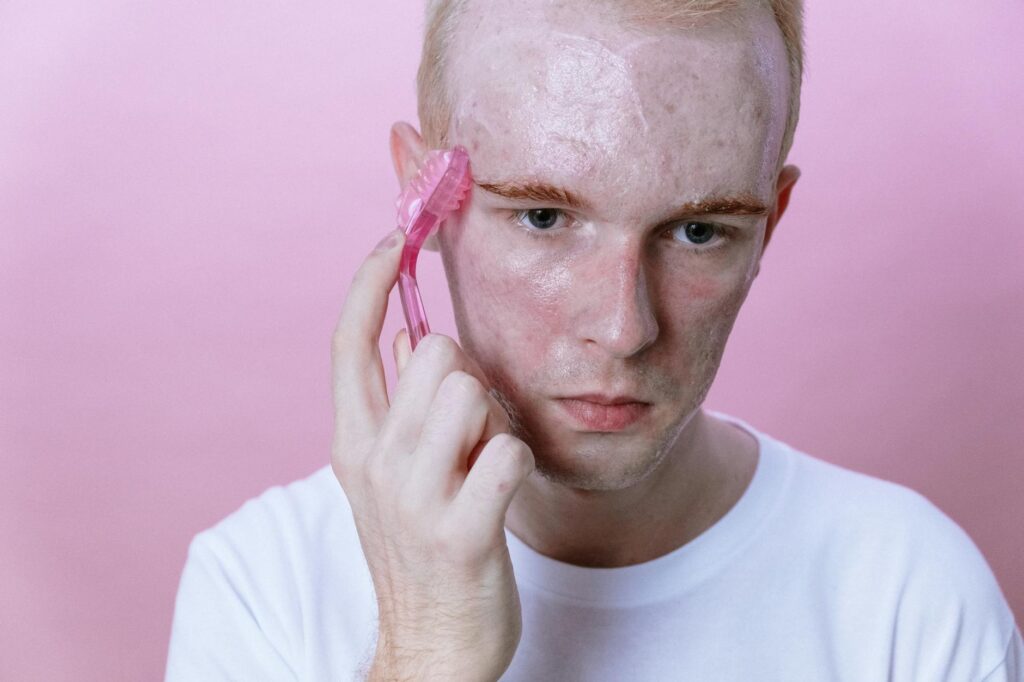
Vanicream works for sensitive acne skin by delivering effective cleansing and moisturizing without the fragrances, dyes, parabens, and botanical extracts that trigger irritation and breakouts in reactive skin types. Its flagship gentle facial cleanser uses a sulfate-free surfactant system that removes excess oil and debris without stripping the skin barrier, while the moisturizing cream provides occlusive hydration with a deliberately boring ingredient list that minimizes the risk of contact dermatitis. For someone who has spent months cycling through “clean beauty” products only to end up with red, stinging skin that breaks out worse than before, Vanicream often becomes the endpoint of that frustrating search.
The brand was originally developed by a pharmacist at Mayo Clinic in Rochester, Minnesota, specifically for patients whose skin reacted to the additives in mainstream products. That clinical origin matters because it explains why Vanicream products lack the elegant textures and pleasant scents consumers expect. They are formulated to be functional and non-reactive, full stop. This article breaks down which specific Vanicream products work best for acne-prone sensitive skin, how they compare to similar options, where they fall short, and how to build a realistic routine around them.
Table of Contents
- Why Does Vanicream Work for Sensitive Skin That Breaks Out?
- Which Vanicream Products Are Best for Acne-Prone Skin?
- How Vanicream Compares to CeraVe, Cetaphil, and La Roche-Posay for Acne
- How to Build a Sensitive Acne Routine Around Vanicream
- When Vanicream Is Not Enough for Acne-Prone Skin
- Vanicream and Prescription Retinoid Pairings
- The Growing Case for Minimal Skincare in Acne Treatment
- Conclusion
- Frequently Asked Questions
Why Does Vanicream Work for Sensitive Skin That Breaks Out?
The core problem with sensitive acne skin is a contradiction. Acne treatments like benzoyl peroxide, salicylic acid, and retinoids are inherently irritating, and sensitive skin is inherently intolerant of irritation. Every additional irritant in your routine, whether it is a fragrance molecule, a preservative like methylisothiazolinone, or even a plant extract marketed as soothing, compounds that burden on your skin barrier. When the barrier is compromised, transepidermal water loss increases, the skin overproduces oil to compensate, and inflammation rises. That inflammation feeds acne. Vanicream interrupts this cycle by eliminating the unnecessary irritants so your skin can tolerate the necessary ones. Vanicream’s free-and-clear philosophy means its products are formulated without the 70-plus common allergens and irritants identified by dermatology patch testing panels. Compare that to a product like cerave Foaming Facial Cleanser, which is also dermatologist-recommended and generally well-tolerated but contains niacinamide and ceramides that some sensitized individuals still react to.
Vanicream strips the formula down further. The Gentle Facial Cleanser contains no ceramides, no hyaluronic acid, no niacinamide. It just cleans. For someone with contact allergies or rosacea-adjacent sensitivity layered on top of acne, that simplicity is the point. The tradeoff is real though. Vanicream products do not actively treat acne. They do not contain salicylic acid, benzoyl peroxide, or any exfoliating agents. They are the supporting cast, not the lead actor. Their job is to keep your skin calm enough that your actual acne treatments, whether prescription or over-the-counter, can do their work without pushing your skin past its tolerance threshold.

Which Vanicream Products Are Best for Acne-Prone Skin?
The Vanicream lineup is small, which is part of its appeal. For acne-prone sensitive skin, three products matter most. The Gentle Facial Cleanser is the starting point. It has a gel-to-lather texture, rinses clean without residue, and has a pH around 5.5, which is close to the skin’s natural acid mantle. It will not make oily skin feel tight the way a foaming sulfate cleanser would, and it will not leave a film the way some cream cleansers do. The Moisturizing Skin Cream, the one in the white tub with the pump, is heavier and better suited to nighttime use or very dry climates. It uses petrolatum and sorbitol as its primary moisturizing agents, which are among the least sensitizing options available.
The Vanicream Lite Lotion is the better choice for daytime use under sunscreen, particularly if you live in a humid climate or have combination skin that gets oily by midday. It absorbs faster and leaves less of a greasy finish. However, if your acne is concentrated on your jawline or cheeks and your forehead stays relatively clear, you may find that even the Lite Lotion is too much for your T-zone while not enough for your dry patches. In that case, applying it only where you need it rather than all over makes more sense than switching products. One product to approach cautiously is the Vanicream Z-Bar, a zinc pyrithione cleansing bar marketed for seborrheic dermatitis and dandruff. Some acne sufferers use it because fungal acne, or pityrosporum folliculitis, responds to antifungal agents. But if your acne is primarily bacterial or hormonal, the Z-Bar will not help, and bar cleansers in general tend to have a higher pH that can be unnecessarily drying for facial skin. Confirm your diagnosis before using it on your face.
How Vanicream Compares to CeraVe, Cetaphil, and La Roche-Posay for Acne
The comparison shoppers most often weigh is Vanicream versus CeraVe, Cetaphil, and La Roche-Posay Toleriane. All four brands are dermatologist-recommended, fragrance-free, and widely available at drugstores. The differences are in formulation philosophy. CeraVe’s selling point is its ceramide complex and MVE delivery technology, which provides sustained moisturization. That is genuinely useful for most people, but ceramides are lipids, and a small subset of acne-prone individuals find that CeraVe products feel heavy or contribute to clogged pores, particularly the Moisturizing Cream in the blue tub. Cetaphil Gentle skin Cleanser is the classic recommendation, but its original formula contains sodium lauryl sulfate, which is a known irritant even at low concentrations. Cetaphil has reformulated some products in recent years, but ingredient lists vary by region and specific product line, which creates confusion. La Roche-Posay Toleriane is probably the closest competitor to Vanicream in terms of minimal formulation, and its Toleriane Hydrating Gentle Cleanser is an excellent product. The main difference is price.
Vanicream’s Gentle Facial Cleanser runs about six to eight dollars for eight ounces, while La Roche-Posay’s equivalent is roughly fourteen dollars for the same size. For a product whose entire value proposition is doing less, paying more is a hard sell. The one area where Vanicream loses is cosmetic elegance. CeraVe and La Roche-Posay invest in textures that feel pleasant on the skin, that sink in smoothly, that look good under makeup. Vanicream products feel utilitarian. The moisturizing cream is thick and takes a minute to absorb. The cleanser lathers modestly. If the sensory experience of your skincare routine matters to your compliance, meaning you will not use a product that does not feel nice, that is a legitimate reason to choose a competitor. The best routine is the one you actually follow.
How to Build a Sensitive Acne Routine Around Vanicream
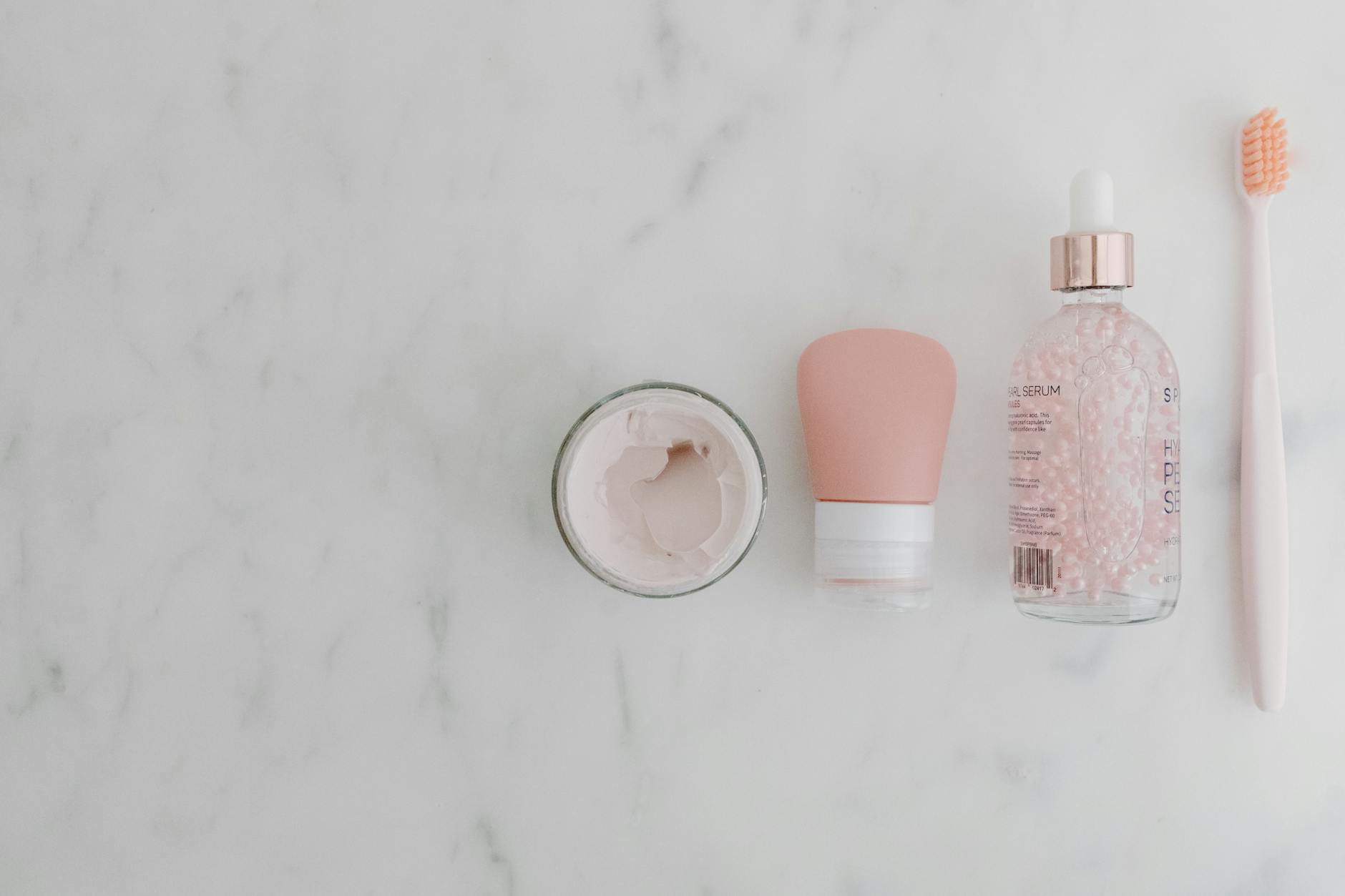
A functional routine for sensitive acne skin uses Vanicream as the base layer and adds one or two active treatments gradually. In the morning, cleanse with the Gentle Facial Cleanser, apply your acne treatment if it is a morning product, wait a few minutes, then apply Vanicream Lite Lotion followed by a mineral sunscreen. At night, cleanse again, apply your prescription or active treatment, wait until it absorbs, then seal with the Moisturizing Skin Cream if your skin runs dry, or the Lite Lotion if it does not. The critical mistake most people make is introducing too many actives at once. If your dermatologist prescribes tretinoin, that should be the only active in your routine for the first six to eight weeks. Do not layer salicylic acid wash underneath it. Do not add a glycolic acid toner because a skincare forum recommended it.
Vanicream’s role in this scenario is to be so inert that your skin’s only variable is the tretinoin. If you break out or get irritated, you know exactly what caused it. That diagnostic clarity is worth more than any multi-step routine. For someone using over-the-counter benzoyl peroxide as their primary acne treatment, the routine tradeoff is between a benzoyl peroxide wash and a leave-on product. A wash like PanOxyl has short contact time with the skin, which reduces irritation but also reduces efficacy. A leave-on benzoyl peroxide gel is more effective but more irritating. Using Vanicream’s gentle cleanser instead of a medicated wash and pairing it with a leave-on benzoyl peroxide product often gives better results for sensitive skin than using a harsh medicated wash alone, because the leave-on treatment has more time to work while the gentle cleanser keeps overall irritation low.
When Vanicream Is Not Enough for Acne-Prone Skin
Vanicream has real limitations, and knowing them prevents wasted time. If your acne is moderate to severe, with deep cystic lesions, widespread inflammation, or scarring, no over-the-counter cleanser or moisturizer will be sufficient. You need prescription treatment, whether that is topical retinoids, oral antibiotics, spironolactone, or isotretinoin. Vanicream can support a prescription regimen, but it cannot replace one. There is also a subset of people whose skin reacts even to Vanicream. The Moisturizing Skin Cream contains propylene glycol and cetearyl alcohol.
Propylene glycol is a known contact allergen for roughly two percent of the population, and cetearyl alcohol, while generally well-tolerated, occasionally triggers reactions in people with specific fatty alcohol sensitivities. If you patch-tested Vanicream on your inner forearm for a few days and noticed redness or tiny bumps, you are likely reacting to one of these ingredients. In that case, products from the Avene Tolerance line or even plain petroleum jelly as a moisturizer may be better options. Another scenario where Vanicream falls short is acne driven primarily by hormonal factors. Adult women who break out along the jawline and chin in sync with their menstrual cycle need hormonal intervention, not a better moisturizer. Vanicream will keep the skin comfortable, but it will not address the underlying androgen sensitivity driving the breakouts. Treating the symptom without addressing the cause is a recipe for frustration.
Vanicream and Prescription Retinoid Pairings
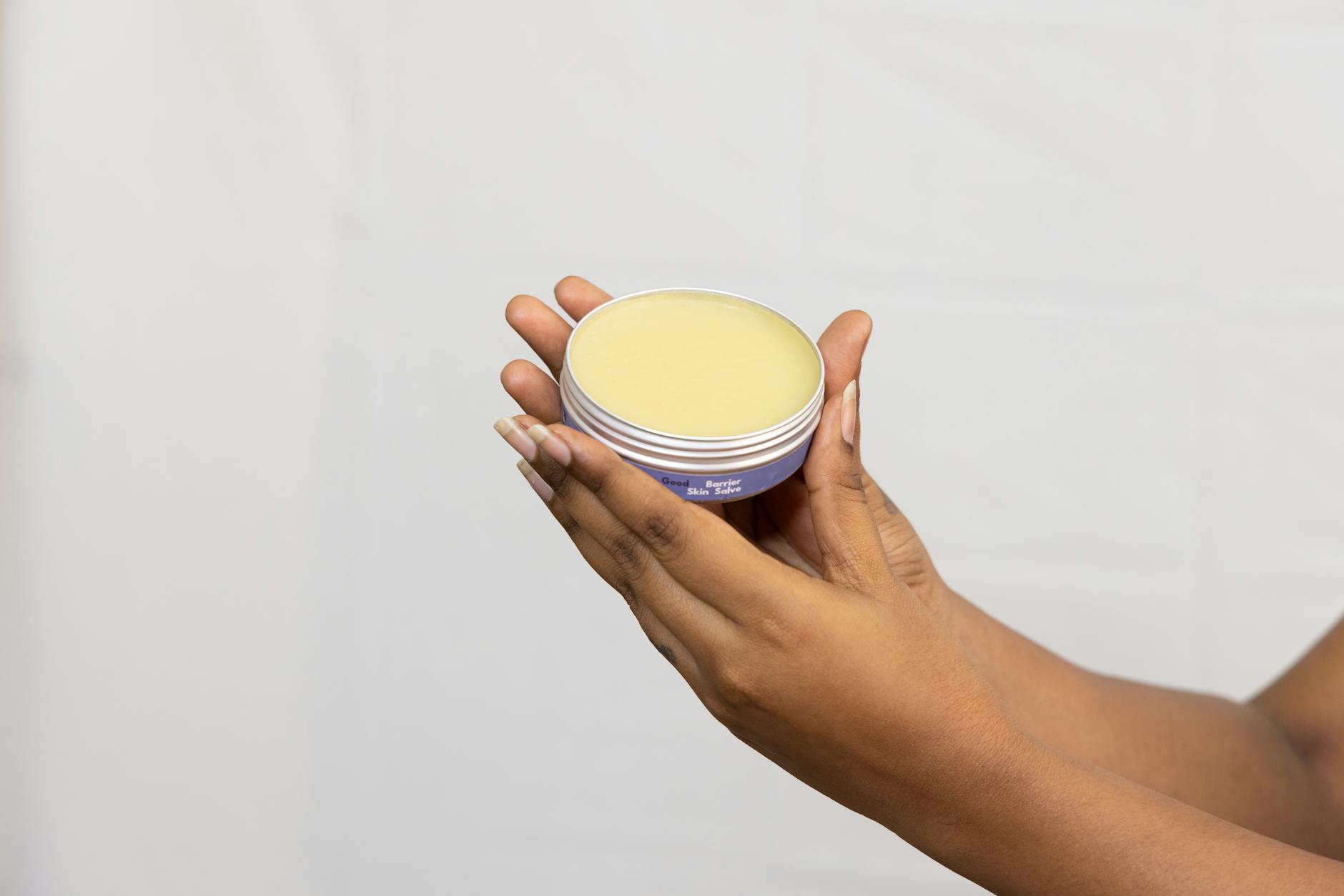
One of the most common and effective uses of Vanicream is buffering prescription retinoids. Dermatologists frequently recommend applying a thin layer of Vanicream Moisturizing Skin Cream before or after tretinoin to reduce the peeling, redness, and dryness that come with retinoid initiation. This technique, sometimes called the sandwich method, places the retinoid between two layers of moisturizer. A patient starting on 0.025% tretinoin might apply Vanicream Lite Lotion first, then a pea-sized amount of tretinoin, then Vanicream Moisturizing Skin Cream on top.
The moisturizer does not meaningfully reduce the retinoid’s efficacy but does substantially reduce irritation, which matters because irritation is the primary reason people abandon retinoid therapy before it has time to work. This pairing works specifically because Vanicream does not contain active ingredients that interact with retinoids. Products containing AHAs, BHAs, or vitamin C can increase retinoid irritation or destabilize the formulation. Vanicream’s inert profile means one fewer variable to worry about.
The Growing Case for Minimal Skincare in Acne Treatment
The broader trend in dermatology is moving toward simplified routines, and Vanicream’s approach anticipated this shift by decades. Research published in the last several years has repeatedly shown that overuse of active ingredients and excessive product layering contribute to barrier damage, sensitization, and paradoxically, worsened acne. The so-called skinimalism movement is partly a market correction after years of ten-step routines and aggressive exfoliation being promoted on social media. Vanicream is well-positioned in this shift, but competition is increasing. Newer brands are launching minimal, free-and-clear product lines at similar price points, and established brands like CeraVe have expanded their sensitive skin options.
Vanicream’s advantage remains its track record and the trust it has built with dermatologists over forty years. For the person sitting in a dermatologist’s waiting room with angry, irritated skin and a bathroom counter full of products that each promised to fix it, the recommendation is almost always the same. Strip everything back. Start simple. Vanicream is usually what simple looks like.
Conclusion
Vanicream serves a specific and valuable role for sensitive acne skin. It is not a treatment. It is the foundation that allows treatments to work by removing every unnecessary source of irritation from your routine. The Gentle Facial Cleanser, Lite Lotion, and Moisturizing Skin Cream form a three-product base that pairs effectively with prescription retinoids, benzoyl peroxide, and other acne medications without competing with them or compounding their side effects. At its price point, with its ingredient transparency, it remains one of the most practical choices available.
The next step is honest assessment. If your acne is mild and your main problem is sensitivity and irritation from previous products, switching to Vanicream as your cleanser and moisturizer for four to six weeks while using a single acne active may be all you need. If your acne is persistent or severe, Vanicream is the right supporting player, but you need a dermatologist calling the shots on your treatment plan. Simple routines are not lazy routines. They are strategic ones.
Frequently Asked Questions
Is Vanicream comedogenic? Will it clog pores?
Vanicream products are not formally rated on the comedogenicity scale, but the Gentle Facial Cleanser and Lite Lotion are generally well-tolerated by acne-prone skin. The Moisturizing Skin Cream is heavier and may contribute to clogged pores in highly oily skin types, so patch testing on a small area first is advisable.
Can I use Vanicream cleanser with benzoyl peroxide or salicylic acid?
Yes, and this is one of its best uses. Because the cleanser contains no active ingredients, it will not interact with or amplify the irritation from acne treatments. Use the Vanicream cleanser as your gentle base and apply your medicated product separately.
Is Vanicream good for fungal acne?
The Gentle Facial Cleanser and Lite Lotion do not contain common fungal acne triggers like fatty acids or fermented ingredients, making them safe choices. However, they will not treat fungal acne. You still need an antifungal agent like ketoconazole or zinc pyrithione applied as a treatment.
How long does it take to see results after switching to Vanicream?
If your previous products were causing irritation-driven breakouts, you may see improvement within two to four weeks of switching to Vanicream as your base routine. If your acne is unrelated to product irritation, Vanicream alone will not clear it, and you should consult a dermatologist.
Can I use Vanicream with tretinoin or Differin?
Absolutely. This is one of the most recommended pairings in dermatology. Apply Vanicream before or after your retinoid to buffer irritation, or use the sandwich method described above. The inert formula will not interfere with retinoid activity.