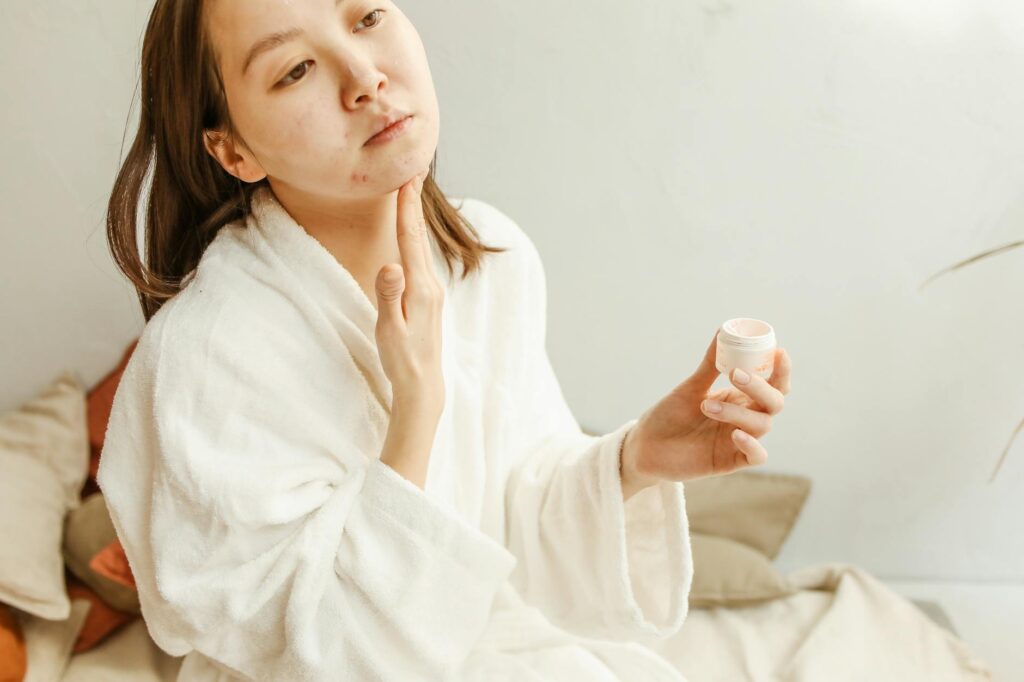
The acne scar treatment algorithm is a systematic, four-phase protocol that dermatologists and aesthetic specialists follow to identify and treat scarring. The sequence goes like this: first, you classify the scars using a standardized grading system; second, you address any remaining erythema or redness; third, you select specific treatment modalities based on scar morphology and severity; and fourth, you protect the healing process through a critical maturation window that lasts 90 to 180 days.
Unlike acne treatment itself, which is relatively linear (suppress bacteria, normalize sebum, reduce inflammation), scar treatment is highly individualized—what works for an ice pick scar won’t work for a rolling scar, and what’s appropriate for a patient with a Fitzpatrick Type II skin tone may not be suitable for someone with Type V or VI skin. This article walks through each phase of the algorithm step by step, including how dermatologists classify severity, why combination therapies have become the standard of care rather than single treatments, what happens during the critical weeks after treatment, and how to know whether you’re a candidate for early intervention or if you should wait. The goal is to give you the insider’s view of how treatment decisions actually happen in the clinic, not just what treatments exist.
Table of Contents
- How Dermatologists Classify and Grade Acne Scars
- Understanding the Three Main Scar Types and Why It Changes Treatment
- The Four-Phase Treatment Algorithm That Dermatologists Follow
- Selecting Treatment Modalities—Why Combination Therapy Is Now Standard
- The Critical Maturation Window—Why Patience Is Part of the Algorithm
- Special Considerations—Isotretinoin, Skin Type, and Combination with Active Acne Treatment
- When to Combine Treatments Versus Using Single Modalities
- Conclusion
- Frequently Asked Questions
How Dermatologists Classify and Grade Acne Scars
The first step in any scar treatment algorithm is accurate classification. Dermatologists use the Goodman quantitative postacne scarring grading system, which employs a 0-84 point scale based on scar counts across five different morphologies and severity levels. This system sounds technical because it is—precision at this stage determines whether the treatment will be effective. A simpler qualitative version uses a 4-point subjective assessment, but the Goodman scale provides the objectivity needed for tracking outcomes and comparing results across different treatments. What’s important to know is that grading reliability depends on who’s doing the grading. Medical students show “fair” interrater reliability when classifying scars, dermatology residents achieve “moderate” reliability, and board-certified dermatologists reach “good” reliability.
This matters because it means going to an experienced dermatologist for your initial assessment genuinely changes the baseline accuracy of your treatment plan. An underestimated scar severity might lead to underpowered treatment; overestimation might expose you to unnecessary procedures. Scars themselves are classified into morphological categories: atrophic scars (which account for the majority of post-acne scarring), hypertrophic scars, and keloidal scars. The atrophic category breaks down further into ice pick scars (narrow, deep, V-shaped), rolling scars (wider, U-shaped, undulating appearance), and boxcar scars (well-demarcated, flat-bottomed, rectangular). These distinctions matter enormously because the treatment algorithm changes based on type. You cannot treat an ice pick scar the way you treat a rolling scar and expect the same outcome.
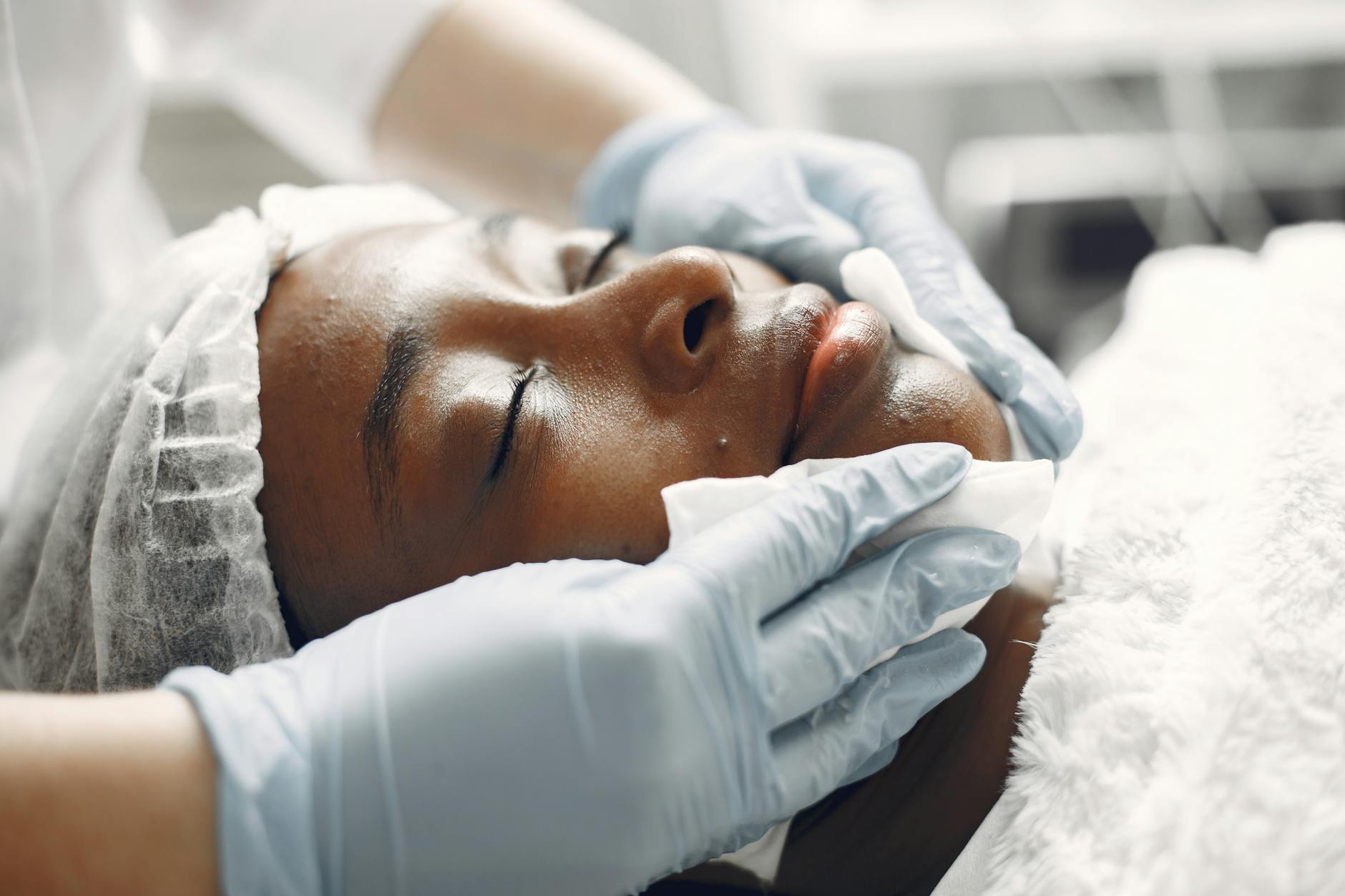
Understanding the Three Main Scar Types and Why It Changes Treatment
Ice pick scars are the most visually apparent because they’re deep and narrow, resembling a small puncture wound. They respond best to ablative laser treatments, chemical peeling with the CROSS technique (controlled application of high-concentration acid to individual scars), or combination approaches like CROSS followed by laser resurfacing. However, ice pick scars often require multiple treatments spaced weeks or months apart because the depth is difficult to address completely in a single session. Rolling scars present a different challenge—they’re wider and have a wave-like appearance because they’re caused by fibrous bands pulling the skin downward. The algorithm for rolling scars typically starts with subcision, a procedure where a needle or blade undermines the scar tissue to break these fibrous attachments, followed by dermal fillers or fat transfer to support the newly released skin.
Subcision alone shows improvement ranging from 10 to 100 percent depending on severity and combination approach, but combined subcision and microneedling produce “excellent” responses in the majority of patients with Grade 3-4 scarring. The wide range in improvement rates reflects how much individual variation exists—dense scarring with severe attachment benefits more from combination therapy than shallow rolling scars. Boxcar scars occupy middle ground. They’re flatter than ice pick scars but more demarcated than rolling scars, so the treatment approach often combines techniques: chemical peels or laser resurfacing to level the edges, potentially combined with subcision or fillers if there’s significant depth. The key limitation is that boxcar scars sometimes have a sharp edge that requires careful technique to avoid creating a surgical-looking border during treatment. This is why very experienced practitioners matter for boxcar scarring—the difference between a subtle blend and an obviously “treated” appearance often comes down to laser power, peel depth, and precise hand technique.
The Four-Phase Treatment Algorithm That Dermatologists Follow
Current 2026 protocols follow a structured four-phase approach. Phase One is assessment and classification using the methods described above. Phase Two involves treating any erythema (redness) present, which is a critical step people often overlook. Active erythema can persist for months or even years after acne resolves, and attempting aggressive scar treatments on erythematous skin often worsens the inflammation. Treatments in this phase include vascular lasers (like IPL or 595nm pulsed dye laser), topical agents like azelaic acid or niacinamide, and sometimes a course of oral antibiotics at sub-antimicrobial doses for their anti-inflammatory properties. Phase Three is where the main scar-directed treatment happens. This is where you choose your modality or modalities based on scar type, severity, Fitzpatrick skin type, and downtime tolerance.
Options include chemical peels (particularly medium-depth peels with trichloroacetic acid or Jessner’s solution, which trigger epidermal regeneration within 24 hours and complete within 7-10 days), laser technologies (ablative and non-ablative), radiofrequency microneedling, subcision, dermal fillers, and fat transfer. Most practices now use combination approaches rather than single modalities because the evidence shows synergistic benefits. Phase Four is protection and maturation. After treatment, the skin is in a vulnerable state. This phase emphasizes strict sun protection (because post-inflammatory hyperpigmentation can occur, especially in darker skin tones), gentle skincare, avoidance of irritating products, and realistic patience. And here’s where the timeline matters enormously: the most meaningful scar remodeling occurs between days 90 and 180 after treatment. Scars gradually become shallower and smoother during this period through collagen remodeling, even without additional procedures. Many patients make the mistake of assessing results too early and deciding treatment “didn’t work” when in fact they’re still in the critical window where improvement is ongoing.

Selecting Treatment Modalities—Why Combination Therapy Is Now Standard
The old approach was to pick one treatment modality and hope it worked. Current 2026 guidelines recommend multi-modal approaches because no single treatment is best for everyone. The algorithm changes based on the specific scar profile. For ice pick scars, the combination is typically CROSS (controlled application of chemical peel to individual scars) plus ablative laser resurfacing. For rolling scars, it’s usually subcision combined with dermal fillers or fat transfer. For boxcar scars, medium-depth chemical peels or laser resurfacing often work alone, but combination with other modalities improves outcomes. Chemical peels are worth understanding in detail because they form the foundation of many combination protocols. Medium-depth peels (typically trichloroacetic acid at 35-50% concentration or Jessner’s solution plus TCA) work by controlled destruction of the epidermis and superficial dermis.
Epidermal regeneration begins within 24 hours post-procedure, and the visible crusting and peeling phase completes within 7-10 days. But the real work happens after—neocollagenesis, the process of new collagen deposition and remodeling, continues for months. This is why chemical peels are often used early in a treatment sequence; they improve the overall texture and provide a foundation that other treatments can build on. Ablative laser technologies (like CO2 or erbium lasers) show “very good” results according to systematic reviews, but they require significant downtime. You’re looking at 7-14 days of visible redness and potential crusting. Non-ablative options (like 1540nm fractionated lasers) have less downtime but also less dramatic results. The algorithm accounts for this trade-off: if a patient has limited downtime availability, non-ablative approaches are sequenced more frequently; if downtime is acceptable, ablative treatments spaced further apart often achieve results faster. Radiofrequency microneedling combines the benefit of microneedling (which stimulates collagen) with radiofrequency energy (which provides deeper thermal stimulation), creating a middle ground in terms of intensity and downtime.
The Critical Maturation Window—Why Patience Is Part of the Algorithm
One of the most underappreciated aspects of the scar treatment algorithm is the maturation period. After you undergo treatment—whether chemical peel, laser, subcision, or combination therapy—your skin enters an active remodeling phase. The most meaningful improvements occur between 90 and 180 days post-treatment. This isn’t marketing; this is hardwired biology. Collagen remodeling takes time, and the skin continues to improve through this window even without additional interventions. This has major implications for treatment planning. First, it means spacing treatments strategically.
If you’re doing multiple modalities, you typically space them 4-6 weeks apart, not weeks apart, so that each treatment has time to deliver its full benefit before adding the next layer of intervention. Second, it means your assessment timeline should be at least 3-4 months post-treatment before deciding whether a procedure “worked” or whether you need additional treatment. Many patients see dramatic improvement in weeks 4-8 (the “honeymoon period” where swelling is down but collagen remodeling is ramping up), then see further gradual improvement through month 6. Third, it changes expectations about perfection. Even aggressive treatment rarely erases scars completely in one session; instead, the algorithm aims for staged improvement—maybe 40-50% improvement from the first treatment, another 30-40% from a second treatment, etc., until scars are acceptable. A critical limitation is that the maturation window doesn’t continue indefinitely. After about 12-18 months, further spontaneous remodeling plateaus, and any remaining scars are likely permanent without additional treatment. This is why the algorithm emphasizes patience but not indefinite waiting—you want treatments happening while the skin can still remodel, not so late that you’ve lost the window entirely.

Special Considerations—Isotretinoin, Skin Type, and Combination with Active Acne Treatment
If a patient is on isotretinoin (Accutane) for severe acne, the algorithm changes significantly. Early treatment with adjunctive procedures while on isotretinoin—combining oral isotretinoin therapy with early chemical peels, lasers, or radiofrequency treatments—significantly improves scar appearance and quality of life. This is counterintuitive to some patients who assume they should wait until acne is completely resolved, but the evidence supports early intervention. The isotretinoin suppresses new acne formation, reducing the risk that new scars will form while older scars are being treated. This creates a window where you can aggressively treat existing scars without creating new ones. Fitzpatrick skin type dramatically affects the algorithm too. Patients with skin types I-II can often tolerate more aggressive ablative treatments with lower risk of complications.
Patients with skin types IV-VI require more conservative approaches because ablative treatments carry higher risk of post-inflammatory hyperpigmentation and paradoxical hyperpigmentation. For darker skin tones, the algorithm often emphasizes non-ablative treatments, radiofrequency microneedling, chemical peels at lower concentrations, and is much more cautious with laser treatments. This isn’t a hard rule—experienced practitioners work with skin types IV-VI routinely—but it’s a critical modification to the baseline algorithm. Downtime tolerance is another individualized parameter. Patients who can’t take time off work need non-ablative approaches; patients with flexibility can use more aggressive ablative modalities. The algorithm accounts for this by sequencing and selecting treatments accordingly. Someone with minimal downtime tolerance might do monthly non-ablative radiofrequency microneedling; someone with flexibility might do quarterly ablative laser or chemical peels.
When to Combine Treatments Versus Using Single Modalities
The current evidence is clear: combination therapy outperforms single modalities for most scar types, but “combination” doesn’t mean “everything at once.” The algorithm sequences treatments strategically. A typical protocol for severe mixed scarring might look like: Phase Two (erythema treatment) for 4-6 weeks with vascular laser and topical agents; Phase Three beginning with medium-depth chemical peel, followed 6 weeks later by subcision plus fillers for rolling components, followed 6 weeks later by ablative laser for residual ice pick scars and overall texture, then entry into Phase Four (maturation and protection) for 6 months before reassessment. However, single modalities still work for straightforward cases. A patient with mild, isolated ice pick scars might achieve satisfactory results with just CROSS technique. A patient with only rolling scars might benefit primarily from subcision and fillers. The algorithm isn’t a rigid checklist; it’s a decision tree that starts with classification and then branches based on what type and severity of scarring you’re dealing with.
The principle is that you select modalities that address the specific scar morphology you’re seeing. Trying to treat ice pick scars with fillers alone, or rolling scars with only ablative laser, is asking for suboptimal results. A practical consideration: combination therapy typically costs more than single modalities because you’re paying for multiple procedures. The algorithm has to weigh outcome against cost. Sometimes doing fewer treatments spaced further apart is appropriate if budget is limited. The key is that spacing and sequencing matter more than doing “everything”—thoughtful combination therapy with proper spacing beats concurrent treatments that overwhelm the skin’s healing capacity.
Conclusion
The acne scar treatment algorithm is a four-phase, individualized approach: classify scars accurately using standardized grading systems; treat any remaining erythema; select and sequence treatment modalities based on scar morphology, severity, skin type, and downtime tolerance; and then protect the skin through the critical 90-180 day maturation window where most remodeling occurs. There’s no single best treatment for everyone, which is why the algorithm emphasizes accurate classification at the start. An ice pick scar, a rolling scar, and a boxcar scar follow different paths through the treatment sequence.
If you’re considering scar treatment, the first step is getting an accurate assessment from an experienced dermatologist who can classify your scars and explain which modalities make sense for your specific situation. Don’t expect single treatments to erase scars completely; expect staged improvement over months. And critically, be patient through the maturation window—most meaningful improvement happens in the weeks and months after treatment, not immediately.
Frequently Asked Questions
How long does it take to see results from acne scar treatment?
Visible improvements often appear within 2-4 weeks post-treatment, but the most meaningful improvement occurs between 90 and 180 days after treatment as collagen remodels and the skin continues to improve. Full results assessment should wait at least 3-4 months.
Is it better to treat all scars at once or space treatments?
Treatments are typically spaced 4-6 weeks apart to allow each intervention to deliver its full benefit before adding the next layer. Spacing matters more than doing everything simultaneously.
Can acne scars be completely erased?
No single treatment erases scars completely. The algorithm aims for staged improvement—40-50% improvement per treatment, with each subsequent treatment adding further refinement—until scars are visually acceptable rather than eliminated entirely.
Should I wait until my acne is completely gone before treating scars?
Not necessarily. If you’re on isotretinoin, early adjunctive scar treatment actually improves outcomes. The key is that new acne formation is being suppressed while you treat old scars, preventing new scarring during treatment.
Does skin tone affect which scar treatments are appropriate?
Yes. Darker skin types (IV-VI) have higher risk of post-inflammatory hyperpigmentation with ablative treatments, so the algorithm emphasizes non-ablative options like radiofrequency microneedling, gentler chemical peels, and caution with lasers. Experienced practitioners can work with all skin types, but the approach is customized.
How do I know if my scars are ice pick, rolling, or boxcar?
A dermatologist can classify this visually, but ice pick scars are narrow and deep (like a pencil point), rolling scars are wider and wave-like, and boxcar scars are well-defined and flat-bottomed. Your scar type determines which treatments work best.