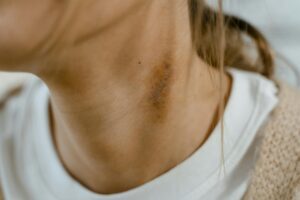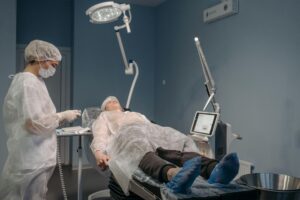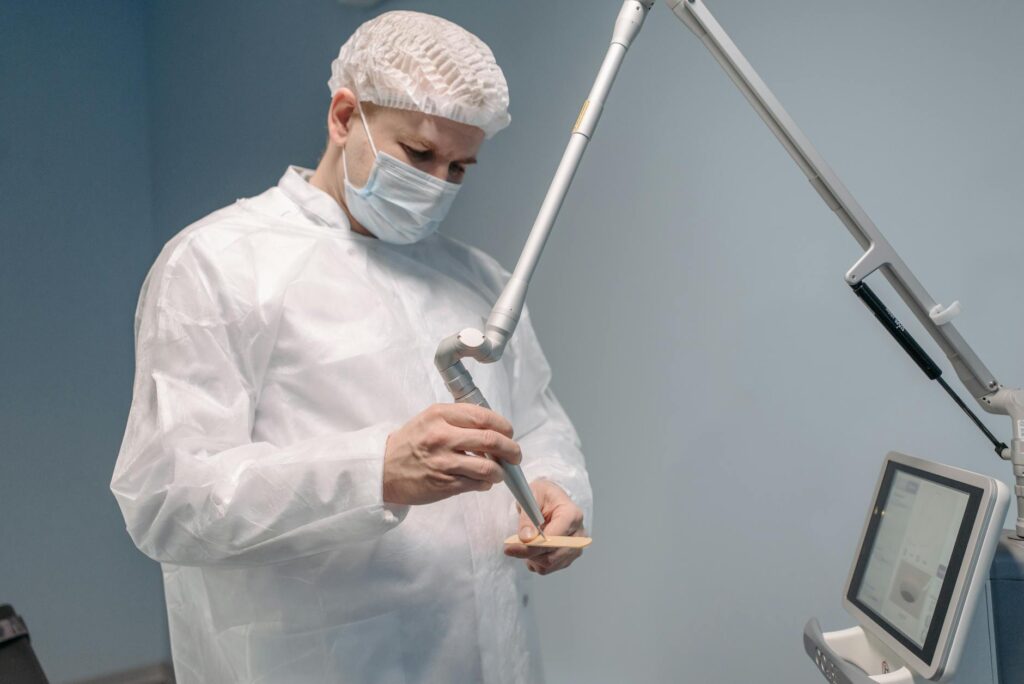
Test spots before laser treatment for acne scars involve applying the laser to a small, inconspicuous area of skin to assess how your skin will respond to the treatment before committing to your entire scar-prone areas. The dermatologist typically treats a section about the size of a postage stamp, usually hidden under clothing or hairline, then observes the healing process over days to weeks to check for complications like excessive redness, pigmentation changes, scarring, or unexpected reactions. This trial application helps your provider determine if the specific laser type, power settings, and wavelength are appropriate for your skin tone, scar depth, and healing capacity. The article covers why test spots matter, what happens during and after the procedure, how providers evaluate results, variations between laser types, and how the test spot findings guide your full treatment plan.
Table of Contents
- Why Are Test Spots Necessary Before Laser Acne Scar Treatment?
- What Physically Happens During a Test Spot Application?
- How Do Dermatologists Evaluate Test Spot Results?
- How Do Different Laser Types Affect Test Spot Outcomes?
- What Complications Can Test Spots Reveal Before Full Treatment?
- How Long Does a Test Spot Take to Heal?
- Moving Forward After Your Test Spot Heals
- Conclusion
- Frequently Asked Questions
Why Are Test Spots Necessary Before Laser Acne Scar Treatment?
Test spots serve as your skin‘s response card before committing to full treatment. Different skin tones react differently to laser energy—darker skin carries higher risks of post-inflammatory hyperpigmentation (darkening) and hypopigmentation (lightening), which is why test spots are particularly critical if you have medium to deep skin tones. Beyond skin tone, individual healing varies dramatically; two people with identical scars might show completely different results depending on their collagen production, inflammatory response, and whether they’re prone to keloid or atrophic scar formation. A test spot reveals whether your body will develop the desired collagen remodeling or instead over-correct with excessive collagen (creating raised scars) or under-correct by remaining flat.
Your dermatologist also uses test spots to calibrate the laser settings. Too much energy and you risk burns or permanent discoloration; too little and the treatment remains ineffective. For example, someone with very active skin and a history of hyperpigmentation might need lower pulse durations or fewer passes, while someone with sluggish healing might tolerate more aggressive settings. Without a test, your provider is essentially guessing at the ideal parameters for your unique skin physiology.
What Physically Happens During a Test Spot Application?
During a test spot, the dermatologist will cleanse your skin thoroughly, often apply a topical anesthetic or numbing cream (though the anesthetic strength might be reduced to see your true pain response), and then fire the laser in a small grid pattern over your test area. The sensation varies by laser type—some feel like rubber band snaps, others like mild stinging, and some feel like being touched with a hot object. The provider makes multiple passes over the same area, gradually building thermal energy, which is when you’ll see immediate effects like swelling, redness, or temporary darkening of the skin.
Immediately after, the area will be red, possibly with some edema (swelling), and you might see small crusts beginning to form depending on the laser type. The dermatologist applies soothing ointment, cooling pads, and often prescribes post-care instructions—typically avoiding sun exposure, wearing spf 50+, using gentle cleansers, and avoiding active skincare ingredients like retinoids for several days. However, different laser types require different aftercare; fractional ablative lasers (which remove the top layer of skin) need more intensive wound care than non-ablative options, which means your test spot aftercare might look quite different depending on which laser your dermatologist is testing.
How Do Dermatologists Evaluate Test Spot Results?
Your provider will schedule follow-up evaluations, typically at 1-2 weeks and again at 4-6 weeks, to see how your skin responded. They’re looking for several markers: the degree of scar improvement (did the texture flatten, did color normalize?), any adverse pigmentation changes that didn’t resolve quickly, signs of infection or delayed healing, and whether the treated area healed smooth or developed any unexpected texture changes. Some dermatologists use high-resolution photographs and specialized skin imaging tools to objectively measure changes in scar depth using 3D mapping technology, which removes guesswork from the evaluation.
If results look promising—meaning the scar improved without complications—your dermatologist will schedule your full treatment using the same or slightly more aggressive settings. If the test spot showed hyperpigmentation that persisted beyond 4 weeks, your provider might recommend waiting for additional fading or using hydroquinone or other depigmenting agents before proceeding. If you healed poorly or the treatment had no visible effect, your dermatologist might switch to a different laser type entirely, or decide that laser isn’t appropriate for your scar type. This is why test spots matter: they prevent expensive, painful treatments that won’t work for you or will create new problems worse than the original scars.

How Do Different Laser Types Affect Test Spot Outcomes?
Ablative CO2 and Er:YAG lasers vaporize skin tissue and create visible wounds, so test spots from these are obvious—you’ll see crusting, obvious redness, and a visible healing timeline. The advantage is that results appear quickly, often within 2-3 weeks, so you get clear feedback fast. The disadvantage is that test spots are uncomfortable, require diligent aftercare, and carry more risk of complications like scarring or pigmentation problems. If you have medium-to-dark skin and your dermatologist is testing an ablative laser, the test spot result is critically important because your risk of post-inflammatory hyperpigmentation is higher.
Non-ablative lasers like Nd:YAG, diode, or pulsed dye lasers don’t remove the top skin layer, so test spots look like mild sunburn or small bruises initially. These heal faster with fewer restrictions, but results take longer to appear—sometimes 3-4 months—which means your test spot evaluation period is longer and feedback is less obvious. Fractional lasers occupy a middle ground: fractional CO2 or fractional Nd:YAG treat the skin in columns, leaving untreated bridges of skin that speed healing compared to fully ablative treatment. A fractional laser test spot shows some crusting and visible healing but less dramatic than full ablation.
What Complications Can Test Spots Reveal Before Full Treatment?
Test spots can identify scarring risk before you expose your entire scar area. If your test spot develops raised, thickened scar tissue (hypertrophic scarring or keloids), this is critical information—it means your body over-corrects to injury, and aggressive laser treatment might make your scars worse. This is especially common in people with darker skin tones and a personal or family history of keloids. Finding this out on a small test spot means you’ve learned something crucial without ruining large areas of your face. Your dermatologist can then pivot to gentler approaches like topical treatments, subcision, or dermal fillers instead.
Test spots also reveal if you have a history of post-inflammatory hyperpigmentation (PIH) that extends far beyond the treated area. Some people develop PIH that spreads beyond the laser marks, which indicates your melanocytes are hyperreactive to inflammation. If this happens on your test spot and doesn’t resolve within 2-3 months, you’re likely to experience the same on full treatment. This means your provider should recommend preventive depigmentation, more conservative laser settings, or possibly deferring laser treatment altogether until you can take systemic measures like tranexamic acid or antioxidant supplements to calm inflammation. Conversely, some test spots show no complications whatsoever, which gives your dermatologist confidence to proceed.
How Long Does a Test Spot Take to Heal?
Healing time depends entirely on your laser type and skin response. Non-ablative test spots typically show significant redness and edema that peak at 24 hours and fade within 1-2 weeks, though subtle pinkness might persist for 4-6 weeks. Fractional laser test spots usually show crusting for 3-5 days, then rapid epithelialization by day 7-10, with residual redness lasting 2-4 weeks.
Fully ablative test spots look like small wounds for 5-10 days with heavy crusting, followed by pink healing skin for several weeks. What matters is that you’re observing your skin during these weeks to catch any signs of infection (yellow drainage, warmth, spreading redness), excessive swelling that suggests angioedema, or pigmentation changes that don’t match normal inflammatory response. Your dermatologist will tell you what’s normal for your specific test spot and when to call if something looks wrong. This observation period is part of the value of test spots: you get to see what post-laser healing looks like on your own skin before committing to full treatment.
Moving Forward After Your Test Spot Heals
Once your test spot heals and you’re both satisfied with the results, scheduling your full treatment is straightforward, though your dermatologist might choose to space treatments out. Many providers do full treatment in sessions spaced 4-6 weeks apart rather than treating everything at once, especially with more aggressive lasers. This allows your skin time to remodel collagen between sessions and gives you time to assess your cumulative response.
If you’re treating multiple scar types on one face—say, a combination of depressed boxcar scars, rolling scars, and some hypertrophic scars—your dermatologist might combine laser with other treatments like subcision or dermal fillers based on what the test spot revealed. A test spot on a rolling scar might show excellent response to ablative laser, but the same test spot on a deeply depressed scar might show minimal improvement, which would prompt your provider to recommend combining laser with filler. This adaptability based on test spot information is what makes them invaluable for creating treatment plans that actually work.
Conclusion
Test spots before laser treatment for acne scars are a small investment that yields critical information about how your skin will respond to the specific laser your dermatologist is considering. They reveal whether your skin type tolerates the treatment well, what complications might emerge, how fast you heal, and whether the scar improvement justifies the procedure. Rather than committing to weeks of intensive treatment and recovery only to discover you’re prone to persistent hyperpigmentation or poor healing, a test spot answers these questions on a postage-stamp-sized area.
If your dermatologist recommends a test spot, view it as a collaboration in developing your ideal scar treatment plan. Ask them specifically what they’re looking for during the healing period, when they want to see you for follow-up, and what results would indicate you’re a good candidate for full treatment. Write down the laser type, settings used on your test spot, and any complications or excellent responses—this documentation helps if you ever seek treatment elsewhere or need to adjust your full treatment plan down the road.
Frequently Asked Questions
Will my test spot leave a permanent scar?
No, test spots are deliberately placed in inconspicuous areas and use the same laser settings you’d receive for full treatment—so if the laser is safe enough to treat your face, it’s safe enough for a test spot. Your test spot will fade like the rest of your treatment area.
How much does a test spot cost?
This varies widely. Some dermatologists include test spots as part of their consultation and don’t charge separately. Others charge a discounted rate ($50-200) that’s applied toward your full treatment cost. Ask upfront so there are no surprises.
Can I do a test spot before deciding between different laser types?
Yes, this is actually an excellent approach. Some dermatologists will do test spots with two different lasers on nearby areas, then let you compare the healing and results to decide which works better for you. This takes more time but removes guesswork.
What should I do if my test spot healed poorly?
Contact your dermatologist immediately. They might recommend waiting and reassessing, trying a different laser type, or exploring non-laser alternatives like chemical peels, microneedling, or dermal fillers. Poor test spot healing doesn’t mean you can’t treat your scars—it just means you need a different approach.
How long after a test spot can I get my full treatment?
Most dermatologists want to wait at least 4-6 weeks after a test spot to do full treatment. This allows complete healing and lets you and your provider fully assess the long-term results. Rushing into full treatment before test spot evaluation is complete defeats the purpose.
Can I do a test spot on a scar that’s currently healing from other treatment?
No, your dermatologist will want your skin to be in a stable state before testing. If you’re currently treating scars with microneedling, chemical peels, or other modalities, you’ll need to finish that course and let your skin fully recover before any laser test spot.