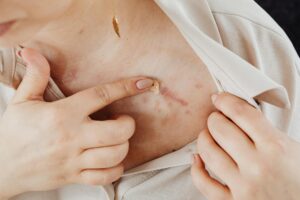
Raised acne scars affect millions dealing with post-acne skin concerns, leaving behind thickened, bumpy reminders that can dent confidence and complicate skincare routines. These hypertrophic scars form when excess collagen builds up during healing, creating elevated patches often on the cheeks, jawline, or forehead.
Silicone sheets have emerged as a go-to non-invasive treatment, backed by clinical studies showing they flatten, soften, and fade these scars without surgery or downtime. In this article, you will learn the science of how silicone sheets target raised acne scars, evidence from large-scale research, step-by-step application for facial use, and expert strategies to maximize results. Whether your scars are fresh or years old, understanding silicone sheets empowers you to integrate them into your acne skincare regimen for smoother, more even skin.
Table of Contents
- How Do Silicone Sheets Work on Raised Acne Scars?
- What Does the Research Say?
- Benefits Specific to Acne Scars
- Potential Side Effects and Limitations
- Comparing Silicone Sheets to Gels and Other Treatments
- How to Apply This
- Expert Tips
- Conclusion
- Frequently Asked Questions
How Do Silicone Sheets Work on Raised Acne Scars?
Silicone sheets create a thin, flexible barrier over the scar, mimicking the skin's outer layer to lock in moisture and regulate temperature. This hydration reduces capillary activity, edema, and overactive fibroblasts that deposit excess collagen, leading to flatter scars.
For acne scars specifically, the sheets prevent further thickening by normalizing collagen production and softening rigid tissue. Studies confirm this mechanism applies to facial hypertrophic scars from acne, with one review of 27 trials involving 1,847 patients showing significant reductions in scar height and redness. The semi-occlusive design allows oxygen exchange while trapping water, promoting a healing environment that eases itching and strain common in acne scar tissue.
- Reduces scar thickness by 40-50% with consistent use, as seen in acne-specific gel trials adaptable to sheets.
- Improves color and elasticity, with patient-reported drops in cosmetic burden from 6.1 to 4.5 points.
- Suppresses excessive collagen via occlusion, bringing scar elasticity closer to normal skin.
What Does the Research Say?
A large prospective study of 224 patients with hypertrophic scars, including those akin to raised acne marks, found silicone sheets significantly improved color, thickness, and elasticity after at least three months of use. Best outcomes occurred with four or more hours daily, regardless of scar age, though starting within three months yielded optimal results.
Dermatologist insights and systematic reviews endorse silicone sheets as the top non-surgical option per 2016 International Scar Management Guidelines, with low side effects and high patient satisfaction. For acne, one study noted 40-50% thickness reduction after eight weeks of twice-daily silicone application, effective on facial skin.
- Supported by decades of data on hypertrophic scars, including acne-related ones, reducing height, redness, and symptoms like itch.
- Effective on both new and mature scars, with 82% completion rate and minimal irritation in trials.
Benefits Specific to Acne Scars
Silicone sheets excel for raised acne scars by targeting hypertrophy without aggravating active breakouts once healed. They hydrate to prevent water loss, reduce tension on fragile facial skin, and protect against bacteria, fostering even texture ideal for acne-prone areas.
Patients report less pain, straining, and cosmetic distress, with scars appearing lighter and softer. Unlike lasers or fillers, sheets are painless, noninvasive, and suitable for daily skincare integration, making them practical for long-term acne scar management.
- Flattens elevated acne marks, improving overall facial appearance and confidence.
- Minimal side effects like mild itching in 11%, far safer than invasive options.

Potential Side Effects and Limitations
While generally safe, silicone sheets can cause itching or skin irritation in about 11% of users, often resolving with proper cleaning. Adhesion issues arise on oily or sweaty facial skin, leading to 12% reporting inconvenience, though this improves with technique.
They work best on raised hypertrophic scars, not depressed atrophic acne scars or hyperpigmentation. Results vary by consistency; under four hours daily limits efficacy, and discontinuation happens in 18% due to lack of quick visible change or side effects. Not ideal over active acne—wait for full healing.
Comparing Silicone Sheets to Gels and Other Treatments
Silicone sheets and gels perform similarly for raised acne scars, both hydrating and occluding effectively, with no superior efficacy in trials. Sheets suit larger facial areas for all-day wear, while gels fit contours better but require reapplication.
Compared to lasers or microneedling, sheets are cheaper, non-invasive, and first-line per guidelines, though slower. Sunscreen pairs well to prevent darkening, enhancing outcomes without added cost.
How to Apply This
- Cleanse the scar area gently with a mild, non-comedogenic cleanser and pat dry completely—moisture interferes with adhesion.
- Cut the silicone sheet to fit the raised acne scar precisely, ensuring full coverage without wrinkles.
- Apply to dry skin, pressing firmly for 10-15 seconds; wear 4-12 hours daily or overnight if tolerable on face.
- Remove gently, wash the sheet with mild soap, air-dry, and reuse up to 30 days or per product instructions; reapply after skincare routine.
Expert Tips
- Start as soon as acne wounds fully epithelialize, ideally within 48 hours to 3 weeks, for prevention.
- Combine with broad-spectrum sunscreen daily, as UV worsens scar visibility.
- For oily skin, powder edges lightly or use medical tape to secure without residue.
- Track progress with photos every two weeks; persist 8-12 weeks minimum for measurable flattening.
Conclusion
Silicone sheets offer a reliable, evidence-based path to smoother skin from raised acne scars, transforming bumpy reminders into faint lines through consistent hydration and protection. With significant improvements in texture, color, and comfort backed by robust studies, they fit seamlessly into acne skincare without hassle or high risk.
Incorporating them early and correctly maximizes benefits, often rivaling pricier treatments. Consult a dermatologist for personalized advice, especially with keloid-prone skin, to reclaim even-toned confidence.
Frequently Asked Questions
How long until I see results from silicone sheets on acne scars?
Noticeable flattening and softening start in 4-8 weeks with 4+ hours daily use; full benefits take 3-6 months.
Are silicone sheets safe for facial acne scars?
Yes, they are non-invasive with few side effects like mild itching; safe post-healing on most skin types.
Can silicone sheets prevent new raised acne scars?
Yes, applying soon after healing reduces thickening risk by normalizing collagen early.
Do silicone sheets work on old acne scars?
Effective even on scars over 12 months, though fresher ones respond faster.