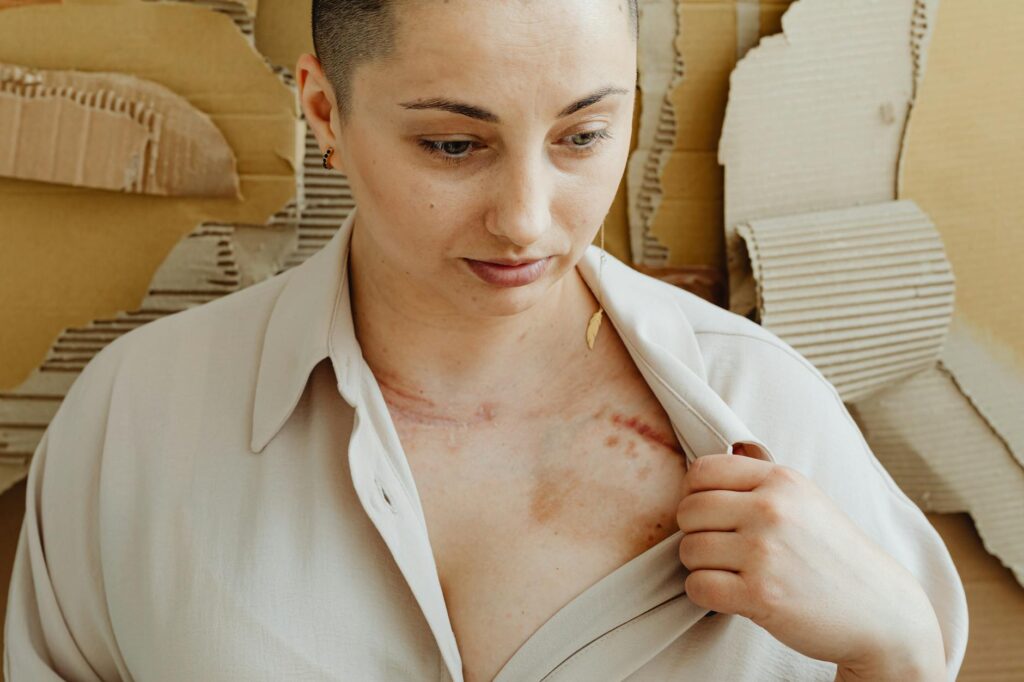
Scar tissue hardness is one of the most reliable indicators a dermatologist can assess to determine your treatment plan. The stiffness of scar tissue directly correlates with the severity of the scar—harder scars indicate higher collagen density and reduced elasticity, which means the scar has matured into a more structured form that requires different treatment approaches than softer, more recent scars. When a dermatologist examines a scar and feels it’s firm or rigid, they’re gathering critical information: this scar will likely respond better to certain laser treatments, injections, or mechanical therapies rather than others.
For example, a hard, raised keloid scar will require different intervention than a soft, depressed atrophic scar, and the hardness itself tells the dermatologist exactly why one treatment works while another won’t. This article explores what scar tissue hardness reveals about your scar’s biology, how dermatologists measure it, and most importantly, how that measurement directly shapes your personalized treatment strategy. Understanding scar hardness empowers you to have informed conversations with your dermatologist about why they’re recommending specific procedures and what to expect from treatment.
Table of Contents
- How Dermatologists Measure Scar Tissue Hardness
- What Scar Hardness Reveals About Scar Severity and Treatment Response
- Clinical Assessment Scales That Dermatologists Use to Rate Scar Hardness
- Treatment Options Specifically Selected Based on Scar Hardness Assessment
- Advanced Technologies and the Reality of Measuring Scar Stiffness
- Emerging Innovations Using Real-Time Hardness Feedback During Treatment
- What Scar Hardness Assessment Means for Your Long-Term Treatment Strategy
- Conclusion
How Dermatologists Measure Scar Tissue Hardness
Dermatologists assess scar hardness using a technique called tonometry, which involves applying pressure to the skin and measuring how much the tissue resists that pressure. This simple clinical assessment provides surprising insight into the scar’s internal structure. However, beyond the hands-on evaluation, modern dermatology increasingly relies on objective measurement tools that quantify hardness with precision. Shear wave elastography (SWE) is one of the most advanced methods, measuring how quickly sound waves travel through scar tissue—stiffer tissue causes waves to move faster. Dermatologists calculate an elastic modulus value using the formula E = 3ρC², which gives them a numerical score representing the exact stiffness of the scar tissue.
This isn’t guesswork; it’s measurable data that directly informs treatment selection. The Vesmeter device represents another breakthrough in scar assessment. Unlike older tools that provided only subjective impressions, the Vesmeter digitally measures both the hardness and elasticity of keloids and hypertrophic scars, recording data that can be tracked over time to monitor treatment progress. This is particularly valuable for patients undergoing multiple treatment sessions—your dermatologist can show you that the scar is actually becoming softer with each procedure, even if visual improvement hasn’t fully caught up yet. Non-invasive imaging techniques like optical coherence tomography (OCT) and high-frequency ultrasound (HFUS) provide additional layers of information about structural and physiological changes in the skin, allowing dermatologists to map scar tissue in microscopic detail.
What Scar Hardness Reveals About Scar Severity and Treatment Response
The correlation between scar hardness and severity is consistent: harder scars are clinically more severe, with greater collagen deposition and more organized fibrous structure. This matters because harder scars have fundamentally different healing biology than soft scars. A soft scar that appeared several months ago is still in active remodeling—collagen is still being deposited and reorganized, and the scar’s properties can still change significantly with time or treatment. A hard scar, by contrast, has often moved into a more stable state where collagen has already densified and cross-linked extensively.
However, this hardness doesn’t mean the scar is hopeless; it actually means your dermatologist can predict treatment response more accurately. The hardness of a scar is influenced by biomechanical forces—tension at the wound site during healing, mechanical pressure applied afterward, and the inherent stiffness of surrounding tissue all shape how much collagen deposits and how it organizes. This is why surgical scars over joints, which experience constant movement and tension, tend to become harder and more problematic than scars on the back or chest, where tension is minimal. When your dermatologist feels a hard scar, they’re assessing not just current damage but the forces that created it. This insight helps them decide whether your treatment needs to include ongoing tension management (like pressure garments or taping) alongside other interventions.
Clinical Assessment Scales That Dermatologists Use to Rate Scar Hardness
Dermatologists don’t assess scar hardness in isolation; they use standardized scales that incorporate hardness alongside other scar characteristics to create a comprehensive picture. The Vancouver Scar Scale, developed in 1990, uses a semi-quantitative approach to measure appearance, pigmentation, vascularity, and pliability (which relates directly to hardness). This remains one of the most widely used tools in clinical practice because it’s quick, reliable, and correlates well with treatment outcomes. The Japanese Scar Scale, revised in 2015, takes a different approach—it includes separate classification tables for different scar types (normal, hypertrophic, or keloid) and assesses how tissue responds to treatment, making it especially useful for tracking progress over multiple sessions.
The POSAS 3.0 (Patient and Observer Scar Assessment Scale) includes hardness as a specific parameter that patients rate themselves on a scale from 1 (normal skin) to 5 (worst imaginable scar). This gives dermatologists insight into not just what the scar looks like objectively, but how it feels to the person living with it—a hard scar that feels restrictive or uncomfortable may require more aggressive treatment than a hard scar that’s purely cosmetic. The Manchester Scar Scale similarly evaluates texture on a range from normal to hard, providing dermatologists with another standardized way to document and compare scars over time. What these scales have in common is that hardness isn’t an afterthought—it’s a core component of how dermatologists classify scars and determine severity.
Treatment Options Specifically Selected Based on Scar Hardness Assessment
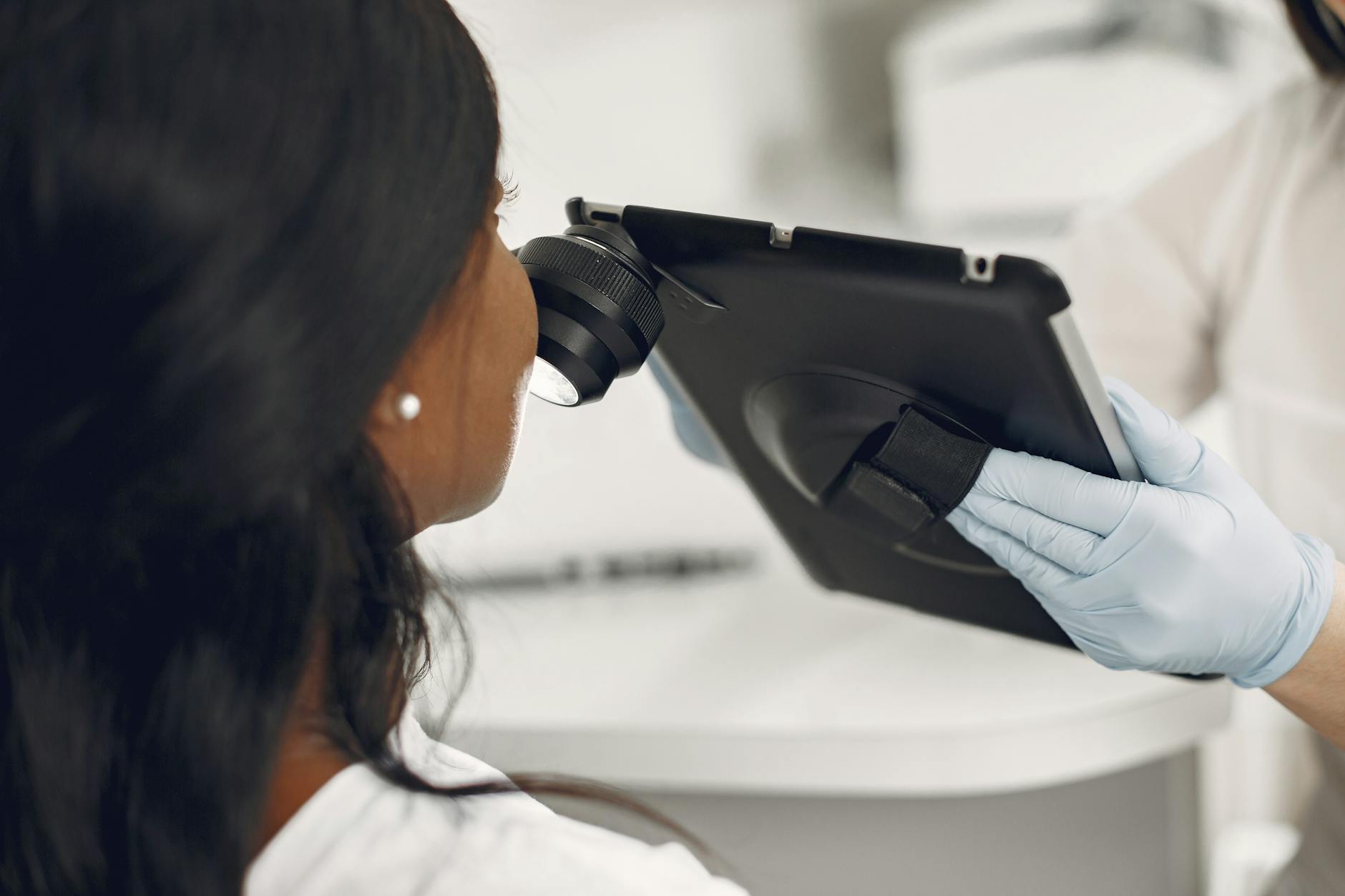
Once a dermatologist measures your scar’s hardness, they use that information to select from a menu of evidence-based treatments. Softer scars and early-stage scars often respond well to silicone gel products, which work by reducing the size, hardness, redness, and swelling of raised scars. Silicone reduces both the visual appearance and the physical stiffness of the scar tissue, making it a good first-line option when hardness is mild to moderate. For harder scars, particularly those that developed years ago, silicone alone may not be sufficient—your dermatologist might recommend more aggressive interventions like fractional laser therapy, which uses controlled injury to stimulate remodeling of the dense collagen beneath the scar’s surface.
Pressure therapy is another hardness-based decision point. If your scar is becoming hard because of ongoing tension or inflammation during the healing phase, pressure garments or compression tape can reduce or prevent the scar from hardening further. This is especially important for burn scars or large surgical wounds, where pressure therapy can actually prevent the scar from becoming hard and restrictive in the first place. However, if a scar has already hardened substantially, pressure alone won’t soften it—it becomes a maintenance tool to prevent worsening rather than a primary treatment. Your dermatologist weighs these factors when recommending pressure therapy, considering both the current hardness of the scar and the likelihood of further progression.
Advanced Technologies and the Reality of Measuring Scar Stiffness
The technology for measuring scar hardness has evolved dramatically, but there’s an important limitation to understand: not all dermatology offices have access to shear wave elastography or Vesmeter devices. Many dermatologists still rely primarily on clinical examination and tactile assessment because these tools are expensive and require specialized training. This doesn’t mean your treatment will be inadequate—experienced dermatologists develop excellent intuition about scar hardness through years of practice.
However, if you have a complex scar where understanding exact tissue stiffness might influence treatment decisions, asking whether your dermatologist has access to objective measurement tools is a reasonable question. Another consideration: measuring scar hardness provides data, but it doesn’t automatically determine the “best” treatment. A very hard, old scar might be a candidate for fractional laser treatment, but if the scar is also on your chest or neck where scarring from laser treatment could be problematic, your dermatologist might recommend a more conservative approach despite the objective hardness measurement. Dermatologists integrate scar hardness data with information about your skin type, the scar’s location, the scar’s age, your healing history, and your personal goals to create a plan that’s customized to you specifically, not just to the scar’s measured stiffness.
Emerging Innovations Using Real-Time Hardness Feedback During Treatment
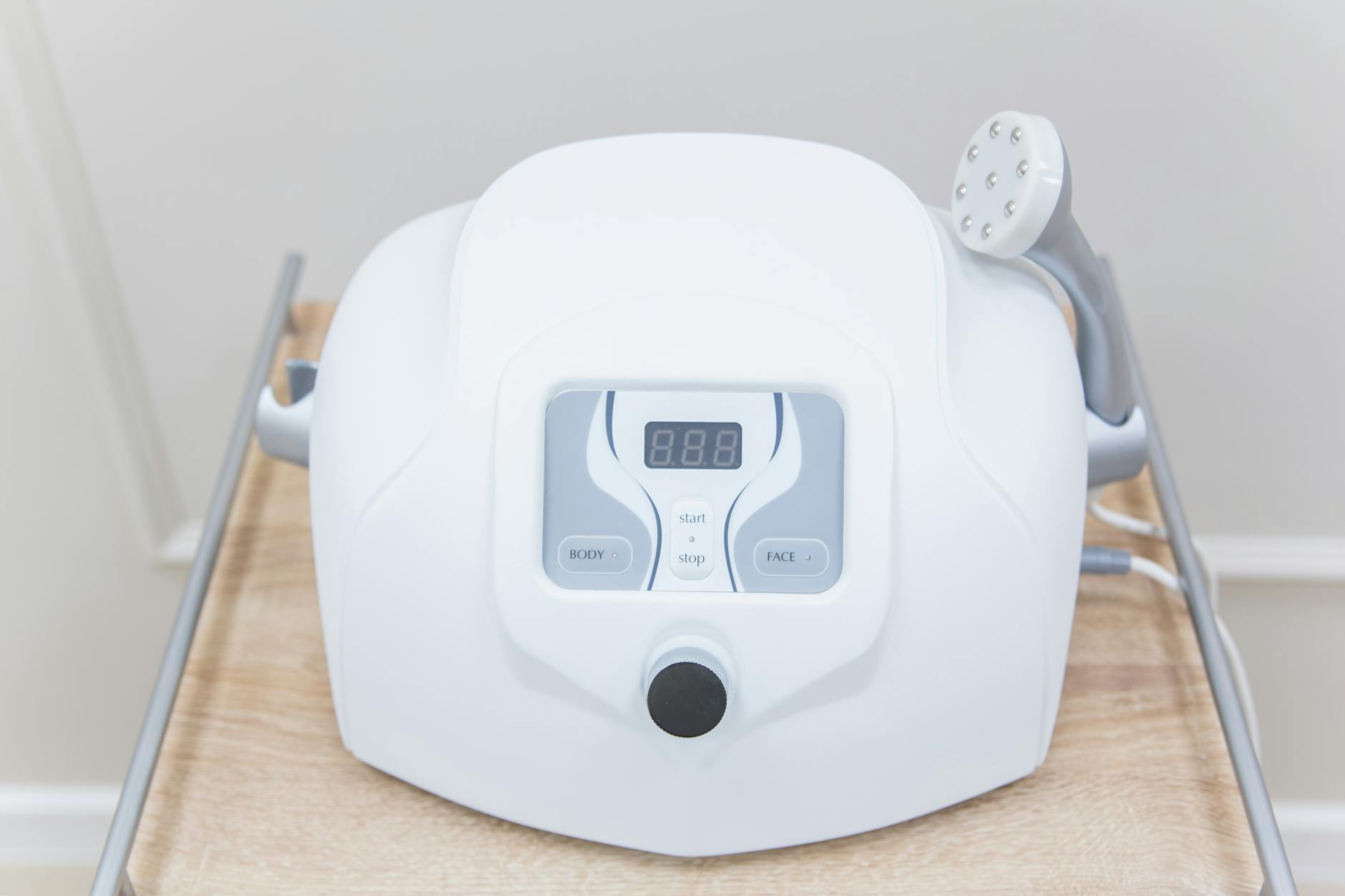
Recent innovations in scar treatment leverage real-time hardness mapping to optimize therapy. Newer fractional laser devices use advanced feedback technology to map scar tissue in microscopic detail during treatment, allowing the laser to adjust energy delivery dynamically based on the scar’s specific depth, density, and hardness in different areas. A scar isn’t uniform—some zones might be harder than others, and these new devices respond to those variations by delivering treatment that’s customized across the scar’s surface.
This represents a significant step forward from older laser systems that applied uniform energy regardless of how hardness varied. Hybrid treatment platforms anticipated for 2026 combine fractional laser with radiofrequency microneedling in a single system, allowing treatment of raised scars, indented scars, and mixed-type scars (which have both hard raised areas and soft depressed areas) in one session. These systems adjust their approach in real time based on feedback about tissue hardness and response, making them particularly effective for complex scars that have been hard to treat with single-modality approaches. Focused ultrasound devices represent another innovation specifically designed to target scar firmness by delivering energy deep into hard, restrictive scar tissue to soften tight areas—particularly valuable for surgical and traumatic scars that have created functional limitation alongside cosmetic concerns.
What Scar Hardness Assessment Means for Your Long-Term Treatment Strategy
Understanding scar hardness helps you think about treatment not as a single procedure but as part of a potential longer-term strategy. A scar that measures as moderately hard might respond well to a single laser treatment session, while a very hard, mature scar might benefit from multiple sessions spaced several months apart, allowing the tissue to partially soften between treatments. Your dermatologist’s assessment of hardness helps set realistic expectations—they can explain, for instance, that your scar is hard enough that you might see 50-70% improvement rather than complete resolution, and that’s based on the tissue properties they’ve measured, not a guess.
Looking forward, the integration of objective hardness measurement into routine scar assessment promises more personalized treatment plans. As devices like Vesmeter become more accessible and AI-assisted analysis of imaging data improves, dermatologists will be able to tailor treatment intensity, technique selection, and treatment intervals based on precise understanding of each patient’s scar tissue properties. This shift from subjective assessment to measurable, data-driven treatment planning is already underway at leading dermatology centers and will likely become standard practice over the next few years.
Conclusion
Scar tissue hardness is not a minor detail in your dermatologist’s assessment—it’s a fundamental marker that determines which treatments will work, predicts how well you might respond, and shapes the timeline and intensity of your treatment plan. By measuring hardness through tactile assessment, tonometry, or advanced imaging, your dermatologist gathers critical information about your scar’s internal structure, age, and treatment potential. A hard scar tells a very different story than a soft one, and that story guides every treatment recommendation your dermatologist makes.
When you meet with your dermatologist about a scar, asking them specifically what they’ve learned about the scar’s hardness—and what that means for your treatment options—is a sign of engaged, informed decision-making. If they mention specific measurement tools or assessment scales, that’s a positive indicator that they’re thinking systematically about your scar rather than treating it generically. Understanding that hardness matters, and why it matters, positions you to have better conversations with your dermatologist and to set realistic expectations for what treatment can achieve.