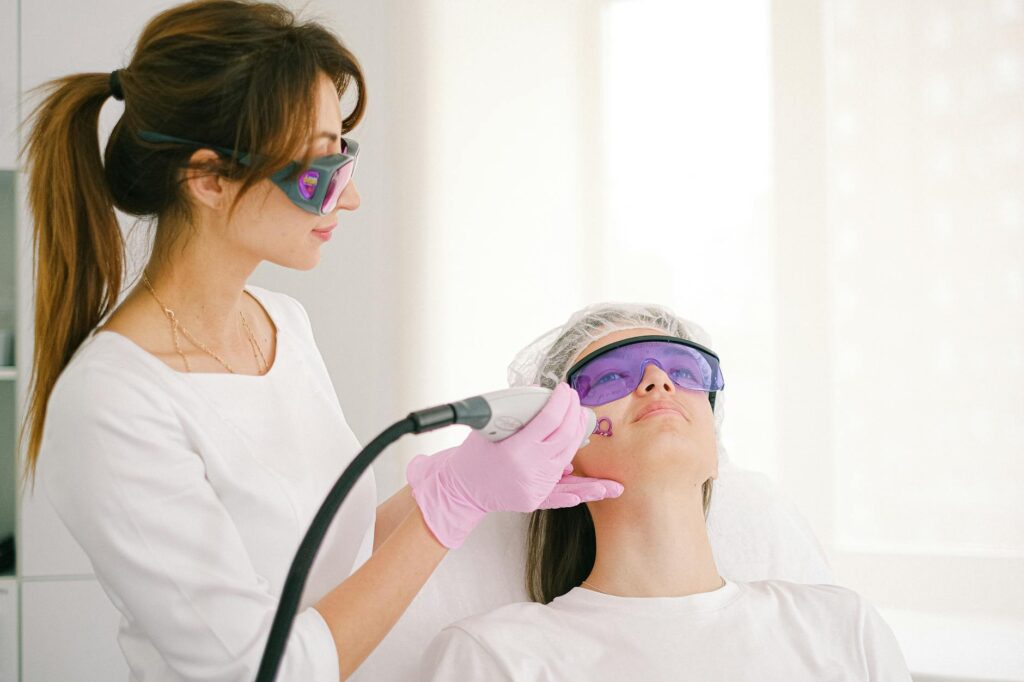
When choosing a dermatologist for acne scars, the most important questions to ask center on three areas: their specific experience treating your type of scarring, which treatment modalities they offer in-house, and what realistic outcomes look like for your skin type and scar severity. A question like “How many patients with atrophic acne scarring have you treated in the past year?” will tell you far more than checking their general credentials. Someone who primarily manages active acne breakouts may not have deep expertise in scar revision, which is a distinct subspecialty that combines elements of dermatology, laser medicine, and sometimes surgical technique. If a provider cannot clearly explain the difference between treating an icepick scar and a rolling scar, that alone is a reason to keep looking. Beyond experience, you need to understand their treatment philosophy.
Some dermatologists lean heavily on a single device they have invested in, while others take a multimodal approach, combining fractional lasers with subcision, fillers, or chemical peels depending on what each scar actually needs. This article walks through the specific questions that separate a skilled acne scar specialist from a generalist, covering credentials and training, treatment options and technology, consultation red flags, cost transparency, what to expect during recovery, how skin tone affects treatment selection, and how to evaluate before-and-after evidence. The stakes are real. Acne scar treatments are expensive, often not covered by insurance, and some procedures carry risks of hyperpigmentation or worsening scars if performed incorrectly, particularly on darker skin tones. Asking the right questions upfront is the single best way to protect both your skin and your wallet.
Table of Contents
- What Credentials and Training Should You Ask About When Choosing a Dermatologist for Acne Scars?
- Which Treatment Options Should a Qualified Acne Scar Dermatologist Offer?
- How to Evaluate Before-and-After Photos and Patient Results
- Understanding Costs, Sessions, and What Insurance Will and Will Not Cover
- Questions About Risks, Side Effects, and Skin Tone Considerations
- Red Flags During the Consultation Process
- How Acne Scar Treatment Is Evolving and What to Ask About Newer Options
- Conclusion
- Frequently Asked Questions
What Credentials and Training Should You Ask About When Choosing a Dermatologist for Acne Scars?
Start with board certification, but do not stop there. A board-certified dermatologist has completed an accredited residency, but acne scar treatment is not a major focus of most residency programs. What matters more is post-residency training: fellowships in procedural dermatology or laser medicine, continuing education in scar revision techniques, and hands-on experience with the specific devices they plan to use on your skin. Ask directly, “Where did you receive your training in scar revision, and how often do you perform these procedures?” A dermatologist who does fractional laser resurfacing twice a month is in a fundamentally different position than one who does it twice a week. Compare this to how you might choose a surgeon. You would not pick a general surgeon for a complex knee reconstruction just because they have a medical license.
The same principle applies here. Procedural dermatology for scarring requires a specific skill set. Look for membership in organizations like the American Society for Dermatologic Surgery, which indicates at least a baseline commitment to procedural work. However, membership alone is not proof of expertise, so pair that with direct questions about case volume and outcomes. One useful question that many patients overlook: “Do you attend conferences or training sessions focused on scar treatment, and if so, which ones?” Dermatologists who stay current with evolving techniques, such as radiofrequency microneedling or platelet-rich plasma protocols, tend to be more invested in this area of practice. If a provider seems uncomfortable discussing their training specifics or deflects with vague answers about years in practice, treat that as a signal, not a reassurance.

Which Treatment Options Should a Qualified Acne Scar Dermatologist Offer?
Ask what treatments are available in their practice and, just as importantly, which ones they would not recommend for your particular scars. A well-equipped acne scar practice typically offers several modalities: fractional ablative lasers like CO2 or erbium, non-ablative fractional lasers, microneedling with or without radiofrequency, chemical peels at varying depths, subcision for tethered scars, dermal fillers for volume loss, and sometimes punch excision or grafting for deep icepick scars. If a practice only has one laser and presents it as the solution for every type of scarring, that is a limitation worth understanding before you commit. The critical follow-up question is, “Why are you recommending this specific treatment plan for my scars?” A thoughtful dermatologist will explain that your rolling scars might benefit from subcision combined with fractional laser, while the boxcar scars on your temples might respond better to TCA CROSS, a technique using high-concentration trichloroacetic acid applied directly into individual scars.
They should be able to articulate why they are choosing one approach over another based on your scar morphology, not just defaulting to whatever device they most recently purchased. However, if your scarring is mild and mostly textural, an aggressive ablative laser may be overkill, introducing unnecessary downtime and risk. A provider who recommends the most intensive, and most expensive, option without discussing graduated alternatives is prioritizing something other than your best outcome. Conversely, if you have deep, tethered scarring and a provider suggests only topical treatments or superficial peels, they may lack the procedural capability to address your actual problem. The right dermatologist matches the intensity of the intervention to the severity of the scars.
How to Evaluate Before-and-After Photos and Patient Results
Ask to see before-and-after photographs of patients with scarring similar to yours, and pay close attention to how those photos are presented. Consistent lighting, the same angle, and similar time intervals between shots are signs of honest documentation. If every after photo is taken under dramatically different lighting or at a flattering angle, the results may look better in pictures than they do in person. Ask what the time gap is between the photos. Results photographed three months post-treatment may look quite different from results at twelve months, and some improvements from collagen remodeling continue to develop for up to a year. A specific question worth asking: “Can you show me results for a patient with a similar skin type and scar pattern to mine?” This matters because outcomes vary significantly based on Fitzpatrick skin type.
A provider might have impressive results on lighter skin but limited experience managing the hyperpigmentation risks that come with treating darker skin tones. If they cannot show you results on someone who looks like you, that is important information, not necessarily disqualifying, but worth factoring into your decision. Also ask about the patients who did not get ideal results. Any honest dermatologist has cases where the improvement was modest or where a complication occurred. A provider who claims a perfect track record is either not doing enough procedures to encounter complications or is not being transparent. The question “What is the most common reason patients are dissatisfied after treatment?” reveals far more about a practice than curated highlight reels.
Understanding Costs, Sessions, and What Insurance Will and Will Not Cover
Acne scar treatment is almost always classified as cosmetic, which means insurance will not cover it. There are rare exceptions, such as scars resulting from a documented medical condition that impairs function, but for the vast majority of patients, this is an out-of-pocket expense. Ask for a full cost estimate that includes the number of sessions anticipated, any pre-treatment products you will need to purchase, and post-treatment care costs. A single session of fractional CO2 laser can range from eight hundred to three thousand dollars depending on the area treated and the geographic market. Microneedling sessions are typically less expensive per session but may require more treatments to achieve comparable results. The tradeoff between cost per session and number of sessions is worth exploring directly.
For example, ablative fractional laser treatments are more aggressive, often producing noticeable improvement in fewer sessions, but each session costs more and involves significant downtime, usually seven to ten days of visible redness and peeling. Non-ablative treatments and microneedling are gentler with less downtime, making them easier to fit into a work schedule, but you might need four to six sessions spaced four to six weeks apart to see meaningful change. Ask your dermatologist to lay out both pathways and their total estimated costs so you can make a decision that fits your budget and your life. Be wary of practices that push financing plans or package deals before you have even had a proper evaluation. A rushed financial conversation before a thorough clinical assessment suggests the practice may be more sales-driven than outcomes-driven. A reputable dermatologist will assess your scars, discuss realistic expectations, outline a treatment plan, and then talk money, in that order.
Questions About Risks, Side Effects, and Skin Tone Considerations
Every acne scar treatment carries risks, and the most important question you can ask is, “What are the specific risks for someone with my skin type?” Post-inflammatory hyperpigmentation, where treated areas darken temporarily or sometimes permanently, is a significant concern for patients with medium to dark skin tones, generally Fitzpatrick types III through VI. Some laser wavelengths are more dangerous for darker skin because they target melanin along with water, increasing the chance of burns or pigment changes. A dermatologist who does not proactively address this, or who uses the same laser settings regardless of skin tone, is a dermatologist to avoid. Ask about their pre-treatment protocols for managing pigmentation risk. Many experienced providers will prescribe a course of hydroquinone or other lightening agents for several weeks before laser treatment in patients prone to hyperpigmentation. They may also recommend specific post-procedure regimens and strict sun avoidance schedules.
If the answer to “How do you minimize hyperpigmentation risk?” is vague or dismissive, that is a warning sign, particularly if you have darker skin. The consequences of getting this wrong can last months or longer and may be more distressing than the original scarring. Beyond pigmentation, ask about the risk of scarring from the treatment itself. This sounds paradoxical, but overly aggressive settings on ablative lasers or improper microneedling technique can create new scars or worsen existing ones. Ask how they determine the appropriate energy settings, and whether they start conservatively with the option to intensify in subsequent sessions. A cautious, incremental approach is almost always safer than a maximally aggressive first treatment, even if it means more visits.

Red Flags During the Consultation Process
Pay attention to whether the dermatologist examines your scars under proper lighting and ideally with magnification before making recommendations. A provider who glances at your face from across the room and immediately prescribes a treatment plan has not done an adequate assessment. Acne scars come in distinct types, including icepick, boxcar, rolling, and hypertrophic or keloidal, and each responds differently to treatment. A thorough consultation involves mapping your scars by type and depth, often using side lighting or a Wood’s lamp.
If you are told “we will just laser everything” without this level of evaluation, consider it a red flag. Another signal worth noting is how the practice handles the consultation itself. Increasingly, initial assessments are conducted by aestheticians, physician assistants, or nurse practitioners rather than the dermatologist who will actually perform the procedure. There is nothing inherently wrong with a team-based approach, but you should meet and speak directly with the person who will be operating the laser or performing subcision on your skin before you agree to treatment. Ask, “Will you personally be performing the procedure, or will it be delegated to someone else?” The answer matters.
How Acne Scar Treatment Is Evolving and What to Ask About Newer Options
The field of acne scar treatment has changed substantially in the past five years, and it continues to evolve. Radiofrequency microneedling devices like Morpheus8 and Genius have gained traction because they deliver energy beneath the skin’s surface without the same surface-level damage as traditional ablative lasers, which can make them safer for a broader range of skin tones. Platelet-rich plasma, used alongside microneedling, has shown some promise in accelerating healing and potentially improving outcomes, though the evidence is still building. Ask your dermatologist whether they have experience with these newer modalities and what their clinical impression has been compared to established approaches.
It is also worth asking whether they see a role for combination protocols that sequence different treatments over time, say, starting with subcision to release tethered scars, followed by a series of radiofrequency microneedling sessions, and finishing with a superficial peel for texture refinement. The trend in the field is moving away from monotherapy and toward customized multi-step treatment plans. A dermatologist who thinks in terms of treatment sequences rather than single procedures is generally better positioned to address complex scarring. That said, newer does not always mean better, and a provider who pushes the latest device without being able to cite their own results or published data is selling novelty, not expertise.
Conclusion
Choosing a dermatologist for acne scars comes down to asking specific, pointed questions and listening carefully to how they are answered. The right provider will have demonstrable experience with your scar type and skin tone, offer multiple treatment options rather than a one-size-fits-all approach, show you honest before-and-after documentation, and discuss risks and limitations without defensiveness. They will give you a clear treatment plan with realistic timelines and transparent pricing before you commit to anything.
Do not rush this decision. Schedule consultations with at least two or three providers, bring a written list of questions, and compare not just their answers but how those answers make you feel. A dermatologist who takes time to educate you, who acknowledges what treatment cannot achieve, and who tailors their recommendations to your specific scars and skin is worth the search. Your skin will carry the results of this choice for years, so invest the time now to get it right.
Frequently Asked Questions
How many sessions does acne scar treatment usually take?
It depends on the type and severity of scarring, but most patients need three to six sessions for meaningful improvement with non-ablative treatments or microneedling. Ablative fractional laser may produce visible results in one to three sessions but with longer recovery between each. Deep icepick scars often require a combination approach over several months.
Can a general dermatologist treat acne scars, or do I need a specialist?
A general dermatologist can manage mild textural irregularities, but moderate to severe scarring benefits from a provider with specific procedural training in scar revision. Not all board-certified dermatologists have the same level of experience with lasers, subcision, or combination protocols. Ask about their case volume before assuming general board certification equals scar treatment expertise.
Is microneedling or laser better for acne scars?
Neither is universally better. Microneedling is generally safer across skin tones and has less downtime, but ablative fractional lasers can produce more dramatic improvement per session for certain scar types. Many experienced dermatologists use both at different stages of treatment. The best choice depends on your scar type, skin tone, tolerance for downtime, and budget.
At what age should I start treating acne scars?
You can begin scar treatment once active acne is well controlled, regardless of age. Treating scars while still experiencing frequent breakouts risks creating new scars in treated areas and can complicate healing. Most dermatologists want to see at least several months of clear or near-clear skin before starting scar revision procedures.
Will acne scars ever go away completely?
In most cases, treatment significantly improves the appearance of acne scars but does not eliminate them entirely. A realistic expectation is fifty to seventy percent improvement in texture and depth over a full course of treatment. Providers who promise complete scar removal are overstating what current technology can deliver. The goal is improvement that makes scars far less noticeable, not perfection.