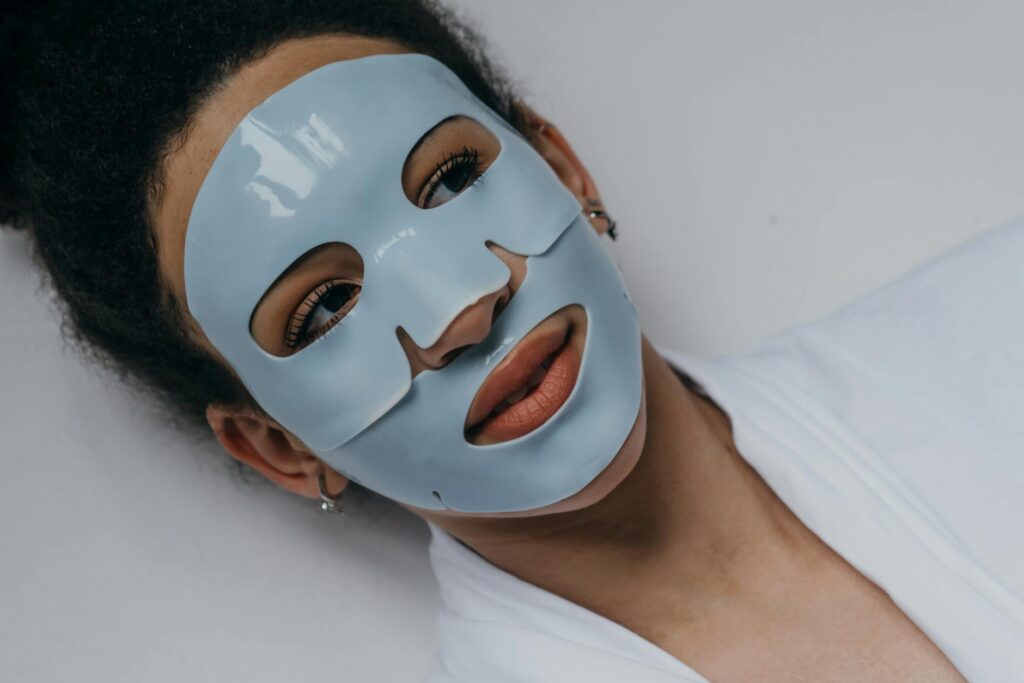
Project E Beauty LED masks offer an affordable, clinically-proven way to treat acne at home using light therapy technology. These masks use specific wavelengths of blue and red light to kill acne-causing bacteria, reduce inflammation, and prevent future breakouts—delivering results comparable to professional dermatology treatments but at a fraction of the cost. Instead of spending hundreds on office visits or prescription medications with potential side effects, you can use a Project E Beauty mask for just 3-10 minutes daily in your own home.
This article explains how these masks work, which models suit different budgets, what clinical evidence supports their effectiveness, and how to get the best results. Project E Beauty offers several LED mask options, from the budget-friendly LightAura with 450 LEDs and 7 wavelength modes to more advanced models like the LumaLux Face with 800 LEDs and infrared capabilities. What makes them attractive for budget-conscious consumers is that a single purchase replaces ongoing treatment costs—no recurring dermatology appointments, no prescription refills, no hidden fees. A rigorous clinical study found that users treating acne with combined blue and red light saw inflammatory lesions decrease by 77% in just four weeks, and the technology is backed by mass medical institutions including Mass General Brigham.
Table of Contents
- How Blue and Red Light Kill Acne-Causing Bacteria
- Clinical Evidence for LED Acne Treatment Effectiveness
- Project E Beauty Mask Models and LED Specifications
- Treatment Duration and Daily Usage Recommendations
- Safety Profile and Potential Side Effects
- Budget Comparison: LED Masks vs. Traditional Acne Treatments
- Timeline to Results and Long-Term Maintenance
- Conclusion
How Blue and Red Light Kill Acne-Causing Bacteria
The core mechanism behind Project E Beauty masks is light wavelength. Blue light at 460 nanometers creates free radicals that destroy the bacteria responsible for acne breakouts (*Cutibacterium acnes*) while simultaneously regulating excess oil production. Think of it like using a very specific antimicrobial agent—except the agent is light, not a chemical. Red light at 630 nanometers and longer wavelengths in the infrared range work on different targets: they stimulate collagen production, reduce inflammation in existing lesions, and prevent the scarring that often follows severe acne.
The combination of blue and red light is more effective than either wavelength alone. Blue light handles the bacterial infection, while red light addresses the inflammatory response and skin healing. This dual-action approach is why Project E Beauty’s multi-wavelength masks (which include both blue and red options) outperform single-color devices. For someone with active breakouts, the blue light component provides the immediate bacterial kill, while the red light prevents the permanent damage that inflammation can cause.

Clinical Evidence for LED Acne Treatment Effectiveness
A randomized clinical study published in the Journal of Clinical and Aesthetic Dermatology measured led light therapy on 420nm blue and 660nm red wavelengths applied for 2.5 minutes twice daily over four weeks. The results were striking: inflammatory acne lesions (the red, swollen pimples) decreased by 77%, and non-inflammatory lesions (blackheads and whiteheads) decreased by 54% compared to a control group. This isn’t anecdotal—these are peer-reviewed, measurable outcomes. For someone with budget constraints, this level of efficacy means you might avoid prescription medications with their own costs and potential side effects.
However, it’s important to understand that these results apply to mild-to-moderate acne. If you have severe, cystic acne affecting large portions of your face or covering your body, at-home LED masks are better used as a complement to dermatology treatment rather than a replacement. Mass General Brigham’s systematic review of six studies with 216 participants confirmed that at-home LED devices are both safe and effective for mild-to-moderate cases, but the threshold matters. You should have realistic expectations about what these masks can accomplish alone versus what requires professional intervention.
Project E Beauty Mask Models and LED Specifications
project E Beauty manufactures several distinct models, each with different LED counts and wavelength options. The LightAura model features 450 LEDs with 7 wavelength modes, making it a versatile entry-level option. The Lumamask Pro includes red light at 630nm, blue light at 460nm, and infrared at 850nm—specifically engineered for acne. The LumaLux Face Pro steps up with 800 LEDs, 7 color options, plus infrared capability, offering maximum wavelength flexibility and coverage. The more LEDs a mask has, the more intense and even the light distribution across your face, and the more wavelength options you have, the more you can customize treatment for your specific skin concerns.
For budget-conscious buyers, the distinction matters. If you’re treating only acne, the Lumamask Pro with its focused blue, red, and infrared wavelengths might deliver better results than a multi-wavelength mask designed for general skin rejuvenation. The LightAura is an affordable starting point if you’re testing whether LED therapy works for you before investing in a premium model. The LumaLux Face Pro is the choice if you want one device to handle acne, anti-aging, and other skin concerns simultaneously. Each represents a different risk-to-reward calculation depending on your budget and how seriously you want to commit to the treatment.

Treatment Duration and Daily Usage Recommendations
One of the budget advantages of Project E Beauty masks is the minimal time commitment. Depending on the model, treatment sessions last only 3-10 minutes. The clinical study that showed 77% reduction in inflammatory lesions used 2.5-minute sessions twice daily, meaning total daily treatment time was under 5 minutes. For someone with a busy schedule, this is manageable even during morning or evening routines.
Compare this to dermatology appointments (travel time, wait time, appointment costs) or daily medications (prescription refills, pharmacy trips, monthly costs), and the time-to-efficacy ratio is favorable. The key is consistency. The mask works because regular light exposure trains your skin’s cellular response—bacteria don’t develop resistance to light the way they do to antibiotics, but you do need steady application. Starting a new LED mask and expecting results after two weeks is unrealistic; the clinical data showed four weeks of twice-daily use for significant improvement. This is actually a limitation if you’re seeking quick fixes, but it’s also an advantage if you’re avoiding antibiotic resistance, which is increasingly common in topical acne treatments.
Safety Profile and Potential Side Effects
Project E Beauty masks use red light therapy technology that is non-invasive, painless, non-toxic, and contains no harmful UV rays. Unlike sun exposure or older UV-based acne treatments, these devices do not heat or burn your skin. The clinical studies reported minimal side effects overall, with only occasional mild dryness and skin irritation reported by a small percentage of users—much lower adverse-event rates than topical or oral acne medications like benzoyl peroxide (which causes significant dryness and peeling) or isotretinoin (which requires liver monitoring and has severe birth defect risks).
That said, some users do experience mild irritation when starting LED therapy, particularly those with sensitive skin. This typically resolves within a few days as skin acclimates. One scenario where caution is needed: if you’re currently using photosensitizing medications (certain antibiotics, retinoids, or NSAIDs), you should consult a dermatologist before starting LED therapy, as the combination might increase photosensitivity. Additionally, if you have a pacemaker or other implanted electronic device, check with your physician before using any light therapy device, though most LED masks operate at frequencies unlikely to interfere.
Budget Comparison: LED Masks vs. Traditional Acne Treatments
The cost analysis favors LED masks for long-term treatment. A single Project E Beauty mask costs between $100-400 depending on the model (exact 2026 pricing varies by retailer and promotion). Compare this to dermatology for acne: a single appointment typically costs $150-300, and most people require multiple visits (initial consultation, follow-up after 4-6 weeks, adjustments, etc.). If you treat acne with professional care over a year, you’re looking at $500-1,500 minimum.
Prescription topical medications like tretinoin or benzoyl peroxide run $50-200 per month, while oral antibiotics for acne can cost $100-300 monthly depending on insurance coverage. An LED mask becomes cost-neutral compared to three months of professional dermatology or prescription treatments, and then it’s essentially free for the remaining 9+ months of its usable lifespan. However, the upfront cost is real and non-refundable if the device doesn’t work for you. This is why Project E Beauty masks are widely available through Amazon and Target—retailers with return policies—so you can test the device with a safety net. If you’re struggling with budget constraints, starting with a lower-priced model like the LightAura reduces the initial financial risk while still giving you access to clinically-validated wavelengths.
Timeline to Results and Long-Term Maintenance
The clinical study showed significant results at four weeks, but individual responses vary. Some users report seeing improvement in acne inflammation within 2-3 weeks, while others need the full 4-6 weeks to notice substantial change. This timeline is important to understand because many people abandoning acne treatments do so too early—they expect results in a week or two and quit when they don’t see them. With LED therapy, patience is rewarded, but you need realistic expectations going in.
Acne that’s been developing for months won’t clear in days. After the initial four-week treatment phase, many users find they can reduce frequency to maintenance mode—perhaps three times per week instead of twice daily—to prevent new breakouts rather than treat active ones. This is where the long-term budget advantage compounds. You’re no longer commuting to dermatology offices or continuously refilling prescriptions; you’re simply maintaining with brief, home-based light sessions. Some users with seasonal acne or hormone-driven breakouts (menstrual cycle-related, for example) use their Project E Beauty mask more intensively during predictable flare periods and scale back otherwise.
Conclusion
Project E Beauty LED masks represent a practical, evidence-backed solution for people seeking affordable acne treatment. The clinical data is solid—77% reduction in inflammatory lesions in four weeks with minimal side effects—and the long-term cost-per-treatment is significantly lower than recurring dermatology or prescription medications. The technology is safe, requires minimal time investment (3-10 minutes daily), and works through a well-understood mechanism: blue light kills acne bacteria while red light reduces inflammation and supports healing.
The realistic next step is to match your budget to the right Project E Beauty model, set expectations for a four-week treatment timeline, and commit to consistency. Available through Amazon, Target, and the official Project E Beauty website, these masks are accessible to most budgets, and many retailers offer return policies if the device doesn’t deliver results for your specific skin. For mild-to-moderate acne, this represents one of the best cost-to-efficacy ratios available in skincare.