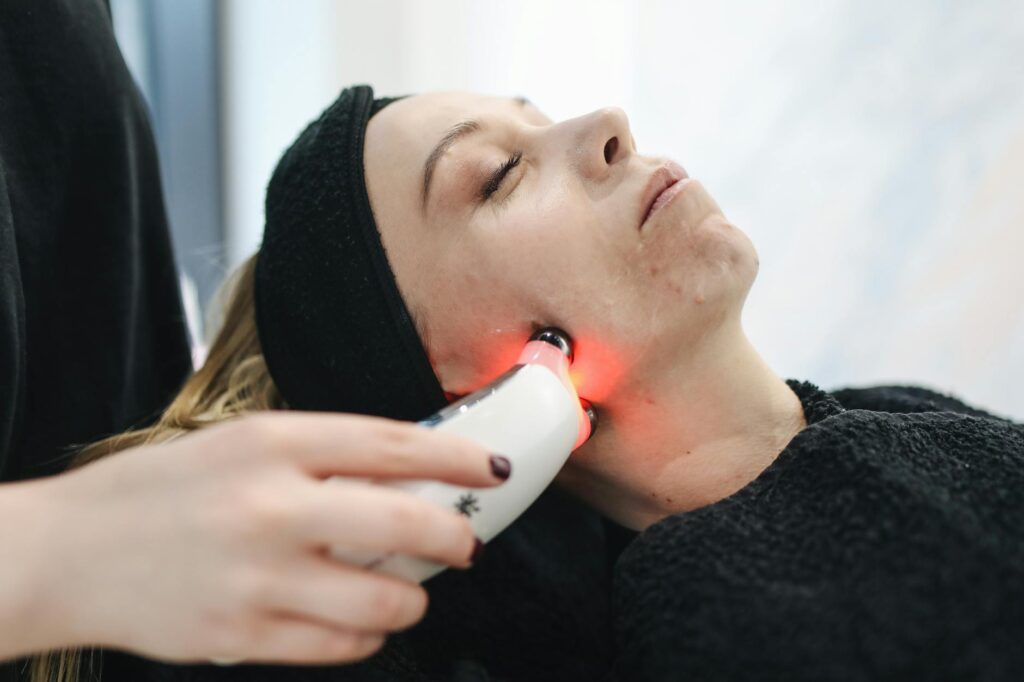
Isolaz laser-vacuum therapy combines broadband light technology with vacuum suction—a unique two-part approach that standard laser treatments don’t offer. While conventional acne lasers focus solely on killing bacteria and reducing inflammation through light energy, Isolaz’s vacuum component actively extracts oil, dead skin, and bacteria from deep within pores before the light portion destroys P. acnes bacteria and reduces redness.
For someone with moderate acne who hasn’t responded to topical treatments or antibiotics, this dual mechanism means you’re getting both mechanical cleansing and phototherapy in a single treatment. The practical difference shows up in results: a 2008 clinical study found 82% of Isolaz patients reported moderate to very satisfied outcomes, and 88% experienced reduction in acne with notably fewer blackheads and pimples. Additionally, Isolaz is the only laser FDA-approved specifically for comedonal, pustular, and inflammatory acne—a distinction that matters when considering which treatment to pursue. This article breaks down exactly how Isolaz differs from standard lasers, what the clinical evidence shows, and whether it’s the right choice for your acne type.
Table of Contents
- How Isolaz’s Vacuum-Light Technology Differs From Standard Acne Lasers
- Clinical Evidence and FDA Approval Status
- Advantages Over Standard Laser Treatments
- What to Expect: Treatment Timeline and Immediate Results
- When Isolaz Has Limitations and May Not Be Enough
- Side Effects and Comfort Comparison
- Long-Term Skin Outcomes and Maintenance Needs
- Conclusion
How Isolaz’s Vacuum-Light Technology Differs From Standard Acne Lasers
Standard acne lasers work through light energy alone: they penetrate skin to destroy acne-causing bacteria and reduce inflammation. Isolaz adds a completely different tool to the process—vacuum suction. During treatment, the vacuum component gently pulls dirt, blackheads, excess sebum, and bacteria out of pores, loosening impacted material. Immediately after, the broadband light energy targets and destroys the extracted bacteria while reducing redness and inflammation.
This photopneumatic therapy approach means Isolaz is essentially doing two jobs: mechanical extraction plus phototherapy. Consider a patient with deep comedonal acne—clogged pores filled with oil and dead skin that standard lasers struggle to address effectively. A conventional laser can kill bacteria on the surface and reduce inflammation, but it can’t extract the actual blockage. Isolaz removes the blockage first through vacuum, then treats what remains. This explains why one clinical trial of 20 adults with mild-to-moderate acne who had failed oral medications and other lasers showed over 75% reduction in lesions within two months when treated with Isolaz at 2-week intervals.
Clinical Evidence and FDA Approval Status
Isolaz holds a unique position in acne treatment regulation: it’s the only laser device FDA-approved specifically for comedonal, pustular, and inflammatory acne. This narrower, specific approval reflects the evidence supporting its use for these particular acne types rather than broader claims about all acne. The clinical data backing this approval is solid: 85% of patients in clinical studies experienced clearer skin, and 88% of trial participants showed measurable reduction in acne severity with notably fewer blackheads and pimples.
However, it’s important to understand the limitations of this approval status. FDA clearance doesn’t mean Isolaz works equally well for every person or every acne variant. A 2008 clinical study showed 100% of patients reported painless treatments, and the same research documented the 82% satisfaction rate—but these numbers come from controlled studies, not real-world use where variables like skin type, age, baseline acne severity, and concurrent treatments vary widely. For severe cystic acne that hasn’t responded to isotretinoin, Isolaz may be less effective than advertised and might require combination therapy.
Advantages Over Standard Laser Treatments
One of the most compelling advantages of Isolaz is the absence of photosensitivity. Many standard acne light therapies, particularly IPL (intense pulsed light) treatments, require patients to avoid sun exposure for weeks afterward and can cause light sensitivity reactions. Isolaz doesn’t carry this risk. Additionally, while IPL therapy can cause blistering, burning, post-inflammatory hyperpigmentation, or prolonged redness, Isolaz clinical studies reported minimal side effects: no crusting, no post-treatment discomfort, and no visible redness.
The downtime difference is equally significant. Standard laser treatments like CO2 or ablative lasers often require a recovery period of several days to weeks, during which the skin is visibly raw and patients must follow strict aftercare protocols. Isolaz requires zero downtime—you can return to normal activities immediately after a 15-20 minute session. This matters practically: someone receiving Isolaz on a Friday doesn’t need to plan around visible skin damage for work on Monday.

What to Expect: Treatment Timeline and Immediate Results
A typical Isolaz treatment session lasts 15-20 minutes, making it easy to fit into a lunch break or between work commitments. Most patients need 2-6 treatments spaced 2-4 weeks apart for optimal results, though the exact number depends on acne severity and how well your skin responds. Unlike some acne treatments that take weeks to show any effect, Isolaz delivers rapid initial results: patients typically see reduced redness and visible flattening or drying of blemishes within 24-48 hours of the first treatment.
The improvement continues well after the treatment series ends. Clinical evidence shows acne continues improving for up to 3 months after your final treatment, meaning you shouldn’t judge efficacy immediately after your last session. This extended improvement period reflects the ongoing antibacterial and pore-clearing effects even as the immediate physical extraction and light damage fade. For someone receiving four treatments at 2-week intervals (an 8-week treatment window), you could still be seeing improvements through week 20.
When Isolaz Has Limitations and May Not Be Enough
Isolaz works best for mild-to-moderate acne, particularly in patients who have failed conventional treatments like topical retinoids, benzoyl peroxide, oral antibiotics, or other laser therapies. If your acne falls into this category—non-responsive to standard approaches—Isolaz shows strong efficacy. However, severe cystic acne or widespread nodular acne may require additional treatments beyond Isolaz alone.
The most important limitation: Isolaz doesn’t address hormonal acne drivers. If your breakouts are primarily driven by hormonal fluctuations, Isolaz can temporarily clear skin and reduce inflammation, but without addressing the underlying hormonal cause (whether through birth control, spironolactone, or other hormonal management), acne typically returns. A patient using Isolaz without managing hormonal imbalance might see excellent results for 2-3 months, then experience recurrence as new comedones form. This doesn’t mean Isolaz failed—it means the root cause wasn’t treated.

Side Effects and Comfort Comparison
Clinical studies documented that 100% of Isolaz patients reported painless treatments, a finding that stands out when compared to other laser modalities. Some patients describe a mild warming or gentle suction sensation, but pain isn’t part of the experience for the vast majority. Compare this to some standard laser treatments, which can range from uncomfortable to genuinely painful, particularly for sensitive individuals.
The side effect profile is remarkably clean. While IPL and some standard lasers cause redness, crusting, blistering, or temporary hyperpigmentation, Isolaz patients typically experience none of these. Some people report mild temporary dryness or slight sensitivity in the first 24-48 hours, but this is minimal compared to other acne treatments. This comfort advantage partly explains the 82% satisfaction rate—people are more likely to complete a full treatment course when sessions are painless and produce no visible healing wounds.
Long-Term Skin Outcomes and Maintenance Needs
After completing a full Isolaz treatment series, skin improvement typically lasts 3-6 months or longer, depending on your acne tendencies and how well you maintain a consistent skincare routine. Unlike oral isotretinoin, which can produce lasting remission for many patients, Isolaz is not a permanent cure—acne can return if oil production, bacteria, and comedone formation resume. However, maintenance treatments spaced 3-4 months apart can sustain results long-term.
The sustainability advantage of Isolaz over some other acne treatments is that it doesn’t alter your body’s biology or require systemic medication. If acne returns, you simply schedule another treatment session; there’s no risk of antibiotic resistance, no hormonal side effects, and no need to take oral medications indefinitely. For patients seeking a non-pharmacological, repeatable solution that produces visible results without systemic risk, this model works well long-term.
Conclusion
Isolaz laser-vacuum therapy offers a meaningfully different approach than standard acne lasers: the combination of mechanical pore extraction plus light-based bacterial destruction addresses acne from two angles simultaneously. The clinical evidence supports its effectiveness, with 85-88% of patients experiencing clearer skin, painless treatments, zero downtime, and minimal side effects—advantages that standard laser treatments don’t consistently deliver. Whether Isolaz is right for you depends primarily on your acne type and treatment history.
If you have mild-to-moderate acne that hasn’t responded to conventional therapies (topicals, antibiotics, or other lasers), or if you’ve experienced side effects from other laser treatments, Isolaz is worth discussing with a dermatologist. However, if your acne is driven primarily by hormonal factors, you’ll need to address that separately. A dermatologist can assess whether your specific acne profile matches the clinical evidence and determine if a full Isolaz treatment series makes sense for your situation.