
Adrenal acne is hormonal acne driven specifically by the adrenal glands rather than the ovaries or typical puberty-related hormone shifts. When your adrenal glands overproduce androgens like DHEA-S and cortisol — often in response to chronic stress, sleep deprivation, or conditions like congenital adrenal hyperplasia — those hormones stimulate sebaceous glands and trigger breakouts that look and behave differently from standard acne. A person who has tried every topical retinoid and benzoyl peroxide wash without improvement, only to discover their DHEA-S levels are elevated on a blood panel, is dealing with a fundamentally different root cause than someone whose acne responds to a basic skincare routine.
What sets adrenal acne apart is its persistence, its pattern on the body, and its resistance to conventional treatments. It tends to cluster along the jawline, chin, and upper back, and it often worsens during periods of high stress rather than following a predictable menstrual cycle pattern the way ovarian hormonal acne does. This article covers the hormonal mechanics behind adrenal acne, how to distinguish it from other types, the diagnostic steps worth pursuing, treatment options that actually address the root cause, common pitfalls people run into, the role of lifestyle factors, and where research on this topic is headed.
Table of Contents
- What Causes Adrenal Acne and Why Does It Behave Differently Than Regular Hormonal Acne?
- How DHEA-S and Cortisol Drive Breakouts at the Skin Level
- Recognizing the Pattern — Where Adrenal Acne Shows Up and What It Looks Like
- Getting the Right Diagnosis — Which Tests to Ask For
- Treatment Approaches and Why Standard Acne Protocols Often Fall Short
- The Insulin Connection That Makes Adrenal Acne Worse
- Where Research Is Heading
- Conclusion
- Frequently Asked Questions
What Causes Adrenal Acne and Why Does It Behave Differently Than Regular Hormonal Acne?
The adrenal glands sit on top of each kidney and produce a range of hormones, including cortisol, adrenaline, and androgens like DHEA-S (dehydroepiandrosterone sulfate). Under normal conditions, these androgens play a modest role in skin oil production. But when the adrenals are overstimulated — whether from chronic psychological stress, overtraining, poor sleep, or an underlying disorder like adrenal hyperplasia — DHEA-S and androstenedione production ramps up. These androgens convert to testosterone and then to dihydrotestosterone (DHT) in the skin, which directly enlarges sebaceous glands and increases sebum output. The result is deep, inflamed cystic lesions that don’t respond well to topical treatment alone. The key difference from ovarian-driven hormonal acne is the timing and the hormone involved.
Ovarian acne tends to flare predictably around ovulation or the luteal phase because it’s tied to fluctuations in estrogen and progesterone relative to testosterone. Adrenal acne doesn’t follow that neat cycle. It worsens when stress spikes — after a brutal work deadline, during a cross-country move, or in the middle of a health crisis — and can persist continuously rather than cycling. A woman whose acne flares two weeks before her period is likely dealing with ovarian hormones. A woman whose acne arrived during a chronically stressful year and hasn’t let up regardless of where she is in her cycle should consider the adrenal angle. Men can also experience adrenal acne, particularly when elevated cortisol is part of the picture, since cortisol itself can upregulate sebaceous gland activity independent of androgens.

How DHEA-S and Cortisol Drive Breakouts at the Skin Level
DHEA-S is the most abundant circulating steroid hormone in the body, and the adrenal glands produce nearly all of it. In the skin, DHEA-S is converted locally into more potent androgens. Sebocytes — the cells that make up sebaceous glands — have the enzymatic machinery to convert DHEA-S into testosterone and DHT right at the follicle. This means that even if your total testosterone levels come back normal on a blood test, elevated DHEA-S can still fuel acne through local conversion. This is a detail that trips up many clinicians who check only total testosterone and declare hormones “normal.” Cortisol complicates the picture further.
Chronically elevated cortisol doesn’t just make you feel wired and exhausted — it increases the skin’s inflammatory response, impairs wound healing, and can thin the skin barrier over time. It also raises blood sugar and insulin, and insulin itself is a driver of sebum production. So a person under chronic stress may be getting hit from two directions: DHEA-S ramping up oil, and cortisol stoking inflammation and insulin resistance simultaneously. However, if someone has elevated DHEA-S but normal cortisol, the issue may be enzymatic or genetic rather than stress-related, which changes the treatment approach significantly. Conditions like non-classic congenital adrenal hyperplasia (NCAH) can cause elevated adrenal androgens without the cortisol picture, and this affects roughly 1 in 100 to 1 in 200 people depending on ethnicity — far more common than most dermatologists screen for.
Recognizing the Pattern — Where Adrenal Acne Shows Up and What It Looks Like
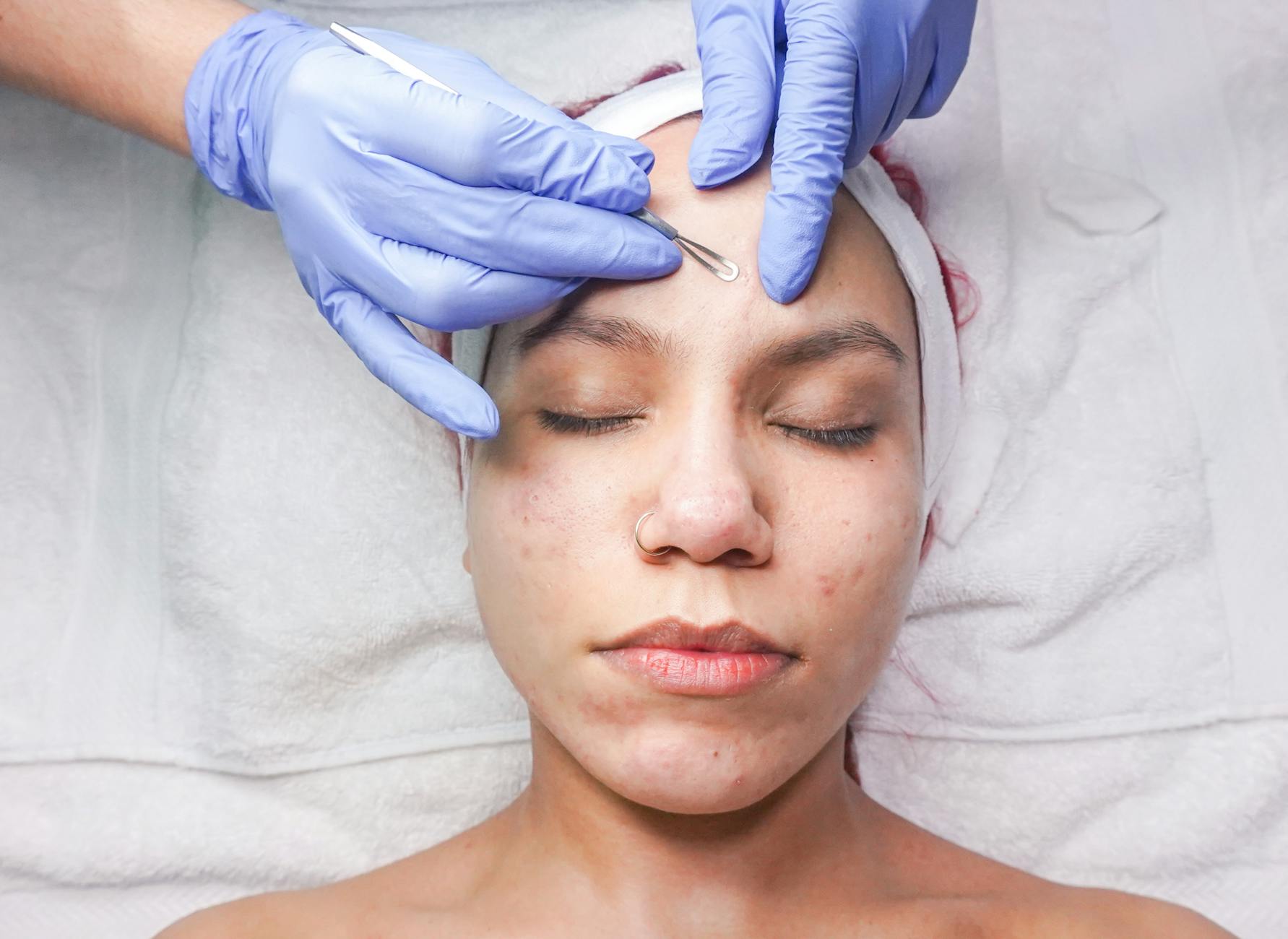
Adrenal acne has a characteristic distribution. It favors the lower face — jawline, chin, and around the mouth — but it also frequently appears on the upper back, shoulders, and chest, areas rich in androgen-sensitive sebaceous glands. The lesions tend to be deep, nodular, and painful rather than superficial whiteheads or blackheads. They often leave post-inflammatory hyperpigmentation or scarring because of how deep the inflammation runs. Consider the example of a 28-year-old woman who develops persistent cystic acne on her jawline and upper back after starting a high-stress job.
She has no prior history of significant acne, her diet hasn’t changed, and her dermatologist’s prescriptions of topical tretinoin and clindamycin haven’t made a dent after four months. A hormonal panel reveals normal estrogen, progesterone, and total testosterone, but her DHEA-S is at 480 µg/dL — well above the typical range for her age. Her fasting insulin is also elevated. This is a textbook adrenal acne presentation, and it explains why topical treatments alone failed: the problem is systemic, not at the skin surface. One distinguishing feature worth noting is that adrenal acne often coexists with other signs of androgen excess — thinning hair at the temples, increased body hair, or oily skin that extends beyond the face. If these signs are present alongside treatment-resistant acne, the adrenal glands deserve investigation.
Getting the Right Diagnosis — Which Tests to Ask For
The most important blood test for suspected adrenal acne is DHEA-S. This is an adrenal-specific androgen, unlike testosterone, which can come from both the ovaries and adrenals. If DHEA-S is elevated, the adrenal glands are the likely source of trouble. A morning cortisol level or a four-point salivary cortisol test can reveal whether chronic stress is part of the equation. Fasting insulin and glucose are worth checking as well, since insulin resistance amplifies androgen activity at the skin.
The tradeoff with testing is that a standard dermatologist visit often won’t include hormonal workups. Most dermatologists treat acne empirically — isotretinoin, antibiotics, spironolactone — without ordering labs. This works fine for many patients, but for those with adrenal-driven breakouts, it leads to months or years of cycling through treatments that suppress symptoms without addressing the cause. Requesting a referral to an endocrinologist, or specifically asking your dermatologist to order DHEA-S, free and total testosterone, cortisol, and fasting insulin, can save significant time and frustration. If DHEA-S comes back very high (above 700 µg/dL in women), further workup including a 17-hydroxyprogesterone level to rule out NCAH and imaging to exclude adrenal tumors becomes necessary. The vast majority of cases are not tumors — they’re functional overproduction related to stress or mild enzymatic deficiency — but ruling out serious pathology matters.
Treatment Approaches and Why Standard Acne Protocols Often Fall Short
Conventional acne treatments target the skin directly: retinoids increase cell turnover, benzoyl peroxide kills bacteria, antibiotics reduce inflammation. These can help with the surface symptoms of adrenal acne, but they don’t address the upstream hormonal driver. Spironolactone, an androgen blocker commonly prescribed for hormonal acne in women, can be effective for adrenal acne because it blocks androgen receptors in the skin regardless of whether the androgens come from the ovaries or adrenals. However, spironolactone does nothing to reduce adrenal androgen production itself, so stopping it usually means the acne returns.
For people whose adrenal acne is driven primarily by chronic stress and elevated cortisol, stress management isn’t just a nice-to-have — it’s a core treatment. This includes sleep optimization, since cortisol regulation depends heavily on circadian rhythm integrity; reducing or modifying intense exercise if overtraining is a factor; and addressing psychological stressors. Adaptogenic supplements like ashwagandha have some clinical evidence for modestly reducing cortisol, though the effect size is limited and quality varies wildly between products. One significant limitation of the lifestyle approach is that it requires sustained behavioral change during a period when the person is, by definition, already stressed — which makes compliance genuinely difficult. Pharmaceutical options for cortisol reduction are limited and carry their own risks, so most treatment plans combine an androgen blocker with targeted lifestyle changes and conventional topical therapy.
The Insulin Connection That Makes Adrenal Acne Worse
Insulin resistance and adrenal dysfunction often reinforce each other. Elevated cortisol raises blood sugar, which prompts more insulin production, and insulin itself stimulates androgen production in both the ovaries and adrenals.
A person eating a high-glycemic diet on top of chronic stress may be amplifying their adrenal acne through this insulin-androgen feedback loop. Reducing refined carbohydrates and added sugars has shown measurable effects on acne in clinical studies — a 2007 study published in the American Journal of Clinical Nutrition found that a low-glycemic diet reduced acne lesion counts by over 20 percent compared to a control diet over 12 weeks. For someone with adrenal acne and confirmed insulin resistance, dietary modification isn’t an alternative medicine add-on; it’s addressing a documented biochemical driver.
Where Research Is Heading
The understanding of adrenal contributions to acne is still catching up to clinical reality. Most acne research and treatment guidelines focus on androgen receptor sensitivity and bacterial colonization rather than adrenal function specifically.
Emerging research into the skin’s own steroidogenic capacity — the fact that sebaceous glands can synthesize androgens locally from precursors like DHEA-S — is reframing how clinicians think about hormonal acne subtypes. As this research matures, it may lead to topical treatments that block local androgen conversion in the skin without requiring systemic hormone manipulation. For now, the practical takeaway is that anyone with treatment-resistant acne, especially with the stress-related and distribution patterns described above, should push for a hormonal evaluation that includes adrenal markers rather than accepting another round of antibiotics.
Conclusion
Adrenal acne is a distinct hormonal subtype of acne driven by overproduction of adrenal androgens like DHEA-S, often compounded by chronic cortisol elevation and insulin resistance. It presents as deep, cystic lesions along the jawline, chin, and upper back, resists standard topical treatments, and worsens with stress rather than following a menstrual cycle pattern. Recognizing it requires hormonal testing that many dermatologists don’t routinely order, which is why it often goes undiagnosed for years.
If you suspect adrenal acne, the most productive next step is getting DHEA-S, cortisol, and fasting insulin levels checked. From there, treatment can be tailored — combining androgen blockers like spironolactone with targeted stress management, sleep improvement, dietary changes to address insulin resistance, and conventional topical therapy for symptom control. Treating only the skin while ignoring the adrenal contribution is why so many people cycle through products and prescriptions without lasting improvement.
Frequently Asked Questions
Can men get adrenal acne?
Yes. While adrenal acne is discussed more often in women — partly because spironolactone, the main androgen blocker used, isn’t prescribed to men — men with elevated DHEA-S and chronic stress can develop the same pattern of deep cystic acne. Treatment options for men are more limited on the hormonal side and tend to focus on isotretinoin, stress reduction, and insulin management.
Will birth control pills help adrenal acne?
Combination oral contraceptives suppress ovarian androgen production and raise sex hormone-binding globulin (SHBG), which binds free testosterone. They can help modestly with adrenal acne by reducing the total androgen load, but they don’t directly address adrenal DHEA-S production. Many women find birth control alone insufficient for adrenal acne, whereas it often resolves ovarian-driven breakouts.
How long does it take for adrenal acne to clear once treatment starts?
Most people see initial improvement within 6 to 12 weeks of starting appropriate hormonal treatment, but full clearing can take 4 to 6 months. Stress-related adrenal acne may fluctuate as life circumstances change, even during treatment. Consistency with both medication and lifestyle modifications matters more than any single intervention.
Is adrenal fatigue the same as adrenal acne?
“Adrenal fatigue” is not a recognized medical diagnosis — it’s a term used in alternative health circles to describe a cluster of symptoms attributed to overworked adrenals. Adrenal acne, by contrast, refers to acne caused by measurably elevated adrenal hormones on blood testing. The distinction matters because treatment should be based on documented lab values, not a vague syndrome label.
Can supplements like zinc or vitamin D help?
Zinc has modest anti-androgen and anti-inflammatory properties, and deficiency is associated with worse acne. Supplementing 30 mg of zinc picolinate daily has shown benefit in some studies. Vitamin D deficiency is common in acne patients and correcting it may support immune function in the skin. Neither supplement alone will resolve adrenal acne, but both can support a broader treatment plan.