Intensif works by combining two mechanisms: the microneedles create micro-channels in the skin, and the radiofrequency energy heats the dermis to trigger collagen synthesis and remodeling. This dual action addresses scarring at its root rather than just surfacing the problem. For a patient with deep rolling scars across their cheeks, multiple Intensif sessions can gradually fill these depressions as new collagen forms and existing collagen contracts during healing. The device is FDA-cleared and widely available at dermatology clinics, though results depend heavily on scar type, skin type, and proper post-treatment care.
Table of Contents
- How Does Intensif Radiofrequency Microneedling Address Acne Scar Depth?
- Which Types of Acne Scars Respond Best to Intensif Treatment?
- What Does an Intensif Treatment Session Actually Involve?
- How Many Sessions Do You Need, and When Will You See Results?
- What Are the Real Limitations and Side Effects of Intensif?
- How Does Intensif Compare to Other Popular Acne Scar Treatments?
- Do Intensif Results Last, and What About Maintenance?
- Conclusion
- Frequently Asked Questions
How Does Intensif Radiofrequency Microneedling Address Acne Scar Depth?
Intensif penetrates to the mid-to-deep dermis—typically 3.5 to 4 millimeters depending on needle depth settings—where the real structural damage from acne scars exists. The radiofrequency energy heats collagen fibers and stimulates fibroblasts, the cells responsible for producing new collagen. Over weeks and months following treatment, this triggers what’s called neocollagenesis: the body’s natural process of laying down fresh collagen to repair the micro-injuries.
Unlike ablative lasers that remove the top layer of skin (risking permanent texture changes or hypopigmentation), Intensif’s energy is delivered through insulated needles, so the epidermis stays largely intact while deep collagen gets rebuilt. A patient with atrophic (indented) scars typically sees gradual filling as the dermis thickens. However, very deep icepick scars or severe pitted scarring may still require supplemental treatments like subscision or filler alongside Intensif, because even robust collagen production can’t always fill a crater 3+ millimeters deep.
Which Types of Acne Scars Respond Best to Intensif Treatment?
Intensif performs best on rolling scars and shallow-to-moderate boxcar scars because these scar types benefit most from collagen stimulation and remodeling. Rolling scars—those gentle, wave-like depressions across large areas of skin—respond particularly well because they’re caused by fibrosis pulling skin down, and new collagen can counteract that tethering. Boxcar scars, which have sharper edges and flat bottoms, also improve significantly, especially the shallow versions.
Icepick scars, the narrow deep puncture marks, show slower improvement with Intensif alone because they’re often too narrow and deep for collagen alone to completely fill. Some providers combine Intensif with subcision (surgically breaking the scar’s tether) for icepick scars to improve results. Your results also depend on how old the scars are: newer scars (under 2 years) tend to respond faster because the tissue is still in active remodeling. Very old, fibrotic scars may require more sessions or higher energy settings, and some may plateau despite optimal treatment.
What Does an Intensif Treatment Session Actually Involve?
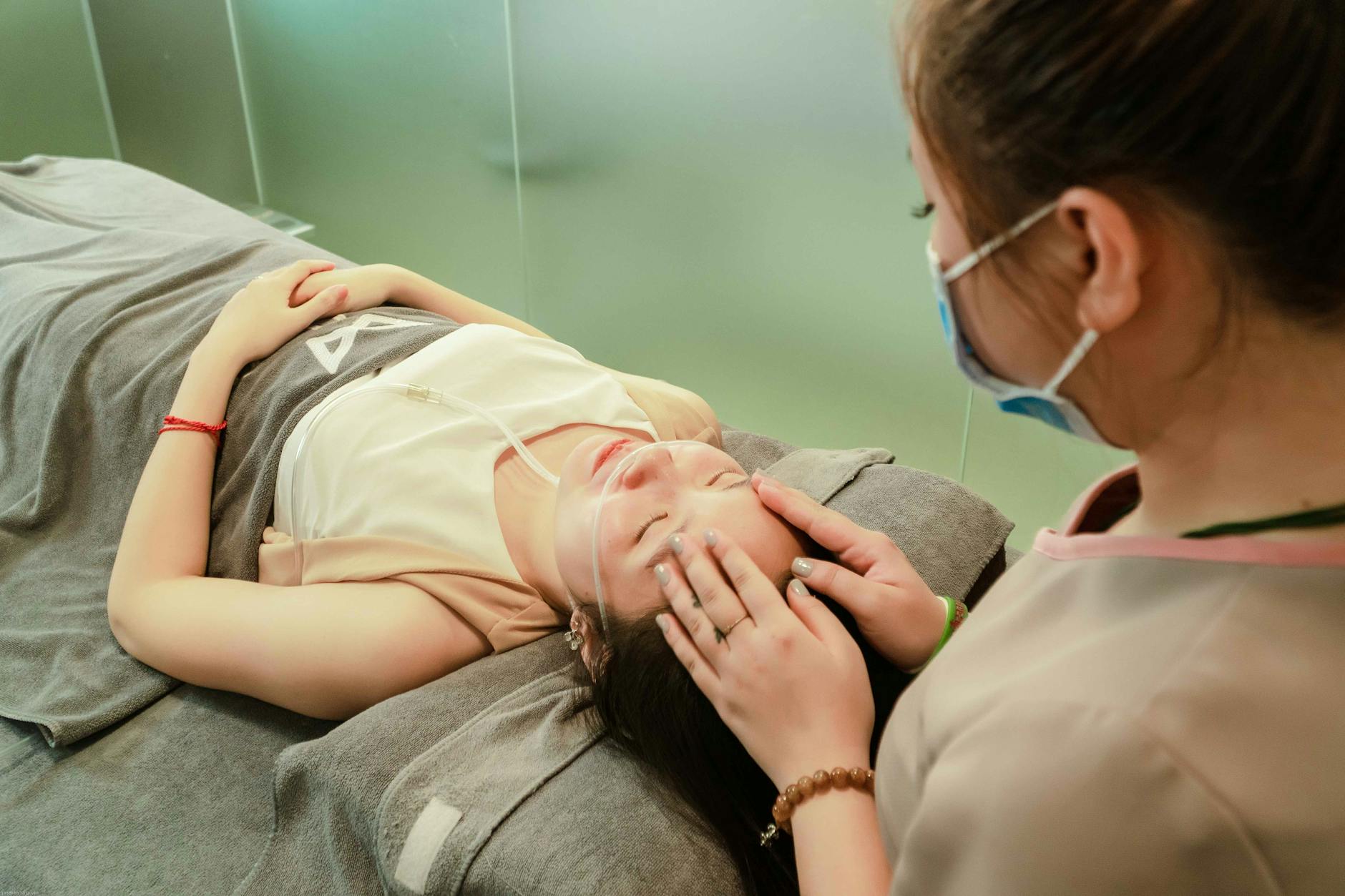
An Intensif session typically takes 30 to 45 minutes from start to finish. Your provider applies topical numbing cream for 20 to 30 minutes, often combined with local anesthetic injection for deeper comfort. Once you’re numb, the handheld device is gently pressed and glided across the scarred areas. You’ll feel vibration and some pressure, but ideally no sharp pain—though sensations vary by individual and treatment intensity.
The provider adjusts the needle depth and radiofrequency power based on your scar severity and skin type: deeper penetration for more severe scars, but lower settings for darker skin tones to minimize hyperpigmentation risk. Immediately after, your skin is red, swollen, and may have tiny bleeding pinpoints—this is normal and expected. Within 24 to 48 hours, the redness fades to pink, and light flaking or peeling begins. Unlike more aggressive ablative lasers, Intensif downtime is minimal: most people can return to work the next day with makeup covering residual redness, though sun protection is non-negotiable for at least a week.
How Many Sessions Do You Need, and When Will You See Results?
Most patients see meaningful improvement after 3 to 4 sessions spaced 4 to 6 weeks apart, though some see initial improvement after just one treatment. Results aren’t immediate: collagen remodeling is a gradual process that unfolds over 3 to 6 months following your final session. At the 3-month mark post-treatment, you’ll notice scars look less deep and skin texture feels smoother.
Some improvement continues even further out, up to a year after your last session. The tradeoff is that more sessions mean more cumulative downtime and higher cost, but stopping too early means leaving improvement on the table. Someone with severe scarring might need 5 to 6 sessions, while someone with light-to-moderate scars might achieve their goals in 2 to 3. Your provider should assess your response after the first 1 to 2 sessions and adjust the treatment plan accordingly—there’s no one-size-fits-all protocol.
What Are the Real Limitations and Side Effects of Intensif?
The most important limitation is that Intensif works best on lighter skin tones and becomes riskier on darker skin. Radiofrequency energy can trigger post-inflammatory hyperpigmentation (dark spots) in skin of color, sometimes lasting months. Providers can reduce this risk by using lower energy settings, but that also reduces collagen stimulation and may slow results.
Someone with skin type IV, V, or VI (deeper pigmentation) should seek a provider experienced with Intensif on darker skin and might consider alternative treatments like microneedling alone or laser options designed for their skin type. Other limitations include: Intensif won’t help much if you have active acne, since inflamed skin can become more irritated; it’s not suitable if you have keloid or hypertrophic scar tendency; it requires consistent post-treatment sun protection (SPF 30+ daily for weeks) or new hyperpigmentation can develop; and results aren’t permanent—collagen remodeling is a biological process that eventually slows, so some people need maintenance treatments annually after their initial series. Pregnancy is also a contraindication, as is taking isotretinoin (Accutane) currently or within the past year.
How Does Intensif Compare to Other Popular Acne Scar Treatments?
Intensif sits in the middle of the scar treatment spectrum. Laser resurfacing (especially fractional CO2) is more aggressive and shows faster, more dramatic results for severe scarring, but carries higher downtime (1 to 2 weeks of significant oozing and peeling) and greater risk of hypopigmentation, especially in darker skin. Microneedling alone (without radiofrequency) is gentler, with minimal downtime, but typically requires more sessions (6 to 12) to match Intensif’s collagen stimulation—though it’s safer for darker skin tones. Injectable fillers offer immediate results but are temporary, lasting 6 to 12 months and requiring repeated costs.
Subscision (surgical release of scar tethering) is often combined with Intensif rather than used alone. Intensif offers a middle ground: more effective than basic microneedling, safer than ablative laser for many skin types, and permanent (though results soften over years). For severe scarring in someone with light skin, ablative laser might deliver faster results. For someone with darker skin or who wants to avoid extended downtime, gentle microneedling might be the smarter starting point before trying Intensif.
Do Intensif Results Last, and What About Maintenance?
Intensif results are semi-permanent. The collagen the treatment stimulates is real collagen that remains in your skin, but as you age and collagen naturally depletes over time, some softening of results can occur years later. Most patients maintain excellent improvements for 2 to 3 years, then notice gradual return of some shallow scarring.
Some providers recommend annual or biennial maintenance sessions to sustain results—a single “refresher” treatment is often enough to maintain collagen and keep scars looking good. However, this is patient-preference and budget-dependent. The key insight is that Intensif isn’t a one-time permanent cure for acne scars; it’s a commitment to treating scars aggressively upfront, then maintaining that improvement with occasional touch-ups. As photoaging and natural collagen loss accelerate with age, even non-scarred skin will need ongoing collagen support treatments anyway, so Intensif maintenance often fits into broader anti-aging skin care strategies for many patients.
Conclusion
Intensif by Endymed offers a scientifically grounded, moderately invasive approach to acne scar treatment by stimulating deep collagen remodeling through radiofrequency microneedling. It works best on rolling and boxcar scars, requires 3 to 6 sessions over 4 to 6 months, and shows meaningful improvement over several months as collagen remodels. Results are semi-permanent and significant, though downside risks include hyperpigmentation on darker skin, the need for maintenance treatments, and the fact that results gradually soften over years as natural collagen loss continues.
If you’re considering Intensif, schedule a consultation with a board-certified dermatologist who can assess your specific scar type, skin tone, and goals. Ask about their experience with your skin type, see before-and-after photos of real patients similar to you, and discuss realistic timelines and the total cost of a full treatment series. For severe scarring or skin of color, get a second opinion from a provider specifically experienced in radiofrequency treatments on diverse skin types. Acne scarring is treatable, but the right treatment depends on your individual scar characteristics and skin profile—not one-size-fits-all marketing claims.
Frequently Asked Questions
Does Intensif work if I still have active acne breakouts?
No. You should have your acne under control (either through topicals, oral medication, or professional treatments) before starting Intensif. Treating active acne with radiofrequency can increase inflammation and pain, and results are unpredictable if the skin is actively inflamed or infected.
How much does Intensif cost?
Typical costs range from $600 to $1,500 per session depending on your geographic location, the provider’s experience, and the area being treated. A full series of 3 to 4 sessions costs $2,000 to $6,000 out of pocket, since Intensif is cosmetic and rarely covered by insurance. Budget accordingly and ask about package discounts.
Can Intensif be combined with other treatments?
Yes. Many providers combine Intensif with subscision for icepick scars, or with topical or injectable treatments to enhance results. However, spacing matters—typically you want 2 to 4 weeks between major procedures to avoid overwhelming your skin’s healing capacity.
Will Intensif leave me with downtime I can’t hide?
Intensif has minimal downtime compared to other scar treatments. You’ll have redness and swelling for 24 to 48 hours, which makeup can cover. Most people return to normal activities the next day. However, if your job requires looking camera-ready or seeing clients, you might prefer to schedule treatments on Fridays for a weekend recovery buffer.
Is Intensif safe for sensitive skin?
Intensif can be adapted for sensitive skin by reducing energy settings, using lower needle depths, and extending the interval between sessions. However, if you have conditions like rosacea, eczema, or active dermatitis, discuss with your provider first—some skin conditions require caution or aren’t suitable for radiofrequency.
How do I protect results after Intensif?
Rigorous sun protection (SPF 30+) is non-negotiable for at least 4 weeks after each session to prevent hyperpigmentation. Avoid other irritating treatments (acids, retinoids at high strength, vitamin C serums) for 1 to 2 weeks post-treatment. Hydration and gentle cleansing are key. Avoid saunas, intense exercise, and swimming for 48 hours post-treatment.