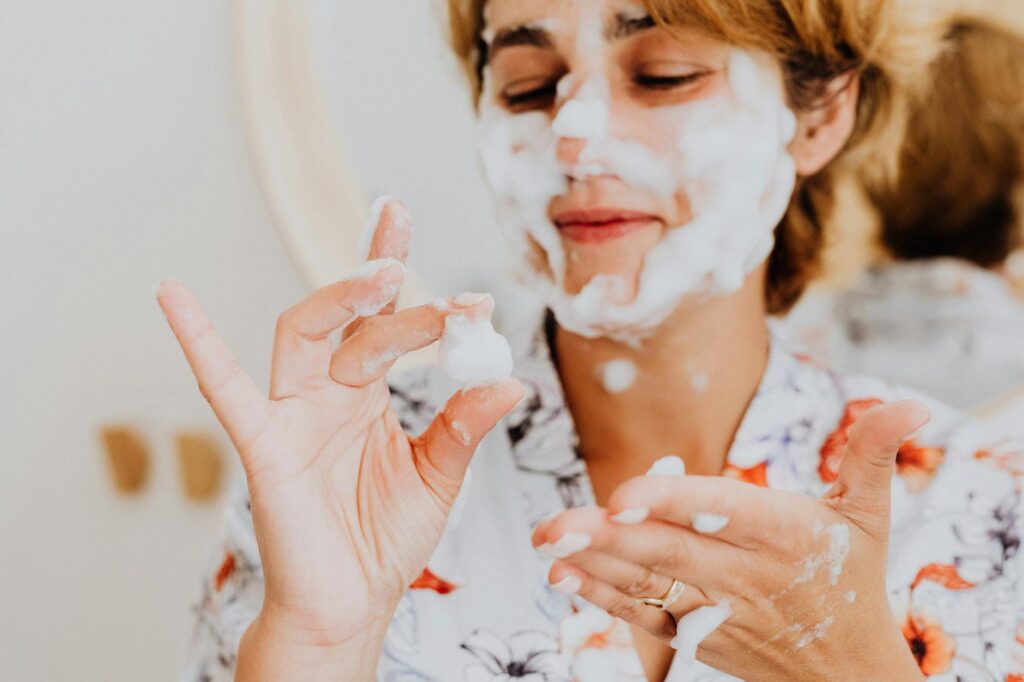
If you have acne-prone skin, your cleanser can make or break your complexion. The ingredients to avoid most vigilantly are sulfates (like sodium lauryl sulfate), fragrance, high concentrations of alcohol, essential oils, and menthol—all of which strip moisture from skin, trigger inflammation, or clog pores. For example, a cleanser containing sulfates might leave your skin feeling squeaky clean but actually dehydrate it so severely that your skin overcompensates by producing excess oil, worsening breakouts.
This article explores which cleanser ingredients actively harm acne-prone skin, why dermatologists warn against them, and what to look for instead. Beyond simply listing problem ingredients, we’ll examine how cleansing fits into your acne management strategy and why the most expensive or heavily marketed products often contain the exact components you need to avoid. Understanding ingredient lists isn’t just about avoiding irritation—it’s about selecting products that support your skin’s barrier while effectively removing dirt and oil without triggering inflammatory responses that fuel breakouts.
Table of Contents
- Which Cleanser Ingredients Make Acne Worse?
- Harsh Surfactants and Why They Damage Your Skin Barrier
- Fragrance and Essential Oils—Inflammatory Ingredients You Should Skip
- Alcohol Content and How to Identify Problem Formulations
- Over-Stripping, Barrier Damage, and the Consequences
- Reading Ingredient Lists Effectively
- Cleanser Selection as Part of Comprehensive Acne Care
- Conclusion
Which Cleanser Ingredients Make Acne Worse?
Acne-prone skin sits at the intersection of oil production, bacterial colonization, and inflammation. The wrong cleanser ingredients worsen all three by destabilizing the skin barrier, which is already compromised in people with acne. When cleansers strip away natural oils too aggressively or introduce irritating compounds, skin responds by increasing sebum production to compensate—a cycle that worsens congestion. Additionally, inflammatory ingredients like fragrance and essential oils trigger immune responses that manifest as redness, swelling, and new breakouts, even if the ingredient itself isn’t directly comedogenic.
Sulfates exemplify this problem perfectly. These anionic surfactants are cheap, create impressive lather, and make consumers feel like their skin is being deeply cleansed. However, they’re also far too harsh for acne-prone skin, breaking down the lipid barrier that normally protects against bacterial overgrowth and moisture loss. After using a sulfate cleanser, acne-prone skin often feels tight and dry within minutes, triggering a compensatory oil surge that peaks within hours. Dermatologists specifically recommend avoiding sulfates for people with acne, sensitivity, or any barrier dysfunction.
Harsh Surfactants and Why They Damage Your Skin Barrier
Surfactants are the molecules that allow oil and water to mix, enabling cleansers to remove makeup, sunscreen, and sebum. However, not all surfactants are created equal. Sodium lauryl sulfate (SLS) and sodium laureth sulfate (SLES) are the most common in inexpensive bar soaps and drugstore cleansers because they’re effective and cost pennies per kilogram to manufacture. The problem is their strength—they’re designed to cut through industrial grease on factory floors, not to gently cleanse human skin. Even brief exposure to products containing SLS can disrupt the skin barrier within minutes, as measured by increased transepidermal water loss in scientific studies.
For acne-prone skin, barrier damage accelerates a vicious cycle. A compromised barrier can’t effectively prevent *Cutibacterium acnes* (the bacterium that causes acne) from colonizing follicles and triggering inflammation. It also can’t retain moisture adequately, which paradoxically causes oily skin to produce more sebum to compensate. However, if you’ve been using very harsh products for years and are accustomed to that “squeaky clean” sensation, switching to a gentler sulfate-free cleanser might feel ineffective at first—your skin needs 1-2 weeks to recalibrate and stop overproducing oil. Many people abandon gentler formulations too soon, not realizing this adjustment period is normal and necessary.
Fragrance and Essential Oils—Inflammatory Ingredients You Should Skip
Fragrance is present in an enormous percentage of over-the-counter cleansers, both conventional and “natural” brands. It serves no cleansing function whatsoever; it’s purely cosmetic, designed to make the product smell pleasant so consumers feel satisfied using it. For acne-prone skin, fragrance is a direct inflammatory trigger. The compounds in fragrance—whether synthetic or derived from essential oils—are volatile, irritating molecules that penetrate the epidermis and activate immune responses. This inflammation can manifest as new breakouts within hours of use, particularly in people whose acne is sensitive-responsive rather than purely bacterial or hormonal.
Essential oils are often marketed as “natural” alternatives to synthetic fragrance, but they’re actually more irritating to acne-prone skin. Oils like lavender, tea tree, peppermint, and eucalyptus contain highly concentrated terpenes and phenolic compounds that disrupt the skin barrier and trigger inflammation at far lower concentrations than people realize. While diluted tea tree oil has some antimicrobial properties, undiluted or heavily concentrated essential oils in a daily cleanser cause more harm than benefit. Menthol and peppermint deserve special mention: these cooling ingredients feel pleasant temporarily but actually irritate the skin, increase transepidermal water loss, and can trigger acne flares in sensitive individuals. A cleanser might be labeled “cooling” or “refreshing,” but for acne-prone skin, that “refreshing” sensation usually indicates irritation, not benefit.
Alcohol Content and How to Identify Problem Formulations
High concentrations of denatured alcohol in cleansers are another common problem for acne-prone skin. Alcohol serves multiple functions in formulations: it’s a preservative, a solvent, and a quick-drying agent that creates that satisfying “drying” sensation people often mistake for efficacy. However, alcohol strips the skin barrier faster than almost any other ingredient, leaving acne-prone skin simultaneously dehydrated and oily—the worst possible combination. The dehydration triggers excess sebum production, while the disrupted barrier allows bacteria to proliferate more easily. Not all alcohol in cleansers is equally problematic.
Fatty alcohols like cetyl alcohol and stearyl alcohol are actually beneficial; they’re emollients that protect the barrier. The problem alcohols are denatured alcohol, isopropyl alcohol, and SD alcohol listed early in the ingredient deck. If one of these appears in the first five ingredients, the concentration is likely high enough to cause damage. Conversely, if alcohol appears at the very end of the ingredient list after “alcohol denat,” the concentration is usually low enough that it causes minimal disruption, though it’s still unnecessary in a daily acne cleanser. The comparison matters: a cleanser with 0.5% denatured alcohol will be gentler than one with 15% denatured alcohol, even though both technically “contain alcohol.”.
Over-Stripping, Barrier Damage, and the Consequences
One of the most destructive habits in acne treatment is using multiple harsh products simultaneously, believing that “more stripping = clearer skin.” Someone might use a sulfate cleanser, follow with an astringent toner containing high alcohol content, then apply an acid exfoliant, all in the same routine. This approach temporarily appears to work because inflammation is suppressed through sheer irritation—the skin looks temporarily less red simply because it’s too damaged to mount an inflammatory response. Within 2-4 weeks, however, the barrier deteriorates so severely that barrier dysfunction acne develops: widespread, diffuse breakouts that weren’t present before, triggered purely by product damage rather than bacteria or hormones.
A critical warning: if you’ve been using very harsh cleansers and are considering switching to gentler formulations, do not change everything simultaneously. Introduce one new gentle product at a time and give your skin 3-4 weeks to adapt. Your skin may temporarily look worse as it “detoxifies” from constant irritation—this is normal and will pass. Additionally, if you’re already treating acne with prescription retinoids or acids, you need an especially gentle cleanser; combining harsh cleansing with active acne medications is a guaranteed path to barrier damage and increased sensitivity.
Reading Ingredient Lists Effectively
Identifying problematic ingredients requires understanding ingredient labeling rules. In cosmetics, ingredients are listed in descending order by weight, meaning the first five ingredients make up the majority of the product. If you see “sulfates” listed as the second or third ingredient, the concentration is significant. Conversely, if an ingredient appears near the end of a very long list, its concentration is minimal and likely less concerning. However, some ingredients are problematic even at low concentrations—fragrance, for example, causes problems for sensitive skin even when listed near the end, because fragrance compounds are inherently irritating at any concentration.
Learn to recognize ingredient groups. Anything ending in “-sulfate” should be avoided: SLS, SLES, ammonium lauryl sulfate, etc. If you see “alcohol denat” or “SD alcohol” listed in the first half of the ingredient deck, the product is likely too stripping. Any product listing fragrance or essential oils as primary ingredients should be avoided. Conversely, look for gentle cleansers that list water first, followed by gentle surfactants like sodium cocoyl isethionate or sodium lauroyl methyl isethionate, and contain emollients like glycerin or sodium hyaluronate. A good acne cleanser will be short and simple, usually containing fewer than 15 ingredients total.
Cleanser Selection as Part of Comprehensive Acne Care
Your cleanser is the foundation of any acne treatment routine, but it’s important to understand its limitations. A perfect cleanser cannot cure acne alone; it simply prevents your routine from making acne worse. The actual acne treatment—whether that’s topical benzoyl peroxide, retinoids, niacinamide, or salicylic acid—comes from other products. Your cleanser’s job is to remove excess oil and surface bacteria without triggering inflammation or barrier damage.
This means the best acne cleanser is often one you barely notice: it cleans adequately, rinses cleanly, and leaves skin feeling soft rather than tight. As dermatology evolves, there’s increasing recognition that over-cleansing and harsh products have been major drivers of acne treatment failure. Many people struggle with acne not because they lack potent enough products, but because they’ve damaged their barrier so severely with harsh cleansers that their skin can’t tolerate active acne treatments. Switching to a genuinely gentle cleanser often makes it possible to actually use prescription-strength treatments without excessive irritation or dryness. The counterintuitive truth in acne care is that gentleness enables efficacy.
Conclusion
The ingredients to avoid in acne cleansers are those that strip the skin barrier, trigger inflammation, or disrupt the skin’s natural protective mechanisms. Sulfates, fragrance, essential oils, high concentrations of alcohol, and menthol should be eliminated from your routine if you have acne-prone skin. Instead, prioritize cleansers with gentle, non-drying surfactants, minimal additives, and a simple ingredient list that supports rather than undermines your skin barrier.
Remember that your cleanser’s job is to be gentle and non-irritating, allowing space for your actual acne treatment products to work effectively. If you’re currently using harsh products and experiencing persistent breakouts, consider that your cleanser might be part of the problem rather than the solution. Switch to a gentle, sulfate-free formula and give your skin 3-4 weeks to recover before evaluating whether your breakouts have improved. Many people find that barrier-supportive cleansing becomes the turning point in their acne management, making it possible to tolerate stronger treatments and achieve clearer skin.