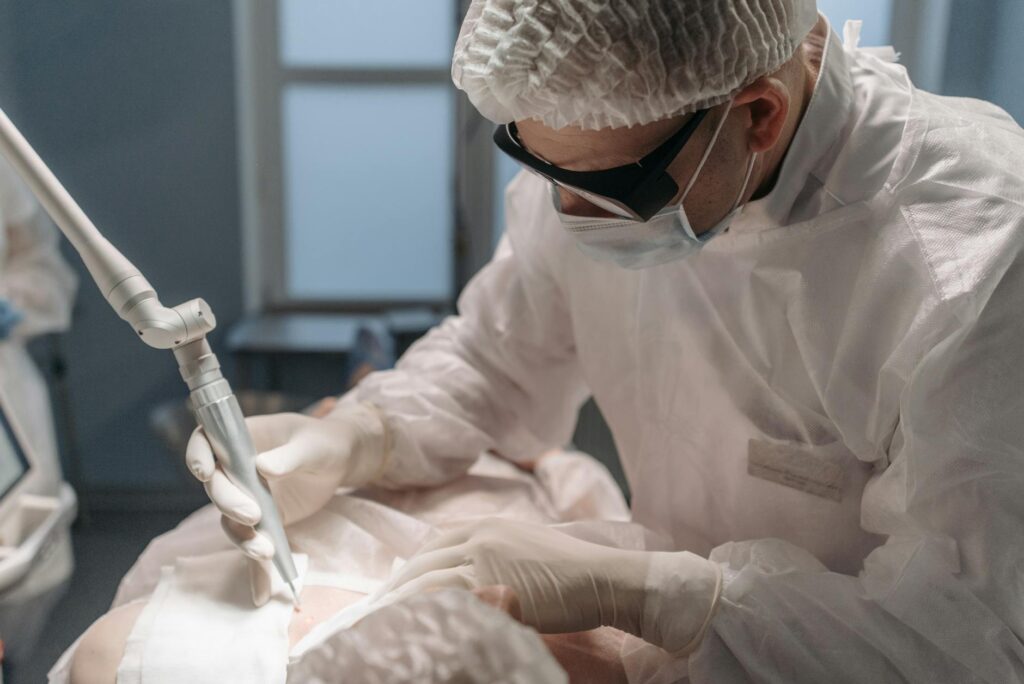
Fractional CO2 laser therapy works on hypertrophic raised acne scars by using concentrated beams of light to vaporize scar tissue and stimulate collagen remodeling beneath the skin’s surface. The results are substantial: clinical studies show scar depth improves by 43-80%, with 35% of patients achieving complete scar reduction and another 40% experiencing significant improvement of more than 50%. For someone with raised, thickened acne scars that have made their skin feel uneven or textured, fractional CO2 offers one of the most clinically supported treatment options available. This article examines how the laser actually remodels scar tissue, what results you can realistically expect, what the treatment protocol looks like, and important considerations like skin type, recovery time, and whether combining it with other therapies might improve outcomes.
Table of Contents
- How Much Can Fractional CO2 Actually Reduce Hypertrophic Acne Scars?
- What Is the Typical Treatment Timeline and How Many Sessions Are Required?
- How Does the Laser Actually Reduce Raised Scar Tissue?
- What Happens During Recovery, and How Much Downtime Should You Expect?
- Are There Differences Between High-Energy and Low-Energy Fractional CO2 Treatments?
- Can Combining Fractional CO2 With Other Treatments Improve Results?
- Which Types of Acne Scars Respond Best to Fractional CO2?
- Conclusion
How Much Can Fractional CO2 Actually Reduce Hypertrophic Acne Scars?
The clinical data on fractional CO2 is specific and measurable. A major clinical study using the Vancouver Scar Scale—a standardized tool for measuring scar appearance—found that scores dropped from 9.35 to 3.12 after treatment, with 92% of patients reporting overall satisfaction with their results. Another study found that 62.5% of scars with height greater than 2 millimeters were reduced below the 2mm threshold after treatment, meaning formerly visible raised bumps became noticeably flatter. The improvement in scar depth ranges from 43-80% depending on factors like scar type, starting severity, and your skin type, with an average improvement of 66.8% across studies.
However, these improvements aren’t absolute. While 35% of patients achieve nearly complete scar reduction, not everyone sees dramatic changes. The 40% who experience significant improvement (over 50% reduction) are different from the 35% who see nearly complete results. The remaining 25% of patients may see only modest improvement. This is why dermatologists emphasize realistic expectations: fractional CO2 doesn’t erase all scars completely, but it does meaningfully flatten and soften them.

What Is the Typical Treatment Timeline and How Many Sessions Are Required?
A standard fractional CO2 treatment course consists of six sessions spaced one month apart. This spacing is important—the skin needs time between treatments to rebuild collagen and for inflammation to settle before the next session. Most patients achieve 50-90% improvement in scar appearance within 6-12 months after completing the full treatment series, though improvement can continue for up to a year as collagen remodeling is an ongoing biological process.
The timeline means patience is required. You won’t see results immediately after your first session; instead, improvement builds gradually across the series of treatments. For many people with significant scarring, this six-month minimum commitment is worth it compared to other options, but if you need results faster, fractional CO2 may not be ideal. Additionally, the cost of six professional sessions can be substantial depending on your area and the size of the treatment zone.
How Does the Laser Actually Reduce Raised Scar Tissue?
Fractional CO2 lasers create thousands of microscopic thermal zones in the skin, vaporizing the top layers of scar tissue while heating deeper layers to trigger collagen remodeling. The “fractional” aspect means the laser treats only a fraction of the skin at a time, leaving surrounding healthy tissue intact to speed healing. For hypertrophic scars, which are raised because of excess collagen buildup, this simultaneous removal and remodeling is particularly effective.
The thermal injury from the laser tells your body that the scarred tissue needs to be rebuilt, and over weeks and months, the fibroblasts in your skin produce more organized, organized collagen instead of the disorganized, overbuilt collagen that forms raised scars. Consider someone with deep ice pick scars and some raised boxcar scars from teenage acne. The ice pick scars would likely respond very well to fractional CO2 because the laser can reach deep into the pitted areas. The raised portions would flatten somewhat, though boxcar scars generally respond less dramatically than ice pick or V-shaped scars because their flat, wide bottoms are harder to address than pointed pit types.

What Happens During Recovery, and How Much Downtime Should You Expect?
Most people experience crusting for a few days immediately after treatment. Your skin will look red and raw, similar to a moderate sunburn, and you’ll need to keep the area clean and moisturized while it heals. For about 2-3 weeks, mild erythema (redness), edema (swelling), and scaling are normal and expected. This is the active healing phase.
After this initial period, you can typically resume most activities, though you’ll want to avoid intense sun exposure and sweating workouts for a few additional weeks. About 32% of patients report side effects beyond the expected redness and crusting, most commonly transient symptoms like prolonged erythema or swelling. However, 12% of patients—particularly those with darker skin tones (Fitzpatrick skin types IV-VI)—experience delayed hyperpigmentation, where treated areas become temporarily darker. This can last weeks to months and is one of the most important downtime considerations for people with deeper skin. If you have a Fitzpatrick skin type IV or darker, discuss post-inflammatory hyperpigmentation risk with your dermatologist before committing to treatment.
Are There Differences Between High-Energy and Low-Energy Fractional CO2 Treatments?
Dermatologists can adjust the laser’s energy settings, and this choice significantly affects both results and risks. High-energy settings produce faster and more dramatic short-term scar thickness reduction, which is why some clinics promote them. However, high-energy treatments come with a tradeoff: increased risk of prolonged erythema, swelling, and post-inflammatory hyperpigmentation—especially in people with darker skin tones.
For Fitzpatrick skin types IV-VI, high-energy settings can create new problems while solving old ones. Low-energy settings are gentler and carry lower hyperpigmentation risk, making them more suitable for people with darker skin and for pediatric patients, where they’ve shown proven efficacy with fewer complications. Low-energy treatments may require more sessions to achieve the same results as high-energy versions, but they distribute the treatment load across time in a way that allows better healing between sessions. Discuss with your dermatologist whether you’re a candidate for lower-energy, longer-course treatment versus higher-energy, faster results.

Can Combining Fractional CO2 With Other Treatments Improve Results?
Recent clinical research shows that sequential treatment combining botulinum toxin A, fractional CO2 laser, and topical growth factors produces enhanced outcomes for hypertrophic scars compared to laser treatment alone. The botulinum toxin reduces muscle tension that can pull on scars, the laser addresses the tissue structure directly, and topical growth factors support collagen remodeling—three different mechanisms working together. This combined approach isn’t standard everywhere, so you’d need to ask your dermatologist whether they offer or recommend this multi-modal strategy.
The evidence supporting combination therapy is compelling, but it also increases cost and complexity. Not every patient needs or wants additional treatments on top of the six-session laser series. However, if your scars are severe or haven’t improved adequately after an initial fractional CO2 series, this sequential approach is worth exploring.
Which Types of Acne Scars Respond Best to Fractional CO2?
Not all acne scars are created equal, and fractional CO2’s effectiveness depends significantly on scar morphology. Dotted ice pick scars and V-shaped scars show the best response to fractional CO2 because the laser can penetrate deep into the narrow pit and the thermal energy can effectively remodel the sides. Atrophic and dotted scars also respond well.
In contrast, boxcar scars—which have flat, wide bottoms—and rolling scars—which have gentle, undulating contours—show inferior response because the laser is less able to address the flat-bottomed or rounded shapes effectively. This distinction matters when setting expectations. If your scarring is predominantly rolling or boxcar scars, fractional CO2 may produce modest improvements, and your dermatologist might recommend combining it with subcision (a procedure that releases tethered scar tissue from below) or other complementary treatments. For ice pick scarring, fractional CO2 alone is often highly effective.
Conclusion
Fractional CO2 laser therapy is one of the most clinically proven treatments for hypertrophic raised acne scars, with studies consistently showing 43-80% improvement in scar depth and 92% patient satisfaction rates. The typical treatment course of six sessions spaced one month apart produces 50-90% improvement in scar appearance within 6-12 months, though individual results vary based on scar type, skin type, and the energy settings used. Recovery involves crusting and redness for 2-3 weeks, and while most side effects are minor, hyperpigmentation risk is real—particularly for people with darker skin tones.
If you’re considering fractional CO2, the key next step is a consultation with a dermatologist experienced in laser scar treatment. Bring photos of your scarring, ask specifically about their results in your skin type, and discuss whether lower-energy or higher-energy settings make sense for your situation. Ask also whether combination therapy with botulinum toxin or other treatments might improve outcomes. The data supports fractional CO2 as effective, but it’s not a one-size-fits-all solution—your individual scar morphology and skin characteristics will determine whether it’s your best option.