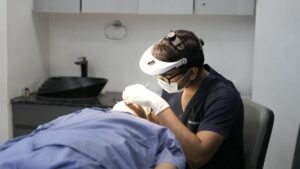
The fanning technique in subcision works by breaking the fibrous bands that tether rolling scars to deeper tissue layers, allowing the depressed skin to lift back toward the surface. When a dermatologist or cosmetic surgeon performs subcision on a rolling scar, they insert a blunt cannula beneath the scar and move it in a fanning motion—spreading outward in multiple directions—to physically separate the scar tissue from the underlying dermis and subcutaneous tissue. This mechanical release of tension is what creates the immediate improvement you see after the procedure, as the skin gradually rebounds and the scar becomes less noticeable.
This article covers how the fanning motion works specifically for rolling scars, why this technique is preferred over other subcision methods, what results you can realistically expect, and what limitations exist. Rolling scars are depressed scars that have sloped edges rather than sharp boundaries, making them appear as indentations across the skin. Unlike ice-pick or boxcar scars, which have defined edges, rolling scars result from fibrosis beneath the skin that literally pulls the surface downward. The fanning technique addresses this root cause—not the scar surface itself, but the adhesions holding it in place—which is why it’s considered one of the most effective approaches for this particular scar type.
Table of Contents
- How Does the Fanning Motion Improve Rolling Scars Beneath the Skin?
- The Mechanics of Subcision Cannulas and Fanning Technique Precision
- Why Rolling Scars Respond Better to Fanning Than Other Scar Types
- Combining Fanning Subcision with Other Treatments for Maximum Results
- Realistic Limitations and When Fanning Subcision Falls Short
- What to Expect During Recovery After Fanning Subcision
- The Future of Subcision: Innovations Beyond Traditional Fanning
- Conclusion
How Does the Fanning Motion Improve Rolling Scars Beneath the Skin?
When the cannula fans outward beneath a rolling scar, it creates multiple small “breaks” in the scar tissue adhesions. Each pass in a different direction—up, down, left, right, and diagonally—disrupts the tight connections between the scar tissue and healthy tissue below. Imagine a piece of fabric glued down to a surface: fanning the adhesive with a tool doesn’t remove the glue entirely, but it weakens and displaces it enough that the fabric can lift away. In your skin, this weakened adhesion allows the dermis to remodel itself and the skin surface to flatten.
The key advantage for rolling scars specifically is that these scars sit in a depression created by downward-pulling tension. Once that tension is released through the fanning motion, gravity and the skin’s natural elasticity help pull the surface back up. Studies show that subcision alone—even without additional treatments—can reduce rolling scar depth by 50-75% in a single session, with the fanning technique being the most thorough approach to ensuring all adhesions are addressed. However, if the rolling scar is very severe or the surrounding skin has lost significant elasticity (common in older patients or those with sun damage), fanning subcision alone may not flatten the scar completely, and combination treatments with fillers or laser therapy may be needed.

The Mechanics of Subcision Cannulas and Fanning Technique Precision
Subcision cannulas come in various gauges, typically ranging from 18-gauge to 21-gauge, with smaller gauges allowing for more precise, controlled fanning and larger gauges covering more tissue area with each pass. The dermatologist uses a specific motion—not stabbing downward, but inserting the cannula at an angle and then moving it side-to-side and in circular motions—to fan across the area beneath the scar. This differs significantly from older, more aggressive techniques that involved dragging a larger needle upward through the tissue, which caused more trauma and a longer healing period.
The precision of the fanning motion matters because incomplete fanning leaves islands of adhesion that continue to tether the scar, limiting the final result. A thorough fanning session may require 20-40 individual passes across the affected area, depending on the scar’s size. Conversely, overly aggressive fanning—though rare—can cause excessive bruising and inflammation that might temporarily worsen the scar’s appearance. The typical recovery period is 1-2 weeks of visible bruising, but the actual remodeling of scar tissue continues for 6-12 weeks after the procedure as new collagen is laid down.
Why Rolling Scars Respond Better to Fanning Than Other Scar Types
rolling scars respond exceptionally well to subcision fanning because their defining feature—the sloped depression caused by tethered tissue—is exactly what this technique addresses. In contrast, boxcar scars have vertical walls that require different approaches like excision or punch grafting to improve their walls, and ice-pick scars are too narrow and deep for subcision alone to be effective. For rolling scars, releasing the tether means releasing the cause, so improvements can be substantial. A typical example: A 32-year-old patient with rolling scars across the cheeks from moderate acne undergoes one subcision session with fanning.
Before the procedure, the scars measure 2-3mm in depth. Three months after the procedure, they measure 0.5-1mm in depth because the skin has lifted back as the adhesions healed in a looser state. In some cases, rolling scars nearly disappear entirely, while in others they become subtle enough that they’re not noticeable without direct lighting. The variability depends on scar age, skin type, and the patient’s ability to heal and remodel collagen.
Combining Fanning Subcision with Other Treatments for Maximum Results
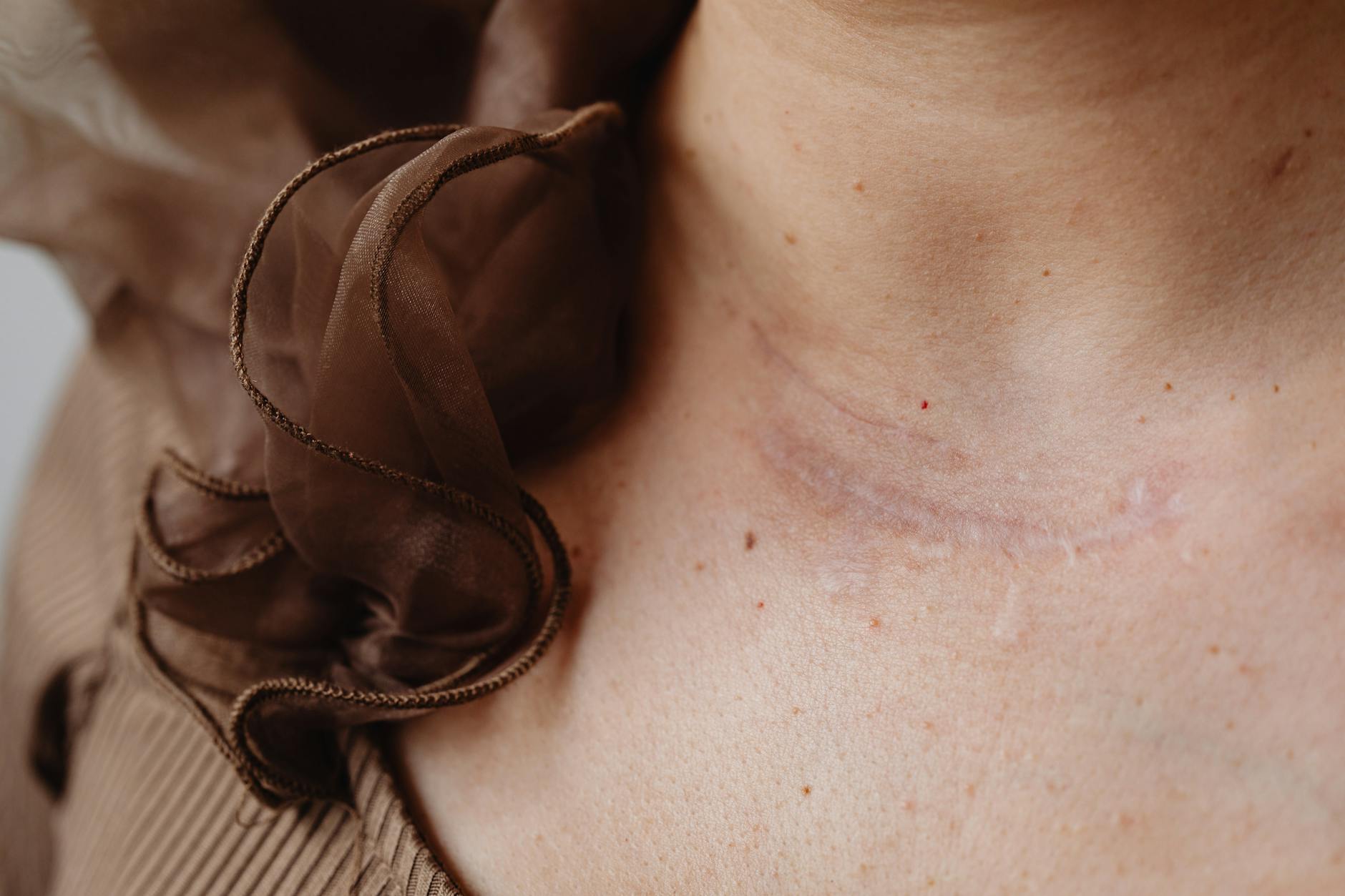
While subcision fanning is powerful, combining it with complementary treatments often produces better results than subcision alone, especially for severe rolling scars. Dermatologists frequently pair subcision with microneedling (performed 2-4 weeks after subcision) or with laser resurfacing to stimulate additional collagen production and even out any remaining surface irregularities. Fillers like hyaluronic acid can also be injected immediately after subcision to further lift the scar while the skin heals.
The tradeoff is cost and recovery time: subcision alone might cost $1,500-3,000 per session, while adding microneedling adds another $500-1,000, and adding filler adds another $400-800 depending on volume. Recovery is also more involved with combination treatments—you’ll experience more inflammation, longer downtime, and stricter activity restrictions. However, patients who commit to combination therapy often see 80-95% improvement in rolling scars, compared to 50-75% for subcision alone. For milder rolling scars, fanning subcision alone may be sufficient.
Realistic Limitations and When Fanning Subcision Falls Short
Fanning subcision is not a guaranteed complete cure for rolling scars, and understanding its limitations is crucial for setting appropriate expectations. Very old scars (more than 5-10 years old) have calcified and stabilized collagen networks that are sometimes resistant to remodeling, making subcision less effective. Additionally, patients with darker skin tones may experience post-inflammatory hyperpigmentation (dark marks) in the treated area, which can take months to fade and may be more bothersome than the original scar for a period of time.
Another limitation: if the patient has poor skin elasticity due to age, sun damage, or genetics, the skin may not rebound effectively even after adhesions are released. In these cases, the scar may improve by only 20-30% despite perfect fanning technique. Patients on blood thinners, those with bleeding disorders, or those prone to keloid formation are also not ideal candidates, as excessive bleeding or abnormal scar formation during healing can paradoxically worsen the appearance. Smoking also impairs healing and reduces the effectiveness of subcision by up to 40%.
What to Expect During Recovery After Fanning Subcision
Immediately after the procedure, the treated area will be swollen and bruised, often appearing temporarily worse than before subcision. The swelling peaks around day 2-3 and gradually improves over 7-10 days, with most visible bruising resolving within 10-14 days. Pain is generally mild to moderate and managed with over-the-counter pain relievers; the sensation is often described as soreness similar to a deep muscle bruise.
During the first two weeks, you should avoid intense exercise, saunas, swimming, and anything that raises blood pressure significantly, as these activities can prolong bruising and swelling. You’ll also avoid direct sun exposure and use broad-spectrum SPF 30+ sunscreen. By week 3-4, most people return to normal activities, though the scar remodeling continues invisibly for several months. Final results typically appear around the 3-month mark, with some continued subtle improvement up to 6 months as collagen continues to remodel.
The Future of Subcision: Innovations Beyond Traditional Fanning
Newer subcision technologies are emerging that may offer improvements over manual fanning in the coming years. Radiofrequency-assisted subcision combines traditional fanning with radiofrequency energy to heat the deepest tissue layers, theoretically stimulating additional collagen production and potentially improving outcomes.
Some practices are also exploring ultrasound-guided subcision, which allows the surgeon to see exactly where the adhesions are located and ensure thorough fanning in all affected areas. Despite these innovations, traditional manual fanning remains the gold standard and is likely to remain so because of its safety profile, precision, and proven effectiveness. The technique has evolved incrementally—better cannula designs, improved anesthesia protocols, more refined motion patterns—but the fundamental principle of releasing scar adhesions through mechanical fanning remains unchanged and highly effective.
Conclusion
The fanning technique in subcision directly addresses the root cause of rolling scars by breaking the adhesions that pull skin downward, allowing the surface to rebound and flatten. For rolling scars specifically, this approach is superior to other scar treatments because it targets the mechanism that creates these particular scars, resulting in 50-75% improvement in most cases and sometimes near-complete resolution. Results continue to improve for several months after the procedure as collagen remodels.
If you have rolling scars and are considering subcision, work with a dermatologist or cosmetic surgeon who has significant experience with this technique and can assess whether your scars are appropriate candidates. Combination treatments often yield superior results, and realistic expectations—understanding that some scars may not completely disappear—will help you feel satisfied with your outcomes. Most patients find that even partial improvement from subcision makes a meaningful difference in their confidence and quality of life.