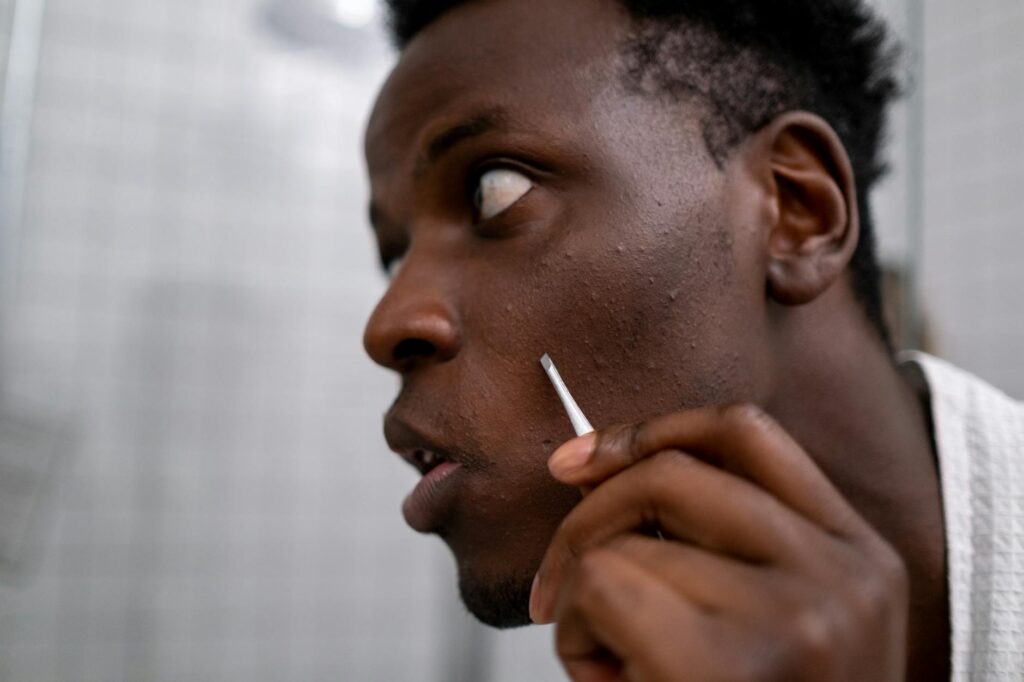
Several promising experimental acne treatments are currently moving through research pipelines, targeting the condition from angles that existing therapies simply do not address. As of recent reports, these include novel approaches like bacteriophage therapy that uses viruses to selectively kill acne-causing bacteria, sebaceous gland-targeting compounds that aim to shrink oil production at the cellular level, and microbiome-based treatments designed to rebalance skin flora rather than wipe it out with broad-spectrum antibiotics. Some of these candidates have reached Phase II and Phase III clinical trials, meaning they have moved beyond initial safety testing and are being evaluated for real-world effectiveness in acne patients. What makes this generation of experimental treatments noteworthy is how different the mechanisms are from the retinoids, antibiotics, and benzoyl peroxide formulations that have dominated acne care for decades. Researchers are exploring everything from nitric oxide-releasing therapies to RNA-based approaches that silence specific genes involved in sebum overproduction.
For example, one line of research has focused on using small interfering RNA to reduce the activity of sebocytes, the cells responsible for producing the oily substance that clogs pores. This article covers the major categories of experimental acne treatments in development, what stage of research each has reached, their limitations, and what patients should realistically expect in terms of timelines and access. Beyond these headline therapies, there are also experimental drug delivery systems, vaccine-like approaches targeting inflammatory pathways, and repurposed medications from other fields being tested for acne. Each comes with its own set of trade-offs, and not all of them will make it to pharmacy shelves. Understanding what is genuinely in the pipeline versus what is speculative helps separate real hope from hype.
Table of Contents
- What New Experimental Acne Treatments Are Currently Being Studied in Clinical Trials?
- How Microbiome-Based Acne Therapies Differ from Traditional Antibiotics
- Vaccine-Like Approaches to Preventing Acne Inflammation
- How to Evaluate Whether an Experimental Acne Treatment Is Worth Watching
- Why Many Promising Acne Treatments Fail Before Reaching Patients
- Nitric Oxide and Novel Drug Delivery Systems for Acne
- What the Next Five Years May Look Like for Acne Treatment Research
- Conclusion
- Frequently Asked Questions
What New Experimental Acne Treatments Are Currently Being Studied in Clinical Trials?
The experimental acne treatment landscape spans several distinct categories, each targeting a different part of the acne formation process. Bacteriophage therapy is among the most talked-about. Phages are viruses that infect and destroy specific bacteria without harming surrounding tissue or beneficial microbes. Researchers have been investigating phages that target Cutibacterium acnes, the bacterium most directly linked to inflammatory acne. Unlike traditional antibiotics, phages are highly selective, which theoretically means they could eliminate problematic bacterial strains while leaving the rest of the skin microbiome intact. However, phage therapy for acne remains in relatively early clinical stages, and questions about formulation stability, dosing, and long-term resistance patterns have not yet been fully answered. Another major area involves sebaceous gland modulators.
Compounds in this class aim to reduce sebum production without the systemic side effects associated with isotretinoin. Some candidates work by inhibiting specific enzymes within the sebaceous gland, while others target hormonal receptors locally rather than systemically. Clascoterone, a topical antiandrogen, was one example that completed trials and received approval in recent years, and it has opened the door for similar compounds still in development. The distinction matters because topical antiandrogens could potentially offer hormonal acne relief to patients who cannot or do not want to take oral hormonal medications. JAK inhibitors represent yet another frontier. Originally developed for conditions like rheumatoid arthritis and alopecia, Janus kinase inhibitors are being evaluated for their anti-inflammatory properties in acne. Early research has suggested that topical JAK inhibitors may reduce the inflammatory cascade that turns a clogged pore into a red, painful lesion. The comparison to existing anti-inflammatory acne treatments like dapsone or certain antibiotics is relevant here: JAK inhibitors may offer more targeted inflammation control, but they also carry concerns about immune suppression that are still being studied in the context of skin application.
How Microbiome-Based Acne Therapies Differ from Traditional Antibiotics
Microbiome-based acne treatments represent a philosophical shift in how dermatology approaches bacterial involvement in acne. Traditional antibiotics, whether topical clindamycin or oral doxycycline, work by killing bacteria broadly. This approach is effective in the short term but has well-documented downsides: antibiotic resistance develops over time, beneficial skin bacteria are collateral damage, and long-term use carries systemic risks including gut flora disruption. Microbiome therapies aim to do the opposite. Instead of killing bacteria indiscriminately, they attempt to introduce or promote beneficial bacterial strains that outcompete or suppress the pathogenic strains of C. acnes associated with inflammatory breakouts. Some companies have been developing topical probiotics and bacterial transplant formulations designed to shift the skin’s microbial balance.
One approach involves applying live cultures of bacterial strains that naturally produce antimicrobial peptides effective against acne-causing bacteria. Another involves postbiotics, the metabolic byproducts of beneficial bacteria, applied in cream or serum form. The idea is that these byproducts create an environment hostile to harmful strains without requiring live organisms to survive on the skin surface. Early-stage studies have shown some promise in reducing inflammatory lesion counts, but the field is still working through fundamental challenges around keeping live bacterial formulations stable and viable in commercial products. However, if you have severe nodulocystic acne or acne that has not responded to standard treatments, microbiome-based therapies are unlikely to be your near-term solution. Most of these treatments are being studied for mild to moderate acne, and their effects tend to be more modest than what isotretinoin or high-dose antibiotics can achieve. There is also the limitation that skin microbiome composition varies significantly between individuals and even between different areas of the same person’s face, making a one-size-fits-all probiotic approach difficult. Researchers are exploring personalized microbiome mapping as a way to tailor treatments, but this adds complexity and cost that would limit accessibility if it reaches the market.
Vaccine-Like Approaches to Preventing Acne Inflammation
One of the more ambitious experimental directions involves developing something resembling an acne vaccine. To be clear, this is not a vaccine against acne in the way we think about vaccines for infectious diseases. Instead, researchers have been working on immunological approaches that target specific inflammatory toxins produced by C. acnes. The bacterium produces a protein called Christie-Atkins-Munch-Petersen (CAMP) factor, which contributes to the inflammation that turns a simple clogged pore into an angry, swollen lesion. By developing antibodies that neutralize CAMP factor, researchers hope to prevent the inflammatory response without killing the bacteria or affecting the broader immune system.
This line of research gained attention several years ago when preclinical studies in mouse models showed that antibodies against CAMP factor could reduce inflammatory markers associated with acne. Translating these results to humans has proven difficult, as mouse skin differs substantially from human skin in terms of sebaceous gland density, microbiome composition, and immune response. As of recent reports, no CAMP factor-targeting therapy has completed large-scale human trials, though the concept remains active in academic research. The appeal is obvious: a treatment that could be administered once or periodically to provide lasting protection against inflammatory acne would be transformative, particularly for adolescents and young adults who face years of recurring breakouts. The limitation worth noting is that even if such a treatment proves effective, it would likely address only the inflammatory component of acne. Non-inflammatory comedonal acne, the blackheads and whiteheads that result from pore blockage without significant bacterial involvement, would require separate treatment. An anti-CAMP factor therapy would most logically be combined with a retinoid or other comedolytic agent, meaning it would complement existing treatments rather than replace them entirely.

How to Evaluate Whether an Experimental Acne Treatment Is Worth Watching
Not all experimental treatments that generate headlines will reach patients. The pharmaceutical development pipeline is famously brutal, with the vast majority of drug candidates failing between early research and market approval. For acne treatments specifically, there are several markers that distinguish serious contenders from long shots. First, look at what phase of clinical trials a treatment has reached. Phase I trials test safety in a small number of people. Phase II trials evaluate effectiveness and dosing in a larger group. Phase III trials are large-scale studies that compare the treatment to existing options or placebo. Historically, only a fraction of drugs that enter Phase II trials ever complete Phase III and reach approval. The trade-off patients face when considering experimental treatments is between access and certainty.
Enrolling in a clinical trial provides access to cutting-edge therapies at no cost, and trial participants receive close medical monitoring. However, you may receive a placebo, the treatment may not work, and side effects may emerge that were not predicted from earlier testing. Compared to sticking with proven options like isotretinoin, adapalene, or established combination therapies, clinical trial participation involves real uncertainty. For someone with severe acne that has not responded to existing treatments, that uncertainty may be worth accepting. For someone with mild acne who has not yet tried first-line therapies, joining a trial for an experimental treatment typically does not make sense and most trial protocols would exclude such candidates anyway. Another practical consideration is geography. Clinical trials for acne treatments are typically concentrated at academic medical centers and dermatology research sites in major metropolitan areas. Databases like ClinicalTrials.gov allow patients to search for active trials by condition and location, which is the most reliable way to find legitimate opportunities. Be cautious about any company or clinic that charges patients to participate in what they describe as an experimental treatment. Legitimate clinical trials do not charge participants.
Why Many Promising Acne Treatments Fail Before Reaching Patients
The gap between a promising lab result and an approved acne treatment is enormous, and understanding why can temper expectations appropriately. One of the most common failure points is the transition from in vitro or animal studies to human trials. A compound that kills C. acnes in a petri dish may not penetrate human skin effectively. A treatment that works on mouse models may not account for the unique density and activity of human sebaceous glands. The skin is a remarkably effective barrier, and topical drug delivery remains one of the most challenging problems in pharmaceutical development. Regulatory hurdles add another layer of difficulty. Because acne is not life-threatening, regulatory agencies generally apply a high bar for safety in acne treatments.
Side effects that might be acceptable in an oncology drug are disqualifying for an acne medication, particularly one intended for adolescents. This is one reason why the side effect profile of isotretinoin, which includes teratogenicity and potential psychiatric effects, has made regulators cautious about approving new systemic acne treatments. Any experimental systemic therapy will face intense scrutiny on safety grounds, which extends development timelines and increases costs. A limitation that patients should be aware of is the publication bias in acne research. Positive results are more likely to be published and publicized than negative ones. A company announcing promising Phase II results will generate press coverage; the quiet discontinuation of a program after disappointing Phase III data often goes unnoticed. This creates an impression that there are more viable treatments in the pipeline than there actually are. When reading about experimental acne treatments, pay attention to who is funding the research and whether results have been published in peer-reviewed journals rather than only in press releases or conference abstracts.

Nitric Oxide and Novel Drug Delivery Systems for Acne
Nitric oxide-releasing compounds represent an interesting niche in experimental acne research. Nitric oxide has antimicrobial properties and plays a role in wound healing and inflammation modulation. Researchers have been developing topical formulations that release nitric oxide gradually upon application, aiming to kill bacteria and reduce inflammation simultaneously. One approach has involved encapsulating nitric oxide in nanoparticle carriers that penetrate into pores and release the gas where C. acnes colonies reside.
Early clinical data has suggested efficacy comparable to some existing topical antibiotics, with the advantage that bacteria are unlikely to develop resistance to nitric oxide in the same way they do to traditional antibiotics. Drug delivery innovation extends beyond nitric oxide. Researchers are experimenting with microneedle patches, liposomal encapsulation, and nanocrystal formulations designed to improve how existing and new acne compounds penetrate the skin. For instance, a microneedle patch applied directly over a cystic lesion could theoretically deliver anti-inflammatory agents or retinoids directly into the deeper layers of skin where the inflammation originates, bypassing the surface barrier that limits the effectiveness of conventional topical treatments. These delivery systems could potentially make existing drugs work better rather than requiring entirely new molecules, which would shorten the path to approval since the active ingredients already have established safety profiles.
What the Next Five Years May Look Like for Acne Treatment Research
The trajectory of acne treatment research suggests that the next several years will bring incremental advances rather than a single breakthrough. The treatments most likely to reach patients in the near term are refinements of existing drug classes, such as new retinoid formulations with improved tolerability, topical antiandrogens beyond clascoterone, and combination products that pair established ingredients in novel ways. The more transformative approaches like phage therapy, microbiome treatments, and anti-inflammatory vaccines face longer development timelines and less certain outcomes.
What is changing, perhaps more importantly than any single drug candidate, is the broader understanding of acne as a complex, multifactorial condition rather than a simple bacterial infection. This shift in perspective is driving research toward combination and personalized approaches. The future of acne treatment may look less like finding a single magic bullet and more like matching individual patients to the right combination of therapies based on their specific acne drivers, whether those are hormonal, microbial, inflammatory, or related to skin barrier function. For patients living with acne now, staying informed about clinical trials and maintaining an open dialogue with a dermatologist about emerging options remains the most practical path to accessing new treatments as they become available.
Conclusion
Experimental acne treatments currently in research span a wide range of approaches, from bacteriophage therapy and microbiome-based formulations to sebaceous gland modulators, JAK inhibitors, nitric oxide-releasing compounds, and vaccine-like strategies targeting inflammatory toxins. Each of these approaches addresses a different aspect of acne formation, and collectively they represent the most diverse pipeline of acne therapies in decades. However, most remain in early to mid-stage clinical development, and the historical attrition rate for drug candidates means that only a fraction will ultimately reach patients.
For anyone dealing with acne today, the practical takeaway is twofold. First, proven treatments like retinoids, benzoyl peroxide, and when appropriate isotretinoin remain the most reliable options and should not be abandoned in anticipation of something better arriving soon. Second, patients with treatment-resistant acne should consider discussing clinical trial participation with their dermatologist, as trials offer the only legitimate early access to experimental therapies. The acne research landscape is genuinely more active and more innovative than it has been in years, and while patience is required, the direction of the science is encouraging.
Frequently Asked Questions
Can I access experimental acne treatments without joining a clinical trial?
Generally, no. Legitimate experimental treatments are only available through clinical trials or, in rare cases, compassionate use programs for severe conditions. Any product marketed as an experimental acne treatment outside of a clinical trial setting should be viewed with skepticism, as it likely has not undergone rigorous testing.
How long does it typically take for an experimental acne treatment to go from Phase I trials to FDA approval?
The timeline varies widely, but historically the process from first-in-human studies to regulatory approval takes anywhere from five to ten years or longer. Many candidates never complete the process. Acne treatments may face particularly long timelines due to stringent safety requirements for a non-life-threatening condition.
Is phage therapy for acne available anywhere in the world right now?
As of recent reports, phage therapy for acne is not widely available as a standard treatment in any major market. Some countries with different regulatory frameworks have explored phage therapy for other bacterial infections, but acne-specific phage formulations remain largely in the clinical trial stage.
Will an acne vaccine eliminate the need for daily skincare treatments?
Even in the most optimistic scenario, vaccine-like approaches being researched would address only the inflammatory component of acne. Patients would likely still need topical treatments for comedonal acne, such as retinoids or salicylic acid. A vaccine-like therapy would complement existing treatments rather than replace them.
Are there risks to joining a clinical trial for an experimental acne treatment?
Yes. Potential risks include unknown side effects, receiving a placebo instead of the active treatment, and the possibility that the treatment simply does not work. However, clinical trials involve close medical monitoring, and participants can typically withdraw at any time. Legitimate trials never charge participants for the experimental treatment.