CO2 laser downtime depends on which type of treatment you receive. Fractional CO2 laser typically requires 5 to 10 days before your skin looks presentable enough for social situations, while full ablative CO2 laser demands 10 to 21 days of active healing. During this recovery period, your skin will progress through distinct phases—from acute redness and swelling in the first three days, through peak peeling and sensitivity in week one, and finally into a gradual fade of visible symptoms over weeks two through six.
The process isn’t random; each day brings predictable changes that give you a realistic roadmap for planning time away from work and social commitments. What many people don’t realize is that visible downtime and complete healing are different timelines. While you might look mostly presentable by day 10 to 14 depending on the treatment intensity, redness can persist for 2 to 6 months underneath the surface as your skin rebuilds collagen. This article walks through what your skin actually looks like day by day, so you can prepare mentally and logistically for what’s coming.
Table of Contents
- What Happens in the First Three Days After CO2 Laser?
- Why Days 4 Through 7 Represent Peak Active Downtime
- The Transition Phase—When You Can Actually Return to Life
- Managing the Downtime Strategically—Treatment Intensity vs. Recovery Timeline
- Hypersensitivity and When Healing Doesn’t Go As Expected
- Fractional Versus Ablative—Different Treatments, Different Timelines
- Long-Term Healing—What Happens After Visible Downtime Ends
- Conclusion
What Happens in the First Three Days After CO2 Laser?
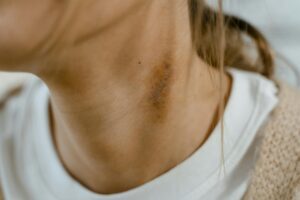
The first 72 hours after CO2 laser treatment are the most dramatic. Your skin will be intensely red, visibly swollen, tight, and hot to the touch—the appearance most closely resembles a severe sunburn you’d get after several hours in direct sun without protection. This is especially pronounced immediately after treatment through day 1, where the redness peaks and your face may feel like it’s radiating heat. If you’ve had fractional CO2, the effect is somewhat less intense than ablative treatment, but the principle is identical: the laser has deliberately created controlled injury to trigger healing and collagen remodeling. By day 2 or 3, you’ll notice mild peeling beginning to emerge, usually starting around the chin and cheeks.
Your skin might feel tight and uncomfortable, and any movement of your face—smiling, frowning, even speaking a lot—can feel like your skin is pulling uncomfortably. Don’t panic; this is the expected inflammatory response. However, this is where you need to distinguish between fractional and ablative: if you had fractional CO2, day 3 might be tolerable with heavy foundation. If you had full ablative, day 3 is still firmly in the “cannot go anywhere in public” category. The ablative procedure removes the entire top layer of skin, so the inflammation is much more pronounced.
Why Days 4 Through 7 Represent Peak Active Downtime
Days 4 through 7 are when most people hit the peak of their downtime. This is when significant visible peeling accelerates—your skin will actually peel in flakes and sheets, and the texture can look rough and patchy. Simultaneously, your skin’s hypersensitivity reaches its maximum; if you touch your face or apply even gentle products, it may sting or feel raw. This is also the period when makeup, even heavy-coverage foundation, tends to look cakey and obvious because of the underlying texture, making it nearly impossible to appear “normal” at work or in social settings. The practical consequence is that most people are unable to return to their normal work or social life without a significant excuse. If you have flexibility to work from home, this is when you’d want to use it.
If you work in retail, hospitality, or any client-facing role, this is the week you’re simply not available. Many dermatologists specifically advise patients to plan for this week as non-negotiable downtime. The good news is that by day 7, the end is in sight—the severity typically begins to ease, even though peeling may continue. A common misconception is that redness equals visibility. You can technically have redness without severe peeling and manage it with makeup. But in week one, you typically have both simultaneously, which is why it’s the most challenging period visually.
The Transition Phase—When You Can Actually Return to Life
Starting in week 2, your recovery trajectory shifts noticeably. The visible peeling begins to slow down and eventually subsides, and the redness, while still present, starts fading more obviously with each passing day. By the end of week 2, many people can return to normal activities—going to work, social outings, mild exercise. However, “can return” doesn’t mean “no one will notice anything”; the redness is still visible if someone looks closely, which is why week 2 is often called “social recovery” for fractional treatments. For ablative CO2, week 2 is still a time of caution.
You’re past the worst of it, but your skin is still in active healing mode, and sun exposure or irritation can set you back. If you had ablative treatment and you’re planning to return to normal life in week 2, you’re looking at having to either apply full-coverage makeup (which can feel heavy on healing skin) or explain to people why you look like you just had a medical procedure. Fractional treatments reach this “mostly normal with concealer” stage faster, sometimes by day 10 to 12. The key limitation in week 2 and 3 is that while you look better, your skin barrier is still compromised. You can’t use your regular skincare routine yet, you still need to be careful with sun exposure despite the appearance of healing, and irritating products can slow recovery. This is not the time to experiment with new serums or treatments.
Managing the Downtime Strategically—Treatment Intensity vs. Recovery Timeline
The biggest tradeoff in CO2 laser treatment is that more aggressive settings produce faster, more dramatic results, but they also produce longer downtime. Fractional CO2 at lower settings might have you feeling presentable by day 7 to 10, while higher settings or full ablative treatment extends downtime to 14 to 21 days. This isn’t a hidden variable—your dermatologist will discuss it upfront, and understanding this tradeoff helps you make a decision aligned with your life. Some people optimize for speed, choosing fractional CO2 specifically because they can’t take three weeks off. Others choose ablative or aggressive fractional because they’re willing to endure longer downtime for more dramatic results.
Both are legitimate approaches. The mistake is underestimating the downtime, telling your boss you’ll “probably be fine by day 5,” and then discovering you look significantly worse than anticipated on day 5. Practically, your recovery timeline also depends on your age, skin type, and how your individual skin responds to injury. Some people at 25 heal noticeably faster than someone at 50, and people with certain skin conditions may have slower or more complicated healing. If you have a history of prolonged redness after other procedures, mention this to your provider—it may influence whether you’re a better candidate for fractional versus ablative, or whether more conservative settings are appropriate for you.
Hypersensitivity and When Healing Doesn’t Go As Expected
During the first week to 10 days, your skin’s sensitivity to even mild irritants is heightened. Products you normally use without thinking—your regular cleanser, moisturizer, sunscreen—may cause stinging, burning, or additional redness. This is why post-treatment protocols always include a very simplified skincare routine: gentle cleanser, moisturizer, and medical-grade sunscreen, nothing else. If you deviate from this, you’re not necessarily delaying healing, but you’re increasing discomfort and potentially causing additional inflammation. A real limitation that catches some people off guard is that hypersensitivity means you need to avoid certain activities entirely. Sweating from exercise will irritate your healing skin, so workouts are off the table for at least 7 to 10 days.
Chlorine pools or hot tubs are forbidden for similar reasons. If you work in a dusty environment or around irritating substances, you may need to arrange different work temporarily. Some people work through this; most people can’t comfortably. Complications, though rare, do happen. If you develop signs of infection—increasing warmth, spreading redness, pus, fever—or if your healing seems stuck in week 3 with no improvement, contact your provider. Most complications resolve quickly with proper care, but ignoring them can extend downtime significantly. This is another reason why choosing an experienced provider matters; improper technique increases complication risk.
Fractional Versus Ablative—Different Treatments, Different Timelines
It’s worth pausing to understand that “CO2 laser downtime” isn’t a single category. Fractional CO2 treats only a percentage of the skin at a time, leaving untreated skin between the treated areas to facilitate faster healing. Ablative CO2 treats the entire surface in one pass, which is more aggressive but delivers more dramatic results.
The downtime difference is substantial: fractional might get you back to work in 10 days looking mostly normal with makeup, while ablative requires 14 to 21 days and more obvious visible healing. A practical example: someone might choose fractional CO2 because they have 10 days before their wedding, whereas someone addressing severe scarring might choose ablative because they’re willing to take three weeks off and want maximum collagen remodeling. Neither choice is wrong; they’re optimized for different priorities. Your provider should discuss this distinction and help you choose based on your results goals and life constraints.
Long-Term Healing—What Happens After Visible Downtime Ends
Once the visible downtime phase ends around day 14 to 21, your healing doesn’t stop; it shifts underground. Collagen remodeling—the actual process that delivers the anti-aging and scar-improvement benefits—peaks around 3 months post-treatment and continues at a slower rate for months beyond that. This means your skin continues improving and tightening even after you look completely normal in the mirror. This extended timeline also means you need to protect your healing skin from sun exposure for several months, not just days.
Redness can persist for 2 to 6 months even after you can cover it easily with makeup or concealer. This isn’t a failure of healing; it’s normal physiology. If you’re someone who can’t wear sunscreen consistently or who plans outdoor vacations in summer, scheduling CO2 laser in winter or early spring makes practical sense. The visible downtime might be done in March, but your skin will be sensitive to sun through June.
Conclusion
CO2 laser downtime is real, measurable, and depends on the treatment type—fractional CO2 requires 5 to 10 days before social recovery, while ablative CO2 demands 10 to 21 days of active healing. The first three days are the most visually dramatic, with intense redness and swelling similar to severe sunburn. Days 4 through 7 represent peak downtime, when most people cannot work or socialize comfortably.
Week 2 onward brings a noticeable shift, with peeling subsiding and redness beginning to fade, though full recovery—including the deep collagen remodeling that delivers results—continues for months. If you’re considering CO2 laser treatment, use this timeline to plan realistically. Discuss your specific situation with your dermatologist, be honest about how much downtime you can actually accommodate, and choose between fractional and ablative based on your results goals versus your schedule constraints. The upfront investment of downtime is part of how CO2 laser delivers results that other treatments simply can’t match; understanding what that investment looks like day by day helps you make a decision you won’t regret.