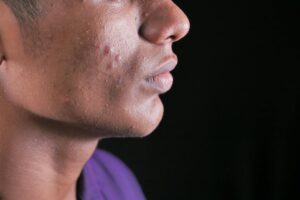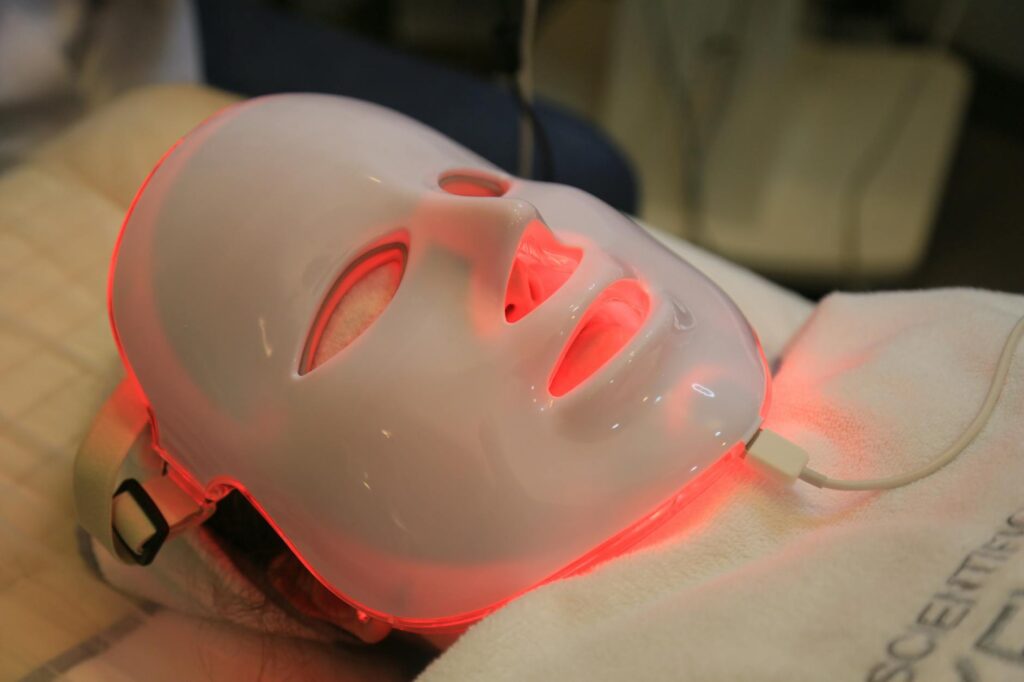
The CurrentBody LED Face Mask uses clinically proven blue and red light wavelengths to directly target acne-causing bacteria and reduce inflammation, with a Mount Sinai study showing 90% skin clearance in just two weeks when used twice weekly. For active acne, the blue light component (415nm wavelength) penetrates the surface to kill Cutibacterium acnes bacteria, while the red light (633nm wavelength) penetrates deeper to reduce the inflammation and redness that lingers after breakouts.
The mask is FDA-cleared for mild to moderate acne vulgaris, making it a legitimate clinical tool rather than a cosmetic gimmick. Beyond active breakouts, recent 2025 research shows that the combination of blue and red light also improves the appearance of acne scars and discoloration, though with specific limitations. This article covers how the technology actually works, what clinical evidence shows, what marks it can and cannot treat, the realistic usage protocol, and who should consider trying this device.
Table of Contents
- How Blue and Red Light Target Acne-Causing Bacteria
- Treating Acne Scars, Marks, and Post-Breakout Discoloration
- The Clinical Evidence Behind CurrentBody LED Therapy
- How to Use the CurrentBody Mask for Best Results
- What the CurrentBody Mask Cannot Do and Important Limitations
- Timeline and Realistic Expectations for Results
- Is the CurrentBody LED Mask the Right Tool for Your Skin?
- Conclusion
How Blue and Red Light Target Acne-Causing Bacteria
The CurrentBody mask’s blue light operates at a 415nm wavelength, which sits directly within the absorption range of porphyrins produced by acne bacteria. Cutibacterium acnes (formerly called Propionibacterium acnes) generates these light-sensitive compounds as part of its metabolism, and when exposed to the right wavelength, the bacteria are effectively destroyed through photochemical effects. This is why blue light acne treatments have become standard in dermatology offices and are increasingly used in at-home devices. The bacteria doesn’t develop resistance to light the way it can develop resistance to antibiotics, which makes this approach valuable for people who’ve struggled with bacterial resistance or antibiotic side effects.
The red light (633nm wavelength) works on a different principle and targets the aftermath of breakouts. This longer wavelength penetrates deeper into the skin’s dermis layer, where it stimulates collagen production and reduces inflammation. When you have active acne, inflammation is part of what makes breakouts visible and painful. Red light helps calm that inflammatory response, which is why it’s particularly useful for the redness and tenderness that persists even after bacteria are controlled. Together, blue light addresses the infection, while red light handles the inflammation and healing—which is why the most robust clinical evidence uses both wavelengths in combination rather than either one alone.

Treating Acne Scars, Marks, and Post-Breakout Discoloration
One of the most common questions about the CurrentBody mask is whether it can fix acne scars, and the answer is nuanced. Recent 2025 research shows that the combination of blue and red led therapy does produce statistically significant improvements in reducing the appearance of atrophic scars and improving their texture. This means it can help with scarring that has some textural component—scars that feel rough or slightly indented. For post-breakout marks that are flat discoloration (red or purple marks, or brown marks on darker skin), the mask works well because red light reduces inflammation and promotes healing of damaged capillaries.
However, there’s an important limitation: the mask will not effectively fill deep pockmarks or severely indented scars. If you have deep, crater-like scarring from severe acne, red light may help soften the appearance and improve surrounding skin quality, but it won’t substantially fill the indentation itself. This is worth understanding before you invest, especially if deep scarring is your primary concern. For post-breakout redness and surface-level textural irregularities, the evidence is strong. For deep atrophic scarring, it’s a supporting treatment that improves appearance without completely resolving the damage.
The Clinical Evidence Behind CurrentBody LED Therapy
The most significant study backing the CurrentBody mask is a 2006 Mount Sinai School of Medicine clinical trial that tested combination blue and red LED therapy on 24 participants (22 completed the full protocol). Participants were treated twice weekly for 4 weeks, and the results showed 90% skin clearance in just two weeks, with improvements continuing through the 12-week follow-up period. This wasn’t a small sample or a quick snapshot; the researchers tracked results over three months, which gives you a realistic sense of what sustained use produces.
The FDA clearance for mild to moderate acne vulgaris is also significant because it means the device has undergone safety and efficacy review by a regulatory body. It’s not just marketing claims—the technology has been formally evaluated. The 2025 research on scar improvement adds another layer of evidence, showing that the combination therapy produces measurable reductions in scar volume, not just subjective improvement. When you’re considering a $300+ device, clinical evidence like this matters more than testimonials.

How to Use the CurrentBody Mask for Best Results
The recommended protocol for the CurrentBody LED mask is specific: use it 3 to 5 times per week for at least 6 weeks to see meaningful results. This isn’t a “use it once and see improvement” tool—it requires consistency and patience. Each session typically runs 15-20 minutes, depending on the specific model. The frequency matters because the bacteria and inflammation need repeated exposure to the light wavelengths to be effectively suppressed.
Using it once a week won’t give you the results shown in the Mount Sinai study, which used twice-weekly treatment. The 6-week timeline is important to understand before starting. The Mount Sinai study showed 90% clearance in two weeks, but that was with twice-weekly use (more frequent than the standard recommendation). With the typical 3-5 times per week protocol, expect to see noticeable improvement around the 4-6 week mark, with continued improvement over 8-12 weeks. This matters if you’re hoping for quick results—if you have a major event in two weeks, the mask probably won’t be the primary solution, though it can be part of a broader skincare plan.
What the CurrentBody Mask Cannot Do and Important Limitations
The most important limitation is that this device targets bacteria and inflammation, not hormones or underlying causes of acne. If your acne is driven by hormonal imbalance, dietary factors, or skincare habits, the LED mask will help manage the visible breakouts but won’t address the root cause. Many people see good initial improvement (clearing bacteria), then plateau or see new breakouts form if the underlying trigger isn’t addressed. This doesn’t mean the device is ineffective—it means it’s one tool in a comprehensive acne management plan, not a standalone cure.
Another practical consideration: the mask works on accessible skin surface and the upper dermis. Cystic acne that develops deep under the skin may not be adequately treated by light therapy alone, and you’d benefit from seeing a dermatologist for complementary treatments like retinoids or in some cases oral medication. Additionally, some people report mild irritation or temporary dryness during the adjustment period, especially if they’re also using other active acne treatments like benzoyl peroxide or salicylic acid. You’ll want to introduce the mask gradually and monitor your skin’s response rather than using it intensely from day one alongside other strong treatments.
Timeline and Realistic Expectations for Results
Based on the clinical evidence, here’s what a realistic timeline looks like: By week 2-3, you may notice a slight reduction in inflammation and redness. By week 4-6, most people see a measurable decrease in active breakout count and improved skin texture. By week 8-12, if you’ve been consistent, the improvements become more obvious—reduced redness, fewer new breakouts, and visible scar texture improvement.
The Mount Sinai study showed 90% clearance in two weeks, but that was with twice-weekly professional treatment; home use typically requires longer to achieve similar results. One realistic example: a person with moderate acne starting the mask at 4 breakouts per week might see that drop to 1-2 per week by week 6, with significantly reduced redness around healing breakouts. Someone with post-acne marks might see those red and purple marks fade more noticeably by week 8-10. However, if you stop using the device, the benefits gradually diminish because the bacterial control and anti-inflammatory effects are only sustained with continued exposure to the light.
Is the CurrentBody LED Mask the Right Tool for Your Skin?
The CurrentBody mask makes most sense if you have mild to moderate acne with an active bacterial component, post-breakout redness that persists, or mild acne scarring with texture. It’s particularly valuable for people who want to avoid or reduce oral antibiotics, or who’ve already developed antibiotic resistance. If you’re looking for a long-term maintenance tool that doesn’t require prescriptions or ongoing medication costs, the upfront investment can pay off over months of use.
The device is less likely to be a game-changer if your acne is primarily hormonal, severe and cystic, or deeply scarred with significant indentation. In those cases, you’d benefit from dermatological consultation alongside or instead of the LED mask. The mask also requires consistent use—if you’re someone who forgets to use devices, a topical retinoid or benzoyl peroxide might be more practical. That said, for the stated indications (mild to moderate acne, post-breakout marks, and surface scar texture), the clinical evidence is solid enough to make this a reasonable option worth trying if other approaches haven’t worked well.
Conclusion
The CurrentBody LED Face Mask is a clinically validated tool for active acne and post-breakout marks, using FDA-cleared blue and red light technology to kill bacteria and reduce inflammation. The Mount Sinai study and 2025 research provide solid evidence for its effectiveness on the conditions it’s designed to treat—active breakouts show 90% clearance with consistent use, and acne scarring texture improves measurably. However, it’s not a miracle device: it won’t fix deep pockmarks, address hormonal acne, or work without consistent use of 3-5 times weekly for at least 6 weeks.
If you’re considering this device, start with realistic expectations about timeline (4-6 weeks to see clear improvement) and understand that it works best as part of a broader skincare routine that also addresses any underlying causes of your acne. For mild to moderate acne, post-breakout redness, and improving the texture of acne scars, the evidence supports giving it a genuine try. The combination of clinical data, FDA clearance, and the mechanism of action (targeting bacteria and inflammation rather than relying on cosmetic claims) makes this one of the more credible at-home acne treatments available.