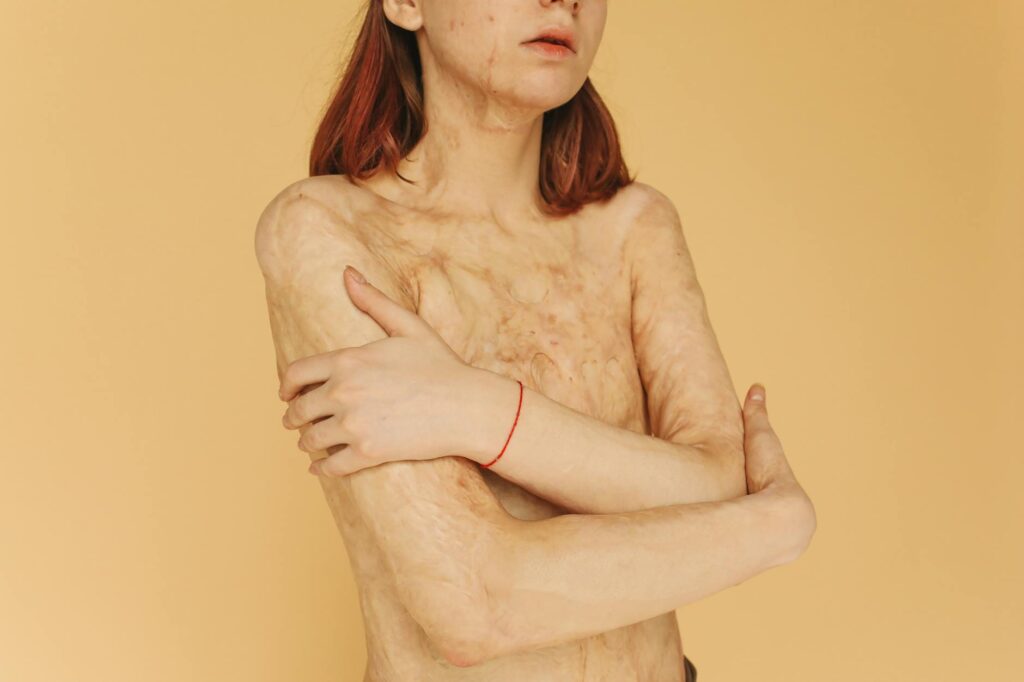
CO2RE Intima is a fractional CO2 laser designed specifically for treating acne scars on the body—chest, back, shoulders, and other off-face areas where traditional scar treatments often fall short. Unlike facial treatments that require extreme precision due to visible aftereffects, off-face application of CO2RE Intima can deliver deeper, more aggressive resurfacing because the skin has more tolerance for downtime and redness in areas that aren’t constantly visible during social interaction. For example, someone with severe boxcar scars across their entire chest can typically tolerate a more intensive treatment session than they could on their face, allowing the laser to penetrate deeper into scarred tissue and stimulate more robust collagen remodeling over the healing period.
The off-face approach to fractional CO2 treatment opens up possibilities that facial CO2 lasers often can’t fully deliver. Because chest and back skin is thicker and has different aesthetic demands than facial skin, treatment parameters can be adjusted upward—more passes, higher energy settings, or denser fractional patterns—to achieve more dramatic scar improvement. This article covers how CO2RE Intima specifically works on off-face acne scars, what results you can realistically expect, how it compares to other body scar treatments, the recovery timeline you’re signing up for, and what limitations exist even with this advanced technology.
Table of Contents
- How Does CO2RE Intima Target Acne Scars on the Body?
- What Results Can You Realistically Expect from CO2RE Intima on Off-Face Scars?
- Off-Face vs. Face Treatment—Why the Body Allows Different Approaches
- What’s the Recovery Timeline and Downtime Reality?
- Limitations and Risks of Off-Face CO2RE Intima Treatment
- Combining CO2RE Intima with Other Scar Treatments
- The Future of Fractional CO2 for Body Acne Scars
- Conclusion
- Frequently Asked Questions
How Does CO2RE Intima Target Acne Scars on the Body?
co2RE Intima works by creating thousands of microscopic columns of thermal injury in the dermis while leaving surrounding tissue intact—this fractional pattern allows the skin to heal faster than with traditional fully ablative CO2 lasers. The fractional approach is crucial for off-face acne scars because it preserves enough healthy tissue that the healing process can complete in weeks rather than months, and infection risk stays lower. When pointed at deep, pitted acne scars (boxcar, ice-pick, or rolling types), the laser ablates the scar tissue itself and triggers an intense inflammatory response that remodels the surrounding collagen, essentially “filling in” depressed scars from the inside.
The off-face advantage is that treatment settings can be more aggressive than on the face. On chest skin, a dermatologist can often run multiple passes at higher energy levels, creating more of the thermal damage that drives collagen remodeling. For instance, treating severe boxcar scars across the chest might involve 3-4 passes at higher fluence settings, whereas the same scars on the cheek would require gentler settings to avoid permanent textural changes or hypopigmentation. The trade-off is that you’ll experience more pronounced redness, swelling, and scabbing—visible in the treatment area, but hidden under clothing for most patients.
What Results Can You Realistically Expect from CO2RE Intima on Off-Face Scars?
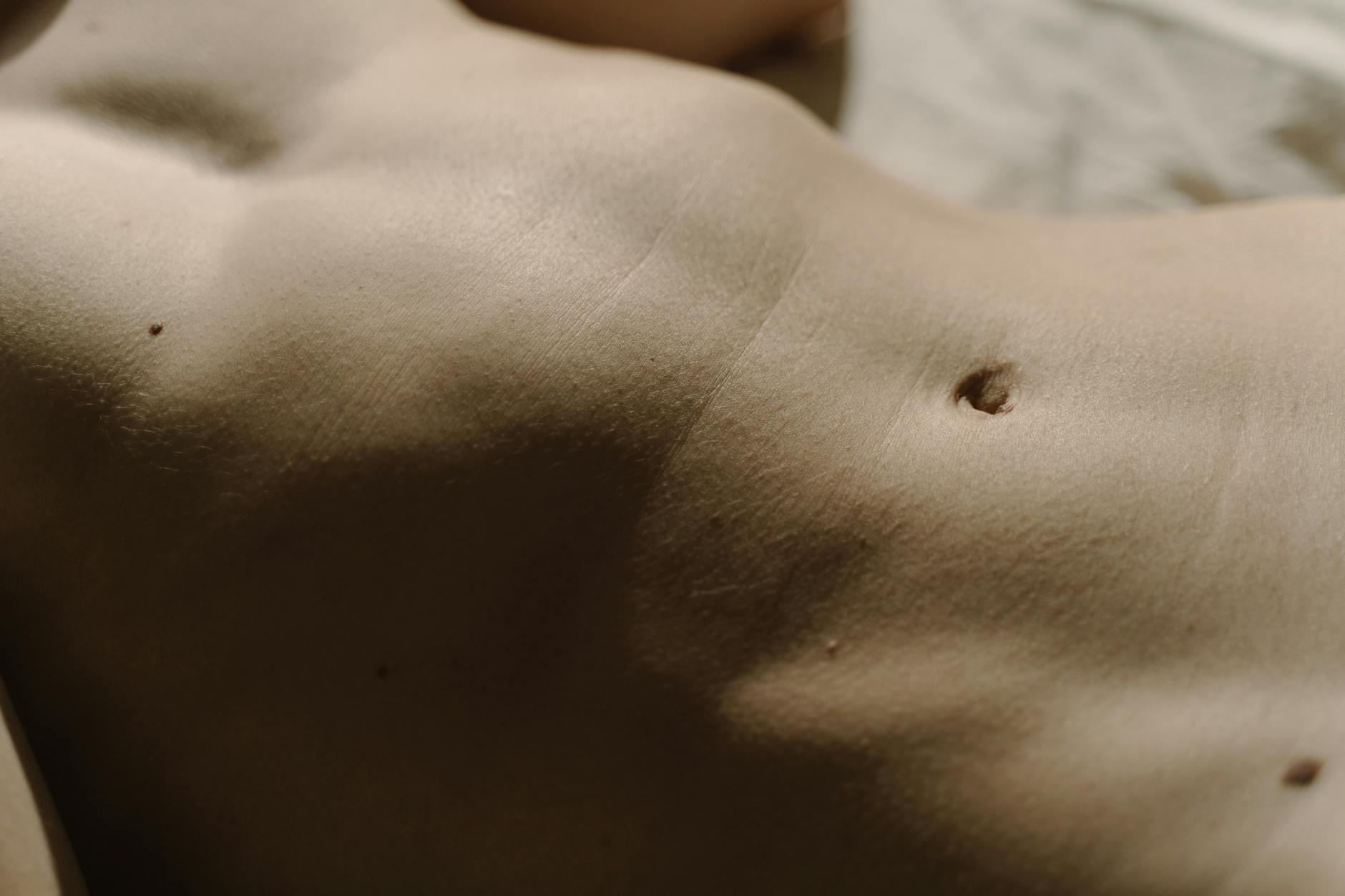
Results from fractional CO2 treatment of off-face acne scars typically show 40-70% improvement in scar depth and texture, depending on scar type and baseline severity. Boxcar and rolling scars respond better than ice-pick scars, which are so narrow and deep that even aggressive laser treatment struggles to fully eliminate them. However, if you’re expecting complete erasure of all visible scarring, that’s not realistic—the goal is to improve scars enough that they’re much less noticeable, blend better with surrounding skin, and don’t catch light in unflattering ways. The improvement is gradual, not immediate. In the first 2-3 weeks, you’ll see mostly swelling and redness as the acute inflammatory response plays out. Real scar improvement emerges over 2-3 months as new collagen deposits into the treated areas.
By 6 months, most patients see their final results. Multiple treatments (usually 3-5 sessions spaced 4-6 weeks apart) deliver better results than a single session, but each additional treatment carries the same recovery demands. Some patients see diminishing returns after 3-4 sessions and accept the improvement they’ve achieved rather than continue pursuing perfection. One important limitation: CO2RE Intima is most effective on white or light-to-medium skin tones. On darker skin, the laser energy can cause post-inflammatory hyperpigmentation or unpredictable pigment changes that may be more visible than the original scars. Patients with skin of color considering CO2 laser should specifically discuss this risk with a dermatologist experienced in treating darker skin and may need to pursue alternative treatments like microneedling or chemical peels instead.
Off-Face vs. Face Treatment—Why the Body Allows Different Approaches
The anatomy and aesthetic demands of body skin allow dermatologists to customize CO2RE Intima treatment in ways that aren’t possible on the face. Body skin is typically thicker, has fewer visible blood vessels near the surface, and can tolerate more aggressive resurfacing without visible adverse effects like permanent erythema or textural irregularities. On the face, the goal is to resurface acne scars while maintaining completely natural appearance and skin tone uniformity—any overly aggressive treatment risks leaving the face looking obviously lasered.
On the chest or back, the treatment goal shifts: you’re maximizing scar improvement knowing that temporary redness and scabbing is acceptable because it’s covered by clothing. This means higher energy settings, denser fractional patterns, or more passes per session become viable options. For example, a patient with severe boxcar scars covering their entire chest might undergo a single aggressive treatment session that would be considered too risky on the face but delivers meaningful results for body scars. The trade-off is that recovery is more intensive—expect 1-2 weeks of oozing wounds, then 2-3 weeks of visible scabbing and redness that would be socially problematic on the face but manageable on covered areas.

What’s the Recovery Timeline and Downtime Reality?
Recovery from CO2RE Intima off-face treatment is substantially longer than most patients expect, especially compared to non-ablative laser treatments. Immediately after treatment, the area is red, swollen, and hot to the touch. Within 24 hours, oozing typically begins—the treated area produces lymphatic fluid that seeps through the microscopic laser channels. This oozing phase lasts 3-5 days and requires consistent wound care: keeping the area clean, applying prescribed topical antibiotics and anti-inflammatory agents, and using non-occlusive or semi-occlusive dressings to prevent infection while allowing some air exposure. By day 4-7, the oozing subsides and a crust forms across the treated area—this is the most visually intense part of recovery. The crusted area looks raw and scabby, which is fine if it’s on your chest under a shirt, but would be problematic on visible skin.
This crust phase lasts 7-14 days depending on treatment intensity and individual healing. During this time, the treated area is fragile: picking or aggressively rubbing scabs will delay healing and increase scarring risk. Most patients need to avoid swimming, sweating from exercise, and prolonged sun exposure during this phase. After crusts shed, you’re left with bright pink or red skin that gradually fades over 2-3 months. Some residual swelling and erythema can persist for 3-6 months, especially if you received aggressive treatment. Importantly, sun protection during this healing window is non-negotiable—treated skin is extremely prone to post-inflammatory hyperpigmentation if exposed to UV before fully healed. Many dermatologists recommend staying out of direct sun for at least 3 months post-treatment and using SPF 50+ daily even when not directly in sun.
Limitations and Risks of Off-Face CO2RE Intima Treatment
While fractional CO2 is powerful, it’s not without risks. Infection is the primary concern during the oozing phase—despite prescribed antibiotics, some patients develop bacterial or even viral infections (like herpes if they’re prone to cold sores). This is why impeccable wound care is essential and why dermatologists often prescribe prophylactic oral antibiotics. If infection occurs, it can delay healing by weeks and increase risk of permanent scarring at the treatment site. Post-inflammatory hyperpigmentation is the most common adverse effect, especially in patients with medium to darker skin tones. Even on lighter skin, sun exposure during healing can trigger melanin overproduction that leaves treated areas darker than surrounding skin for months.
Conversely, post-inflammatory hypopigmentation—permanent lightening of treated areas—is rarer but possible and harder to treat if it occurs. Hypertrophic scarring is uncommon with fractional CO2 but can occur if the skin heals with excessive collagen deposition, essentially trading depressed scars for raised ones. Another real limitation: textural changes or “waxy” skin appearance can persist long-term in some patients, especially if they received aggressive treatments. The treated area may feel smoother but look slightly different in texture compared to untreated adjacent skin. This is usually subtle and improves over time, but it’s a risk rather than a guarantee of improvement. Finally, CO2RE Intima is not a good choice if you have active acne in the treatment area—you need clear, non-inflamed skin before laser treatment, otherwise the laser will worsen inflammation and increase infection risk.

Combining CO2RE Intima with Other Scar Treatments
Some dermatologists combine fractional CO2 treatment with subcision (surgical release of scar tissue beneath the skin surface) to address acne scars more completely. Subcision releases the fibrotic bands pulling down depressed scars, essentially allowing the scar to rise before the CO2 laser ablates the remaining raised scar tissue. This combination is particularly useful for rolling scars that respond poorly to laser alone. For example, a patient with both depressed and slightly raised rolling scars across their back might undergo subcision during the first session, then 3-4 weeks later receive CO2RE Intima treatment to resurface what remains.
Microneedling can theoretically be combined with CO2 treatment, but timing matters. Most dermatologists avoid microneedling immediately after CO2 because the skin is still healing from the laser injury. However, some practitioners use intentional delayed microneedling (weeks or months post-laser) to further enhance collagen remodeling and improve remaining shallow scars. Mixing treatments requires careful sequencing and adds cost, so it’s worth discussing with your dermatologist whether combination approach would meaningfully improve your specific scars versus accepting results from CO2 treatment alone.
The Future of Fractional CO2 for Body Acne Scars
Fractional CO2 technology continues to evolve toward more precise energy delivery and faster recovery times. Newer laser systems are adding real-time cooling mechanisms and computerized pattern control that allows even finer customization of treatment intensity.
For body scars specifically, manufacturers are developing accessories that make it easier to treat large surface areas uniformly—important when someone has widespread scarring across their entire chest or back. Looking forward, the combination of fractional CO2 with emerging technologies like radiofrequency-assisted fractional ablation or combination wavelength lasers (CO2 + erbium hybrid systems) may eventually deliver scar improvement with somewhat faster healing. However, fractional CO2 remains the gold standard for aggressive acne scar resurfacing on the body, and unless your specific skin characteristics contraindicate laser treatment, it’s likely to remain the most effective option for moderate-to-severe depressed scars on off-face areas for years to come.
Conclusion
CO2RE Intima represents one of the most effective tools dermatologists have for treating acne scars on the chest, back, shoulders, and other body areas where the skin’s thickness and coverage tolerates more aggressive resurfacing than facial applications allow. The treatment works by creating fractional thermal injury that triggers collagen remodeling, resulting in 40-70% improvement in scar depth and texture over 2-3 months and multiple sessions. Results are meaningful but not perfect—the goal is to make scars significantly less noticeable and less light-catching rather than complete erasure.
Before committing to CO2RE Intima treatment, have a detailed consultation with a board-certified dermatologist about your specific scar types, skin tone, recovery tolerance, and realistic outcome expectations. Understand that recovery requires 2-3 weeks of visible wound-like appearance, months of sun protection, and the possibility of temporary or rarely permanent side effects like hyperpigmentation or textural changes. For patients with appropriate scars and skin types willing to accept the downtime, CO2RE Intima off-face treatment remains one of the best pathways to meaningful acne scar improvement.
Frequently Asked Questions
How many CO2RE Intima sessions do I need for off-face acne scars?
Most patients see meaningful improvement after 3-5 sessions spaced 4-6 weeks apart, though some achieve acceptable results in 2 sessions and others need more. Your dermatologist will reassess after each session to determine if additional treatments are warranted based on remaining scar depth and your tolerance for recovery.
Can I have CO2RE Intima treatment in summer when I want to go outside?
No—summer is generally the worst time for this treatment. You need to avoid direct sun and stay diligent with SPF 50+ for 3+ months post-treatment to prevent hyperpigmentation. Schedule treatment for fall or winter if possible, giving yourself months to heal before peak sun exposure season.
Is fractional CO2 safe for darker skin tones?
Fractional CO2 carries higher risk of hyperpigmentation and unpredictable pigment changes on darker skin compared to lighter skin. This doesn’t mean it’s absolutely contraindicated, but treatment must be customized by a dermatologist with specific experience treating darker skin, often at lower energies with more conservative settings, and with realistic expectations that results may be more subtle.
Will CO2RE Intima make my acne scars completely disappear?
No—the realistic goal is 40-70% improvement in scar depth and appearance. Very deep ice-pick scars may improve only 30-40%, while shallower boxcar scars might improve 60-80%. Most patients accept the improvement after multiple sessions rather than pursuing additional treatments in search of perfection.
What’s the difference between fractional and ablative CO2 treatment?
Fractional CO2 (like CO2RE Intima) creates microscopic columns of damage with intact skin between them, allowing faster healing and lower complication risk. Traditional fully ablative CO2 removes the entire top layer of skin in the treatment area, causing more intense results but requiring 3-6 months of downtime—it’s rarely used for acne scars today because fractional technology delivers excellent results with acceptable recovery.
Can I combine CO2RE Intima with other treatments like microneedling?
Yes, but not immediately—your skin needs to fully heal from CO2 treatment (8-12 weeks) before adding another injury-based treatment. Some dermatologists intentionally space microneedling sessions months after CO2 to further enhance collagen remodeling, but this should be planned in advance rather than added as an afterthought.