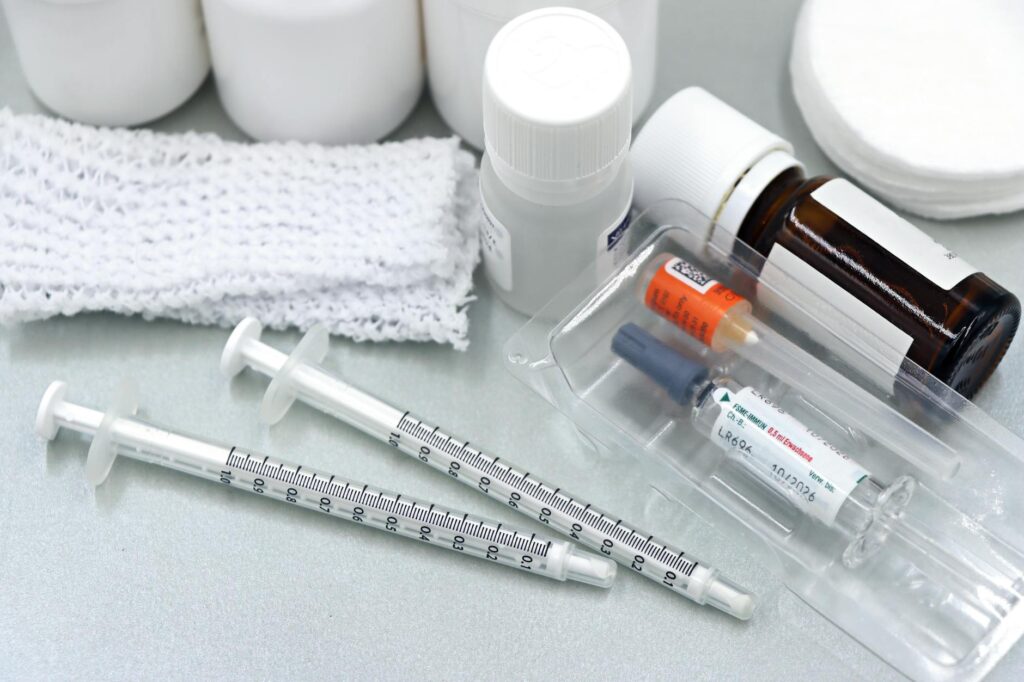
Clindamycin resistance means that the bacteria your treatment targets have developed the ability to survive the drug, rendering your prescription partially or completely ineffective. For acne patients, this is not a theoretical concern — in the UK, roughly 65% of Cutibacterium acnes strains are now resistant to clindamycin and erythromycin, which means if you are using a topical clindamycin gel by itself, there is a better-than-even chance it is doing very little for the bacteria on your skin. One study found that clindamycin 1% gel monotherapy caused resistant C. acnes counts to surge to more than 1,600% of baseline levels over 16 weeks, essentially breeding stronger bacteria while failing to clear your breakouts.
The problem extends well beyond acne. Clindamycin resistance is climbing across multiple bacterial species worldwide, from MRSA in hospital settings to Group B Streptococcus in pregnant women. The mechanisms driving this resistance are well understood, and so are the strategies to work around it — but only if you and your prescriber are aware of them. This article breaks down exactly how resistance develops, why standard lab tests can miss it, what the latest research says about resistance rates globally, and what your realistic alternatives look like when clindamycin stops working.
Table of Contents
- How Does Clindamycin Resistance Actually Develop?
- What the Global Resistance Numbers Mean for Acne Patients
- Why Your Lab Results Might Be Misleading You
- Alternatives When Clindamycin Resistance Is Confirmed
- The Hidden Risk of Combination Products
- Resistance Beyond Acne — Why It Matters for Everyone
- Where Acne Treatment Is Heading
- Conclusion
- Frequently Asked Questions
How Does Clindamycin Resistance Actually Develop?
clindamycin works by binding to the bacterial ribosome — the machinery bacteria use to build proteins — and shutting down protein synthesis. Resistance develops when bacteria acquire genetic changes that block this mechanism. The most common route is the erm gene (erythromycin ribosomal methylase), which chemically modifies the ribosomal binding site so clindamycin can no longer attach to it. There are three distinct patterns. Constitutive resistance means the bacteria are always resistant, regardless of what other drugs are present. Efflux-mediated resistance means bacteria have developed molecular pumps that actively push clindamycin out of the cell before it can accumulate to effective concentrations. And then there is inducible resistance, which is the most clinically treacherous of the three. Inducible clindamycin resistance is dangerous because the bacteria appear susceptible on routine lab testing.
The resistance only activates when the bacteria are exposed to a macrolide antibiotic like erythromycin or azithromycin, which flips on the erm gene. A standard susceptibility test will report the strain as clindamycin-sensitive, and your doctor may prescribe it with full confidence — only for the drug to fail in practice. The only reliable way to catch inducible resistance is the D-test, where erythromycin and clindamycin discs are placed adjacent to each other on a culture plate. If the zone of inhibition around the clindamycin disc flattens into a “D” shape facing the erythromycin disc, inducible resistance is present. Not every lab performs this test automatically, which means cases slip through. To put this in perspective, a study of community-associated MRSA in the United States found inducible clindamycin resistance in 33% of isolates, and the rate jumped to 56% in hospital-associated MRSA. A 2025 study from Ethiopia detected inducible clindamycin resistance in 26.3% of S. aureus isolates. These are not small numbers, and they underscore why the D-test should be standard practice whenever clindamycin is being considered for a staph infection.

What the Global Resistance Numbers Mean for Acne Patients
The resistance landscape varies dramatically by region, but the overall direction is the same everywhere — upward. In Korea, 77% of MRSA isolates are clindamycin-resistant compared to just 4% of methicillin-susceptible S. aureus. In the United States, infectious disease guidelines use a resistance prevalence threshold of greater than 15% to determine whether clindamycin should be avoided as empirical therapy — meaning doctors should not prescribe it as a first-line guess without culture data. Many regions have long blown past that threshold. For acne specifically, the situation is stark. That UK figure of approximately 65% resistance in C.
acnes is not an outlier — it reflects decades of widespread topical and oral antibiotic prescribing with insufficient stewardship. The 16-week study showing resistant C. acnes counts exploding to over 1,600% of baseline with clindamycin monotherapy illustrates the vicious cycle: the drug kills susceptible bacteria, leaving resistant strains with no competition, and those resistant populations boom. However, when clindamycin was combined with benzoyl peroxide in the same study, resistant counts stayed at or below baseline. Benzoyl peroxide works through oxidative damage rather than a specific bacterial target, and no resistance to it has been documented to date. This is why the American Academy of Dermatology recommends against antibiotic monotherapy for acne and advises limiting antibiotic courses to roughly three months, always in combination with benzoyl peroxide or retinoids. The warning here is straightforward: if your dermatologist hands you a prescription for clindamycin gel alone — no benzoyl peroxide, no retinoid, no plan to stop the antibiotic within a few months — ask questions. You may be setting yourself up for a harder-to-treat situation down the line.
Why Your Lab Results Might Be Misleading You
One of the most underappreciated aspects of clindamycin resistance is that your culture and sensitivity report might say “susceptible” while the bacteria in your body are functionally resistant. This happens because of the inducible resistance mechanism described earlier. Standard disk diffusion or automated susceptibility systems test clindamycin in isolation, and the erm gene stays dormant unless triggered by a macrolide. If you have recently taken or are concurrently taking erythromycin, azithromycin, or clarithromycin, that trigger is present in your body even if it was absent on the lab plate. Consider a real-world scenario: a patient with a skin abscess gets cultured, and the lab reports MRSA susceptible to clindamycin. The doctor prescribes oral clindamycin.
The patient also happens to be taking azithromycin for a sinus infection. The azithromycin activates the erm gene in the MRSA, and clindamycin fails. The infection worsens, and what could have been managed with a simple oral antibiotic now requires IV vancomycin. This is not hypothetical — it is the exact clinical trap that prompted the Clinical and Laboratory Standards Institute to recommend D-testing for all staphylococcal isolates that test erythromycin-resistant but clindamycin-susceptible. If you are being prescribed clindamycin for anything more serious than mild acne, it is worth asking your doctor whether a D-test was performed. If the lab did not include one, and your isolate was erythromycin-resistant, the clindamycin susceptibility result should be considered unreliable.

Alternatives When Clindamycin Resistance Is Confirmed
When clindamycin is off the table, the alternative depends heavily on what you are treating. For invasive MRSA infections — think bloodstream infections, bone infections, pneumonia — vancomycin remains the most commonly used replacement. A January 2025 study of 34 children with invasive clindamycin-resistant community-associated MRSA found that vancomycin achieved a 73.3% cure rate, TMP/SMX (Bactrim) reached 88.9%, linezolid hit 100%, and doxycycline also achieved 100%. Ceftaroline, a newer cephalosporin with MRSA activity, showed only a 50% cure rate in that cohort, though the small sample size makes that figure hard to generalize. Three children in the study died from their MRSA infections, a reminder that resistance in invasive disease carries real mortality risk.
For skin and soft tissue infections that do not require hospitalization, TMP/SMX and doxycycline are the workhorses. Both are oral, inexpensive, and widely available. The tradeoff is that TMP/SMX can cause serious allergic reactions and has drug interactions with certain blood thinners and diabetes medications, while doxycycline causes sun sensitivity — a meaningful consideration for acne patients who may also be using photosensitizing topicals like retinoids. For acne specifically, the shift away from clindamycin does not have to mean switching to another antibiotic. A 2025 study found that dapsone 5% gel showed comparable efficacy to clindamycin 1% for acne and actually delivered superior results for inflammatory lesions — without the resistance concerns tied to traditional antibiotics. Benzoyl peroxide remains the anchor of any acne regimen involving antibiotics, but dapsone represents a genuinely promising non-antibiotic topical alternative for patients who have already developed clindamycin-resistant flora.
The Hidden Risk of Combination Products
Many acne patients assume they are safe from resistance because they use a combination product containing both clindamycin and benzoyl peroxide. Products like Duac, BenzaClin, and Acanya pair the two ingredients specifically to prevent resistance. And the data supports this — the study showing that BPO kept resistant C. acnes counts at or below baseline is exactly why these combinations exist. But there are scenarios where the protection breaks down. The most common one is inconsistent use. Benzoyl peroxide is an oxidizer that can bleach fabrics, cause dryness, and irritate sensitive skin.
Patients frequently apply the combination product to their face but skip it on nights when their skin feels irritated, or they switch to plain clindamycin lotion for the body while keeping the combination only for the face. Any area receiving clindamycin without concurrent benzoyl peroxide becomes a breeding ground for resistant organisms. Those resistant strains do not stay put — they colonize other body sites and can spread to close contacts. Another limitation: the AAD’s recommendation to limit antibiotic courses to approximately three months applies even to combination products. The benzoyl peroxide component prevents resistance from accelerating as rapidly, but it does not eliminate the selection pressure entirely. Indefinite use of clindamycin-containing products is not recommended. After the initial three-month course clears active breakouts, the transition should be to a maintenance regimen of benzoyl peroxide and/or retinoids without the antibiotic.

Resistance Beyond Acne — Why It Matters for Everyone
Clindamycin resistance is not just a dermatology problem. The CDC classifies clindamycin-resistant Group B Streptococcus at a “Concerning” threat level, estimating 13,000 infections in 2016. More than 40% of invasive GBS infections are now caused by clindamycin-resistant strains. A 2025 global meta-analysis covering 266 studies across 57 countries found a 29.3% global clindamycin resistance rate in GBS, with erythromycin resistance at 35% and azithromycin resistance at 40.1%. In the United States alone, clindamycin resistance in GBS rose from 1.5% before 2000 to 17.5% after 2000, a statistically significant increase. In Korea, resistance in GBS among reproductive-age women remains persistently high at up to 40%.
This matters for acne patients indirectly but meaningfully. Every course of clindamycin — topical or oral, for acne or anything else — exerts selection pressure not just on C. acnes but on your entire microbial ecosystem. The resistant genes that develop in one bacterial species can transfer to others through horizontal gene transfer. Broad, population-level overuse of clindamycin for acne contributes to the reservoir of resistance genes that ultimately show up in GBS, MRSA, and other pathogens in hospitals and communities. Being a responsible steward of your own antibiotic use is not just about protecting your skin — it is about protecting the efficacy of drugs that other people need for life-threatening infections.
Where Acne Treatment Is Heading
The trajectory is clear: acne treatment is moving away from antibiotics as a long-term strategy. The evidence against antibiotic monotherapy is now overwhelming, and even well-designed combination regimens are intended as short-term interventions. The future likely belongs to non-antibiotic antimicrobials, anti-inflammatory agents, and targeted therapies that do not drive resistance.
Dapsone gel is one early example of this shift, offering anti-inflammatory and antimicrobial effects through a mechanism distinct from traditional antibiotics. Research into bacteriophage therapy, antimicrobial peptides, and microbiome-modulating approaches is accelerating. For now, the practical takeaway is that benzoyl peroxide — a compound that has been available for decades and has never generated documented resistance — remains the single most important topical in the acne arsenal. If you take one thing from the resistance data, let it be this: any acne regimen that includes an antibiotic must also include benzoyl peroxide, and any antibiotic component should have a planned end date.
Conclusion
Clindamycin resistance is not an abstract microbiological concept — it is a practical barrier that can derail your treatment whether you are managing acne, a skin infection, or something far more serious. The mechanisms are well characterized, the global data shows resistance rates climbing across bacterial species and geographies, and standard lab tests can miss inducible resistance entirely without a D-test. For acne patients, the clearest lesson is that clindamycin should never be used alone and should always be paired with benzoyl peroxide and limited to roughly three months. If your current regimen includes clindamycin in any form, have a conversation with your dermatologist about your exit strategy.
Ask whether a D-test was performed if you are being treated for a staph infection. Explore alternatives like dapsone gel if clindamycin-resistant flora are a concern. And if your skin is stable on a retinoid and benzoyl peroxide maintenance regimen, you may not need the antibiotic at all. The best way to ensure antibiotics work when you truly need them is to stop using them when you do not.
Frequently Asked Questions
Can I develop clindamycin resistance just from using a topical gel on my face?
Yes. Topical clindamycin exerts selection pressure on skin bacteria just as oral antibiotics do. Studies show that clindamycin 1% gel monotherapy increased resistant C. acnes counts to over 1,600% of baseline within 16 weeks. The effect is localized but the resistant organisms can spread to other body sites and to close contacts.
How do I know if my acne bacteria are already resistant to clindamycin?
The most reliable indicator is clinical failure — your breakouts are not improving after several weeks of consistent use. Formal culture and sensitivity testing of C. acnes is rarely performed in routine dermatology practice, but if your clindamycin product seems to have stopped working, resistance is the most likely explanation.
Is benzoyl peroxide really enough to prevent resistance when used with clindamycin?
Clinical data shows that combining clindamycin with benzoyl peroxide keeps resistant bacterial counts at or below baseline, compared to the dramatic increases seen with clindamycin alone. No resistance to benzoyl peroxide has been documented to date. However, this protection only works if both agents are applied consistently to the same areas — skipping the benzoyl peroxide negates the benefit.
Should I ask my doctor for a D-test?
If you have a culture showing erythromycin-resistant but clindamycin-susceptible staphylococcus, yes. The D-test is the only reliable way to detect inducible clindamycin resistance, which appears susceptible on standard testing. For routine acne treatment, formal susceptibility testing is not typically performed, but for skin infections and abscesses, it can prevent treatment failure.
What is the best alternative to clindamycin for acne?
Benzoyl peroxide is the most effective non-antibiotic topical antimicrobial for acne and has no known resistance. Dapsone 5% gel is a newer option that showed comparable efficacy to clindamycin with superior results for inflammatory lesions in a 2025 study. Retinoids like adapalene address acne through a completely different mechanism and are the backbone of most maintenance regimens.
How long is too long to use clindamycin for acne?
The American Academy of Dermatology recommends limiting antibiotic courses for acne to approximately three months. Even when combined with benzoyl peroxide, indefinite use of clindamycin-containing products is discouraged. After the initial course controls active breakouts, transition to a non-antibiotic maintenance regimen.