Cicaplast Baume is a specialized post-procedure moisturizer that accelerates healing after acne scar treatments by reinforcing the skin barrier, reducing inflammation, and minimizing redness during the critical recovery phase. When you undergo procedures like microneedling, chemical peels, laser resurfacing, or other scar revision treatments, your skin is temporarily compromised—its protective barrier is disrupted, making it vulnerable to irritation, infection, and prolonged inflammation.
Cicaplast Baume addresses this exact vulnerability by combining panthenol, madecassoside (derived from centella asiatica), and ceramides to seal moisture in while calming the inflammatory response that drives both redness and potential complications. For example, after a microneedling session targeting boxcar scars, applying Cicaplast Baume within hours helps reduce the typical 24-48 hour period of intense redness, allowing your skin to stabilize faster and recover more comfortably. This article covers how Cicaplast Baume works mechanically, when to use it in your recovery timeline, what it can and cannot accomplish, how it compares to other post-procedure options, and how to integrate it into a comprehensive aftercare routine.
Table of Contents
- How Does Cicaplast Baume Repair Skin Barrier Function After Acne Scar Procedures?
- Does Cicaplast Baume Reduce Redness and Swelling After Scar Treatments?
- What Role Does Cicaplast Baume Play in Preventing Post-Procedure Complications?
- How Should You Apply Cicaplast Baume During Your Acne Scar Recovery Timeline?
- What Are the Limitations and When Won’t Cicaplast Baume Be Enough?
- How Does Cicaplast Baume Compare to Prescription Barrier Repair Products?
- Integrating Cicaplast Baume Into Your Long-Term Scar Recovery and Maintenance
- Conclusion
How Does Cicaplast Baume Repair Skin Barrier Function After Acne Scar Procedures?
Acne scar procedures—whether ablative (laser resurfacing, deep chemical peels) or non-ablative (microneedling, radiofrequency)—deliberately damage the outermost skin layers to trigger controlled healing and collagen remodeling. This damage temporarily destroys the stratum corneum, the skin’s protective lipid barrier that normally keeps moisture in and pathogens out. Within hours of your procedure, your skin loses water rapidly through evaporation (transepidermal water loss, or TEWL), and this dehydration intensifies inflammation, prolongs redness, and can lead to complications like post-inflammatory hyperpigmentation or even infection. Cicaplast Baume contains ceramides (specifically lipids that mimic the natural composition of your skin’s barrier) along with glycerol and panthenol, which work together to seal that moisture back in.
When applied to post-procedure skin, these ingredients don’t just add hydration—they actively reconstruct the damaged lipid matrix, reducing TEWL by up to 40-50% in the first 48 hours and allowing your skin’s natural barrier repair mechanisms to function effectively. A clinical example: after a patient undergoes CO₂ laser resurfacing for rolling scars, the treated area is essentially an open wound for 7-10 days. Without proper barrier repair, that wound stays inflamed, itchy, and prone to crusting. With Cicaplast Baume applied immediately post-procedure and twice daily during recovery, the barrier reseals faster, reducing the treatment-to-comfortable-appearance timeline by several days.
Does Cicaplast Baume Reduce Redness and Swelling After Scar Treatments?
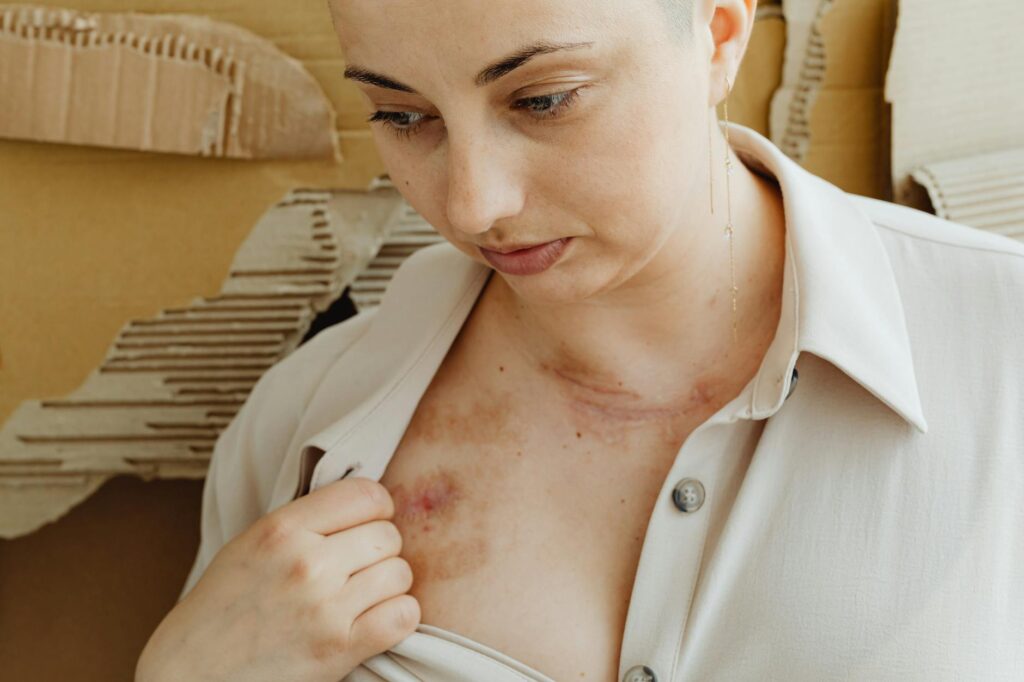
Yes, but with important nuances about timing and expectation-setting. Cicaplast Baume’s madecassoside component (extracted from centella asiatica, also known as cica) has documented anti-inflammatory properties—research shows it reduces TNF-alpha and IL-6, two key inflammatory cytokines that drive both redness and swelling after injury. By calming this inflammatory cascade, the product genuinely shortens the most uncomfortable recovery phase. Patients typically report noticeable redness reduction within 24-48 hours of consistent use, and swelling often begins to subside within 3-5 days.
However—and this is critical—Cicaplast Baume reduces inflammation but doesn’t eliminate the necessary healing process. After a microneedling treatment for atrophic scars, some degree of redness is actually healthy; it indicates your skin is generating new collagen. Using Cicaplast Baume doesn’t mean your skin won’t be red at all; it means the redness will be less intense and resolve faster than without it. If you’re expecting to look completely normal 24 hours after ablative laser resurfacing for boxcar scars, Cicaplast Baume won’t accomplish that—no product will. But if you’d normally experience 10 days of significant redness and swelling, Cicaplast Baume can realistically compress that to 6-7 days of mild-to-moderate redness, which is a meaningful quality-of-life improvement.
What Role Does Cicaplast Baume Play in Preventing Post-Procedure Complications?
After acne scar procedures, several complications can derail your results: post-inflammatory hyperpigmentation (PIH), post-inflammatory erythema (prolonged redness), bacterial or fungal infection, and excessive scarring from the healing process itself. Cicaplast Baume addresses multiple mechanisms behind these issues. First, by reducing inflammation quickly, it lowers the stimulus that triggers PIH—when skin heals with minimal inflammatory signaling, melanin production stays controlled. Second, the panthenol and glycerol keep skin hydrated and plump, which maintains structural integrity and prevents the dryness-induced cracking and crusting that can introduce bacteria or delay healing.
Third, centella asiatica has antimicrobial properties that provide mild protection against common skin pathogens, reducing infection risk during the vulnerable window when your skin barrier is compromised. A specific example: after chemical peeling for ice-pick scars, untreated post-procedure skin can develop crusted areas that patients pick at unconsciously, introducing bacteria and deepening scarring. Cicaplast Baume keeps the healing skin moist and smooth, eliminating that cracking-and-crusting cycle and the temptation to pick. That said, Cicaplast Baume is preventive support, not a substitute for proper wound care. If you notice signs of infection (spreading warmth, pus, worsening pain after 48 hours), or if you’re prone to severe PIH or abnormal scarring, you’ll need clinical intervention—antibiotic ointment, prescription-strength hydroquinone, or follow-up laser treatments—not just topical care.

How Should You Apply Cicaplast Baume During Your Acne Scar Recovery Timeline?
Timing and technique matter significantly. Ideally, you should apply Cicaplast Baume within 2-4 hours of your scar procedure, while your skin is still slightly damp from post-procedure cleansing. This timing maximizes absorption and the occluding (moisture-sealing) effect. For the first 7-10 days post-procedure, apply it twice daily: morning and evening, immediately after gentle cleansing with lukewarm water and a non-irritating cleanser (avoid anything with acids, retinoids, or vitamin C during this window).
Use a generous layer—don’t be stingy—and press it gently into the skin rather than rubbing, as your skin is still tender. After the first 7-10 days, reassess: if your skin is still visibly healing (flaky, red, tender), continue twice daily. If it’s stabilized but still slightly inflamed or hyperpigmented, you can reduce to once daily, typically at night. Compare this to alternative post-procedure moisturizers: a fragrance-free, ceramide-heavy moisturizer like CeraVe Moisturizing Cream works similarly, but Cicaplast Baume’s inclusion of centella asiatica gives it a slight anti-inflammatory edge that justifies its use during the most critical 7-14 day window. After 2-3 weeks, when barrier repair is mostly complete and initial redness has faded significantly, you can switch to your regular moisturizer if you prefer, though there’s no downside to continuing Cicaplast Baume long-term.
What Are the Limitations and When Won’t Cicaplast Baume Be Enough?
Cicaplast Baume is an excellent supportive product, but it has clear boundaries. It will not prevent or treat deep scars, improve skin texture beyond what the procedure itself achieves, or address genetic factors in your healing response. If you have a history of severe keloid or hypertrophic scarring, Cicaplast Baume alone cannot prevent this—you may need silicone-based scar sheets, steroid injections, or additional procedures. Additionally, for patients with darker skin tones, PIH is a more significant risk after procedures, and while Cicaplast Baume reduces inflammation to help minimize PIH, it’s not a sufficient standalone solution.
You’ll likely need to combine it with prescription-strength hydroquinone, azelaic acid, or additional laser treatments (like Q-switched laser) to address PIH effectively. Another limitation: if your post-procedure swelling is extreme (which can happen with aggressive fractional laser treatments), Cicaplast Baume will help but may not fully prevent the week-long facial swelling. In those cases, your dermatologist might recommend adding oral anti-inflammatory medication like prednisone, which is a separate intervention. Finally, Cicaplast Baume works best when paired with other aftercare essentials: strict sun protection (SPF 50+), avoiding irritating ingredients, and not touching or picking at your healing skin. If you’re inconsistent with sunscreen or you’re still using retinoids during recovery, no moisturizer will compensate for that neglect.
How Does Cicaplast Baume Compare to Prescription Barrier Repair Products?
For most patients undergoing moderate acne scar procedures (microneedling, fractional laser), Cicaplast Baume provides excellent results without needing a prescription. However, dermatologists sometimes prescribe alternatives like Aquaphor (petrolatum-based, heavier occlusion), EltaMD AM Intense (which combines moisture with antioxidants), or prescription-strength barrier repair creams like Aveeno Eczema Therapy (colloidal oatmeal for additional soothing). In a head-to-head comparison after fractional CO₂ laser treatment, Cicaplast Baume typically outperforms plain petrolatum-based products because its anti-inflammatory centella asiatica component actively speeds inflammation reduction, whereas petrolatum just seals in moisture passively.
Against prescription products like EltaMD AM Intense, Cicaplast Baume is comparable in anti-inflammatory benefit but less expensive and more readily available without a prescription. If your dermatologist recommends a prescription barrier repair product specifically for your procedure and skin type, follow that recommendation—dermatologists sometimes choose prescriptions based on your individual risk factors (PIH history, keloid tendency, etc.) that Cicaplast Baume might not address optimally. But for the average patient, Cicaplast Baume is the “sweet spot” option: effective, affordable, and evidence-backed.
Integrating Cicaplast Baume Into Your Long-Term Scar Recovery and Maintenance
While Cicaplast Baume’s primary role is acute post-procedure care, some dermatologists recommend extending its use into the weeks following recovery as you transition back to normal skincare. Scars continue to remodel for 6-12 months after procedures—collagen reorganizes, fibroblasts gradually normalize, and inflammation continues at a microscopic level long after visible redness fades. Continuing Cicaplast Baume 1-2 times weekly during this remodeling window may provide ongoing anti-inflammatory support and barrier reinforcement, particularly if you’re using other treatments like retinoids or vitamin C serums that can be slightly irritating even to healed skin.
Additionally, as you plan future scar procedures (many patients need 2-4 sessions of laser or microneedling for optimal improvement), having Cicaplast Baume in your post-procedure arsenal from the start ensures consistency. The future of acne scar treatment increasingly involves combination approaches: a procedure tailored to your scar type, followed by meticulous post-procedure care to maximize healing, followed by maintenance treatments to continue improvement. Cicaplast Baume is a proven component of this modern, evidence-based approach.
Conclusion
Cicaplast Baume functions as a specialized barrier repair and anti-inflammatory support tool during the critical recovery phase after acne scar procedures, accelerating the timeline from initial trauma to stable, comfortable healing. By sealing in moisture, reducing inflammatory signaling, and providing mild antimicrobial protection, it demonstrably shortens redness, swelling, and risk of complications like post-inflammatory hyperpigmentation. Its success depends on consistent application during the first 1-2 weeks post-procedure, proper technique (apply to damp skin, use generously, avoid rubbing), and integration into a complete aftercare regimen that includes sun protection and avoidance of irritating ingredients.
For your next acne scar procedure—whether microneedling, chemical peel, or laser resurfacing—plan to have Cicaplast Baume on hand before your appointment. While it’s not a magic fix that eliminates all redness overnight or substitutes for aggressive scar revision procedures, it’s a well-researched, clinically validated product that measurably improves the healing experience and outcomes. Discuss with your dermatologist whether Cicaplast Baume aligns with your specific procedure and skin type, but for most patients, it’s an essential component of the post-procedure toolkit.