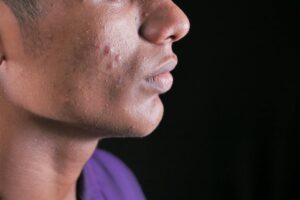
What Chronic Acne Means for Skin Health
Chronic acne goes beyond occasional pimples. It is a long-lasting inflammatory condition that affects the pilosebaceous units, which are the hair follicles and oil glands in your skin.[1] When acne persists for months or years, it signals deeper issues like ongoing inflammation, blocked pores, and changes in the skin’s natural balance.
At its core, chronic acne starts with four main problems. First, skin cells build up too much inside the follicles, a process called hyperkeratinization. This clogs the pores and forms tiny blockages known as microcomedones.[1] Second, oil glands produce too much sebum, the oily substance that keeps skin moist. Hormones like androgens and insulin-like growth factor 1 drive this overproduction, creating a perfect environment for bacteria.[1] Third, bacteria called Cutibacterium acnes grow out of balance in the microbiome, the community of microbes on your skin. This dysbiosis sparks inflammation.[1] Fourth, stress worsens everything by activating skin receptors that boost oil, alter cell shedding, and weaken the skin barrier.[1]
For skin health, chronic acne means constant low-level damage. Inflammation irritates the skin barrier, making it harder for skin to protect itself from irritants and germs.[2] Over time, this leads to redness that lingers, uneven texture, and sometimes permanent scars like pits or dark spots.[2][4] The skin’s ability to heal slows down, and repeated breakouts can thin the outer layer, leaving it dry or sensitive.[3]
Lifestyle plays a big role too. High stress raises cortisol, which ramps up oil and worsens clogs.[3] Poor sleep, bad diets with lots of sugar or dairy, and lack of exercise add fuel to the fire by spiking hormones and inflammation.[3][5][6] Even skincare habits matter. Harsh cleansers or heavy products strip the skin, prompting more oil to compensate and trap bacteria.[3][5]
In adults, chronic acne often ties to hormones. Women may see jawline pimples from androgen imbalances, polycystic ovary syndrome, or shifts during pregnancy, birth control changes, or menopause.[5] Medications like steroids can trigger it too.[3] Without control, this cycle harms confidence and daily comfort, as severe cases affect emotional health.[7]
Treating chronic acne focuses on restoring balance. Topical retinoids unclog pores and calm inflammation by speeding up cell turnover.[2][3][5] Benzoyl peroxide kills bacteria, while salicylic acid exfoliates buildup.[3] For tougher cases, oral antibiotics, hormonal pills, or isotretinoin target root causes like bacteria and oil overdrive.[3][5] Light therapies and peels reduce bacteria and smooth scars.[2][3] Natural aids like certain plant compounds may help rebalance the microbiome, but they work best with medical care.[1]
Early action protects skin health most. Gentle routines, sun protection, and trigger tracking prevent flares and scarring.[2] Seeing a dermatologist for persistent spots ensures tailored care that heals without harm.
Sources
https://pmc.ncbi.nlm.nih.gov/articles/PMC12735603/
https://www.fivensondermatology.com/acne
https://www.westchestercosmeticdermatology.com/blog/adult-acne-why-it-happens-and-how-to-treat-it/
https://www.pharmacytimes.com/view/the-educated-patient-clearing-up-acne
https://www.tuftsmedicine.org/about-us/news/acne-over-30
https://www.dermatologyadvisor.com/factsheets/diet-and-acne/
https://yardleyderm.com/the-family-impact-of-severe-acne/