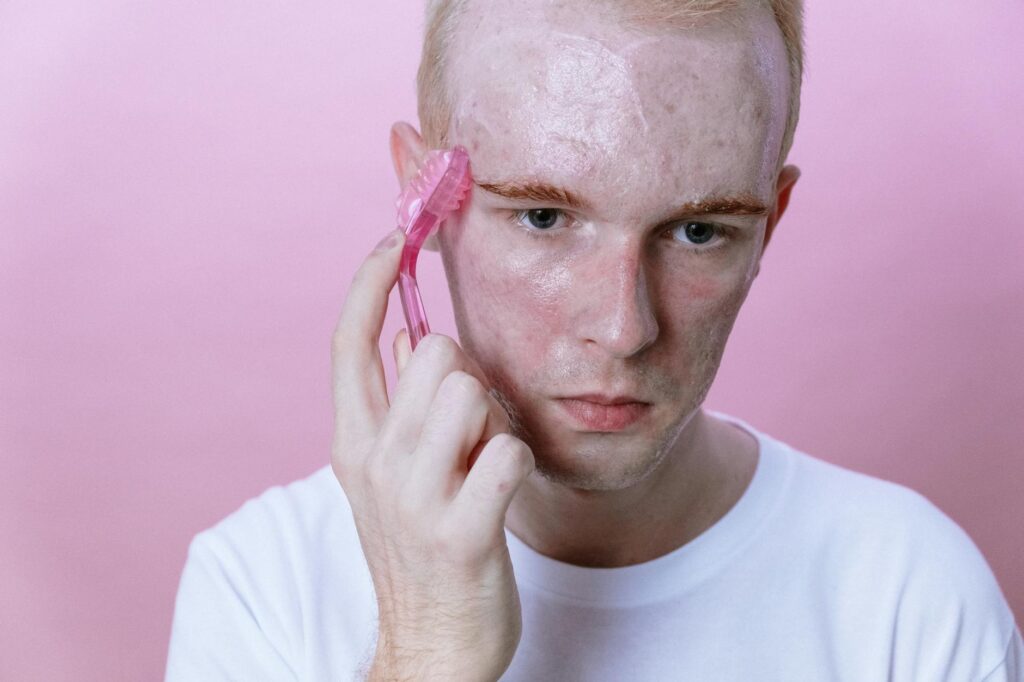
Persistent redness after acne isn’t a sign that your skin is damaged beyond repair—it’s a normal (but frustrating) part of how your skin heals from inflammation. That red or pink discoloration you see weeks after your pimples have cleared, known as post-inflammatory erythema or PIE, is caused by dilated or damaged capillaries under your skin that were inflamed during the acne breakout and healing process. For example, if you had a cluster of inflamed cystic acne on your jawline, even after the bump flattens completely, the surrounding area might remain visibly red for weeks or months because those small blood vessels are still irritated and haven’t fully remodeled back to normal.
The good news is that PIE typically resolves on its own over time—and if you want to speed up the process, there are proven professional and at-home treatments that work. This article covers what causes that stubborn redness, who’s most likely to experience it, how long you can expect it to last, and both professional and topical treatments that dermatologists recommend to help calm it down faster. We’ll also explain how PIE differs from post-inflammatory hyperpigmentation (the brown marks), since the two require completely different approaches.
Table of Contents
- What Causes Persistent Redness After Acne Clears
- Who Develops Persistent Redness and Why It Varies Between People
- Professional Dermatology Treatments for Persistent Acne Redness
- Topical Treatments and What Actually Works at Home
- Understanding Your Timeline: How Long Will the Redness Actually Last?
- Red Marks vs. Brown Marks—Why PIE and PIH Need Different Treatments
- The Real Prevention Strategy: Stop Post-Acne Redness Before It Starts
- Conclusion
What Causes Persistent Redness After Acne Clears
post-inflammatory erythema develops because acne triggers a cascade of vascular changes in your skin that don’t resolve as quickly as the pimple itself. When inflammatory acne forms—like papules, pustules, or cysts—the inflammation damages small blood vessels and stimulates your body to send extra blood to the area to heal the wound. Even after the pimple flattens, these capillaries remain dilated (widened) and inflamed, creating that telltale redness you see in the mirror.
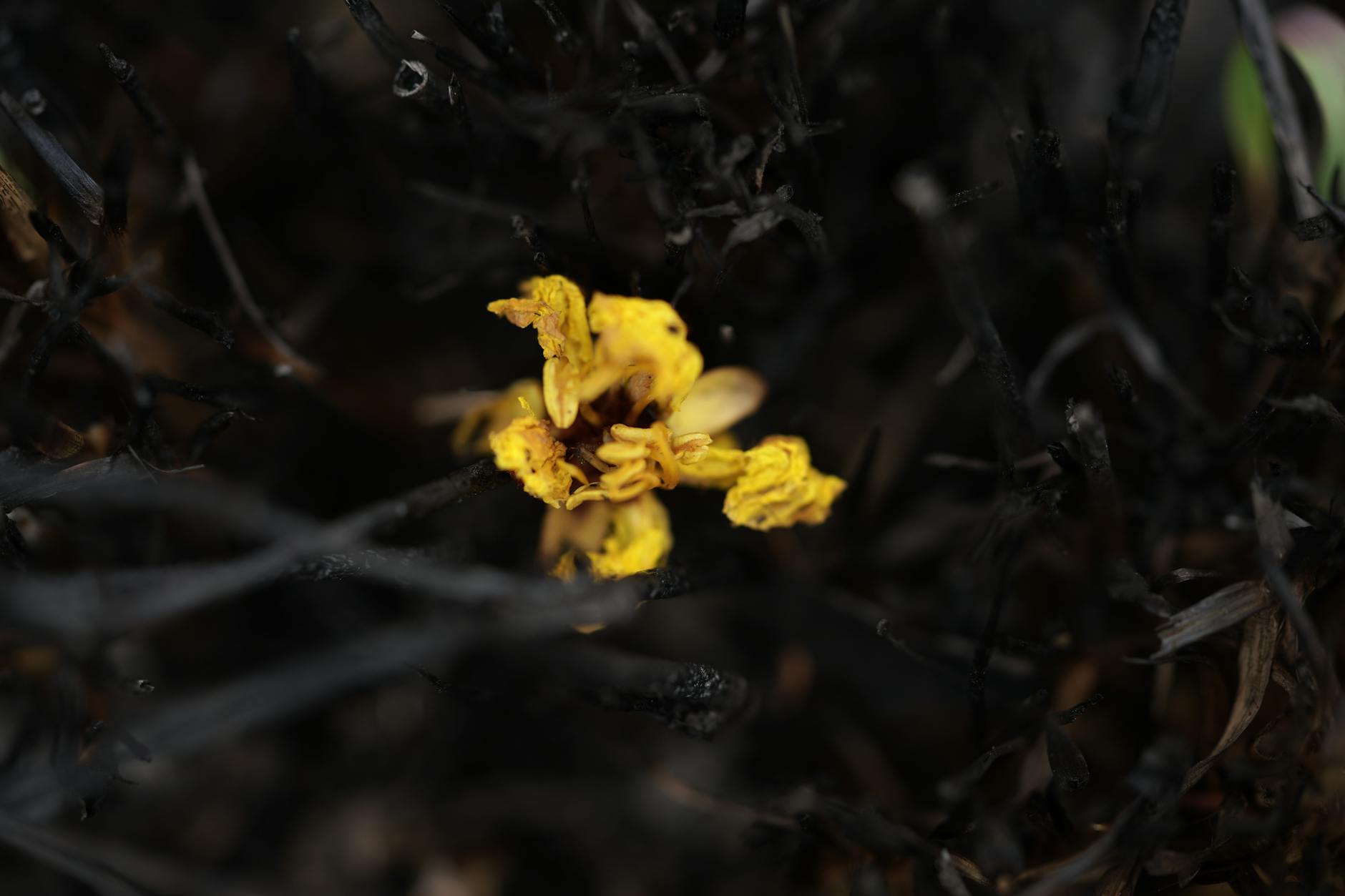
The intensity of the original inflammation directly determines how prominent and long-lasting your PIE will be. A mild pimple that you barely touched might leave only minimal redness that fades in a few weeks, while severe or deeply inflamed acne can trigger more substantial vascular damage and inflammation that persists for months. In some cases, the inflammatory process even stimulates angiogenesis—the formation of new blood vessels—which contributes to the overall erythematous (red) appearance and can delay the vascular remodeling process that would normally restore your skin to normal. This is why people who pick or squeeze their acne often end up with more intense and longer-lasting redness: additional trauma extends the inflammatory phase.
Who Develops Persistent Redness and Why It Varies Between People
Not everyone develops the same degree of post-acne redness, and genetics and skin type play a major role. People with fair skin, particularly those with Fitzpatrick skin types I, II, and III, are significantly more susceptible to developing visible PIE. This doesn’t mean darker skin tones don’t experience PIE—they do—but the redness is often less visually apparent due to higher baseline melanin, which can mask the vascular discoloration. However, this doesn’t mean you should ignore treatment if you have deeper skin tones; the underlying vascular damage is still present and may benefit from professional treatment.
The type of acne also matters considerably. PIE develops primarily from inflammatory acne lesions like papules, pustules, nodules, and cysts—the bumpy, often painful breakouts. Non-inflammatory acne like blackheads and whiteheads rarely leave behind persistent redness because they don’t trigger the same level of vascular inflammation and damage. This is an important distinction: if you’ve had mild comedonal acne and you’re not seeing significant red marks, that’s completely normal. But if you’ve dealt with tender, inflamed breakouts, especially in clusters or on sensitive areas like your chin or chest, persistent redness afterward is highly likely and nothing unusual.
Professional Dermatology Treatments for Persistent Acne Redness
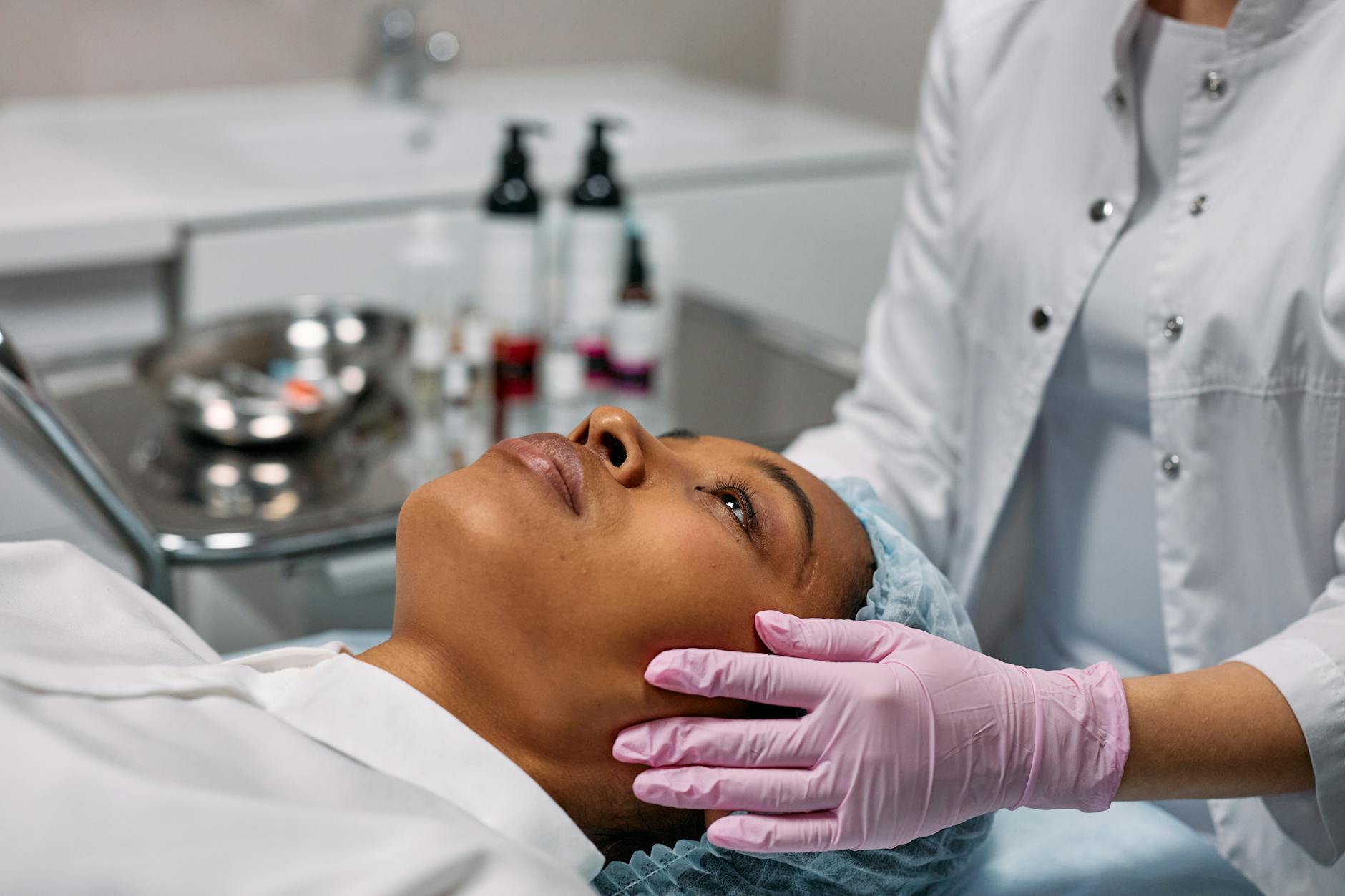
If you want to accelerate healing beyond the natural timeline, dermatologists have several evidence-based options that target the underlying vascular damage. The gold standard is pulsed dye laser (PDL) treatment, which approximately 95% of dermatologists recommend as the first-line therapy for red acne marks. PDL works by delivering targeted pulses of light energy that is absorbed by the hemoglobin in blood vessels, causing them to collapse and be reabsorbed by your body. Most people see noticeable improvement within 4 to 8 weeks of starting laser treatment, though complete resolution may take several months and sometimes requires multiple sessions.
Beyond PDL, intense pulsed light (IPL) is another vascular-targeting option that works similarly but with a broader light spectrum, making it slightly less precise but potentially useful for larger areas of redness. Microneedling is a different approach that uses controlled micro-injuries to stimulate collagen production and improve the appearance of surface red spots, though it’s generally more effective for texture issues than pure vascular redness. Dermatologists may also use injected corticosteroids to reduce swelling and inflammation more aggressively, particularly for severe or cystic acne marks. The tradeoff with professional treatments is cost and accessibility—laser and injection treatments require an office visit and can be expensive—but results are typically faster and more dramatic than at-home options.
Topical Treatments and What Actually Works at Home
If professional treatments aren’t accessible or you want to start with at-home options, several topical ingredients have solid scientific backing. Azelaic acid is one of the most effective, with 15% azelaic acid gel showing significant improvement in both acne and PIE after 12 weeks of twice-daily application. Azelaic acid works by reducing inflammation and helping normalize the skin barrier, making it especially useful if you have both active acne and post-inflammatory marks. Salicylic acid at 0.5-5% concentrations offers anti-inflammatory benefits and can prevent new breakouts while helping reduce existing redness.
Emerging options like tranexamic acid, brimonidine tartrate, and oxymetazoline are showing promise in clinical settings for reducing PIE, though these are less widely available in over-the-counter products and may require prescription formulations or professional-grade products. The limitation here is that topical treatments work more slowly than professional treatments—you’re realistically looking at 6-12 weeks minimum for noticeable improvement rather than 4-8 weeks with laser. However, they’re non-invasive, affordable, and safe to use while you’re also using acne treatments. If you combine a consistently used topical treatment with sun protection (more on that below), you’ll see gradual but meaningful improvement over time.
Understanding Your Timeline: How Long Will the Redness Actually Last?
PIE can persist for several months on its own, with complete natural resolution taking anywhere from a few months to over a year depending on the severity of the original inflammation. In mild cases, you might see significant fading within 2-3 months without any treatment. In moderate cases, expect 4-6 months of visible redness. Severe inflammatory acne can leave behind redness that takes 12 months or longer to fade completely. Importantly, some people experience cases where facial PIE never completely clears on its own, even with extended time—which is why professional treatment options exist.
The timeline improves considerably if you start treatment early. Research shows that most people see noticeable improvement within 4 to 8 weeks of beginning a treatment plan, whether topical or professional. This means that rather than accepting 6-12 months of obvious redness and hoping it fades, you could potentially cut that timeline in half with an active treatment approach. The catch is that “noticeable improvement” doesn’t mean complete resolution—it means the redness is less prominent and less likely to be the first thing you notice when you look in the mirror. Complete resolution typically still takes several months beyond the initial improvement phase.
Red Marks vs. Brown Marks—Why PIE and PIH Need Different Treatments
If you also have dark brown or gray spots left behind from acne, that’s post-inflammatory hyperpigmentation (PIH), and it’s a completely different issue that requires a completely different treatment approach. While PIE (the redness) typically resolves relatively quickly with the right treatment, PIH is notoriously persistent. Studies show that at least 50% of patients with PIH still have visible marks after 1 year, and approximately 22.3% of patients still have marks after 5 years or longer. This stark difference means you can’t use the same treatment for both—vascular treatments like PDL and IPL target red marks but don’t effectively treat pigmentation, while pigment-targeting ingredients like hydroquinone or retinoids address brown marks but won’t reduce vascular redness. This distinction matters because many people assume all post-acne marks need the same solution.
If your marks are primarily red or pink, you’ll benefit most from PDL, topical azelaic acid, or time. If they’re brown, you need pigment-fading treatments. Many people have both simultaneously—red marks over slightly deeper pigmented spots—which means your treatment plan might need to address both concerns at different stages. One critical factor for both PIE and PIH is UV protection: sun exposure worsens both conditions and can deepen hyperpigmentation while reactivating inflammation and redness. Daily SPF 30+ is non-negotiable if you have post-acne marks of any kind.
The Real Prevention Strategy: Stop Post-Acne Redness Before It Starts
While this article focuses on treating redness that’s already there, the most effective long-term strategy is preventing excessive redness from developing in the first place. The research is clear: not popping, picking, or squeezing pimples significantly reduces the intensity and duration of post-inflammatory redness. Each time you extract a pimple manually, you extend the inflammatory phase and increase vascular damage. Similarly, treating acne early—before it becomes deeply inflammatory or cystic—prevents the severe inflammation that leads to persistent redness.
Looking forward, the skincare field is moving toward more personalized approaches to post-acne marks, with dermatologists increasingly using combinations of treatments rather than single interventions. For someone with significant PIE, combining PDL with topical azelaic acid and rigorous sun protection produces faster and more complete results than any single treatment alone. For milder cases, consistent topical treatment plus time often proves sufficient. The key is addressing it early rather than waiting months hoping it fades on its own.
Conclusion
Persistent redness after acne is frustrating but temporary and treatable. It’s caused by inflammation and vascular damage from your breakout, and the more severe your original acne, the more pronounced your redness is likely to be. Fair-skinned individuals and people with inflammatory acne types are most susceptible, and while PIE typically resolves within several months to a year on its own, professional treatments like PDL and topical options like azelaic acid can cut that timeline significantly.
Most people see noticeable improvement within 4 to 8 weeks of starting active treatment. Start with sun protection (essential for both red and brown marks), consider a topical treatment like 15% azelaic acid if you prefer at-home options, and consult a dermatologist about PDL if you want faster results. If you also have brown marks from hyperpigmentation, treat those separately with pigment-targeting ingredients rather than vascular treatments. The combination of early intervention and consistent treatment gets you back to clear, unmarked skin far faster than waiting and hoping.