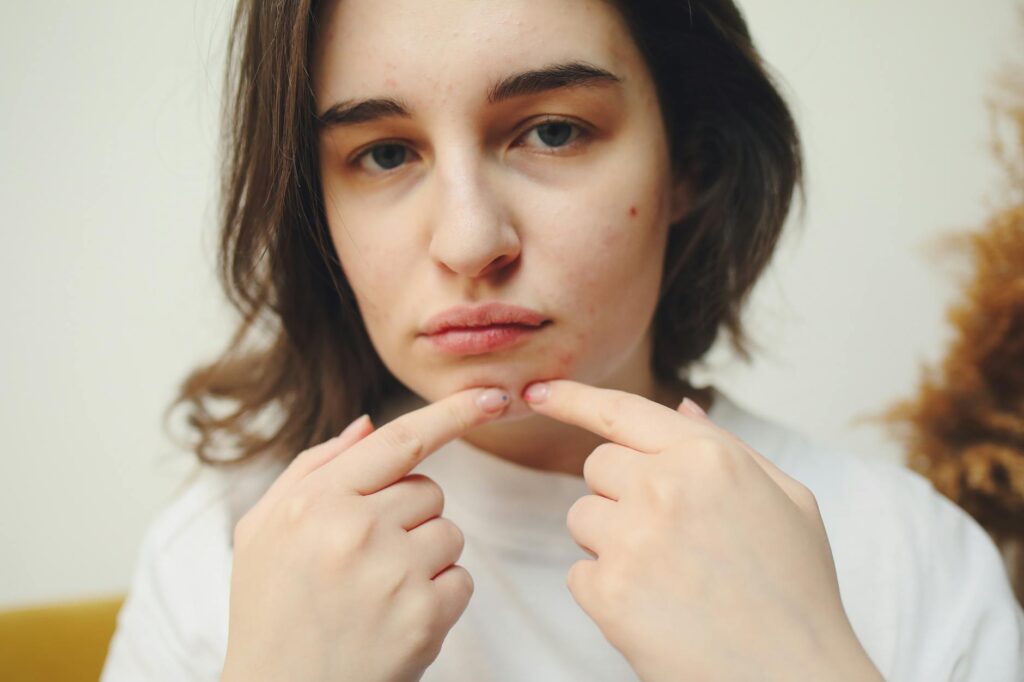
Persistent acne despite a consistent skincare routine almost always stems from factors operating beneath the skin’s surface””hormones, gut health, diet, and stress””that no topical product can fully address. You can cleanse twice daily, use the right active ingredients, and never sleep in makeup, yet still wake up to new breakouts because the root causes are systemic rather than superficial. Consider someone in their late twenties who has perfected a gentle, non-comedogenic routine but continues to experience monthly flare-ups along the jawline: this pattern points to hormonal fluctuations that external products simply cannot override. The frustration is real and remarkably common.
According to research published in the Journal of the American Academy of Dermatology, 50.9% of women aged 20-29 experience acne, and adult acne affects up to 15% of women overall””numbers that continue to rise. These statistics reveal an uncomfortable truth: acne is not merely a hygiene problem or a consequence of “not trying hard enough.” The causes run deeper, involving everything from gut microbiome imbalances to insulin responses triggered by diet. This article examines why your careful skincare routine may not be enough, exploring the hormonal mechanisms, emerging gut-skin research, dietary connections, and common mistakes that undermine even the most diligent efforts. Understanding these factors is the first step toward addressing acne at its source rather than just its surface.
Table of Contents
- Why Does Acne Persist Even With a Good Skincare Routine?
- The Hormonal Factors Behind Stubborn Breakouts
- How Gut Health Influences Skin Clarity
- Diet and Lifestyle Triggers That Undermine Skincare Efforts
- Common Skincare Mistakes That Actually Worsen Acne
- When Professional Intervention Becomes Necessary
- The Future of Acne Treatment and Rising Prevalence
- Conclusion
Why Does Acne Persist Even With a Good Skincare Routine?
The disconnect between skincare diligence and persistent breakouts comes down to what dermatologists call “internal acne drivers.” Your skin is an organ influenced by hormones, inflammation levels, blood sugar, stress hormones, and the bacterial balance in your gut. Topical products work on the outermost layer, but they cannot regulate testosterone fluctuations, lower systemic inflammation, or repair a compromised intestinal barrier. This explains why 85% of people aged 12-24 experience at least minor acne regardless of their skincare habits””their bodies are undergoing hormonal changes that no cleanser can counteract. Hormonal acne, in particular, follows predictable patterns that reveal its internal origin. Breakouts concentrated along the jawline, chin, and lower cheeks that worsen before menstruation or during periods of high stress indicate that fluctuating androgen levels are stimulating oil glands beyond what topical treatments can control.
Women with polycystic ovary syndrome (PCOS) frequently experience this pattern because the condition causes elevated androgen levels. For these individuals, the most sophisticated skincare routine addresses symptoms without touching the cause. The comparison between surface-level and systemic acne is instructive. Surface-level acne””the occasional whitehead from a clogged pore or breakout from a new product””responds well to consistent topical care. Systemic acne, driven by hormones, gut health, or chronic inflammation, requires a multi-pronged approach that may include dietary changes, stress management, and sometimes medical intervention. Recognizing which type you’re dealing with determines whether better skincare is the answer or whether you need to look deeper.
The Hormonal Factors Behind Stubborn Breakouts
Hormones regulate sebum production, and when androgen levels rise””whether from natural menstrual cycles, pregnancy, menopause, or conditions like PCOS””oil glands go into overdrive. This excess sebum mixes with dead skin cells and bacteria, creating the perfect environment for breakouts. The prevalence data tells the story: acne affects 50.9% of women in their twenties but drops to 15.3% in women over 50, tracking closely with hormonal activity across the lifespan. However, hormonal acne is not exclusively a women’s issue, nor is it always tied to obvious hormonal events. Men experience hormonal acne driven by testosterone, and both sexes can develop breakouts from cortisol spikes caused by chronic stress.
The key limitation of topical treatments becomes clear here: you cannot regulate hormone levels by applying products to your face. Retinoids, benzoyl peroxide, and salicylic acid can help manage symptoms, but if the hormonal driver remains unaddressed, breakouts will continue cycling. For those whose acne follows menstrual patterns or worsens with stress, this recognition is crucial. It means that skincare is one piece of a larger puzzle that may include consulting with an endocrinologist, managing stress through lifestyle changes, or exploring hormonal treatments with a dermatologist. Expecting topical products to solve a hormonal problem sets up an inevitable frustration.
How Gut Health Influences Skin Clarity
Emerging research has established a direct connection between gut microbiome composition and acne development. Mendelian randomization studies””which use genetic variants to establish causal relationships””have demonstrated that gut bacteria actually influence acne rather than merely correlating with it. Specifically, depletion of beneficial bacteria like Bifidobacterium, Lactobacillus, and Butyricicoccus is associated with acne development, pointing toward the gut as a therapeutic target. The mechanism involves what researchers call “leaky gut.” When the intestinal barrier becomes compromised””often from ultra-processed foods, chronic stress, or antibiotic use””toxins and inflammatory compounds can enter the bloodstream and eventually reach the skin.
This systemic inflammation contributes to acne in ways that no facial cleanser can address. For example, someone eating a diet high in processed foods may experience persistent breakouts not because of any skincare failure but because their gut barrier has been compromised, allowing inflammatory compounds to circulate throughout the body. This research is relatively recent, with significant findings published in 2024 and 2025, so microbiome-targeted acne treatments are still emerging. However, the implication is clear: supporting gut health through diet, probiotics, and limiting ultra-processed foods may prove as important as any topical treatment. The limitation is that gut health improvements take time””weeks to months””and the science on exactly which interventions work best for acne is still developing.

Diet and Lifestyle Triggers That Undermine Skincare Efforts
High-glycemic foods cause rapid blood sugar spikes that trigger a cascade of hormonal responses, including increased insulin and insulin-like growth factor 1 (IGF-1). These hormones stimulate oil production and contribute to inflammation, creating conditions favorable for acne. The Western diet, rich in refined carbohydrates, sugars, and processed foods, essentially works against your skincare routine by promoting the internal conditions that drive breakouts. The tradeoff between dietary pleasure and skin clarity is one many people resist acknowledging. Cutting out sugary drinks, white bread, pastries, and processed snacks requires sustained willpower, and the skin benefits may take weeks to become apparent.
Compare this to applying a new serum, which feels like an immediate action with hoped-for quick results. The dietary approach is slower but addresses root causes; the topical approach is faster but may only manage symptoms. Chronic stress and poor sleep compound these dietary effects. Cortisol, the stress hormone, directly increases sebum production while also disrupting sleep quality and gut health. Someone working long hours, eating convenient processed foods, and sleeping poorly is creating a perfect storm for persistent acne””one that no amount of expensive skincare can overcome. The interconnected nature of these factors means that addressing only one while ignoring others often produces disappointing results.
Common Skincare Mistakes That Actually Worsen Acne
Even well-intentioned skincare habits can backfire when executed incorrectly. Switching acne treatments weekly in hopes of faster results irritates the skin barrier and can trigger reactive breakouts. Acne treatments like retinoids and benzoyl peroxide typically require 8-12 weeks to show full effects, yet impatience often leads people to abandon effective products before they’ve had time to work. The irony is that the constant switching, meant to solve acne faster, often makes it worse. Over-exfoliation represents another common error.
Physical scrubs used too aggressively or chemical exfoliants applied too frequently create microtears and inflammation, compromising the skin barrier and triggering increased oil production. Similarly, using products mismatched to your skin type””heavy moisturizers on oily skin or harsh drying treatments on sensitive skin””can push the skin into reactive patterns. Skipping hydration entirely, a common mistake among those with oily skin, actually signals sebaceous glands to produce more oil to compensate for the perceived dryness. The warning here is that more aggressive is not better. Acne-prone individuals often fall into the trap of thinking that if some active ingredient is good, more must be better, or that stripping the skin of all oil will prevent breakouts. In reality, maintaining a healthy skin barrier with consistent, gentle care often produces better outcomes than aggressive treatment protocols that destabilize the skin.
When Professional Intervention Becomes Necessary
Certain acne patterns indicate that over-the-counter products and lifestyle modifications are insufficient. Deep, painful cystic lesions that form below the skin’s surface rarely respond to topical treatments alone. Acne that persists for weeks or months despite consistent daily care, particularly when accompanied by signs of scarring, requires professional evaluation. The risk of waiting too long is permanent scarring that no future treatment can fully reverse. A dermatologist can prescribe medications that address internal acne drivers””hormonal treatments like spironolactone, oral antibiotics for bacterial overgrowth, or isotretinoin for severe cases.
These interventions target aspects of acne that topical products cannot reach. For example, spironolactone blocks androgen receptors, reducing the hormonal stimulation of oil glands in a way that no cream or serum can replicate. The decision to seek professional help often comes after months or years of frustration with over-the-counter approaches. However, earlier intervention may prevent scarring and shorten the overall treatment timeline. If your acne is leaving marks, causing pain, or persisting despite three months of consistent care, consulting a dermatologist is a practical next step rather than an admission of defeat.
The Future of Acne Treatment and Rising Prevalence
Global acne burden is projected to increase by 15% between 2022 and 2040, driven by population growth, rising stress levels, changing dietary patterns, and increased cosmetic product use. This trend suggests that acne will remain a significant concern for decades, making understanding of its root causes more important than ever. Current prevalence already ranges from 9.4% to 20.5% of the population over age 16, with the highest rates””28.3%””observed in those aged 16-24.
Research into microbiome-targeted treatments represents a promising frontier. As scientists better understand the causal relationships between gut bacteria and skin health, new therapeutic approaches may emerge that address acne at its microbial roots. While topical treatments will always play a role in managing surface symptoms, the future of acne treatment likely lies in approaches that address the systemic factors driving breakouts from within.
Conclusion
Persistent acne despite a good skincare routine signals that the problem extends beyond the skin’s surface. Hormonal fluctuations, gut microbiome imbalances, dietary choices, chronic stress, and inadequate sleep all contribute to breakouts that no topical product can fully address. Recognizing this reality is not about abandoning skincare””consistent, appropriate topical care remains important””but about understanding that it’s one component of a more comprehensive approach. Moving forward, consider evaluating not just what you put on your skin but what happens inside your body.
Track whether breakouts correlate with your menstrual cycle, stress levels, or dietary patterns. Support gut health through whole foods and reduced processed food intake. Maintain consistent, gentle skincare rather than switching products frequently. And if acne persists despite these efforts, particularly if it’s deep, painful, or scarring, consult a dermatologist who can address the internal factors that lifestyle changes and topical treatments cannot reach.