What Causes Breakouts During Pregnancy
Pregnancy brings many changes to the body, and one common issue is breakouts on the skin. These can look like pimples, cysts, or red bumps, often showing up on the face, back, chest, or other areas. Up to 42 percent of pregnant women deal with this acne because of shifting hormones[1][3].
The main culprit is hormones, especially progesterone. This hormone rises quickly to help the pregnancy along. It tells the skin’s oil glands, called sebaceous glands, to make more oil. This extra oil mixes with dead skin cells and thickens the lining inside hair follicles. Bacteria and dirt get trapped, leading to clogged pores and breakouts[1].
The body’s immune system also changes during pregnancy. This makes it easier for bacteria to grow and for inflammation to flare up. Skin becomes more prone to pimples anywhere, from the face to the shoulders, neck, back, or even butt[1].
Most breakouts happen in the first trimester. That’s when hormones like human chorionic gonadotropin (hCG), progesterone, and estrogen swing up and down a lot. By the third trimester, things might calm for some women as hormone levels even out and skin gets used to it. But breakouts can last the whole pregnancy, especially if a woman had hormone-related acne before[1].
Not everyone gets worse skin. Some notice clearer skin thanks to other hormone shifts, like higher estrogen or immune changes[1].
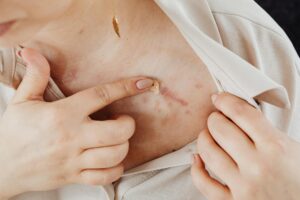
There’s also a different kind of breakout called PUPPP, or pruritic urticarial papules and plaques of pregnancy. This is an itchy rash with small red bumps, often starting on the belly in the third trimester. It might spread to the buttocks, breasts, or thighs. Experts think it comes from skin stretching too much, especially with twins or fast weight gain. This stretch could harm connective tissue and spark inflammation. It usually starts in stretch marks and looks like hives or pimple clusters. It does not hurt the baby and fades after birth[2].
The old idea that breakouts mean a baby girl is not true. Hormones cause it no matter the baby’s sex[1].
After birth, acne might improve in a few months as hormones settle. But for some, it sticks around or gets worse, especially while breastfeeding when estrogen stays low[1].
Sources
https://www.cosmopolitan.com/style-beauty/beauty/a69307596/pregnancy-acne/
https://www.ummhealth.org/health-library/pruritic-urticarial-papules-and-plaques-of-pregnancy
https://www.aol.com/articles/pregnancy-gave-cystic-acne-actually-122400849.html