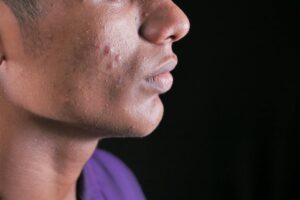
Acne that does not form whiteheads is often the deep, painful type called cystic acne or nodules. These breakouts happen deep under the skin without a visible white tip because inflammation pushes into the lower layers instead of staying at the surface.
Whiteheads form when oil, dead skin cells, and bacteria clog a pore near the top of the skin, creating a closed bump with a white head. In contrast, cystic acne starts the same way with excess oil and clogged pores, but bacteria like Cutibacterium acnes multiply fast inside. This sparks a strong immune response that sends swelling deep into the dermis, the skin’s thicker middle layer.[1][2][6]
Hormones play a big role in this process. Androgens, which are male hormones present in everyone, boost oil production from sebaceous glands. During puberty, menstrual cycles, pregnancy, stress, or conditions like PCOS, these hormones spike and worsen the problem. The result is a tender, swollen lump that feels hard or pus-filled but stays buried, never pushing out as a whitehead.[1][4][7]
Genetics also matter. If family members had severe acne, you are more likely to get these deep spots due to inherited oil production and inflammation traits.[1][2]
Other triggers speed up the deep inflammation. High sugar foods and dairy can raise insulin levels, which ramps up oil. Stress releases cortisol that does the same. Skincare with pore-clogging ingredients, heavy makeup, sweat, or friction from masks add to pore blockage without surface whiteheads forming.[1][3][4][5]
Unlike surface acne, these deep breakouts last longer and risk scarring because they damage skin structure below the surface. Bacteria thrive in the trapped mix of oil and cells, but the inflammation goes too far inward to pop up visibly.[1][2]
Lifestyle factors like poor sleep or certain medications can tip the balance toward these hidden cysts over milder whiteheads.[3][5]
Sources
https://londondermatologyclinics.com/cystic-acne-your-guide-to-causes-and-management/
https://www.doctorrogers.com/blogs/blog/acne-pimples-101-why-we-break-out-what-s-actually-going-on-and-how-to-handle-it-like-a-dermatologist
https://artofskincare.com/blogs/learn/acne-lesson-1-what-is-acne-and-why-do-i-have-it
https://www.tuftsmedicine.org/about-us/news/acne-over-30
https://renotahoederm.com/when-its-time-to-see-a-dermatologist-for-acne-in-reno-nv/
https://naturalimageskincenter.com/common-misconceptions-about-bacterial-acne-how-to-identify-it-correctly/
https://www.drbatras.com/skin-diseases/acne/types