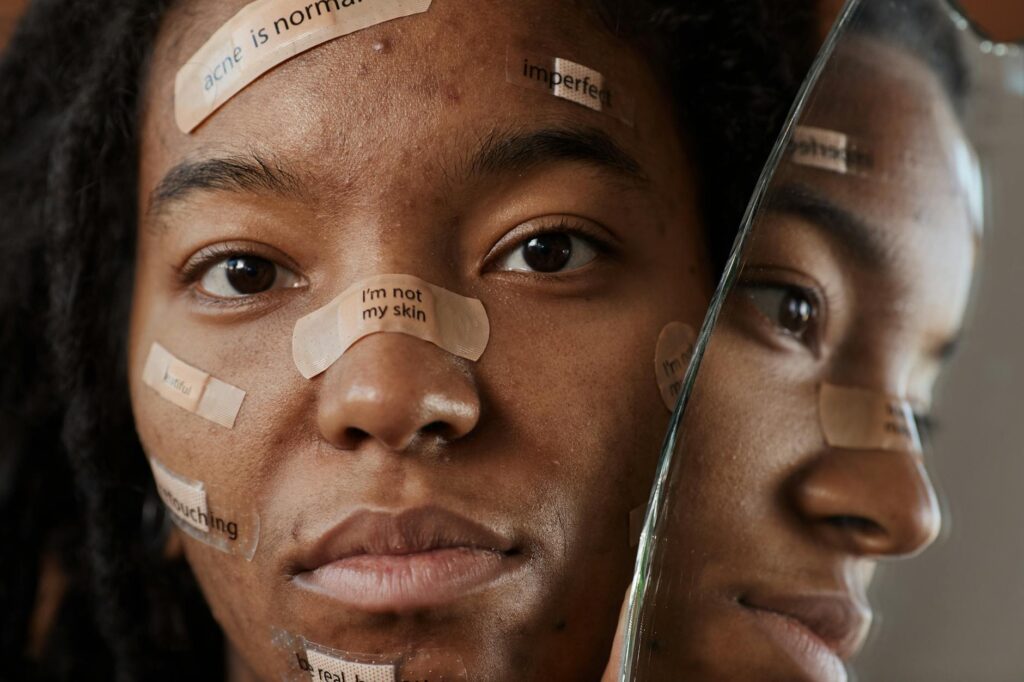
Acne appearing on only one side of your face is almost always caused by something that touches that specific side repeatedly””your phone, your pillowcase, your hand while you rest your chin, or the way you sleep. Unlike hormonal acne that typically appears symmetrically across the chin and jawline, unilateral acne (breakouts on one side) points to an external, localized trigger that introduces bacteria, traps oil, or creates friction on that particular area. For example, someone who always holds their phone to their right ear during long calls often develops clusters of pimples along their right cheek and jaw, while their left side remains clear. This pattern of one-sided breakouts is sometimes called “acne mechanica” when caused by pressure and friction, or contact-related acne when bacteria transfer is the primary culprit.
The good news is that once you identify the specific habit or object causing the problem, these breakouts are often easier to resolve than hormonally driven acne because you can eliminate the source directly. However, if you’ve ruled out obvious external causes and still experience persistent one-sided acne, there may be underlying factors like asymmetrical oil production or even dental issues worth investigating. This article explores the most common causes of unilateral facial acne, helps you identify your specific triggers, and provides practical steps to clear your skin. You’ll learn how to audit your daily habits, understand when to suspect something beyond surface contact, and discover effective treatment approaches for this frustrating but solvable skin concern.
Table of Contents
- Why Does Acne Appear on Only One Side of Your Face?
- Common Everyday Objects That Trigger One-Sided Breakouts
- The Role of Sleeping Position in Facial Acne Patterns
- How Daily Habits Unconsciously Affect One Side of Your Face
- When One-Sided Acne Signals Something Beyond Surface Contact
- The Impact of Hair Products and Hairstyling on Asymmetrical Acne
- How to Prepare
- How to Apply This
- Expert Tips
- Conclusion
- Frequently Asked Questions
Why Does Acne Appear on Only One Side of Your Face?
The skin on both sides of your face is essentially identical in structure, which means when acne shows up predominantly on one side, something external is almost certainly at play. Your face encounters dozens of surfaces and objects throughout the day, and many people have unconscious habits that favor one side over the other. The bacteria, oils, and dirt transferred during these contacts can clog pores, trigger inflammation, and create the perfect environment for breakouts””but only where contact occurs. Consider the difference between someone who sleeps on their back versus someone who sleeps exclusively on their left side. The back sleeper’s face has minimal contact with their pillow, while the side sleeper presses their left cheek into fabric for six to eight hours nightly. That fabric accumulates skin oils, hair products, laundry detergent residue, and bacteria over time.
Even with regular pillowcase changes, the prolonged contact and pressure can trap sebum in pores and irritate the skin. Studies on acne mechanica have shown that sustained pressure combined with heat and moisture””exactly what happens when your face meets a pillow””significantly increases breakout risk. However, not all one-sided acne stems from obvious contact. Some people have naturally asymmetrical faces with one side producing more oil than the other, or differences in pore size that make one cheek more acne-prone. Additionally, certain medical conditions can cause unilateral facial symptoms. If you’ve eliminated all contact-based causes and the problem persists, this asymmetry might be physiological rather than behavioral.

Common Everyday Objects That Trigger One-Sided Breakouts
Cell phones rank as the number one culprit behind one-sided cheek and jaw acne in adults. The average smartphone harbors more bacteria than a toilet seat””including acne-causing strains like Propionibacterium acnes and Staphylococcus aureus. When you press your phone against your face during calls, you’re transferring this bacterial colony directly to your skin while simultaneously creating a warm, moist environment sealed against your cheek. People who spend hours on work calls consistently report breakouts on their dominant phone-holding side. Beyond phones, pillowcases and bedding play a significant role, particularly for side sleepers.
Dirty pillowcases act as a reservoir for everything your skin and hair shed: dead skin cells, sebum, product residue, and bacteria. Even “clean” pillowcases washed with heavily fragranced detergent can cause irritation that mimics acne. Helmet straps, headphones, musical instruments like violins and flutes, and even certain hairstyles that drape over one side of the face can all contribute to unilateral breakouts. The limitation here is that simply cleaning these objects once won’t solve the problem””the contact itself is part of the issue. Some people diligently wipe their phones with antibacterial cloths daily and still break out because the pressure and heat during long calls are enough to trigger acne mechanica even on a sterile surface. For phone-related acne specifically, switching to speakerphone or earbuds often proves more effective than any cleaning regimen.
The Role of Sleeping Position in Facial Acne Patterns
Sleep position creates some of the most predictable patterns of one-sided acne because it involves prolonged contact during the hours when your skin is trying to repair itself. Side sleepers almost universally experience more breakouts on their sleeping side, and the pattern often maps precisely to where their face contacts the pillow. Someone who sleeps with their face turned slightly might notice acne concentrated on their cheekbone and temple rather than their entire cheek. The mechanism involves multiple factors working together. Pressure restricts blood flow and traps sebum in follicles. Heat and humidity from breathing create a bacterial-friendly environment.
Friction from shifting during sleep causes micro-irritation. Hair products and facial oils transfer to the pillowcase and then back to the skin in concentrated form. For someone who sleeps eight hours exclusively on their right side, their right cheek experiences 56 hours of this environment weekly while their left side remains untouched. Switching sleep positions sounds simple but proves difficult in practice. Most people return to their preferred position unconsciously during sleep. More realistic solutions include using silk or satin pillowcases (which create less friction and absorb less oil than cotton), changing pillowcases every two to three days, or trying specialized pillows with face cutouts designed for side sleepers. A 2018 study in the Journal of Cosmetic Dermatology found that participants who switched to silk pillowcases showed measurable improvement in skin hydration and reduced irritation compared to cotton pillowcase users.

How Daily Habits Unconsciously Affect One Side of Your Face
Beyond obvious contacts like phones and pillows, many people have unconscious habits that concentrate touching, pressure, or product exposure on one side of their face. Resting your chin in your hand during meetings, leaning your cheek against a car window during commutes, or twirling hair on one side all introduce bacteria and friction to specific areas. These habits are often so automatic that people remain unaware of them until specifically tracking their behavior. Consider someone who works at a computer eight hours daily. They might unconsciously rest their left cheek on their left hand while reading emails, lean their face toward their dominant side when concentrating, or press a headset against one ear for calls. Combined, these small contacts add up to hours of bacterial transfer and pressure weekly””but only on one side.
A practical experiment involves asking a coworker or family member to note every time you touch your face over a few days. Most people are surprised by both the frequency and the sidedness of their face-touching habits. The tradeoff with behavior modification is between awareness and practicality. While tracking every face touch sounds straightforward, maintaining that vigilance long-term proves exhausting. More sustainable approaches include environmental changes (keeping hands busy with a stress ball during calls) or physical barriers (wearing your hair back if you tend to touch hair that drapes over one side). Perfect elimination isn’t necessary””reducing contact by fifty percent often produces noticeable improvement.
When One-Sided Acne Signals Something Beyond Surface Contact
While external contact causes most unilateral acne, persistent one-sided breakouts that don’t respond to habit changes may indicate other issues worth investigating. Dental problems, particularly infections or abscesses, can cause facial inflammation that manifests as acne-like bumps on the affected side. Sinus infections similarly can trigger one-sided facial inflammation. These conditions typically accompany other symptoms””tooth pain, facial pressure, or swelling””but sometimes skin changes appear first. Hormonal fluctuations usually cause symmetrical acne, but some people experience asymmetrical hormonal responses. The lymphatic system, which drains waste products from facial tissues, can become sluggish or blocked on one side, potentially contributing to congestion and breakouts.
Nerve-related conditions affecting one side of the face can alter sebum production or skin sensitivity in that area. These causes are rare compared to contact-based acne, but they explain cases that resist conventional treatment. A warning: don’t assume a serious underlying condition just because you have one-sided acne. The vast majority of cases trace back to mundane causes like phone contact or sleep position. However, if you’ve genuinely eliminated all contact-based triggers for two to three months and see no improvement, or if your one-sided breakouts are accompanied by pain, swelling, numbness, or other unusual symptoms, consulting a dermatologist or physician makes sense. They can rule out conditions that require specific treatment beyond skincare approaches.

The Impact of Hair Products and Hairstyling on Asymmetrical Acne
Hair products represent an underrecognized cause of one-sided facial acne, particularly for people who part their hair to one side or wear asymmetrical styles. Heavy styling products, leave-in conditioners, oils, and pomades can migrate onto facial skin, clogging pores along the hairline, temples, and cheeks. This type of acne, sometimes called “pomade acne” or “acne cosmetica,” follows the distribution of product contact rather than traditional acne zones.
Someone with side-swept bangs covering their left forehead, for instance, may notice persistent breakouts on that side while their right forehead remains clear. The hair acts as a constant delivery system for whatever products coat it, and the occlusion traps oil and bacteria against the skin. Even products marketed as lightweight or non-comedogenic can cause problems when continuously pressed against facial skin. Switching to the opposite side occasionally isn’t practical for most hairstyles, but pinning hair back during sleep, reducing product use near the face, and washing the hairline thoroughly during facial cleansing can help significantly.
How to Prepare
- **Document your face contact patterns for one full week.** Keep a simple log noting every time something touches your face, which side, and for how long. Pay attention to phone calls, sleeping position, head resting habits, and any equipment you wear. Most people discover two to three primary contact sources they weren’t fully aware of.
- **Audit your bedding and establish a rotation system.** Purchase enough pillowcases to change them every two to three nights. Consider silk or satin options if budget allows. Wash bedding with fragrance-free, hypoallergenic detergent to eliminate potential irritants.
- **Clean all personal devices that contact your face.** Use appropriate wipes or solutions for phones, glasses, headphones, and any other equipment. Set a recurring reminder to repeat this cleaning daily.
- **Evaluate hair products and styling habits.** List every product you use and check ingredients for known comedogenic compounds. Consider whether your hairstyle directs hair products toward one side of your face.
- **Set up alternatives for high-contact activities.** Purchase earbuds or a headset for phone calls. Arrange your workspace to discourage face-resting habits. Keep your hands occupied during sedentary activities.
How to Apply This
- **Apply acne treatment products preferentially to the affected side.** While you should maintain basic cleansing for your entire face, concentrate active ingredients like benzoyl peroxide, salicylic acid, or retinoids on the side with active breakouts. This approach reduces unnecessary dryness and irritation on your clear side while delivering adequate treatment where needed.
- **Use a barrier product on the affected side before high-contact activities.** If you must use a phone against your face, applying a thin layer of non-comedogenic moisturizer beforehand can reduce bacterial transfer and friction. This isn’t a perfect solution but provides some protection when avoiding contact isn’t possible.
- **Treat the specific acne type present.** One-sided acne from friction and pressure often presents as closed comedones and small inflammatory papules rather than deep cystic acne. These typically respond well to topical retinoids and salicylic acid. If your one-sided acne includes deep, painful nodules, the cause may be more complex than surface contact, warranting professional evaluation.
- **Give treatment a consistent three to four week trial before judging effectiveness.** Acne treatments take time to work, and the skin cell turnover cycle means improvements won’t be visible immediately. Continue both the treatment and the contact-reduction measures simultaneously for an accurate assessment.
Expert Tips
- Wipe your phone screen before every call using an alcohol-based solution, or better yet, switch entirely to speakerphone or earbuds””cleaning alone often isn’t sufficient because pressure and heat contribute independently of bacteria.
- Sleep on a silk or satin pillowcase, which creates less friction and absorbs less oil than cotton; if silk is too expensive, a satin polyester case provides similar benefits at lower cost.
- Don’t over-treat the affected side in frustration””applying excessive amounts of benzoyl peroxide or using multiple active ingredients simultaneously can damage your skin barrier and paradoxically worsen breakouts through irritation.
- If you identify a contact source you cannot eliminate (like a required work headset), focus on immediately cleansing that area post-contact rather than trying to prevent all contact; a gentle micellar water swipe after removing the headset removes transferred bacteria before it can colonize pores.
- Track your breakout patterns using photos and notes for at least one full menstrual cycle if applicable; even contact-triggered acne can worsen during certain hormonal phases, and understanding this pattern helps you intensify preventive measures at the right times.
Conclusion
One-sided facial acne almost always tells you something specific: that side of your face is encountering a trigger the other side is not. Whether it’s your phone pressed against your cheek, your pillowcase accumulating bacteria, your hand supporting your chin during work, or hair products migrating from an asymmetrical style, the cause is typically identifiable through careful observation of your daily habits. The asymmetry itself is a diagnostic clue that points toward external, behavioral causes rather than internal hormonal factors””and that’s actually good news because it means you have direct control over the solution. Clearing one-sided acne requires both detective work and patience.
Audit your contact patterns honestly, implement environmental changes systematically, and give your skin time to respond. Most people see significant improvement within four to six weeks of eliminating their primary trigger while using appropriate topical treatment. If you’ve genuinely addressed all identifiable contact sources for two to three months without improvement, consulting a dermatologist can help identify less common causes. But for the majority of one-sided acne sufferers, the answer lies somewhere in their daily routine””finding it is just a matter of looking at the right side of the question.
Frequently Asked Questions
How long does it typically take to see results?
Results vary depending on individual circumstances, but most people begin to see meaningful progress within 4-8 weeks of consistent effort. Patience and persistence are key factors in achieving lasting outcomes.
Is this approach suitable for beginners?
Yes, this approach works well for beginners when implemented gradually. Starting with the fundamentals and building up over time leads to better long-term results than trying to do everything at once.
What are the most common mistakes to avoid?
The most common mistakes include rushing the process, skipping foundational steps, and failing to track progress. Taking a methodical approach and learning from both successes and setbacks leads to better outcomes.
How can I measure my progress effectively?
Set specific, measurable goals at the outset and track relevant metrics regularly. Keep a journal or log to document your journey, and periodically review your progress against your initial objectives.
When should I seek professional help?
Consider consulting a professional if you encounter persistent challenges, need specialized expertise, or want to accelerate your progress. Professional guidance can provide valuable insights and help you avoid costly mistakes.
What resources do you recommend for further learning?
Look for reputable sources in the field, including industry publications, expert blogs, and educational courses. Joining communities of practitioners can also provide valuable peer support and knowledge sharing.