CaHA microspheres work by directly activating your skin’s fibroblasts—the cells responsible for producing collagen—through physical contact and mechanical stimulation. When injected into acne scars, these tiny calcium hydroxylapatite particles (25-45 micrometers in size) create a biological scaffold that jumpstarts your skin’s natural regenerative response, leading to new collagen and elastin deposition over weeks and months. This isn’t just filling a scar; it’s essentially triggering your body to rebuild the damaged tissue from within.
The mechanism is surprisingly elegant: the CaHA particles embedded in a gel carrier integrate into the skin and work on a cellular level to stimulate fibroblasts, initiating what researchers call a “regenerative healing response” rather than simple scar-filling inflammation. The process begins as early as four weeks after injection and continues for at least a year, meaning your skin keeps improving long after the initial treatment. This article explains exactly how CaHA microspheres accomplish this, which types of acne scars respond best, what clinical evidence shows about real-world results, and what timeline you can expect.
Table of Contents
- How Do CaHA Microspheres Activate Fibroblasts and Trigger Collagen Production?
- The Biological Scaffold: How CaHA Creates New Tissue Architecture
- Clinical Evidence: Real Results from Acne Scar Patients
- Treatment Timeline and Progressive Improvement: What to Expect
- Combination Therapy: Maximizing Results with Microneedling
- Duration and Longevity: How Long Do Results Actually Last?
- Is CaHA Right for Your Acne Scars: Identifying Ideal Candidates
- Conclusion
How Do CaHA Microspheres Activate Fibroblasts and Trigger Collagen Production?
The science of CaHA microspheres hinges on direct cell-to-cell contact. Research published in the Journal of Cosmetic Dermatology demonstrates that when CaHA particles come into physical contact with your skin’s fibroblasts, they activate these collagen-producing cells through mechanical stretching—possibly involving mechanoreceptors that sense physical pressure. This is fundamentally different from other scar treatments that simply fill space or chemically stimulate tissue. The microspheres don’t just sit there; they actively engage with your cells on a mechanical level.
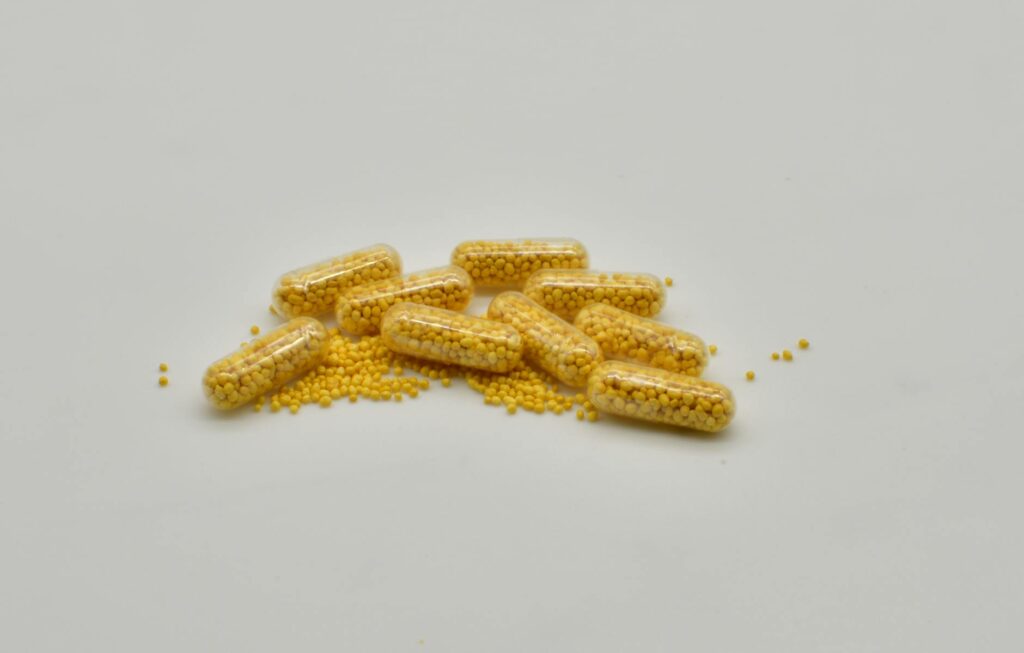
A standard CaHA product like Radiesse contains 30% calcium hydroxylapatite microspheres suspended in 70% carboxymethylcellulose gel. This composition is deliberately engineered: the gel acts as a carrier that keeps the microspheres distributed throughout the injection site, while the individual particles interact with surrounding fibroblasts. Because the particles are the right size—not too large to prevent cellular interaction and not too small to be immediately absorbed—they maintain this stimulatory contact for an extended period, continuously triggering collagen synthesis. What makes this approach valuable for acne scars specifically is that CaHA initiates what clinicians call a “regenerative healing response” with actual collagen deposition, rather than triggering the kind of inflammatory response that creates fibrosis or scar tissue. Your body treats the CaHA scaffold as a signal to rebuild healthy tissue, not as a foreign irritant requiring aggressive immune response.
The Biological Scaffold: How CaHA Creates New Tissue Architecture
Beyond activating individual fibroblasts, CaHA microspheres integrate into your skin and function as a three-dimensional scaffold that organizes and supports new collagen formation. Think of it like providing structural support while your body fills in the depressed scar with new, healthy tissue. The particles create a framework that guides collagen and elastin production, resulting in more organized tissue remodeling than you’d get from scar-filling alone. However, there’s an important limitation: this scaffolding approach works best for certain scar geometries and not others. CaHA is highly effective for saucerized (depressed) acne scars and rolling scars, which are relatively shallow, broad depressions in the skin.
In a 2024 clinical study tracking 89 patients with moderate-to-severe acne scars, 73% showed visible improvement in cheek hollows and depressions after just 12 weeks when CaHA was combined with microneedling. The combination therapy approach enhanced outcomes because microneedling created additional stimulus for fibroblast activity while the CaHA scaffold provided structural support for new collagen deposition. If you have ice-pick scars—the narrow, deep puncture-like scars—CaHA is essentially ineffective because the scar geometry doesn’t allow the scaffold to provide adequate structural support for filling. In those cases, you’d need more aggressive treatments like punch excision or TCA cross. Understanding your specific scar type before treatment is crucial for setting realistic expectations.
Clinical Evidence: Real Results from Acne Scar Patients
The clinical evidence for CaHA and acne scars comes from both large patient cohorts and controlled research studies. The 89-patient study mentioned above represents one of the largest recent datasets, showing 73% of patients with visible improvement in depression-type scars within 12 weeks. This wasn’t subjective assessment—it measured actual reduction in scar depth and visible hollowing. A separate pilot study combining microfocused ultrasound with CaHA filler achieved statistically significant improvement in overall acne scar severity (P = 0.002), meaning the results weren’t due to chance. What’s particularly notable is the timeline of improvement.
Unlike dermal fillers that provide immediate but temporary improvement, CaHA shows progressive improvement over months as collagen synthesis builds. Early response begins around 4 weeks post-injection, but peak results often emerge at 8-12 weeks when new collagen deposition is most active. Many patients report continued subtle improvement up to the 12-month mark as the regenerative process fully completes. The consistency of these results across different patient populations and treatment protocols suggests CaHA’s mechanism is robust. Whether used alone or combined with microneedling, the fundamental mechanism—fibroblast activation leading to collagen production—reliably produces measurable scar improvement.

Treatment Timeline and Progressive Improvement: What to Expect
Understanding the CaHA treatment timeline helps set realistic expectations. Immediately after injection, you’ll have some filling effect from the gel carrier, but this isn’t where the real improvement comes from. The actual magic happens over the following weeks as your fibroblasts respond to the CaHA scaffold. In the first 2-4 weeks post-injection, you may notice swelling and the initial volumizing effect.
By week 4, animal studies show that new collagen growth has already begun. This is the beginning of the regenerative phase. By weeks 8-12, most patients report noticeable improvement in scar appearance, with the 89-patient study showing 73% visible improvement at the 12-week mark. The collagen remodeling continues beyond this point—clinical effects persist for up to 12 months minimum after a single injection, with some sources citing biostimulation benefits extending up to 18 months. The practical implication is that you should schedule a treatment several months before a major event if scar improvement is your goal—unlike temporary fillers that work immediately, CaHA requires patience for the collagen-stimulating benefits to fully manifest.
Combination Therapy: Maximizing Results with Microneedling
While CaHA alone delivers measurable scar improvement, combining it with microneedling or other collagen-stimulating treatments amplifies results. Microneedling creates controlled micro-injuries that trigger additional fibroblast activation, while the CaHA scaffold provides structural support for the newly synthesized collagen. The 89-patient study showing 73% improvement used exactly this combination approach. The synergy works because both treatments hit fibroblasts through different mechanisms: microneedling through injury-induced inflammation and fibroblast recruitment, CaHA through direct mechanical contact and scaffolding.
When timed properly—typically performing microneedling at the time of CaHA injection or within a short window—the cumulative stimulus creates more robust collagen remodeling than either treatment alone. However, combination therapy isn’t always necessary. For rolling scars and milder depressions, CaHA monotherapy often produces adequate improvement. Combination approaches make most sense for deeper or more extensive scarring, where you need the additive benefits of multiple mechanisms. Cost and downtime considerations matter too—combination therapy extends recovery time and increases treatment expense compared to CaHA injection alone.
Duration and Longevity: How Long Do Results Actually Last?
Results from CaHA treatment for acne scars last approximately 1-2 years, with clinical effects persisting for at least 12 months post-injection. The biostimulation component—the actual collagen the treatment induced your body to produce—can last up to 18 months, meaning the improvement from the regenerative response often outlasts the scaffold itself. As your body gradually metabolizes the CaHA microspheres over months, the collagen they stimulated your fibroblasts to produce remains, providing ongoing scar improvement.
What this means practically is that you don’t experience sudden reversal of results. Instead, you may gradually notice the skin texture slowly softening again as the biostimulation effect naturally diminishes. Some patients choose to undergo a second treatment 12-18 months later to maintain or further improve results, though not everyone requires maintenance treatments. The durability of results varies based on individual healing responses, sun damage, and continued collagen loss from aging—factors beyond the treatment’s control.
Is CaHA Right for Your Acne Scars: Identifying Ideal Candidates
CaHA works best if you have depressed or rolling acne scars—the broad, shallow depressions that make skin look uneven rather than the narrow puncture-like ice-pick scars. Before considering treatment, a dermatologist should assess your specific scar morphology, as this determines whether CaHA can deliver meaningful results. The good news is that the most common acne scar types—rolling and boxcar scars—respond reliably to this approach.
Your expectations should align with reality: CaHA doesn’t erase scars or make skin perfectly smooth, but it delivers measurable, visible improvement in scar depth and appearance. The improvement is progressive, requiring patience over several months, and results last long enough to justify the investment for most patients. Safety is well-established, with over a decade of clinical experience and a high safety profile documented in medical literature.
Conclusion
CaHA microspheres activate collagen production by directly stimulating your skin’s fibroblasts through mechanical contact and scaffold formation, initiating a regenerative healing response rather than simple scar filling. New collagen begins forming as early as four weeks post-injection, with peak improvements appearing around 12 weeks and continued refinement for up to 18 months. For depressed and rolling acne scars, clinical evidence shows approximately 73% of patients experience visible improvement, with results lasting 1-2 years.
If you’re considering CaHA for acne scars, start with a consultation to determine your scar type and whether you’re an ideal candidate. While ice-pick scars and very deep atrophic scars require different approaches, most common acne scar patterns respond well to CaHA monotherapy or combination treatment with microneedling. The mechanism is well-researched, the safety profile is established, and real-world results from clinical studies support its effectiveness for appropriate scar types.