
B12 injections deliver 100% absorption directly into your bloodstream, while oral supplements are absorbed at only 1-2% through your digestive system. This fundamental difference means injections work faster—new red blood cell production begins within 48-72 hours, compared to oral supplements which take days to weeks to correct a deficiency. However, here’s what most people misunderstand: B12 injections will not improve your skin unless you actually have a B12 deficiency.
If your B12 levels are normal, your body simply excretes the excess since it’s a water-soluble vitamin. For people with genuine B12 deficiency, though, correcting the problem can reverse skin issues like the pale or yellowish complexion caused by anemia, as well as hyperpigmentation (darkened patches) that commonly appears on hands, feet, and knuckles. This article covers the real science behind how B12 affects skin, the absorption differences between injections and oral supplements, how long each method takes to produce results, and the most important caveat: why oral treatment is actually preferred for one specific skin condition despite injections’ faster absorption. We’ll also explore side effects, when injections make sense versus when they don’t, and what clinical research actually shows about long-term outcomes.
Table of Contents
- How Do B12 Injections Absorb So Much Better Than Oral Supplements?
- Can B12 Injections Actually Improve Your Skin?
- What Skin Changes Signal a B12 Deficiency?
- Which Method Works Faster and Better for Achieving Skin Results?
- The Critical Exception: Why Oral Treatment Is Actually Preferred for Hyperpigmentation
- Side Effects and Safety: A Major Difference Between Methods
- When Injections Actually Make Sense Versus When They Don’t
- Conclusion
- Frequently Asked Questions
How Do B12 Injections Absorb So Much Better Than Oral Supplements?
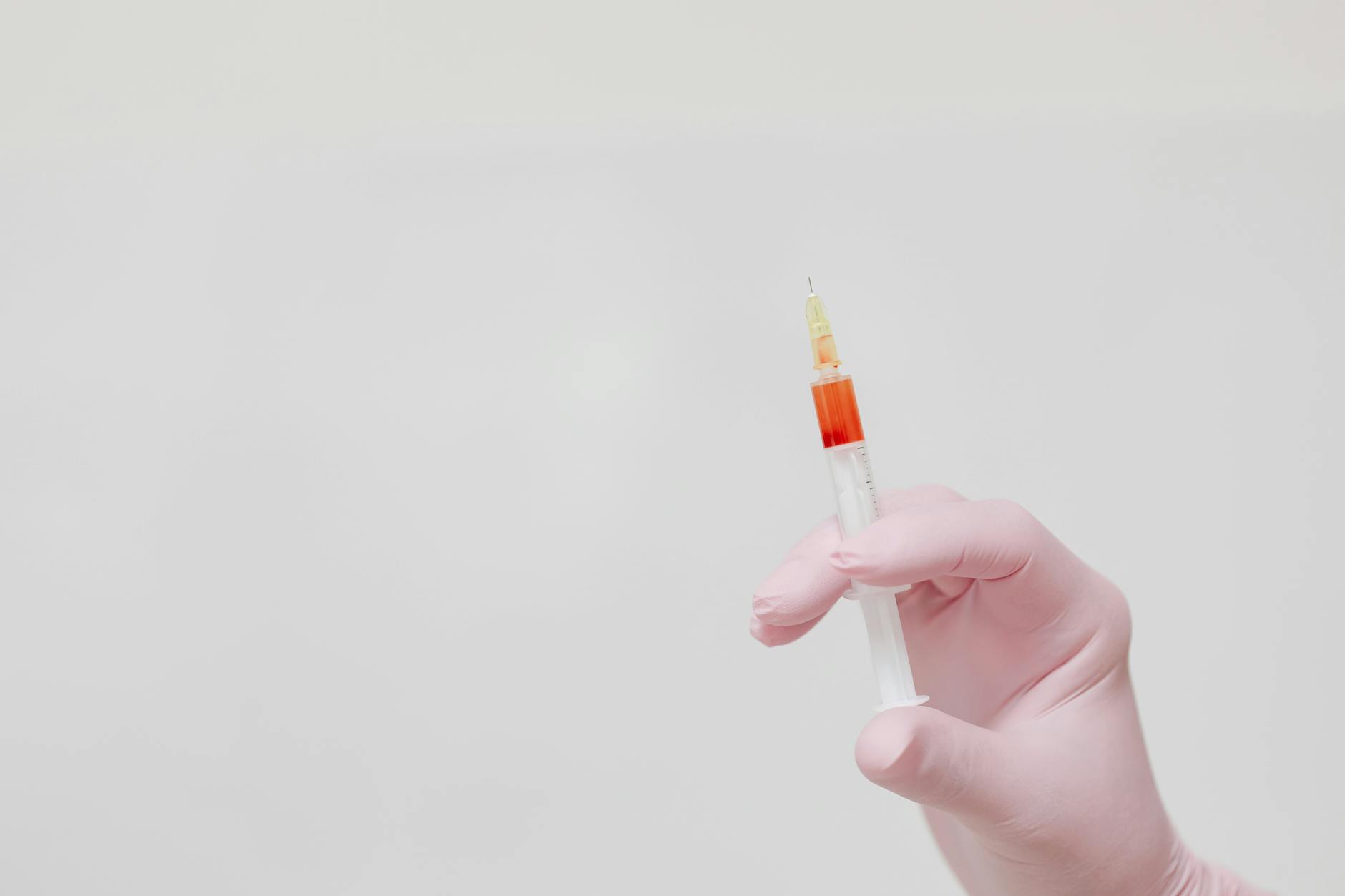
The absorption difference comes down to biology. Oral B12 must survive stomach acid, rely on intrinsic factor (a protein your stomach produces), and pass through your intestinal lining—a process that succeeds only 1-2% of the time in healthy people. For anyone with digestive issues, celiac disease, Crohn’s disease, or a history of gastric surgery, oral absorption approaches zero. B12 injections bypass this entire system by delivering the full dose directly into muscle tissue, where it’s absorbed into the bloodstream with near 100% efficiency. This is why injections are the standard treatment for people who can’t absorb oral B12 due to malabsorption disorders. The speed difference is significant too.
Injections begin stimulating new red blood cell production within 48-72 hours, meaning you’ll feel more energetic and alert quickly if you’re deficient. Oral supplements take considerably longer because they must first be absorbed, then reach sufficient blood levels before cells can use the vitamin. This speed advantage makes injections appealing to people seeking fast results, but it comes with a tradeoff: you’re getting a much larger single dose rather than the modest daily amount oral supplements provide. However, in one important scenario, this speed advantage doesn’t matter. When your skin issue is hyperpigmentation from B12 deficiency, research shows that oral treatment is actually preferred over injections. The darkening typically takes 6-12 weeks to resolve after starting treatment, regardless of whether you use injections or high-dose oral supplements—so the injection’s faster absorption doesn’t translate to faster skin improvement in this case.
Can B12 Injections Actually Improve Your Skin?
This is the critical distinction that separates myth from science. B12 injections do not improve skin in people with normal B12 levels. your body doesn’t store excess water-soluble vitamins; it excretes them through urine. If your B12 levels are already adequate, injecting more B12 simply leaves your body minutes later. This is why B12 injections are not a cosmetic treatment and won’t give you clearer, brighter, or younger-looking skin just by taking them.
But for people with a genuine B12 deficiency, the correction process can reverse specific skin problems. The most common manifestation of B12 deficiency is hyperpigmentation—darkened patches that appear on hands, feet, knuckles, palms, and the creases of the soles. People with deficiency also experience vitiligo (loss of skin pigmentation in patches), glossitis (inflammation of the tongue), and changes to hair and nails. As your deficiency is corrected and your red blood cell count normalizes, the anemia that caused the pale or yellowish cast to your skin resolves, and your natural complexion returns. Someone who looked gray or sallow for months may look noticeably healthier within weeks as their color returns. This is improvement driven by fixing an underlying medical condition, not by B12 acting as a skin treatment.
What Skin Changes Signal a B12 Deficiency?
Hyperpigmentation is the skin symptom most commonly linked to B12 deficiency, appearing especially on the hands, feet, and darker-skinned creases. Dermatological research identifies it as the primary cutaneous manifestation—more common than the other skin changes that can occur. Some people develop vitiligo alongside hyperpigmentation, losing pigment in some areas while gaining it in others, which can be distressing. Glossitis, inflammation of the tongue, often accompanies these skin changes and makes the mouth feel swollen and tender. Additionally, people with B12 deficiency frequently report brittle nails, hair loss, and premature graying.
A clinical example helps illustrate this. Someone with pernicious anemia (an autoimmune form of B12 deficiency) might notice dark patches spreading across their knuckles and the sides of their hands over several months, concurrent with increasing fatigue. They might think it’s a skin condition and seek dermatological treatment, only to discover blood tests showing severely depleted B12. Once B12 replacement therapy begins, the hyperpigmentation gradually fades over 6-12 weeks as the deficiency resolves. Some cases improve within 2 weeks, while others take the full 12 weeks or longer, depending on severity and how long the deficiency existed.

Which Method Works Faster and Better for Achieving Skin Results?
For speed of initial response, B12 injections clearly win. They begin stimulating new red blood cell production within 48-72 hours, while oral supplements take days to weeks to correct deficiency. If you’re severely anemic and your skin is pale, injections will likely restore color noticeably faster. A standard injection protocol involves 1000 micrograms given intramuscularly daily or every other day for 1-2 weeks, then monthly for 3 months, then every 3 months for maintenance. This aggressive initial dosing gets your levels up quickly. However, long-term efficacy tells a different story.
Clinical research demonstrates that after 1-4 months, oral B12 and intramuscular injections are equivalent in normalizing serum B12 levels. A randomized clinical trial comparing the two methods showed similar improvements in both groups at the 4-month mark. High-dose oral supplements (which are now available) can achieve the same result as injections, just more slowly. This means if you’re willing to wait a few weeks for results, oral supplements will get you there at the same endpoint. The tradeoff is convenience versus speed. Injections require a trip to a clinic or provider to receive the injection, but the dose is standardized and immediate. Oral supplements require you to remember to take them daily, and absorption can vary based on food, stomach acid, and other factors—but many people find this easier to manage long-term.
The Critical Exception: Why Oral Treatment Is Actually Preferred for Hyperpigmentation
Here’s where conventional wisdom falls apart. Medical research specifically recommends oral treatment as the preferred approach for B12 deficiency that presents with hyperpigmentation as the primary symptom. This seems counterintuitive given that injections absorb better and work faster, but the research is clear. The reason centers on the timeline: hyperpigmentation takes 6-12 weeks to resolve regardless of treatment method. The injection’s faster initial absorption doesn’t translate to faster skin clearing.
Since both methods achieve the same skin outcome in the same timeframe, oral treatment is preferred because it avoids injection site risks and is less invasive. This is an important warning if you’re considering injections specifically to clear darkened patches on your hands or feet. If that’s your primary concern and blood tests confirm B12 deficiency, a dermatologist or primary care provider would likely recommend starting with high-dose oral B12 first. You won’t see results any slower than with injections, but you’ll avoid the injection site discomfort and potential for local reactions. If oral supplementation fails due to malabsorption, then injections become the next logical step.

Side Effects and Safety: A Major Difference Between Methods
B12 injections can cause local side effects at the injection site: redness, swelling, and mild pain are common and usually resolve within a day. More serious adverse reactions are rare but documented—including acneiform eruptions (acne-like rashes), rosacea flares, allergic reactions, and in extremely rare cases, anaphylaxis. There’s also a rare phenomenon called B12-induced acne, where the injection appears to trigger acne outbreaks in susceptible individuals. None of these are likely, but they’re possible.
Oral B12 supplements have no documented adverse effects. You cannot overdose on B12 since excess is simply excreted. This safety profile makes oral supplements attractive for people with sensitive skin or a history of injection reactions. If you already struggle with acne or rosacea, the small risk of B12 injection triggering a flare is worth considering. Someone who gets rosacea flares from physical irritation or inflammation might reasonably choose oral supplements to avoid the injection trauma entirely.
When Injections Actually Make Sense Versus When They Don’t
B12 injections are genuinely beneficial for specific situations: severe malabsorption disorders (celiac, Crohn’s, pernicious anemia), people who cannot tolerate oral supplements, those with severe neurological symptoms requiring rapid correction, or patients who have failed oral supplementation. They make sense for correcting an actual deficiency efficiently. They do not make sense as a cosmetic treatment or for people with normal B12 levels seeking skin improvement.
Looking forward, the landscape is shifting toward high-dose oral supplements as first-line therapy for simple dietary deficiency, particularly as new formulations improve absorption. Injections remain the gold standard for malabsorption and severe cases, but for most people with mild to moderate deficiency and skin concerns like hyperpigmentation, oral treatment is becoming the preferred starting point. The key is getting diagnosed first—a simple blood test showing your B12 level—before deciding which route makes sense for your situation.
Conclusion
B12 injections absorb at 100% efficiency compared to oral supplements’ 1-2% absorption, and they produce effects faster—beginning new red blood cell production within 48-72 hours rather than days or weeks. However, this speed advantage only matters if you actually have a B12 deficiency. For people with normal B12 levels, injections won’t improve skin.
For those with deficiency-related hyperpigmentation specifically, oral treatment is medically preferred despite injections’ faster absorption, because the skin clearing takes 6-12 weeks regardless of method. Before considering either treatment for skin concerns, get your B12 level tested. If it’s deficient, work with your doctor to determine whether injections or high-dose oral supplements make sense for your situation based on malabsorption risk, convenience, and any history of injection reactions. The science is clear: fixing a real deficiency improves skin, but neither method will benefit skin that’s already healthy.
Frequently Asked Questions
Will B12 injections make my acne go away?
Not unless you have B12 deficiency causing the acne. If your B12 is normal, injections won’t help. However, in rare cases, B12 injections can trigger acneiform eruptions as a side effect, making acne temporarily worse.
How long does it take for B12 injections to clear hyperpigmentation from deficiency?
Typically 6-12 weeks after starting treatment, with some cases improving within 2 weeks. This timeline is the same whether you use injections or oral supplements.
Can I get B12 injections just to improve my skin tone without being deficient?
No, and it won’t work. Your body excretes excess B12 in urine if your levels are already adequate. B12 is not a cosmetic treatment for people with normal levels.
Which is cheaper: B12 injections or oral supplements?
Oral supplements are typically far cheaper and don’t require clinic visits. Injections require healthcare provider administration, which adds cost.
If I’m not deficient, can high-dose oral B12 improve my skin?
No. Whether you’re deficient or not, high-dose B12 only improves skin if there’s an underlying deficiency to correct. Excess is simply excreted.
Why is oral B12 preferred for hyperpigmentation if injections absorb better?
Because hyperpigmentation takes 6-12 weeks to resolve regardless of method. The injection’s faster absorption doesn’t translate to faster skin clearing, so oral treatment is preferred because it’s less invasive and has no side effects.