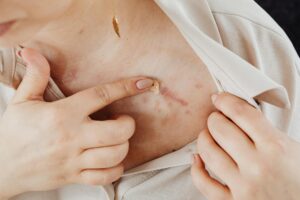
Aklief (trifarotene) is a fourth-generation retinoid specifically designed to treat acne on the chest, shoulders, and back—areas that are notoriously difficult to manage and often covered by clothing, making them prone to severe breakouts. Unlike earlier retinoids that were primarily tested on facial acne, Aklief was developed and FDA-approved specifically for truncal acne, meaning it targets the exact type of sebaceous gland overactivity and bacterial colonization that occurs on the body. The drug works by binding to specific retinoid receptors on skin cells, normalizing cell turnover, reducing sebum production, and decreasing the inflammation that characterizes body acne—and clinical trials showed it can clear roughly 40% of truncal acne lesions within just three months of consistent use. This article covers how Aklief works differently on body skin versus facial skin, what results you can realistically expect, how to use it properly to minimize irritation, and how it compares to other treatment options like oral antibiotics, spironolactone, or benzoyl peroxide for stubborn back and chest acne.
Table of Contents
- How Does Trifarotene Work on Chest and Back Acne?
- Why Truncal Acne Is Particularly Stubborn
- Efficacy and Real-World Clinical Results
- Proper Application and How to Minimize Irritation
- Common Side Effects and When to Adjust Your Approach
- Comparing Aklief to Other Truncal Acne Treatments
- Prescription Requirements and Long-Term Use Outlook
- Conclusion
- Frequently Asked Questions
How Does Trifarotene Work on Chest and Back Acne?
Trifarotene is a selective retinoid X receptor (RXR) agonist, which is a more technical way of saying it binds very specifically to certain cellular receptors and leaves others alone—this selectivity reduces some of the side effects that made earlier retinoids like tretinoin so irritating. On truncal skin, Aklief increases cell turnover, which prevents dead skin cells from clogging the large sebaceous glands that densely populate the chest, shoulders, and upper back. Additionally, it reduces the amount of sebum these glands produce, which starves Cutibacterium acnes (formerly Propionibacterium acnes) of the lipids it needs to thrive.
The drug also has a direct anti-inflammatory effect, suppressing the inflammatory cascade that makes body acne so painful and prone to scarring. For example, someone with deep cystic acne on their upper back might find that after six weeks of Aklief use, the active nodules flatten and new lesions stop forming—not because bacteria disappeared overnight, but because the chemical environment in the follicle became hostile to bacterial growth and inflammation stopped spiraling. However, Aklief does not kill bacteria directly the way benzoyl peroxide does, so it’s not the fastest option if you need acute lesions cleared in days rather than weeks.
Why Truncal Acne Is Particularly Stubborn
Truncal acne is harder to treat than facial acne because body skin has a thicker stratum corneum (outer barrier), produces more sebum, and is often covered by clothing that traps heat, moisture, and bacteria. The follicles on the back and chest are also larger and deeper than on the face, which means the bacterial colonies that form in them are harder for topical treatments to penetrate. Additionally, many people wear tight sports bras, compression shirts, or backpacks for hours at a day, which creates constant friction and occlusion—a perfect breeding ground for acne.
Most of the acne medications people know—like benzoyl peroxide or salicylic acid cleansers—were designed for facial acne and often don’t work well enough on body acne because they either don’t penetrate deeply enough or are too irritating to use on large body surface areas twice a day. For instance, a teenager who clears their face completely with benzoyl peroxide might still have severe acne on their chest and back, forcing them to pursue either oral antibiotics (which come with resistance risks) or retinoids like Aklief that actually address the root cause of truncal acne rather than just treating the surface. However, if someone has active rosacea or extremely sensitive skin on their trunk, Aklief’s irritation potential might make it unsuitable without careful dose titration.
Efficacy and Real-World Clinical Results
In the pivotal clinical trials that led to Aklief’s FDA approval in 2019, about 40% of people using the cream achieved at least a 75% reduction in inflammatory lesions (the red, painful bumps and cysts) after twelve weeks. For non-inflammatory lesions (blackheads and whiteheads), the improvement was roughly 50%. These numbers sound modest compared to oral isotretinoin (which can clear acne completely in 80%+ of patients), but isotretinoin carries serious risks including birth defects and liver damage, so Aklief is typically considered first-line for moderate truncal acne.
What’s particularly relevant is that Aklief works on large body surface areas—one study followed people using the cream on their entire back, shoulders, and upper chest simultaneously, and after 12 weeks, most showed visible improvement across all treated zones. For example, someone with acne scattered across their chest and upper back would likely see the upper back clear first (since it has thicker skin and is more tolerant of retinoid irritation), while smaller, superficial lesions on the chest might take 16 weeks to fully resolve. The catch is that most of these studies excluded people with severe cystic acne or acne accompanied by significant keloid scarring, so results in those populations may be less dramatic.

Proper Application and How to Minimize Irritation
Aklief comes as a 0.005% cream, which is a very specific concentration chosen to be strong enough to work on thick trunk skin but weak enough to avoid severe irritation on sensitive individuals. The standard approach is to apply a pea-sized amount (roughly the size of a green pea, not a pearl) to clean, completely dry skin, either at night or in the morning, depending on your tolerance. Crucially, you must apply it to dry skin—applying it to damp or wet skin will increase penetration and irritation dramatically, which is why dermatologists recommend waiting 15-20 minutes after cleansing before applying Aklief.
Most people start with the lowest frequency (once or twice per week) and gradually increase to every other night or nightly over 4-8 weeks, as their skin adapts. A typical escalation schedule looks like: Week 1-2, twice per week; Week 3-4, three times per week; Week 5+, every other night or nightly as tolerated. Using a gentle, fragrance-free moisturizer immediately after application—while the Aklief is still slightly damp—can significantly reduce irritation and dryness without compromising efficacy. One caveat is that you should not use Aklief with other potentially irritating ingredients like vitamin C, benzoyl peroxide, or strong exfoliating acids in the same routine, as this combination can trigger severe scaling, redness, and peeling that makes people quit treatment.
Common Side Effects and When to Adjust Your Approach
The most common side effect of Aklief is mild to moderate redness, dryness, and scaling, particularly in the first 2-4 weeks—this is often called a “retinization period” and usually improves as skin adapts. Many people experience mild itching or a burning sensation during the first week of application, which typically fades as the skin barrier strengthens. However, if after four weeks you’re experiencing severe burning, blistering, or spreading redness beyond the treatment area, you should reduce frequency to once or twice per week and consider speaking with your dermatologist about whether Aklief is right for you.
A less common but important consideration is photosensitivity: retinoids don’t directly increase UV sensitivity the way some other drugs do, but they do thin and potentially weaken the outer skin barrier, which means you must use broad-spectrum SPF 30+ sunscreen daily if you’re using Aklief, even on body areas that are normally covered. For example, if you use Aklief on your upper back and then go to the beach without a shirt and sunscreen, you’re at higher risk for sunburn and potential sun damage in the treated area. Additionally, Aklief is contraindicated in pregnancy (it’s pregnancy category C), so anyone trying to conceive should discuss this with their doctor before starting treatment.
Comparing Aklief to Other Truncal Acne Treatments
Aklief is often compared to oral medications like doxycycline (an antibiotic) or spironolactone (a hormone-blocking agent). Doxycycline works faster—people often see improvement within 2-3 weeks—but it carries risks of bacterial resistance and photosensitivity, and the benefit disappears once you stop taking it. Spironolactone can be very effective for hormonally-driven acne, especially in women, but it requires blood tests, can cause dizziness, and may take 2-3 months to show results. Aklief’s advantage is that it addresses the root biological cause of acne (cell turnover and sebum production) rather than just suppressing bacteria, so improvements tend to be more durable after treatment ends.
For topical options, benzoyl peroxide is faster-acting and doesn’t have retinization irritation, but it’s difficult to use on large body areas without causing excessive dryness, and many people find it stains their clothing. Salicylic acid body washes are gentle but often too weak to move the needle on moderate or severe acne. Topical antibiotics like clindamycin are another option but carry the same bacterial resistance concerns as oral antibiotics. In a head-to-head scenario, someone with moderate inflammatory truncal acne would probably see faster improvement with oral doxycycline (weeks 2-4) but more durable improvement with Aklief (weeks 8-12+), making the choice depend on how urgently they need results.
Prescription Requirements and Long-Term Use Outlook
Aklief is a prescription medication in the United States, so you’ll need a dermatologist or prescribing physician to obtain it. Most insurance plans cover it, though some require prior authorization or have specific quantity limits per refill. The typical prescription is for a 45-gram tube, which contains enough cream to treat large body surface areas (chest and back) for about 30 days with nightly application—so you’ll usually refill monthly.
Looking forward, retinoid research is moving toward even more selective compounds that minimize irritation while maintaining efficacy, and Aklief represents a significant step in that direction. For people with truncal acne unresponsive to other treatments, Aklief has become a reasonable option to try before considering isotretinoin (a nuclear option reserved for severe, scarring acne). Long-term safety data shows that retinoids can be used indefinitely without losing effectiveness or causing systemic toxicity, so if Aklief works for you, it can serve as a maintenance treatment for years.
Conclusion
Aklief (trifarotene) is a fourth-generation retinoid specifically developed to treat the stubborn acne that develops on the chest, shoulders, and back—areas where standard facial acne treatments often fail. It works by normalizing skin cell turnover, reducing sebum production, and dampening inflammation, with clinical evidence showing roughly a 40% improvement in inflammatory lesions within three months of consistent use. The drug requires patience, careful application to dry skin, and gradual dose escalation to minimize irritation, but for people with moderate truncal acne, it offers a more durable solution than antibiotics or benzoyl peroxide.
If you’re considering Aklief, start by speaking with a dermatologist about whether it’s appropriate for your specific acne type and skin sensitivity. Most people benefit from pairing it with a gentle moisturizer, daily sunscreen, and realistic expectations that visible improvement will take 8-12 weeks rather than days. While it’s not a cure and some people don’t respond dramatically, Aklief has become a first-line option for truncal acne precisely because it addresses the underlying biology rather than just treating the surface.
Frequently Asked Questions
How long does it take to see results with Aklief?
Most people notice initial improvement (fewer new lesions forming) within 4-6 weeks, with significant improvement by 8-12 weeks. Full results can take 12-16 weeks. This is slower than antibiotics but faster than waiting for spontaneous improvement.
Can I use Aklief on my face if I also have facial acne?
Aklief is approved only for truncal acne, so it’s not typically recommended for facial use even though it could theoretically work. Facial skin is thinner and more sensitive, and other retinoids like tretinoin or adapalene are better studied for the face.
What should I do if Aklief makes my skin too red and dry?
Reduce application frequency to once or twice per week, wait longer between cleansing and application, apply to completely dry skin, and use a gentle moisturizer immediately after. If irritation persists after 4-6 weeks, discuss adjusting your approach or trying an alternative with your dermatologist.
Can women of childbearing age use Aklief?
Aklief is pregnancy category C, meaning risks cannot be ruled out in pregnancy. Women planning to conceive should discuss this with their doctor. If you become pregnant while using Aklief, discontinue it and notify your physician.
Does Aklief work better than oral antibiotics for truncal acne?
Aklief results are more durable long-term because it addresses root causes rather than suppressing bacteria, but oral antibiotics work faster (2-3 weeks). The best choice depends on whether you prioritize speed or durability.
How often do I need to refill my Aklief prescription?
A 45-gram tube typically lasts 30 days with nightly application on large body areas. Most people refill monthly, though you can reduce frequency if you’re not yet applying nightly.