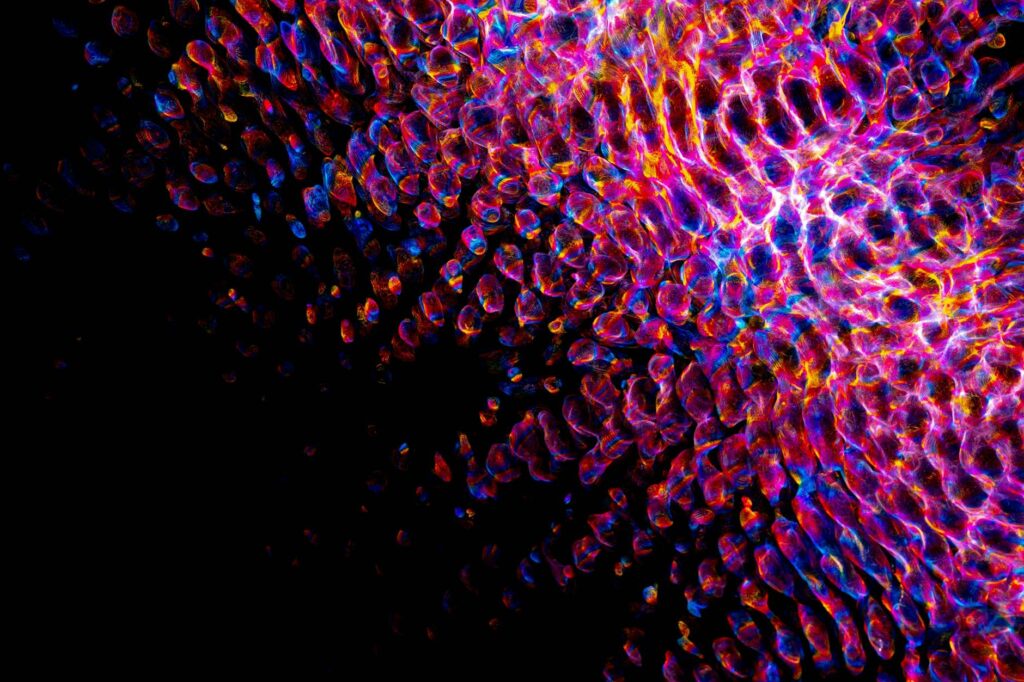
The combination of adipose-derived stem cells (ADSCs) and their secreted exosomes works to reduce scar formation by modulating fibroblast activity—specifically by promoting fibroblasts toward a reparative phenotype that breaks down excess collagen and reduces the inflammatory response that drives scar tissue buildup. When introduced to damaged skin, ADSC-derived exosomes signal fibroblasts to shift from a tissue-damaging, collagen-overproducing state into a more balanced repair state that favors skin remodeling over fibrotic scarring. This article explores the specific mechanisms behind this cellular interaction, the clinical evidence supporting it, and how this therapeutic approach compares to conventional scar treatments. Understanding this process is important for anyone considering advanced scar treatments, as it represents a fundamentally different approach to scar reduction than traditional methods like laser resurfacing or surgical revision.
Table of Contents
- What Are Adipose-Derived Stem Cells and Exosomes?
- How Fibroblasts Drive Excessive Scarring
- The Specific Mechanisms of ADSC-Exosome Action on Fibroblasts
- Clinical Applications and Current Treatment Approaches
- Limitations and Realistic Expectations for Results
- Comparing ADSC-Exosome Therapy with Other Scar Treatments
- Future Directions in ADSC-Exosome Scar Therapy
- Conclusion
- Frequently Asked Questions
What Are Adipose-Derived Stem Cells and Exosomes?
adipose-derived stem cells are multipotent cells harvested from fat tissue that possess remarkable regenerative properties and the ability to secrete bioactive molecules into their environment. These cells are relatively easy to obtain through minimally invasive liposuction, making them more practical than bone marrow-derived stem cells for clinical applications. ADSCs naturally produce numerous exosomes—tiny extracellular vesicles roughly 30-150 nanometers in diameter that carry proteins, lipids, and genetic material to other cells.
Rather than the stem cells themselves necessarily integrating into scar tissue, the real therapeutic work happens through the exosomes’ “molecular cargo,” which acts like cellular messengers communicating repair instructions to surrounding fibroblasts. The exosomes secreted by ADSCs contain specific microRNAs and proteins that have been shown in research to directly influence fibroblast behavior. For example, ADSC-derived exosomes carry miR-29 and other anti-fibrotic microRNAs that target and reduce the expression of collagen genes in fibroblasts—essentially telling overactive fibroblasts to produce less of the structural protein that creates visible scars. This is distinct from simply injecting stem cells themselves; the exosomes represent a more refined, cell-free approach that reduces immune complications while maintaining therapeutic efficacy.
How Fibroblasts Drive Excessive Scarring
Fibroblasts are the cells responsible for producing collagen and maintaining skin structure, but in scar tissue, these cells become dysregulated, producing excessive collagen in disorganized patterns rather than the normal parallel-aligned architecture of healthy skin. During wound healing, fibroblasts receive inflammatory signals from immune cells that activate them into a highly productive state—this is necessary initially, but normally this state resolves as inflammation subsides. In problematic scars, however, fibroblasts remain activated for months or years, continuously depositing collagen and creating the raised, thickened, inflexible tissue characteristic of hypertrophic or keloid scars.
A critical limitation in traditional scar treatments is that they often work through destruction or removal rather than correction: laser treatments burn scar tissue, surgical revision removes it, and microneedling creates controlled injury to trigger remodeling. However, if the underlying fibroblasts remain dysregulated, new scar tissue simply reforms. This is why scars frequently recur or worsen after purely ablative treatments. ADSC-exosome therapy attempts to address the root problem by directly reprogramming fibroblast behavior, making it theoretically more durable than destroying scar tissue while leaving the problematic cells unchanged.
The Specific Mechanisms of ADSC-Exosome Action on Fibroblasts
When ADSC-derived exosomes contact fibroblasts in scar tissue, they trigger several coordinated changes in cellular behavior. The exosomes fuse with fibroblast membranes and deliver their cargo of microRNAs—particularly miR-29, miR-21, and others—which suppress the expression of collagen I and III genes, the primary structural proteins in scars. Simultaneously, these exosomes increase expression of matrix metalloproteinases (MMPs), enzymes that break down existing collagen, creating a net shift from collagen accumulation to collagen remodeling.
Additionally, ADSC exosomes reduce inflammatory signaling in fibroblasts by dampening activation of pathways like TGF-β (transforming growth factor beta), which is the primary “activate and produce collagen” signal in wound healing. This multi-pronged approach means that ADSC-exosome treatment reduces collagen production while simultaneously increasing collagen degradation, a combination that potentially addresses scars more comprehensively than single-mechanism treatments. In research studies, this has been demonstrated to shift fibroblasts toward a less activated, less collagen-producing state within days to weeks of exosome exposure. For instance, laboratory studies on fibroblasts isolated from human hypertrophic scars showed significant reductions in collagen synthesis when exposed to ADSC-derived exosomes, with these effects sustained even after single exposures.

Clinical Applications and Current Treatment Approaches
ADSC-exosome therapies are being explored in clinical settings through direct injection into scar tissue, often combined with microneedling or other minimally invasive procedures that enhance absorption and distribution of the exosomes. The typical approach involves harvesting fat tissue from the patient or a donor, isolating ADSCs in a laboratory, culturing them to produce exosome-rich conditioned media, concentrating the exosomes, and then injecting them back into the scarred area. Some clinics use “naked” exosomes, while others encapsulate them in hydrogels or nanoparticles to improve their stability and retention at the injection site.
The practical advantage of this approach is that exosome treatments avoid many of the immune and safety concerns associated with injecting living stem cells. Because exosomes are non-living, acellular vesicles, they don’t proliferate, don’t require vascularization, and don’t carry the risk of tumorigenic transformation that theoretically concerns some with cellular stem cell therapies. Treatment typically involves 2-4 injection sessions spaced 2-4 weeks apart, with visible improvements in scar texture and appearance beginning to appear 4-8 weeks after the initial treatment series, as fibroblasts gradually remodel the scarred collagen. However, if X condition exists—such as active keloid disease where fibroblasts are genetically predisposed to overproduction—then even exosome therapy may need to be combined with other approaches like topical silicone or low-dose radiation to prevent recurrence.
Limitations and Realistic Expectations for Results
While ADSC-exosome treatments show promise, they are not a reliable one-shot scar eraser, and expectations should be calibrated to the research evidence. Most studies show 30-50% improvements in scar appearance and texture rather than complete scar elimination, particularly for deep atrophic scars (indented scars) or severe hypertrophic scars. The variability in results depends heavily on the age of the scar, its size and depth, the individual’s healing response, and the specific exosome preparation used. A warning worth noting: this technology is still largely investigational, and many treatments marketed as “exosome therapy” have not undergone rigorous clinical trials, making it difficult to distinguish truly effective treatments from expensive placebos.
Some clinics claim remarkable results without peer-reviewed evidence to support them. Another limitation is that exosome treatments tend to work best on moderately active scars in the earlier stages of fibroblast dysregulation; older, completely mature scars with densely cross-linked collagen may respond more slowly or incompletely. Cost is also a practical barrier—ADSC-exosome treatments typically range from $2,000-10,000 per series depending on the facility and the number of sessions, and this is rarely covered by insurance as these are still considered experimental or cosmetic treatments. Additionally, no treatment addresses the genetic or systemic factors that predispose some individuals to abnormal scarring, so people with keloid-forming tendency or other inherent scar-prone conditions may see limited benefit without addressing these underlying factors.

Comparing ADSC-Exosome Therapy with Other Scar Treatments
Traditional scar treatments like laser therapy, chemical peels, and dermal fillers work through different mechanisms and have different risk-benefit profiles. Ablative CO2 or erbium lasers vaporize scar tissue and stimulate collagen remodeling but carry risks of hypopigmentation, infection, and paradoxically, new scar formation in sensitive individuals. Dermal fillers like hyaluronic acid or collagen can temporarily improve the appearance of atrophic (indented) scars by physically filling the depression, but don’t address the underlying fibroblast dysregulation and require repeated treatments every 6-12 months as fillers resorb.
In contrast, ADSC-exosome therapy theoretically addresses the root biological problem and could provide longer-lasting results, though the evidence is still emerging. A practical comparison: someone with a 2-year-old moderate hypertrophic scar might see faster, more visible improvement with fractional laser treatment over the course of 2-3 months, whereas ADSC-exosome therapy might take 3-6 months to show equivalent results but could prove more durable long-term. Conversely, ADSC-exosome therapy carries lower risk of worsening the scar in treatment-sensitive individuals, whereas aggressive laser resurfacing in the wrong hands can create textural damage or permanent skin changes. The ideal approach for many patients might involve combining exosome therapy with complementary treatments—for example, using exosome injections alongside microneedling to enhance absorption and treatment penetration.
Future Directions in ADSC-Exosome Scar Therapy
The field is rapidly evolving toward optimization of exosome production, refinement of dosing protocols, and better understanding of which patients benefit most from this approach. Current research focuses on engineering exosomes with enhanced anti-fibrotic payloads, combining ADSC-derived exosomes with exosomes from other cell types that have complementary effects, and developing standardized preparation and potency-testing methods to reduce variability between treatments.
Some researchers are exploring whether genetic modification of ADSCs before exosome isolation could produce exosomes with even more powerful fibroblast-modulating effects. Another promising direction is the development of long-acting exosome formulations that extend the duration of fibroblast signaling, potentially reducing the number of treatment sessions required. As this technology matures and more rigorous clinical trials are completed, it’s likely that ADSC-exosome therapy will become a standard option for scar management, potentially offering patients a middle ground between the speed of laser treatments and the biological durability of cell-based therapies.
Conclusion
ADSC-derived exosomes offer a novel mechanism for scar improvement by directly modulating fibroblast behavior toward a less inflammatory, less collagen-producing state. This represents a shift from destructive scar treatments toward regenerative approaches that address the biological root of scar formation.
The evidence, though still emerging from clinical studies, suggests meaningful improvements in scar texture and appearance when exosome therapy is performed by knowledgeable providers, though complete scar elimination is not realistic for most patients. If you’re considering ADSC-exosome treatment for scarring, seek a provider who can document their exosome preparation methods, explain their specific protocols, and provide realistic expectations based on your scar characteristics rather than marketing hype. The best candidates are those with moderately active scars, willingness to commit to multiple treatment sessions, and realistic goals for improvement rather than perfection.
Frequently Asked Questions
How long do results from ADSC-exosome scar treatment last?
Results appear to be durable in the medium term (12+ months in studies), as the treatment promotes permanent remodeling of collagen structure rather than temporary filling or destruction. However, long-term data beyond 2-3 years is still limited.
Can ADSC-exosome therapy treat all types of scars?
It appears most effective on hypertrophic and moderately atrophic scars. Deep atrophic “icepick” scars and severe keloids respond less predictably and may require combination treatment approaches.
Is ADSC-exosome therapy FDA-approved?
In the United States, ADSC-derived exosome preparations are not yet FDA-approved as scar treatments. Treatments using these therapies are typically classified as experimental or investigational, which is why they’re not covered by insurance.
How does ADSC-exosome therapy differ from PRP (platelet-rich plasma)?
While both use regenerative signaling molecules, ADSC exosomes contain specific anti-fibrotic microRNAs directly targeting fibroblast overproduction, whereas PRP primarily contains growth factors that promote general tissue healing. Exosomes are more targeted to the scar dysregulation problem.
Can I use my own fat cells (autologous) for ADSC-exosome treatment?
Yes, autologous ADSC-derived exosomes are preferable as they eliminate immune rejection risk, though the preparation process takes 2-3 weeks and increases treatment cost. Some clinics use allogeneic (donor) exosomes for faster treatment but with theoretical immune considerations.
How many treatment sessions are typically needed?
Most protocols use 2-4 sessions spaced 2-4 weeks apart, though optimal frequency and total number of sessions are still being researched and vary by clinic protocol.