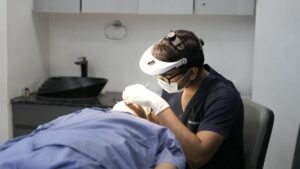
Acne stigma in medicine means that healthcare providers—whether consciously or not—minimize acne as a serious condition, which directly undermines patient care by delaying treatment, limiting access to evidence-based therapies, and neglecting the severe psychological toll. A 17-year-old turned away from dermatology because their acne “doesn’t look that bad” may wait months or years before accessing isotretinoin, the only cure for severe acne, while their documented depression deepens and social isolation compounds. This misalignment between how acne is medically treated and its actual clinical significance drives disparities in care, affects mental health outcomes, and disproportionately harms patients of color, women, and transgender individuals.
Acne affects approximately 20.5% of the global population over age 16, with the highest prevalence at 28.3% among ages 16-24. In the United States alone, nearly 85% of people experience acne at some point in their lifetime, with about 50 million Americans affected annually. Despite its prevalence and clear association with depression, anxiety, and psychological distress, acne is often treated as a cosmetic concern rather than a medical condition worthy of timely, evidence-based intervention. This article explores how stigma operates within healthcare systems, which patients bear the greatest burden, and why addressing it is essential for treating acne effectively.
Table of Contents
- How Medical Bias About Acne Severity Fails Patients
- Gender and Racial Treatment Disparities in Acne Care
- The Mental Health Crisis Among Acne Patients
- Why Patients Abandon Treatment—And What Evidence-Based Care Requires
- The Hidden Cost of Minimizing Acne in Primary Care
- Transgender Patients and the Intersection of Medical Stigma
- Building Stigma-Aware Acne Care Systems
- Conclusion
- Frequently Asked Questions
How Medical Bias About Acne Severity Fails Patients
The most damaging form of acne stigma in medicine is the assumption that disease severity is proportional to suffering. research demonstrates that perceived stigma—not actual disease severity—is the strongest predictor of psychological well-being impairment in acne patients. A patient with mild papules but intense anxiety about appearance may suffer more clinically significant psychological consequences than a patient with severe cystic acne who experiences minimal distress. Yet medical systems typically triage based on visible lesion count and morphology, not on the patient’s actual burden or mental health status.
This mismatch produces real harms. When a dermatologist dismisses mild acne as “not worth treating aggressively” because skin lesions are small, they may miss that the patient is experiencing clinical-level depression, has withdrawn from school, or avoids social situations. The patient leaves feeling unheard, and their mental health deteriorates without proper treatment. Conversely, a patient with objective severe disease but lower psychological distress may receive aggressive treatment that causes side effects they cannot tolerate—side effects that a less stigma-aware provider might dismiss or attribute to the patient’s compliance rather than address collaboratively.

Gender and Racial Treatment Disparities in Acne Care
Female acne patients report significantly higher depression and anxiety than male patients with similar disease severity, yet they encounter different stigmatizing assumptions: that their concerns are cosmetic vanity rather than legitimate health concerns. This bias can lead providers to recommend weaker treatments, offering only topical options when oral antibiotics or isotretinoin may be medically appropriate. A 23-year-old woman requesting isotretinoin may be asked repeatedly about her contraception status and reproductive intentions before her disease severity is discussed—a gatekeeping pattern rarely applied to male patients with equivalent disease. Racial disparities in acne treatment are more stark.
Black patients are significantly less likely to receive isotretinoin, oral antibiotics, adapalene, tazarotene, and spironolactone compared to white patients with similar disease severity. This disparity reflects both systemic barriers (insurance coverage, appointment availability, referral patterns) and provider-level bias. The clinical outcome is measurable: 43.5% of non-white patients discontinued isotretinoin early compared to 30.1% of white patients, suggesting either that non-white patients received less supportive care during treatment or faced greater barriers to continuing therapy. This disparity matters profoundly because isotretinoin is the only curative acne treatment—meaning that equal access to cure is distributed unequally by race, and the psychological and physical burden of untreated or undertreated acne falls disproportionately on patients of color.
The Mental Health Crisis Among Acne Patients
Acne is robustly associated with higher psychological distress, depression, and anxiety compared to the general population. This is not patients being shallow or vain—these are documented clinical outcomes supported by published research. For some patients, acne triggers or worsens mental illness. For others, the social stigma compounds the emotional load: research shows that people commonly report wanting greater social distance from individuals with acne, are less likely to hire someone with acne for customer-facing roles, and less likely to include people with severe acne in online photos or befriend them. A teenager struggling with moderate acne may lose job opportunities in retail or hospitality, losing employment experience and income precisely when peer belonging and economic independence matter most.
The psychological burden is not distributed equally. More severe acne is associated with greater degrees of social stigma, compounding disease burden. Darker skin tones are also associated with greater perceived stigma, meaning that Black and Brown patients with acne face both the biological condition and intensified social rejection. Additionally, marginalized populations including transgender patients face compounded barriers: among transgender patients with moderate-to-severe acne, 38% never received oral treatments despite receiving a diagnosis, a rate far below what would be expected based on disease severity alone. This reveals that the invisibility or deprioritization of acne treatment extends particularly to patients whose identities already face stigma within healthcare systems.

Why Patients Abandon Treatment—And What Evidence-Based Care Requires
Patients often discontinue acne therapies early, not primarily because disease has cleared, but because of delayed outcomes or medication side effects. A patient starting an oral antibiotic might expect visible improvement within 2-3 weeks; when improvement takes 8-12 weeks (which is clinically normal), they may interpret the lack of rapid response as treatment failure and discontinue. A patient starting tretinoin experiences initial worsening and irritation; without explicit communication that this expected “retinization phase” is temporary and normal, they stop.
These early discontinuations are not treatment failures—they are communication and support failures on the provider’s part. Providers who actively address stigma and patient experience change these outcomes. This means explicitly naming that acne is a medical condition worthy of evidence-based treatment, setting realistic expectations about timeline (“oral antibiotics take 12 weeks to demonstrate full efficacy”), monitoring mental health alongside skin clearance, and ensuring patients feel heard even when their concerns include social and psychological dimensions alongside medical ones. It means explaining why a particular treatment is being offered: “Your acne severity and your documented psychological distress both support isotretinoin as appropriate” conveys something different than “Your acne is severe enough for isotretinoin.” The first frames the patient’s experience as clinically relevant; the second frames it as incidental.
The Hidden Cost of Minimizing Acne in Primary Care
A critical limitation of how acne is treated in general practice is that many primary care providers default to minimal intervention because they view acne as self-limited—it eventually resolves in most people. However, “eventually” often means 5-10 years of untreated disease, during which psychological and social harms accumulate irreversibly. A teenager untreated for moderate acne from ages 14-21 loses seven years of critical social development, dating, friendship formation, and employment experience during identity consolidation.
Once acne clears naturally, the skin is healthy again, but the lost time and internalized shame remain. Additionally, deferring treatment shifts harm to the patient: they may self-treat with unproven internet remedies, extract lesions causing permanent scarring, or turn to untested treatments. The psychological distress can trigger disordered eating, social isolation, or substance use—downstream harms that a primary care provider may never recognize as stemming from acne. When providers minimize acne, they transform it from a condition requiring treatment into a source of patient-level suffering and self-harm.
Transgender Patients and the Intersection of Medical Stigma
The finding that 38% of transgender patients with moderate-to-severe acne never received oral treatments despite receiving a diagnosis reveals a specific intersection where medical stigma becomes acute and discriminatory. Some of this gap may reflect provider discomfort or bias; some may reflect that transgender patients navigate healthcare systems with heightened caution due to documented experiences of discrimination and misgendering.
A transgender patient who was misgendered during an acne appointment or received unsolicited comments about their body may be reluctant to return to that provider, even if they need treatment. Addressing this requires active inclusion and affirming practice: asking about pronouns, ensuring privacy during examination, and explicitly discussing that acne treatment is medically necessary rather than cosmetic—especially relevant for patients experiencing acne as a side effect of hormone therapy, where dermatological support meaningfully affirms their transition and medical autonomy.
Building Stigma-Aware Acne Care Systems
The evidence is unambiguous: interventions addressing stigma and its mental health consequences improve outcomes for acne patients. This does not require revolutionary changes—it requires that providers recognize acne as a condition worthy of timely, evidence-based care; assess mental health impact alongside physical disease; ensure equitable access to all treatment tiers including isotretinoin; and explicitly counteract social stigma in clinical conversations and treatment planning.
Progress requires systemic shifts: training dermatologists in implicit bias and cultural competency, expanding access to specialty dermatology (many acne patients never see a dermatologist due to insurance or geography and receive suboptimal care from generalists), and centering patient experience—including psychological experience—as a core outcome of treatment. As acne stigma in medicine is addressed, patient outcomes improve not just for skin clearance, but for mental health, employment prospects, education continuity, and overall quality of life.
Conclusion
Acne stigma in medicine means that the condition is simultaneously ubiquitous—affecting 20.5% of the global population and 85% of Americans at some point—and systematically dismissed as cosmetic rather than medical. When healthcare providers minimize acne as superficial or assume disease severity tracks with psychological impact, they delay diagnosis, restrict access to curative treatments like isotretinoin, and overlook documented associations with depression and anxiety.
Racial, gender, and other structural disparities further concentrate harm among patients already facing marginalization. Addressing this requires that patients deserve providers who validate their experience as both medical and psychological, set realistic expectations for treatment timelines, and understand that mental well-being is as much a marker of treatment success as skin clearance. The data is clear: when acne stigma is reduced in clinical settings, patients remain in treatment longer, achieve superior outcomes, and experience meaningful improvement in quality of life—which is the true aim of medicine.
Frequently Asked Questions
Does my acne require seeing a dermatologist, or can my primary care doctor treat it?
Primary care providers can prescribe first-line treatments including benzoyl peroxide, topical retinoids, and oral antibiotics, and many patients respond well to these. However, dermatologists have specialized expertise with complex cases and access to specialized treatments like isotretinoin (Accutane), hormonal therapy for females, and other advanced options. If your acne is moderate-to-severe, treatment-resistant despite adequate trials, or causing significant psychological distress, dermatology referral is medically justified—not as a luxury, but as evidence-based care.
I’ve heard isotretinoin (Accutane) is dangerous. Is it really worth it?
Isotretinoin is the only curative acne treatment and is appropriate for severe acne, but it does require careful monitoring due to teratogenicity (severe birth defects if used during pregnancy), potential liver and lipid effects, and significant dry skin. The risk-benefit calculation should be individualized. For someone who has suffered years of acne, depression, scarring, and failed other treatments, isotretinoin often represents a transformative option. For someone with mild acne, the risks outweigh benefits. A knowledgeable provider will discuss this honestly rather than gatekeeping.
Why does the same acne treatment work for some people but not others?
Acne is multifactorial—driven by sebaceous gland overactivity, bacterial colonization, inflammation, and follicle blockage. People’s skin differs in which factors predominate, so treatment response varies significantly. Someone with inflammation-driven acne responds well to oral antibiotics; someone with sebaceous overactivity responds better to isotretinoin or hormonal treatment. There is no universal acne treatment, which is why working with a provider to adjust and combine approaches is important rather than expecting one product to work for everyone.
I feel deeply embarrassed about my acne. Is this a normal reaction?
Yes. Given that research documents social stigma against people with acne, reduced hiring rates, reduced likelihood of befriending, and significant psychological distress, your feelings are a normal response to a stigmatizing condition, not a personal failing or vanity. However, if acne-related distress is affecting your daily functioning—avoiding school or work, withdrawing from friends, affecting sleep or eating—this warrants professional mental health support alongside dermatological treatment. Both the skin and emotional experience deserve care.
Are there effective acne treatments for darker skin tones?
Yes, all evidence-based acne treatments are effective across skin tones, but important nuances exist. Post-inflammatory hyperpigmentation (darkening of skin after inflammation resolves) is more visible and common in darker skin, so some patients benefit from incorporating depigmenting agents alongside acne treatment. Additionally, some providers have less training treating acne in darker skin and may underestimate severity or recommend suboptimal treatments. If you feel your treatment plan isn’t accounting for your specific skin concerns, requesting a second opinion or referral to a provider with specific experience treating acne in your skin tone is appropriate.