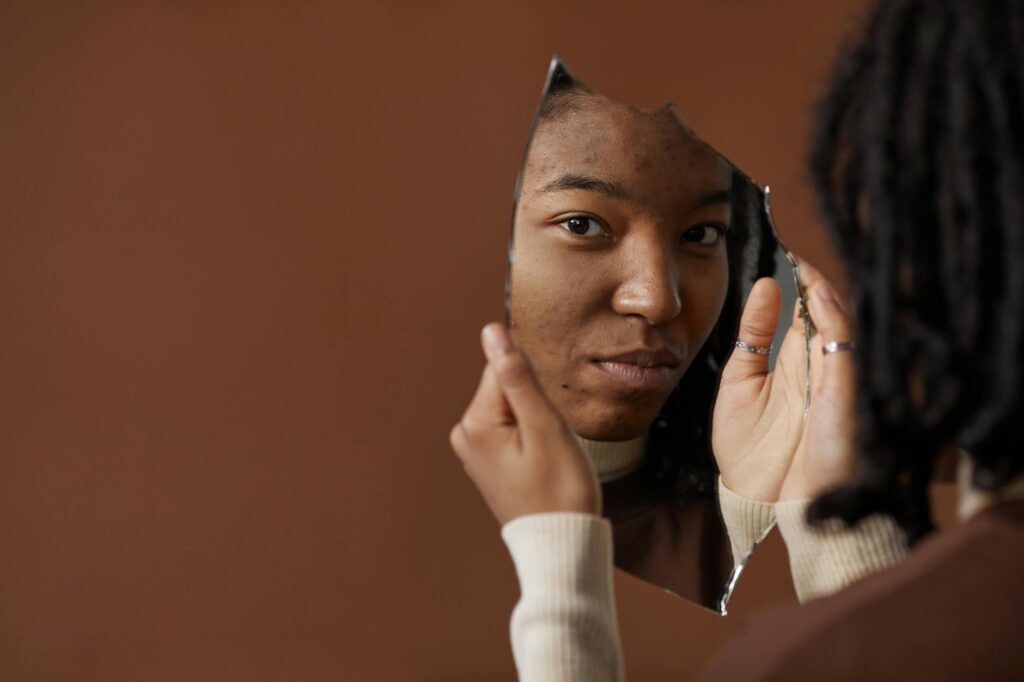
Acne dysmorphia is a psychological condition where a person becomes obsessively fixated on minor or even nonexistent acne flaws, perceiving their skin as far worse than it objectively is. It falls under the broader umbrella of body dysmorphic disorder, or BDD, and it can drive people into destructive cycles of mirror-checking, skin picking, product overuse, and social withdrawal — all over blemishes that others can barely see or that have long since healed. Someone with acne dysmorphia might cancel plans because of a single small pimple, spend hours examining their pores under magnified mirrors, or layer on so many active treatments that they destroy their skin barrier while trying to fix a problem that was never as severe as they believed.
This condition is more common than most people realize, particularly among those who have a history of moderate to severe acne. Even after skin clears significantly, the emotional imprint of past breakouts can warp self-perception so thoroughly that the person continues to see themselves as broken out. This article covers how acne dysmorphia differs from normal skincare concern, the specific behavioral and emotional signs to watch for, how social media and certain skincare culture habits make it worse, what professional treatment looks like, and when it is time to step away from the mirror and talk to someone who can help.
Table of Contents
- What Exactly Is Acne Dysmorphia and How Does It Differ from Normal Skin Concerns?
- The Warning Signs That Skin Obsession Has Crossed a Line
- How Social Media and Skincare Culture Fuel Distorted Skin Perception
- Practical Steps for Breaking the Mirror-Checking and Picking Cycle
- When Treatments Backfire — The Danger of Over-Treating Perceived Flaws
- The Role of Cognitive Behavioral Therapy in Treating Skin-Focused BDD
- Moving Toward a Healthier Relationship with Your Skin
- Conclusion
- Frequently Asked Questions
What Exactly Is Acne Dysmorphia and How Does It Differ from Normal Skin Concerns?
Everyone has days when a breakout feels like a bigger deal than it is. That is not acne dysmorphia. The distinction lies in proportion, duration, and functional impairment. A person with normal skincare concerns might feel annoyed by a breakout, adjust their routine, and move on. A person with acne dysmorphia cannot move on. They may spend thirty minutes to several hours a day scrutinizing their skin, comparing it to others, or researching treatments for flaws that a dermatologist would classify as minimal or within the range of normal skin texture. The distress is persistent, not situational, and it starts interfering with work, relationships, and daily functioning.
Clinically, acne dysmorphia is considered a presentation of body dysmorphic disorder focused specifically on perceived skin defects. BDD affects roughly 1.7 to 2.9 percent of the general population, according to research published in psychiatric literature, but rates are significantly higher among dermatology patients — some studies suggest between 9 and 15 percent of people seeking dermatological treatment meet criteria for BDD. The key word is “perceived.” This does not mean these individuals have no acne at all, but rather that the level of distress and preoccupation is wildly disproportionate to the actual severity. A person might have two post-inflammatory marks and genuinely believe their skin looks disfigured. One important comparison: someone with acne who feels self-conscious but still goes about their life is experiencing a normal emotional response to a visible condition. Someone who refuses to leave the house without a specific concealer routine, who has called in sick because of a pimple, or who has spent thousands on products and procedures while their skin is objectively clear or near-clear — that pattern suggests something beyond ordinary concern. The condition hijacks the brain’s perception, and no amount of reassurance or clear skin photos can override it, because the problem is not really about the skin anymore.
The Warning Signs That Skin Obsession Has Crossed a Line
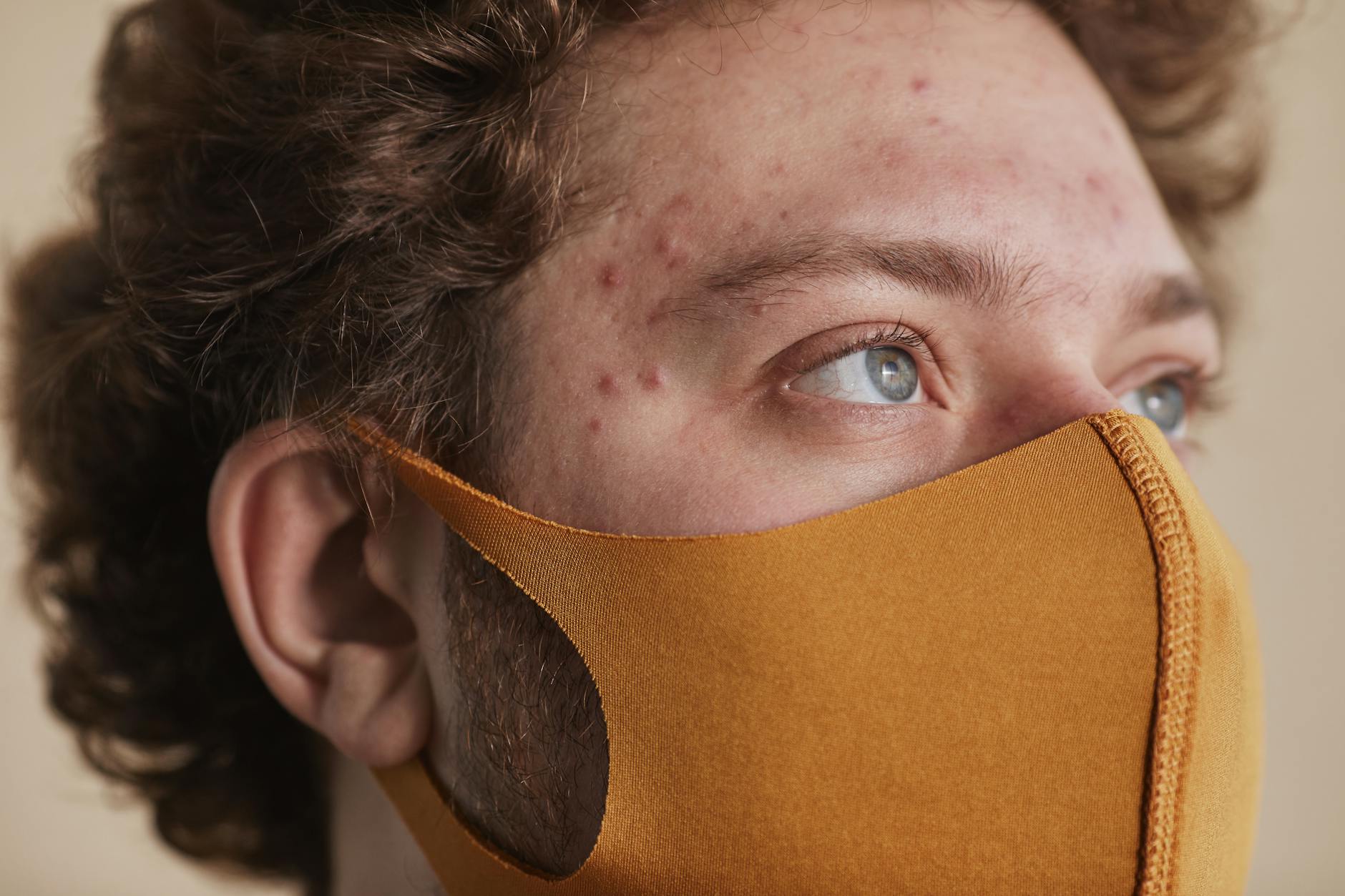
Recognizing acne dysmorphia in yourself is difficult precisely because the condition makes you believe your perception is accurate. However, there are behavioral patterns that serve as reliable red flags. Frequent mirror-checking — not a quick glance but repeated, prolonged examination of the skin, often in different lighting conditions — is one of the most common. Some people develop specific rituals: checking their skin in natural light, then bathroom light, then with a phone flashlight held at various angles, searching for flaws. Others avoid mirrors entirely, which is the opposite behavior driven by the same underlying distress. Skin picking, or excoriation, often accompanies acne dysmorphia. What starts as trying to extract a clogged pore turns into an extended session of squeezing, prodding, and picking at skin that did not need intervention.
The cruel irony is that the picking creates real wounds and scars, which then feed back into the obsessive cycle and seem to confirm the person’s belief that their skin is terrible. Product hoarding is another sign — constantly buying new treatments, rotating actives at an unsustainable pace, or using prescription-strength products on skin that does not warrant them. If you are using tretinoin, an AHA, a BHA, benzoyl peroxide, and azelaic acid simultaneously on skin that a friend would describe as “fine,” the issue may not be your routine. However, it is critical not to use this information to dismiss someone’s genuine acne struggles. If a person has active, visible, moderate-to-severe acne and feels distressed about it, that is not dysmorphia — that is a reasonable response to a real skin condition. The line blurs when skin has objectively improved or cleared but the person’s emotional response and behavioral patterns have not changed at all. If you had severe acne at sixteen and your skin is now mostly clear at twenty-five but you still feel the same level of dread before leaving the house, that disconnect between reality and perception is worth examining carefully.
How Social Media and Skincare Culture Fuel Distorted Skin Perception
The explosion of close-up skin content on social media has created an environment that is almost perfectly designed to worsen acne dysmorphia. Platforms like TikTok and Instagram routinely show pore-level footage of skin, often filmed with ring lights and high-definition cameras that reveal texture no one would notice in a normal face-to-face conversation. When someone already prone to obsessive skin scrutiny spends time watching “skin texture” videos or “what my acne really looks like” content, it reinforces the habit of examining skin at a level of magnification that is not how anyone actually sees them in the world. The “glass skin” ideal popular in skincare communities sets an essentially unattainable standard. Real human skin has pores, texture, fine lines, occasional redness, and variation in tone. It is not supposed to look like a porcelain doll under studio lighting.
Yet the constant exposure to filtered, retouched, or carefully lit images creates a baseline expectation that is fundamentally unrealistic. A person with acne dysmorphia absorbs these images and uses them as the standard against which they judge their own skin — always in the harshest light, always at the closest range, always against the most flawless comparison. Skincare Reddit communities, Facebook groups, and product review threads can also contribute, though not always intentionally. When someone posts asking whether their skin concern is “normal,” they may receive well-meaning advice to try yet another product or see yet another specialist, inadvertently validating the idea that their skin needs fixing. For someone with acne dysmorphia, this feedback loop is fuel. Every recommendation becomes another action item in an endless quest for skin that will never feel good enough, because the goalposts move every time the skin improves.

Practical Steps for Breaking the Mirror-Checking and Picking Cycle
If you recognize these patterns in yourself, the most impactful immediate change is reducing mirror time and changing how you use mirrors. This sounds simple, but it is genuinely difficult for someone in the grip of acne dysmorphia. One approach that therapists who specialize in BDD recommend is timed mirror use: allow yourself a set window — say, two minutes in the morning and two minutes at night — for necessary grooming, then step away. Remove magnifying mirrors from your home entirely. Those 10x magnification mirrors are not showing you how your skin looks to anyone; they are showing you a distorted, exaggerated version that feeds the obsession. Compared to trying to fix the problem with more skincare products, reducing exposure to your own skin in unnatural conditions is both cheaper and more effective. Adding another serum does not address the underlying perception issue.
Simplifying your routine to three or four basic products and then redirecting the time you would have spent researching and applying treatments into literally any other activity is a practical tradeoff that addresses the behavioral component of the condition. Some people find that replacing the mirror-check ritual with a brief alternative — making a cup of tea, stepping outside, texting a friend — helps interrupt the compulsive loop before it escalates. The harder but more important step is recognizing that willpower alone may not be enough. Acne dysmorphia, like other forms of BDD, involves genuine neurological patterns — the brain’s threat-detection system is misfiring and treating minor skin variation as a significant danger. You would not expect someone with a broken arm to just think their way out of pain. Similarly, telling someone with acne dysmorphia to “just stop worrying about it” misunderstands the nature of the problem. Behavioral changes like mirror reduction are a good start, but they work best in combination with professional support.
When Treatments Backfire — The Danger of Over-Treating Perceived Flaws
One of the most damaging consequences of unrecognized acne dysmorphia is the skin damage caused by excessive treatment. Dermatologists have noted patients presenting with irritant contact dermatitis, severely compromised moisture barriers, and chemical burns — not from acne, but from the aggressive treatment regimens they adopted to combat acne that was minimal or absent. A person might be using a retinoid, two acids, and benzoyl peroxide on skin that has perhaps one or two small comedones, and the resulting redness, peeling, and irritation then becomes the new fixation. There is also a financial dimension that rarely gets discussed.
Someone with acne dysmorphia may spend hundreds or thousands of dollars per month on products, facials, laser treatments, or cosmetic procedures trying to achieve skin that already exists under the inflammation they are creating. They may also pursue procedures that carry real risks — aggressive chemical peels, microneedling at inappropriate frequencies, or even isotretinoin prescriptions obtained by overstating their acne severity — all in pursuit of a perfection standard that their condition will not allow them to perceive even if they achieve it. The warning here is specific: if your skin consistently gets worse after you try to make it better, the problem might not be your skin. If you have seen three dermatologists and none of them seem as concerned about your skin as you are, that discrepancy is information. If the people closest to you seem confused when you talk about how bad your skin is, listen to that confusion rather than dismissing it as them “just being nice.” The gap between how you see your skin and how others see it is the central diagnostic feature of this condition.
The Role of Cognitive Behavioral Therapy in Treating Skin-Focused BDD
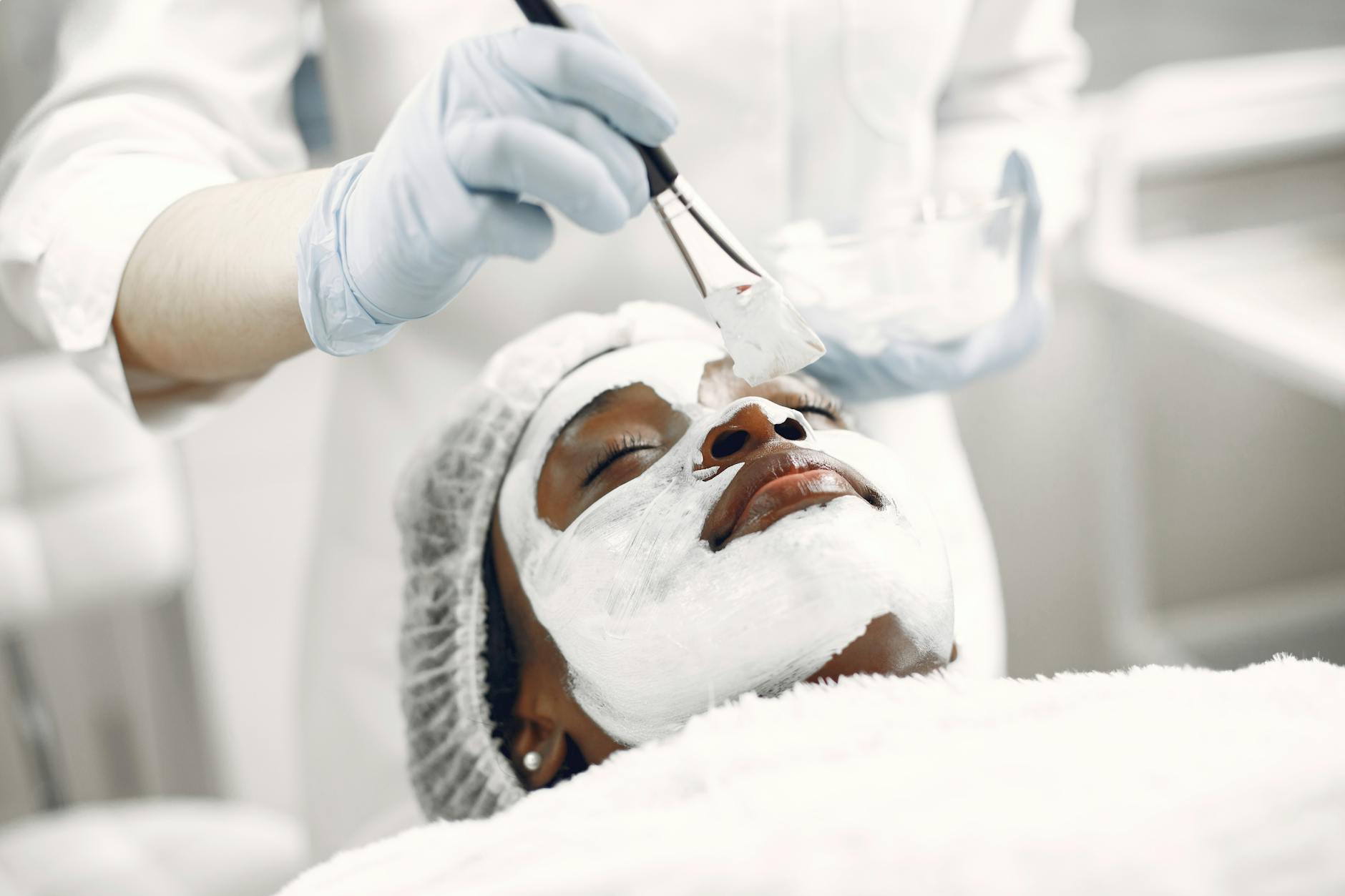
Cognitive behavioral therapy, specifically a form adapted for body dysmorphic disorder, is the most evidence-supported psychological treatment for acne dysmorphia. CBT for BDD typically involves identifying the distorted thought patterns — “everyone is staring at my skin,” “I cannot go out looking like this,” “my skin is ruined” — and systematically challenging them through behavioral experiments and cognitive restructuring. For example, a therapist might ask a patient to go to a public place without concealer and then evaluate whether the catastrophic social consequences they predicted actually occurred.
Exposure and response prevention, a component of CBT, is particularly relevant for the compulsive behaviors associated with acne dysmorphia. This might involve gradually reducing mirror-checking time, resisting the urge to pick, or going progressively longer periods without applying makeup over perceived flaws. In more severe cases, SSRIs — the same class of medication used for OCD, which shares neurological features with BDD — may be prescribed alongside therapy. Research published in the Journal of Clinical Psychology has shown that roughly 50 to 80 percent of BDD patients show meaningful improvement with appropriate CBT, though treatment typically requires 12 to 22 sessions to see lasting change.
Moving Toward a Healthier Relationship with Your Skin
Recovery from acne dysmorphia does not mean you stop caring about your skin or abandon your skincare routine entirely. It means reaching a place where your skin is one part of your life rather than the thing your entire sense of self revolves around. For many people, this shift happens gradually — the mirror checks become shorter, the urge to pick fades, the internal monologue about skin quiets down, and one day they realize they went to work without thinking about their pores once.
The growing awareness of acne dysmorphia within both the dermatology and mental health fields is encouraging. More dermatologists are screening for BDD before recommending cosmetic procedures, and more therapists understand that skin-focused body image distortion is not vanity but a treatable psychological condition. If you see yourself in any of what this article describes, the most important thing you can do is tell someone — a therapist, a doctor, a trusted person in your life — not about your skin, but about how much space your skin takes up in your head. That distinction is where recovery begins.
Conclusion
Acne dysmorphia is a real, diagnosable condition that traps people in a cycle of obsessive skin scrutiny, compulsive behaviors, and emotional distress that is out of proportion to their actual skin condition. It is not vanity, it is not being dramatic, and it is not something you can simply decide to stop doing. The hallmark signs — excessive mirror-checking, skin picking, product overuse, social avoidance, and a persistent gap between how your skin looks and how you believe it looks — are patterns worth taking seriously, especially if they are interfering with your ability to live your life.
If you recognize these patterns, the path forward involves both practical behavioral changes and professional support. Simplify your skincare routine, remove magnifying mirrors, limit your consumption of close-up skin content on social media, and most importantly, talk to a mental health professional who has experience with body dysmorphic disorder. Your skin does not need to be perfect for you to deserve to leave the house, see your friends, or feel at ease in your own face. Treatment works, and the first step is recognizing that the problem lives in perception, not in your pores.
Frequently Asked Questions
Can you have acne dysmorphia if you actually have acne?
Yes. Acne dysmorphia is not defined by the absence of acne but by the disproportionate response to it. Someone with mild acne who experiences severe distress, spends hours on their skin daily, and avoids social situations may have acne dysmorphia even though real blemishes exist. The key factor is whether the level of preoccupation and impairment matches the objective severity of the skin condition.
Is acne dysmorphia the same as body dysmorphic disorder?
Acne dysmorphia is a specific presentation of body dysmorphic disorder focused on perceived skin flaws. BDD can target any body part — nose, hair, musculature, skin — but when the fixation centers on acne, blemishes, pores, or skin texture, it is commonly referred to as acne dysmorphia. The diagnostic criteria and treatment approaches are essentially the same.
How do I know if I am just dedicated to skincare or if I have a problem?
The distinction is functional impairment and distress. If your skincare routine brings you genuine enjoyment and you can skip it on a busy day without anxiety, that is a healthy hobby. If missing a step causes panic, if you are late to work because of mirror-checking, if you cancel social plans over a blemish others cannot see, or if you spend money you cannot afford on products and procedures, those are signs the behavior has moved beyond dedication into compulsion.
Will my acne dysmorphia go away if my skin clears up completely?
Often, no. This is one of the most misunderstood aspects of the condition. Many people with acne dysmorphia have already achieved clear or nearly clear skin and still experience the same distress. Because the root cause is a perceptual and cognitive distortion rather than the skin itself, clearing the skin without addressing the underlying psychology typically just shifts the fixation to texture, scarring, pore size, or other perceived flaws.
Should I tell my dermatologist I think I have acne dysmorphia?
Absolutely. A good dermatologist will take this seriously and may adjust their treatment recommendations accordingly. They may advise against aggressive procedures that would not meaningfully improve your appearance but could carry risks, and they can refer you to a mental health professional experienced in BDD. Being honest with your dermatologist protects you from unnecessary treatments and ensures you get the help that will actually make a difference.