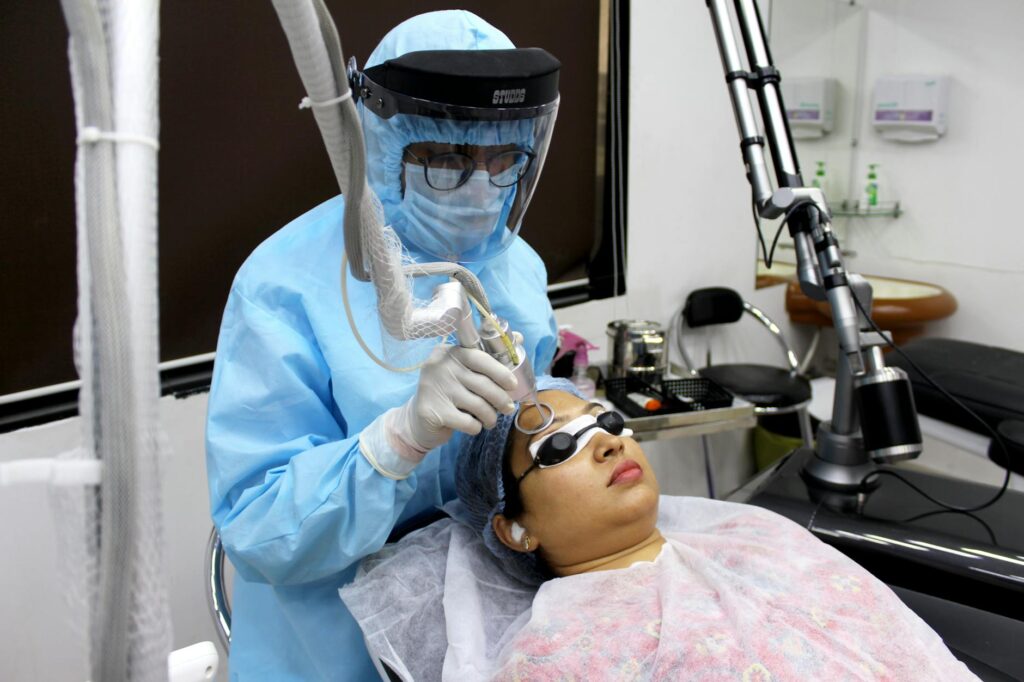
Acne Centers of Excellence are specialized dermatology clinics that combine advanced medical equipment, evidence-based treatment protocols, and dermatologists with specific acne expertise to deliver comprehensive care for patients struggling with moderate to severe acne. Rather than general dermatology practices that treat all skin conditions, these centers dedicate their focus and resources specifically to acne management, offering everything from prescription medications and professional-grade chemical peels to light-based therapies and extraction services. For example, a patient with persistent cystic acne might visit a Center of Excellence and have access to isotretinoin monitoring, antibiotic protocols, hormonal treatments for women, and cutting-edge laser therapies—all coordinated through a team familiar with managing acne’s complexity—rather than cycling through treatments at a general practice. This article explores what these specialized clinics actually offer, how their approach differs from standard dermatology, what qualifications matter, and how to evaluate whether a Center of Excellence is the right choice for your acne treatment.
Table of Contents
- What Specialized Equipment and Technologies Do These Centers Use?
- How Do Centers of Excellence Structure Their Treatment Protocols?
- What Does Staffing and Expertise Look Like at These Centers?
- How Do These Centers Approach Scarring and Long-Term Skin Repair?
- How Do These Centers Monitor and Manage Drug-Related Risks?
- Do These Centers Offer Customized Skincare Routines and Home Maintenance?
- How Are Centers of Excellence Evolving in Treating Resistant and Adult-Onset Acne?
- Conclusion
- Frequently Asked Questions
What Specialized Equipment and Technologies Do These Centers Use?
acne Centers of Excellence invest in technology that general dermatology offices often don’t maintain. These typically include laser systems (such as blue-light therapy for bacterial reduction), chemical peeling stations with professional-strength solutions, microneedling devices, and sometimes photodynamic therapy equipment. The most advanced centers also have in-house compounding pharmacies to create custom topical treatments tailored to individual skin types—a service that allows dermatologists to adjust strength and ingredient combinations without relying solely on mass-market products.
However, having technology available doesn’t guarantee better outcomes if the dermatologist doesn’t have the specific training to use it effectively for acne. A laser that works well for rosacea isn’t necessarily ideal for inflamed acne lesions, and incorrect settings or overuse can damage skin. The best centers employ dermatologists who have formal training or significant published experience with their equipment specifically for acne treatment, not just general dermatology skills.

How Do Centers of Excellence Structure Their Treatment Protocols?
These clinics typically follow published, evidence-based acne treatment guidelines—like those from the American Academy of Dermatology—but customize them based on acne severity, patient age, skin type, and underlying causes. A Center of Excellence usually conducts thorough initial assessments, including hormonal screening for women, antibiotic sensitivity testing for resistant bacteria, and imaging or extraction of comedones to determine treatment priorities. This structured approach prevents the common problem of jumping between random treatments without a coherent plan.
That said, even excellent protocols require patient adherence and realistic expectations about timing. Isotretinoin (Accutane) produces the clearest results but requires monthly blood work and strict birth control for women, which some patients cannot sustain. Topical retinoids show results after 3-6 months of consistent use, not immediately. A Center of Excellence should explain these timelines honestly and establish how they’ll adjust treatment if the initial plan isn’t working, rather than simply prescribing the strongest option available and hoping for compliance.
What Does Staffing and Expertise Look Like at These Centers?
True Acne Centers of Excellence employ dermatologists who have additional training or board certification focused on acne and rosacea, or who have published research in acne management. The clinic staff typically includes acne-specialized estheticians who understand the difference between irritation and effective exfoliation, medical assistants trained in extraction techniques (which, done incorrectly, can spread bacteria and worsen scarring), and often a nurse or physician assistant focused on patient education and medication monitoring.
Some centers also employ mental health professionals, recognizing that severe acne significantly impacts depression, anxiety, and social functioning. A patient being started on isotretinoin, for instance, requires baseline depression screening and periodic monitoring—something a general dermatology office might skip. Look for centers where staff members have years of experience specifically in acne care, not those that recently added an acne clinic as a side service.

How Do These Centers Approach Scarring and Long-Term Skin Repair?
Beyond treating active acne, Acne Centers of Excellence assess and manage scarring, which affects roughly 30-40% of moderate-to-severe acne patients. These centers offer treatments like subcision (breaking apart scar tissue beneath the skin), laser resurfacing, dermal fillers for depressed scars, and combination approaches that standard dermatology offices simply don’t perform regularly. They also understand that preventing new scarring during active acne treatment is more cost-effective than trying to repair it afterward.
The tradeoff is that scar treatments are expensive and often not covered by insurance, requiring out-of-pocket costs. Additionally, some scarring types (like rolling scars) respond better to certain treatments (like subcision) while others (like boxcar scars) respond better to lasers. A good Center of Excellence will honestly assess whether your scars can be improved before committing you to multiple procedures. A center that promises complete scar elimination is overpromising—realistic centers aim for visible improvement, not perfection.
How Do These Centers Monitor and Manage Drug-Related Risks?
Treating acne sometimes means using medications with serious potential side effects. Isotretinoin can cause depression, birth defects, and liver damage. Oral antibiotics can disrupt gut bacteria and create resistant infections. Hormonal treatments carry cardiovascular risks for some women.
A Center of Excellence maintains robust monitoring protocols—regular bloodwork, pregnancy tests where applicable, liver function monitoring, and documented follow-ups—that exceed what a general dermatology office might do. These centers also maintain careful records of antibiotic prescriptions to prevent overprescribing and creating resistant bacteria. However, robust monitoring means more appointments and potentially higher costs. If a center offers powerful acne medications with minimal follow-up or labs, that’s a warning sign they’re cutting corners on safety. Additionally, if you’re on multiple medications for other conditions, make sure the center explicitly reviews drug interactions rather than assuming your primary care doctor is handling that—sometimes this gap creates overlooked problems.
Do These Centers Offer Customized Skincare Routines and Home Maintenance?
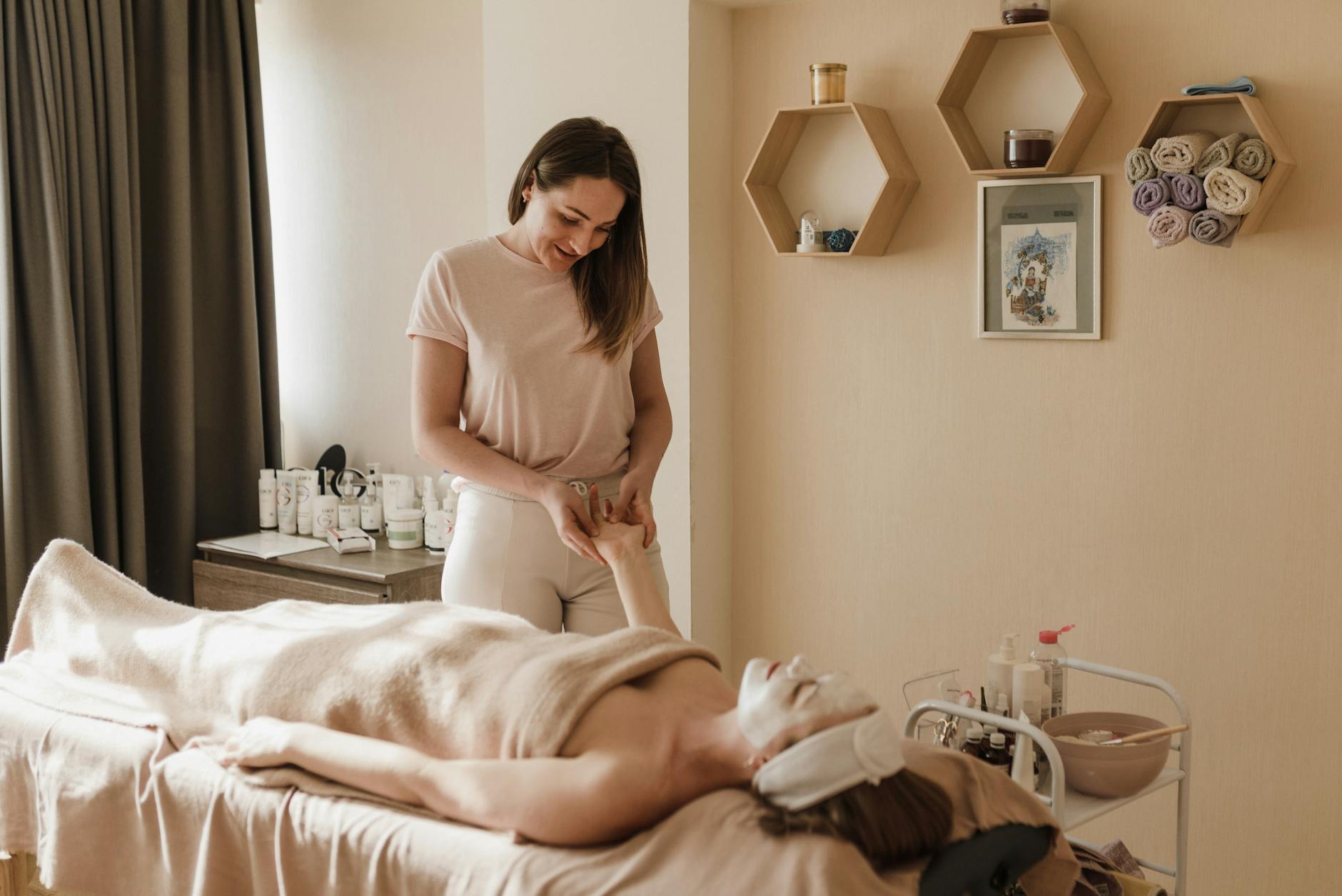
Beyond clinical treatments, Acne Centers of Excellence typically provide detailed home care recommendations—not the generic “use a gentle cleanser” advice, but specific product recommendations based on whether you need dehydrating acne treatments or hydrating ones, whether you’re using retinoids (which increase sun sensitivity), and whether your barrier is compromised. Some centers have preferred product lines they recommend, though the best ones also acknowledge that patient preference and budget matter.
Many centers include a skin care consultation with an esthetician or nurse specialist as part of treatment, helping you understand why certain ingredients matter in your specific case. For example, if you’re using benzoyl peroxide, you need non-comedogenic moisturizer and careful sun protection—not because the center profits from selling those products, but because using them correctly determines whether your acne treatment succeeds.
How Are Centers of Excellence Evolving in Treating Resistant and Adult-Onset Acne?
Acne Centers of Excellence are increasingly recognizing that acne isn’t just a teenage condition. Adult-onset acne, often driven by hormonal changes, stress, or skincare product sensitivity, requires a different diagnostic approach than teenage acne. These centers now often employ dermatologists with endocrinology knowledge or work closely with reproductive endocrinologists to address hormonal causes in women.
They’re also better equipped to distinguish between acne caused by occlusive makeup or skincare products versus true hormonal acne, which changes treatment direction entirely. The field is also moving toward genetic and microbiome testing to understand why some patients’ acne is resistant to standard antibiotics and why some respond to treatments that don’t work for others. Forward-thinking centers are beginning to incorporate these tools into their practice, though insurance coverage remains limited. As personalized medicine advances, expect Acne Centers of Excellence to increasingly offer treatment plans based on your specific bacterial and skin chemistry rather than one-size-fits-all approaches.
Conclusion
Acne Centers of Excellence offer systematic, evidence-based treatment delivered by specialists with deep expertise in acne management and access to advanced technology that general dermatology offices don’t maintain. They reduce the trial-and-error cycle that many acne sufferers experience and provide coordinated care that addresses not just active breakouts but also scarring, medication safety, and prevention of recurrence.
The structured protocols, specialized staffing, and investment in technology typically result in better outcomes for moderate-to-severe acne and faster improvement than general dermatology. If you’re struggling with acne that hasn’t responded to standard treatments or over-the-counter products, or if you’re dealing with scarring from prior breakouts, seeking out an Acne Center of Excellence in your area is worth the investment. Start by asking your primary care doctor for a referral or searching for dermatologists with specific acne certifications or published acne research—these are reliable indicators that you’re finding someone with genuine expertise rather than a general practice that simply calls itself an “acne center.”.
Frequently Asked Questions
How do I know if a clinic is a real Center of Excellence versus just marketing itself that way?
Look for dermatologists with board certification in dermatology (and ideally additional acne-specific training), staff dedicated specifically to acne care, published research or teaching positions by the lead providers, and comprehensive evaluation at the first visit. Many genuine centers are affiliated with academic medical centers or dermatology research programs. You can also ask directly what percentage of their patient load is acne—a true Center of Excellence sees acne as their primary focus, not a side service.
What’s the average cost of treatment at a Center of Excellence, and does insurance cover it?
Initial consultations and standard treatments like topicals and oral medications are usually covered by insurance with standard copays. However, advanced therapies like laser treatments, chemical peels, and extraction services are often not covered or require prior authorization. Costs vary widely by location and clinic, but expect $500-$2,000+ for advanced procedures out of pocket. Some centers offer package deals that are more cost-effective than paying per-visit.
How long does it typically take to see improvement at a Center of Excellence?
Most patients see some improvement within 6-8 weeks on a new treatment regimen, but meaningful clearing often takes 3-4 months. Isotretinoin is the fastest route to remission (usually clear within 5-6 months) but is reserved for severe cases. Don’t judge a center’s effectiveness based on improvement in the first month—good acne treatment requires patience and protocol adherence.
Should I get a second opinion if my regular dermatologist recommends isotretinoin?
Isotretinoin is serious medication, and it’s reasonable to seek a second opinion before starting it, particularly from an Acne Center of Excellence or an academic dermatology program where isotretinoin is prescribed frequently. Most acne specialists support this practice, as it reduces the risk of prescribing it unnecessarily while ensuring that patients who truly need it understand the requirements and monitoring involved.
What if there’s no Acne Center of Excellence near me?
Look for a dermatologist with specific acne expertise, check if academic medical centers near you offer acne clinics, and consider whether telehealth options with acne specialists in larger cities are feasible. Some well-known Acne Centers of Excellence offer limited telehealth consultations for out-of-area patients. Even if you can’t access a true center locally, a dermatologist with strong acne expertise is far preferable to a general practice.