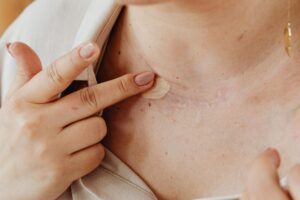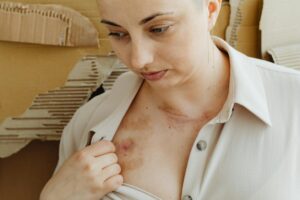
Yes, new acne treatments are delivering measurably better outcomes for patients who’ve struggled with conventional therapies. The FDA approval of Cabtreo in October 2023 marked a significant milestone: the first fixed-dose triple-combination treatment that combines clindamycin, adapalene, and benzoyl peroxide in a single formulation. Clinical data showed this combination achieved a 70% reduction in inflammatory and noninflammatory lesion counts, substantially outperforming the traditional approach of layering individual ingredients.
Beyond this landmark approval, the acne treatment landscape has transformed with new drugs entering clinical trials, advanced laser technologies reaching new efficacy levels, and entirely novel approaches—including an mRNA acne vaccine currently in development. This article explores the most significant advances reshaping acne care. We’ll cover newly approved medications like Cabtreo, examine promising Phase III drug candidates, discuss how laser technologies now rival oral isotretinoin for severe cases, and look at emerging microbiome-directed therapies. You’ll learn what distinguishes these new treatments from older options, understand the practical trade-offs, and see where acne therapy is headed over the next few years.
Table of Contents
- What Are the Newest FDA-Approved Acne Treatments and How Do They Work?
- How Are Clinical Researchers Improving Success Rates with New Drug Candidates?
- What Role Are Advanced Laser and Light-Based Technologies Playing?
- How Are Doctors Addressing the Gut Microbiome When Treating Acne?
- What New Treatments Are Currently in Development and When Will They Arrive?
- Understanding the Market Context Behind Treatment Innovation
- Where Is Acne Treatment Heading in the Next Five Years?
- Conclusion
What Are the Newest FDA-Approved Acne Treatments and How Do They Work?
Cabtreo represents the culmination of decades of combination therapy research. Rather than asking patients to apply three separate products—an antibiotic, a retinoid, and a benzoyl peroxide wash—dermatologists can now prescribe a single fixed-dose formulation. The triple combination includes 1.2% clindamycin (the antibiotic), 0.15% adapalene (the retinoid), and 3.1% benzoyl peroxide (the oxidizing agent). This matters because each ingredient addresses acne through a different mechanism: clindamycin suppresses the bacteria involved, adapalene normalizes skin cell turnover and reduces sebum, and benzoyl peroxide provides an additional antimicrobial and anti-inflammatory effect.
The approval extended the treatment to patients as young as 12 years old, broadening access for adolescents who often experience the most severe psychological burden from acne. However, the 70% reduction in lesion counts doesn’t mean everyone experiences the same improvement—this is an average across the trial population. Some patients reach 90% clearance while others see 40% improvement, depending on their individual skin physiology and adherence. Additionally, the combination formula includes a retinoid, which means patients must use rigorous sun protection and cannot use it if pregnant or planning pregnancy, limiting its utility for certain populations.

How Are Clinical Researchers Improving Success Rates with New Drug Candidates?
Denifanstat, a novel oral acne treatment from Ascletis Pharma, completed Phase III trials in June 2025 with results that exceeded expectations. The drug achieved a 33.2% treatment success rate after 12 weeks of therapy compared to just 14.6% in the placebo group—more than double the placebo rate. Across 480 patients, the drug met all primary, key secondary, and secondary endpoints, suggesting a robust and consistent effect. Most adverse events reported were mild to moderate, indicating a favorable safety profile that could expand its use among patients who couldn’t tolerate earlier generations of acne drugs.
What makes Denifanstat notable is that it succeeded where many oral acne drugs have struggled: delivering meaningful improvement without the severe side effects that limit prescribing. Earlier systemic treatments like isotretinoin carry substantial risks including birth defects, liver toxicity, and inflammatory bowel disease, requiring intensive monitoring. Denifanstat’s trial data suggests a better balance between efficacy and tolerability. However, the 33.2% success rate, while impressive compared to placebo, means two-thirds of patients still experienced symptoms beyond the study’s definition of treatment success. This underscores a central truth in acne medicine: no single drug works perfectly for everyone, and combination approaches often remain necessary.
What Role Are Advanced Laser and Light-Based Technologies Playing?
Laser technology has evolved far beyond its cosmetic acne-scar-smoothing applications. Modern advanced laser systems now demonstrate efficacy comparable to oral isotretinoin—the gold-standard drug reserved for severe, treatment-resistant acne—by specifically targeting the sebaceous glands responsible for excess oil production and bacterial colonization. These procedures work by creating controlled thermal damage to the sebaceous gland structure, potentially producing longer-lasting remission of acne than topical or even oral medications for patients who’ve exhausted conventional options.
The advantage of laser therapy is that it offers an alternative pathway for patients who cannot take isotretinoin due to safety contraindications (pregnancy, liver disease, psychiatric history, or intolerance). The main limitation is cost and accessibility: laser treatments typically require multiple sessions spaced weeks apart, and many insurance plans do not cover the procedure. A typical course costs between $2,000 and $5,000 out-of-pocket, making it financially prohibitive for many patients. Additionally, darker skin types face higher risk of post-inflammatory hyperpigmentation or hypopigmentation from laser treatments, so patient selection and skin phototype assessment are critical before recommending this approach.

How Are Doctors Addressing the Gut Microbiome When Treating Acne?
Sarecycline, a narrow-spectrum oral antibiotic approved in recent years, tackles an underappreciated problem with traditional acne antibiotics: microbiome disruption. Broad-spectrum antibiotics like doxycycline and minocycline, long standbys in acne treatment, kill not only the acne-causing Cutibacterium acnes but also beneficial bacteria throughout the digestive tract. This disruption can lead to yeast overgrowth, diarrhea, and other gastrointestinal complications. Sarecycline, by contrast, selectively targets C. acnes with minimal impact on normal gut flora, reducing the collateral damage to the microbiome while maintaining acne-fighting efficacy.
This shift reflects a broader recognition in dermatology that the microbiome—both on skin and in the gut—plays a role in acne pathogenesis and healing. Beyond sarecycline, researchers are investigating microbiome-directed therapies including probiotics and bacteriophages (viruses that infect bacteria) in clinical trials. Early evidence shows these can reduce inflammatory lesions and erythema, though the evidence remains preliminary due to small sample sizes and variation in probiotic formulations. The main caveat is that most probiotic acne studies involve fewer than 100 patients, and results haven’t yet been replicated in large, well-controlled trials. Until more rigorous data emerges, microbiome therapies are best viewed as adjuncts to proven treatments rather than replacements for retinoids or antibiotics.
What New Treatments Are Currently in Development and When Will They Arrive?
Ameluz, a photodynamic therapy agent for moderate-to-severe acne, completed Phase 2b trials and is expected to release topline data in early 2026, with an FDA presentation potentially following later in 2026. If approved, it would offer dermatologists another option for patients who’ve exhausted first-line topical and oral treatments. Photodynamic therapy works by applying a light-activated medication to the skin and then exposing it to specific wavelengths of light, generating reactive oxygen species that kill bacteria and reduce sebaceous gland activity. The advantage is that it can be completed in office visits and doesn’t require months of daily application like topical retinoids. More speculatively, Sanofi is conducting trials of the world’s first mRNA acne vaccine, a novel approach that would train the immune system to recognize and attack C.
acnes bacteria. If successful, this could represent a paradigm shift from symptomatic treatment to immune-mediated prevention. However, results are not expected until 2029 at the earliest, and the vaccine remains in early-to-mid stage development. This means patients with acne today should not expect a vaccine option in the near term. The regulatory pathway for an acne vaccine is also uncharted territory—the FDA has never approved a vaccine specifically for treating an existing bacterial skin infection rather than preventing systemic infection—so the approval process may take longer than with conventional drugs.
Understanding the Market Context Behind Treatment Innovation
The acne treatment market reached $1.7 billion in global sales in 2025, reflecting a 5% year-over-year increase from 2024. This growth is driving pharmaceutical investment in new therapies because the market remains large and underserved. Despite decades of treatment options, many patients achieve only partial improvement with existing drugs, experience intolerable side effects, or develop resistance over time.
The expanding market size creates financial incentive for companies to develop treatments with improved efficacy, safety, or convenience profiles. Market growth also reflects changing treatment patterns: more dermatologists are moving toward combination therapies, higher doses, and earlier intervention in younger patients, expanding the overall addressable market. Additionally, increased awareness of acne’s psychological impact—particularly in adolescents and young adults—has legitimized acne treatment as a priority health concern rather than a cosmetic nuisance, encouraging both patient demand and insurance coverage.
Where Is Acne Treatment Heading in the Next Five Years?
The trajectory is clear: treatment is moving toward greater specificity and personalization. Rather than defaulting to isotretinoin for severe cases, dermatologists now have Cabtreo, advanced lasers, and Ameluz photodynamic therapy as alternatives with different risk-benefit profiles. Oral drugs like Denifanstat represent a middle ground—more effective than topicals for moderate acne, with a better side-effect profile than isotretinoin for many patients.
The next five years will likely bring approvals for Ameluz and potentially other Phase III candidates, further expanding the toolkit. Longer-term, the emergence of microbiome-directed therapies and vaccine approaches signals that acne medicine may eventually shift away from purely antimicrobial or keratolytic strategies toward immune modulation and microbiome restoration. These approaches are still years away from clinical reality, but the trend toward treating acne as a dysbiotic and inflammatory condition—rather than simply a bacterial infection—will shape how dermatologists think about prevention and long-term management.
Conclusion
New acne treatments are indeed delivering better outcomes, though “better” is contextual. For many patients, Cabtreo offers convenience and efficacy in a single application. For others, Denifanstat or Ameluz (once approved) will provide alternatives when conventional therapies fail.
Advanced lasers now offer a non-pharmacological path for severe, resistant cases. Collectively, these advances mean dermatologists have more nuanced options to match individual patient needs, skin types, tolerability profiles, and life circumstances. If you’re struggling with acne that hasn’t improved with over-the-counter treatments or older prescription medications, this is an ideal time to revisit dermatology. The gap between what was available five years ago and what’s available today is substantial, and the next few years will widen that gap further as Ameluz and other pipeline drugs reach approval.