
Is dairy causing your acne? The honest answer is: probably, but not definitely. Recent research shows a clear statistical link between dairy consumption and acne breakouts, but scientists still haven’t proven that milk directly causes acne in the biological sense. The distinction matters. A large meta-analysis of 14 studies tracking over 78,500 participants found that people consuming dairy had a 25% to 32% higher risk of acne, with skim milk showing the strongest association. Yet despite decades of dermatological research, only one uncontrolled study has actually tested whether removing milk reduces breakouts.
This article breaks down what the evidence actually shows, why dermatologists are increasingly recommending dairy elimination as an acne strategy, and what factors determine whether dairy will trigger your breakouts. The core finding is striking: women who drank more milk during their teenage years were 50% more likely to experience acne than those who consumed less. That’s not a trivial difference. But here’s the complication: most dermatologists still cannot definitively tell you that dairy is your personal acne culprit without you testing it yourself. The research points toward dairy as a risk factor, not a guaranteed cause.
Table of Contents
- What Does Recent Research Actually Show About Dairy and Acne?
- Why Skim Milk Appears More Problematic Than Whole Milk
- The Biological Mechanism: How Milk Affects Your Skin at the Cellular Level
- Not All Dairy Products Trigger Acne Equally—Cheese and Yogurt Tell a Different Story
- The Research Gap That Creates Uncertainty
- Individual Factors That Determine Whether Dairy Will Affect Your Acne
- What Dermatologists Currently Recommend About Dairy and Acne
- Conclusion
What Does Recent Research Actually Show About Dairy and Acne?
The largest compilation of evidence comes from a meta-analysis published in Clinical Nutrition that examined 14 independent studies involving 78,529 participants. The results were consistent: dairy consumption associated with increased acne risk across the board. Any dairy product showed a 1.25 times higher odds ratio for acne. Any milk specifically showed a 1.28 odds ratio. When researchers broke it down by type and amount, the pattern became even clearer. Skim and low-fat milk had the highest association at 1.32 odds ratio, while whole milk was lower at 1.22.
Frequency mattered too: drinking one glass of milk daily raised the acne odds to 1.41, and two or more glasses daily pushed it to 1.43, compared to people drinking less than one glass per week. One particularly noteworthy study tracked 47,355 women and specifically asked them about milk consumption during their teenage years. Those who drank more milk—particularly skim milk—were 50% more likely to have experienced acne than those who drank less. This wasn’t a small effect size. However, the limitation worth noting is that all this evidence is observational. Researchers asked people about their dairy intake and acne history, but didn’t randomly assign some people to drink milk and others not to, while measuring acne development. That type of controlled trial is what would actually prove causation, and it hasn’t been done at scale.
Why Skim Milk Appears More Problematic Than Whole Milk
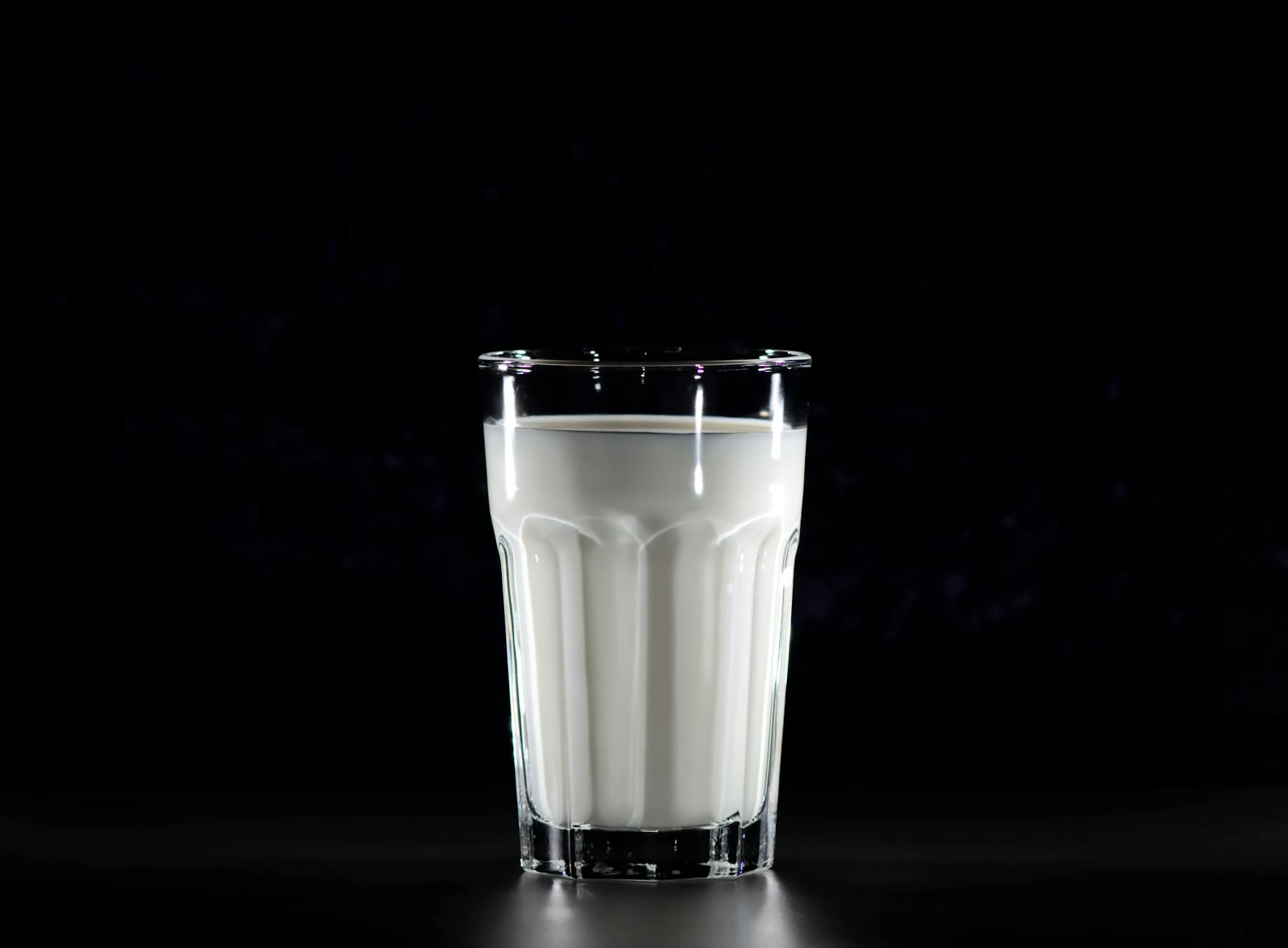
The finding that skim and low-fat milk show stronger associations with acne than whole milk surprised many researchers and dermatologists. The conventional assumption would be that whole milk, being higher in fat, might be worse for acne-prone skin. But the data consistently shows the opposite. Skim milk has a 1.32 odds ratio for acne, while whole milk only reaches 1.22. One likely explanation involves how dairy is processed.
When manufacturers remove fat from milk to create low-fat and skim varieties, the remaining whey and casein proteins become more concentrated. These proteins may have a stronger effect on your skin’s oil production and inflammation. The broader implication is important: if you’re trying a dairy elimination experiment to see if it helps your acne, simply switching from skim to whole milk might help more than you’d expect. Some people with acne have reported significant improvements after this single change. However, if you’re sensitive to dairy’s hormonal effects (discussed in the next section), this shift won’t eliminate the problem entirely. Whole milk will still contain the same hormone compounds that skim milk does—it just comes with added fat, which may actually buffer some of the acne-triggering effects.
The Biological Mechanism: How Milk Affects Your Skin at the Cellular Level
Milk naturally contains hormones, including androgens and insulin-like growth factor 1 (IGF-1). These aren’t added by manufacturers—they’re present because milk is designed to support a calf’s rapid growth. When you consume dairy, research shows your serum IGF-1 and insulin levels rise. Your sebaceous glands (the oil-producing glands in your skin) are highly sensitive to IGF-1 and insulin signaling. When these hormones increase, your glands produce more sebum.
More sebum means more food for acne-causing bacteria like Cutibacterium acnes, and it creates an environment where your skin becomes more prone to inflammation and follicle clogging. This mechanism explains why the timing and amount of dairy matter. A single glass of milk temporarily raises your insulin and IGF-1; regular consumption keeps these levels chronically elevated. It also explains why the effect varies so much between individuals. Your genetic sensitivity to IGF-1 signaling, your baseline insulin levels, and your hormonal status all determine how much your sebaceous glands respond to dairy consumption. Someone with insulin resistance or polycystic ovary syndrome (PCOS) might see dramatic acne improvements from eliminating dairy, while someone with naturally low insulin sensitivity might see no change.
Not All Dairy Products Trigger Acne Equally—Cheese and Yogurt Tell a Different Story
Here’s a critical finding that often gets overlooked: yogurt and cheese show significantly weaker associations with acne compared to milk. The meta-analysis found that while milk products showed consistent 1.25 to 1.32 odds ratios, cheese and yogurt didn’t show the same strong link. This difference likely comes down to fermentation and processing. Yogurt’s bacterial fermentation may break down some of the problematic proteins and reduce IGF-1 content. Cheese is so heavily processed and aged that its hormonal content changes substantially from fresh milk.
This creates a practical distinction for people managing acne: you might tolerate yogurt or cheese without triggering breakouts, even if milk causes problems. Some people have successfully substituted Greek yogurt for milk in their diet and seen acne improve. However, the caveat is that fermented dairy is still dairy—it contains casein protein and other compounds that affect some acne-prone individuals. Tolerance varies. The safest approach when testing dairy’s effect on your acne is to eliminate all dairy temporarily (usually 4-6 weeks) and then reintroduce individual products one at a time to see which ones, if any, trigger breakouts for you specifically.
The Research Gap That Creates Uncertainty
Despite the consistent observational evidence, dermatology currently faces a significant limitation: only one uncontrolled, unblinded study has actually tested whether eliminating milk reduces acne. That’s a shocking gap for something so commonly recommended. An uncontrolled study means researchers didn’t have a comparison group, and unblinded means both the participants and researchers knew they were testing a milk elimination. These study designs are prone to bias—if you expect milk to help your acne and you stop drinking it, you might unconsciously change other habits (sleeping better, reducing stress, washing your face more) that actually improve acne.
Placebo effects are real and powerful in dermatology. This limitation is why dermatologists often phrase dairy advice cautiously. Most acknowledge the statistical pattern is strong enough to recommend testing dairy elimination for persistent breakouts, but they can’t say with certainty that dairy is causing your specific acne. Large, well-designed randomized controlled trials would settle this question but haven’t been funded or conducted. In the meantime, the evidence is robust enough that many dermatologists now ask patients about dairy intake when evaluating acne, and some recommend a dairy-elimination trial for patients who aren’t responding to standard treatments.

Individual Factors That Determine Whether Dairy Will Affect Your Acne
Your genetics, biological sex, ethnicity, and overall dietary patterns all influence how much dairy impacts your acne. Women appear more sensitive to dairy’s acne effects than men, possibly because of interactions with female hormones like estrogen. The large population study specifically examined women and found dramatic effects; equivalent studies in men are rare. If you have a family history of acne, you’re likely more genetically susceptible to dairy’s effects. Your baseline insulin sensitivity matters too—people with insulin resistance or PCOS often see the strongest acne improvement from dairy elimination. Ethnicity may also play a role, though the research here is limited.
Lactase persistence (the ability to digest lactose) varies by ancestry, and some populations have higher rates of dairy consumption historically. Individual dietary patterns matter as well. If your diet is already high in refined carbohydrates and sugar, dairy’s effects on insulin might be amplified. Conversely, if you eat a low-glycemic diet with plenty of protein and fiber, dairy’s hormonal effects might be partially buffered. The takeaway is practical: dairy’s acne risk is not one-size-fits-all. You might tolerate milk perfectly while your sibling breaks out from it, or vice versa.
What Dermatologists Currently Recommend About Dairy and Acne
The modern dermatology consensus has shifted toward taking dairy seriously as a potential acne trigger, even without proof of direct causation. Most dermatologists now acknowledge that the observational evidence is strong enough to discuss with patients, and many recommend a dairy-elimination trial for people with persistent acne that isn’t responding to standard treatments like retinoids or antibiotics. This doesn’t mean dermatologists believe dairy universally causes acne—they recognize that it triggers breakouts in some people and not others. The practical approach most dermatologists suggest is straightforward: if you have acne, especially acne that’s resistant to treatment, try eliminating all dairy for 4-6 weeks and track your skin’s response.
Then reintroduce dairy products individually to identify which ones, if any, worsen your breakouts. This personal experiment is more useful than any generic recommendation because it accounts for your individual sensitivity. If dairy doesn’t affect your acne, you’ve confirmed that and can stop restricting it. If it does, you now know a modifiable trigger and can choose whether to eliminate it, switch to non-dairy alternatives, or limit consumption to lower-acne products like yogurt.
Conclusion
The research consistently shows that dairy consumption associates with increased acne risk, particularly for skim and low-fat milk. The biological mechanism—dairy’s hormonal content raising IGF-1 and insulin levels—is well-established. Meta-analyses of tens of thousands of participants confirm the pattern. However, the lack of large controlled trials means we can’t definitively prove that dairy causes acne in every person, or even that it causes acne in you specifically. This distinction between correlation and causation is why dermatologists recommend testing rather than assuming.
If you’re dealing with persistent acne, the evidence supports trying a dairy elimination experiment. The low risk and potential benefit make it a reasonable approach to identify your personal triggers. Keep in mind that not all dairy affects acne equally—yogurt and cheese show weaker associations than milk, and whole milk appears less problematic than skim. Your individual genetics, hormonal status, and dietary patterns all influence whether dairy will affect your skin. The most practical next step is to eliminate dairy temporarily, observe your acne’s response, and then strategically reintroduce products to determine your tolerance. This personal testing answers the question that matters most: Is dairy causing *your* acne?.