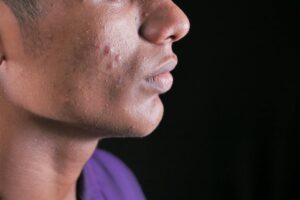
When everyday creams and cleansers fail to clear your acne, it’s time to step up to stronger options that target the root causes like deep bacteria, clogged pores, hormones, or stubborn inflammation. This guide covers proven steps for tough cases, starting with seeing a specialist and moving to advanced treatments.
First, book an appointment with a dermatologist right away. Over-the-counter products often fall short for severe or persistent acne, which can lead to scarring if ignored. A doctor can diagnose the type, like cystic or hormonal acne, and create a plan tailored to you.[1][2]
Prescription topicals are usually the next move. Topical retinoids unclog pores and speed up skin cell turnover to prevent new breakouts. Pair them with benzoyl peroxide to kill bacteria and reduce inflammation. For moderate cases, use this combo daily: a gentle cleanser, retinoid at night, benzoyl peroxide on alternate nights, and oil-free moisturizer.[1][2][4]
If topicals aren’t enough after a few months, add oral medications. Oral antibiotics like doxycycline calm inflammation and fight bacteria, but limit them to 3-4 months to avoid resistance. Always combine with benzoyl peroxide.[2] For women with hormonal acne along the jaw or chin, hormonal therapies shine. Combined oral contraceptives suppress hormones that boost oil production, while spironolactone blocks androgens for clearer skin. These often work better than antibiotics long-term.[1][4][5]
For the toughest acne that resists everything else, isotretinoin is the gold standard. This oral retinoid shrinks oil glands and clears severe nodular acne, often after other treatments fail. It requires close monitoring due to side effects, but delivers lasting results for scarring-prone cases.[1][2][4][5]
In-clinic procedures speed things up or handle scars. Cortisone injections quickly shrink painful cysts. Chemical peels exfoliate pores and smooth texture. Laser therapy or blue light kills bacteria deep down and reduces redness. Microneedling boosts collagen to fade scars from old breakouts.[1][2][3][4][7]
Support your treatments with simple habits. Use non-comedogenic products, skip popping pimples, wash gently twice a day, and apply sunscreen. Cut back on sugar and dairy, which can fuel inflammation. Manage stress through sleep or light exercise, as it worsens flares.[1]
Stick to the plan for 8-12 weeks to see changes. Consistency matters, and combining approaches often works best for acne that won’t quit.
Sources
https://londondermatologyclinics.com/cystic-acne-your-guide-to-causes-and-management/
https://www.droracle.ai/articles/649030/what-are-the-treatment-options-for-acne
https://www.advanceddermatologypc.com/conditions/acne/
https://www.westchestercosmeticdermatology.com/blog/adult-acne-why-it-happens-and-how-to-treat-it/
https://pmc.ncbi.nlm.nih.gov/articles/PMC12691598/
https://www.fivensondermatology.com/acne
https://doralhw.org/acne-treatment-beyond-topicals-when-to-consider-professional-procedures-2/