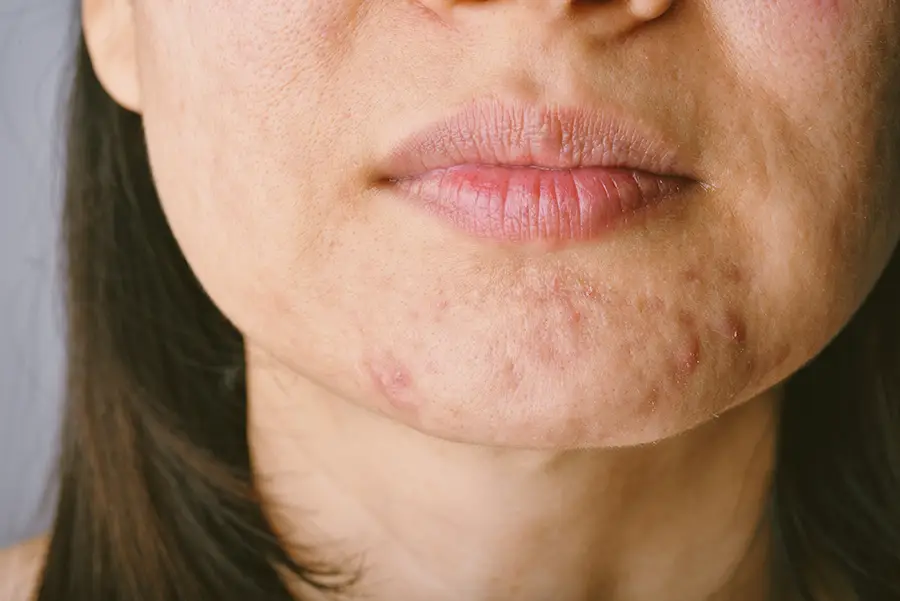
How to Tell the Difference Between Acne and Rosacea
Table of Contents
Introduction
Redness, bumps, and breakouts on the face are easy to label as “acne.” But for many people, especially adults, the real issue is rosacea—or even a combination of both conditions.[2][3] Misreading the signs can lead to the wrong products, more irritation, and worsening symptoms over time.[1][6]
This article walks you through how to tell the difference between acne and rosacea, what each one looks and feels like, and why getting the diagnosis right matters for treatment.[1][2][3] You’ll learn key signs to watch for, typical triggers, common mistakes with products, and when it’s time to see a dermatologist. The goal is to help you make sense of what’s happening on your skin so you can choose skincare and treatments that actually help, not hurt.
—
What Are Acne and Rosacea, in Simple Terms?
Acne and rosacea are both **inflammatory skin conditions**, but they don’t have the same cause or behavior.[2][3][4]
- **Acne (acne vulgaris)** is caused by **clogged hair follicles** from excess oil, dead skin cells, and bacteria.[3][4] It leads to:
- Blackheads and whiteheads (comedones)[1][4][6]
- Red pimples and pustules
- Sometimes deep, painful cysts and nodules[1][4]
- **Rosacea** is a **chronic inflammatory and vascular disorder**—not a clogged-pore problem.[2][3][4] It often involves:
- Persistent or frequent facial redness and flushing[2][3][4][6]
- Visible small blood vessels (telangiectasia)[2][3][4]
- Acne‑like bumps and pustules, but usually **no blackheads**[1][4][6]
- Burning or stinging sensations in the skin[2][3]
Acne can appear on the **face, chest, shoulders, and back**, while rosacea is usually **limited to the central face** (nose, cheeks, chin, and forehead).[2][4][5]
—
How Do the Bumps Look Different?
If you’re staring in the mirror trying to figure out what you’re seeing, the **type of bump** is one of the clearest clues.
Key visual differences
- **Comedones (blackheads and whiteheads)**
- Strongly point toward **acne**.[1][4][6]
- General rule: **blackheads occur only in acne**, not rosacea.[6]
- **Red papules and pustules without comedones**
- More suggestive of **rosacea**, especially when they sit on a red, flushed background.[1][6]
- **Deep cysts or nodules**
- Typical of **moderate to severe acne**, not rosacea.[1][4]
Texture and background skin
- **Acne**
- Oily skin and bumpy texture[1]
- Redness usually centered around active pimples, not the whole face[1]
- **Rosacea**
- Generalized redness across the central face[1][3][4]
- Uneven texture, sometimes with **visible blood vessels** and enlarged oil glands in later stages[1][3]
- Skin often feels sensitive, burning, or stinging[2][3]
If you see **persistent redness plus pimple‑like bumps but no blackheads**, rosacea should be high on the list.[4][6]
—
Where on the Face and Body Do They Show Up?
Location gives another strong clue.
- **Acne**
- Common on:
- Face
- Chin and jawline
- Neck
- Shoulders
- Chest
- Upper back[1][2][3][4]
- Often linked to oily “T‑zone” and areas with many oil glands.
- **Rosacea**
- Primarily affects the **central face**:
- Nose
- Cheeks
- Central forehead
- Chin[2][4][5][7]
- Redness may extend to the scalp, neck, or chest in some flares, but the core pattern is central facial flushing.[1][2][5]
If your breakouts appear on the **body as well as the face**, acne is more likely.[2][4] If everything seems clustered on the **nose and cheeks with flushing**, think rosacea.[2][4][5]
—
Who Gets Acne vs. Who Gets Rosacea?
Age and background aren’t everything, but they’re helpful context.
- **Acne**
- Very common in **teenagers and young adults** due to hormonal changes.[3][4]
- Can persist into adulthood, especially in women.
- Can affect any skin type or tone.
- **Rosacea**
- Most common in **adults over 30**.[3][4]
- More often reported in lighter skin types, but it does occur in all skin tones; redness and vessels can be harder to see on darker skin.[4]
- Often has a chronic, relapsing course with flares and calm periods.
If new “acne” appears **for the first time in your 30s or 40s**, especially with flushing, rosacea becomes more likely than classic teenage‑type acne.[3][4]
—
What Do Acne and Rosacea Feel Like?
The **sensations** in the skin can be as telling as what you see.
- **Acne**
- Tender, sore, or painful cysts or nodules[4]
- Occasional itch or discomfort
- Usually not associated with burning or stinging of the whole area
- **Rosacea**
- Burning or stinging sensations are common.[2][3]
- Skin often feels **easily irritated** by products, temperature, or touch.
- Some people describe tightness, warmth, or “heat” in the face during flares.[2][3]
If applying products frequently causes **stinging or intense irritation**, especially on already-red skin, that fits more with rosacea than acne.[2][3]
—
What Triggers Acne vs. Rosacea Flares?
Both can flare, but often for different reasons.
Common acne triggers
- Hormonal shifts (puberty, menstrual cycle, some medications)[3]
- Heavy, comedogenic skincare or makeup
- Not removing makeup or sunscreen
- Occlusive helmets, masks, or tight clothing
- High‑glycemic diets may worsen acne in some people (white bread, sugary drinks)
Acne is tightly tied to **oil production and clogged pores**.[3][4]
Common rosacea triggers
Rosacea is often linked to **vascular and immune system reactivity**, so anything that increases blood flow to the face or irritates the skin can trigger it.[2][3][7]
Common triggers include:
- Sun exposure[2][3][7]
- Heat (hot showers, saunas, hot weather)[2][3][7]
- Alcohol (especially red wine)[2][3]
- Spicy foods[2][3]
- Hot beverages[3][7]
- Emotional stress[2][3][7]
- Intense exercise
- Wind or cold exposure
- Harsh skincare ingredients or physical scrubs
If your redness and bumps **come and go with alcohol, spicy food, heat, or emotions**, rosacea is more likely than acne.[2][3][7]
—
Can You Have Both Acne and Rosacea?
Yes. Many people have **overlapping features** of both conditions.[6][8]
- You might have:
- Comedonal acne on the forehead and jawline
- Rosacea‑type redness and bumps on the nose and cheeks
This overlap is important because:
- Classic acne treatments (like strong benzoyl peroxide or high‑strength retinoids) can **irritate rosacea and worsen redness**.[1][6]
- Rosacea responders may need gentler, barrier‑supportive routines plus targeted rosacea meds, while acne lesions still need pore‑focused care.
If your skin seems to react badly to typical acne products yet you still get breakouts, it’s worth asking a dermatologist whether **both acne and rosacea** are present.
—
Why Getting the Diagnosis Right Matters
Treating rosacea as acne—or acne as rosacea—can delay improvement and sometimes make the condition worse.[1][6]
- Using harsh, drying acne products on rosacea‑prone skin can:
- Increase redness and burning
- Trigger longer, more intense flares[1][6]
- Using only gentle rosacea care on significant acne may:
- Leave clogged pores and cysts untreated
- Increase risk of scarring over time
A dermatologist will usually:
- Ask about your **symptoms, triggers, and age of onset**[3]
- Examine **distribution, type of lesions, and presence/absence of comedones**[1][3][5][7]
- Look for **visible blood vessels** and **eye symptoms** suggestive of rosacea[3][4]
This professional assessment is the surest way to know what you’re dealing with and which treatment options make sense.[1][3][8]
—
How Are Acne and Rosacea Treated Differently?
Because the underlying issues are different, treatment strategies diverge.[2][3][4][6]
Typical acne treatments
Focus on **unclogging pores, reducing oil, and controlling bacteria**.[3][4]
Common ingredients:
- **Benzoyl peroxide (2.5–5%)**
- Kills acne‑causing bacteria and helps reduce inflammation.
- **Topical retinoids** (adapalene, tretinoin)
- Normalize cell turnover and prevent clogged pores.[4]
- **Salicylic acid (0.5–2%)**
- Oil‑soluble exfoliant that clears pores.
- **Topical/oral antibiotics** (e.g., clindamycin, doxycycline)
- Reduce bacteria and inflammation.[4]
- **Hormonal treatments** in some cases
- E.g., certain birth control pills, spironolactone for women.
Typical rosacea treatments
Focus on **calming inflammation, reducing redness, and strengthening the skin barrier**.[2][3][4]
Common approaches:
- **Topical anti‑inflammatories and antibiotics**
- Metronidazole gel or cream (e.g., Metrogel)[4]
- Azelaic acid (helps bumps and redness, generally well‑tolerated)[4]
- **Vasoconstrictor creams** for flushing
- E.g., brimonidine (Mirvaso) to temporarily reduce facial redness.[4]
- **Oral antibiotics** at anti‑inflammatory doses
- Often doxycycline for papules/pustules.[2][3][4]
- **Laser or light therapies**
- To reduce visible blood vessels and persistent redness (done in clinic).
Rosacea skincare is usually **gentle, fragrance‑free, and non‑foaming**, with a big emphasis on **daily sunscreen** to reduce flares.[2][3]
—
How to Build a Skincare Routine if You Think It’s Acne
If your skin fits more with acne (comedones, body involvement, teen/young adult onset), a simple, consistent routine is key.
Morning
- Use a mild, low‑foam cleanser for normal–oily skin.
2. **Targeted treatment**
- Apply a thin layer of:
- **Benzoyl peroxide 2.5–5%** on breakout‑prone areas, or
- **Salicylic acid 0.5–2%** leave‑on product.
3. **Light, non‑comedogenic moisturizer**
- Look for “oil‑free” and “non‑comedogenic” on the label.
4. **Sunscreen (SPF 30+)**
- Use a non‑comedogenic, broad‑spectrum formula daily.
Night
- Gently remove sunscreen, sweat, and makeup.
2. **Topical retinoid**
- Start with **adapalene 0.1%** 2–3 nights a week.
- Gradually increase to nightly use as tolerated.
3. **Moisturizer**
- Apply after retinoid if skin is dry or sensitive.
**Timeframe:** For acne, expect **8–12 weeks** of consistent use before judging results. Stopping and starting products frequently often makes things worse.
—
How to Build a Skincare Routine if You Think It’s Rosacea
If your main issues are flushing, central facial redness, sensitivity, and acne‑like bumps without blackheads, a rosacea‑friendly routine helps protect and calm the skin.
Morning
- Cream or lotion cleanser, fragrance‑free, no scrubbing beads.
2. **Rosacea treatment (if prescribed)**
- Thin layer of:
- Metronidazole gel/cream, or
- Azelaic acid, as directed by your dermatologist.[4]
3. **Soothing moisturizer**
- Look for:
- Ceramides
- Glycerin
- Niacinamide (low to moderate strength)
- Avoid heavy fragrance and alcohol.
4. **Mineral or gentle sunscreen (SPF 30+)**
- Zinc oxide or titanium dioxide filters are often better tolerated.
- Choose formulas marketed for “sensitive” or “rosacea‑prone” skin.
Night
- Lukewarm water only—avoid hot water, which can trigger flushing.
2. **Rosacea treatment**
- As prescribed (some topical meds are once or twice daily).
3. **Barrier‑repair moisturizer**
- Richer cream if your skin is dry or tight.
**Timeframe:** Rosacea often improves gradually over **4–8 weeks** of consistent treatment, with further gains over several months. Recognizing and avoiding triggers is just as important as products.[2][3]
—
How to Apply Products Without Making Things Worse
Step‑by‑step application tips
- Wash your hands before touching your face.
- Use lukewarm water; avoid very hot or very cold temperatures.
2. **Use the “thin to thick” rule**
- Apply in this order:
- Prescription gels/creams or actives
- Serums (if any)
- Moisturizer
- Sunscreen (in the morning)
3. **Introduce one new product at a time**
- Especially important if rosacea is suspected.
- Wait **1–2 weeks** between new additions so you can spot any reaction.
4. **Go slow with strong actives**
- Acne:
- Use benzoyl peroxide or retinoids **2–3 nights a week** at first.
- Increase gradually as tolerated.
- Rosacea:
- Avoid high‑strength acids and physical scrubs.
- If using azelaic acid, start every other night and increase slowly.
5. **Patch test sensitive skin**
- Apply a small amount to a small area near the jawline for **2–3 nights**.
- If no burning, strong redness, or swelling occurs, expand gradually.
6. **Support your barrier**
- If burning or peeling occurs:
- Pause active treatments for a few days.
- Focus on gentle cleanser + moisturizer only.
- Reintroduce treatments less frequently once skin settles.
—
Next Steps: What to Do After Reading This
- **Compare your skin to the patterns described**
- Look for:
- Presence or absence of blackheads
- Central facial redness and flushing
- Body involvement (chest/back) vs. face‑only
- Triggers like heat, alcohol, or spicy food.
- **Adjust your routine carefully**
- If you suspect acne:
- Introduce gentle benzoyl peroxide, salicylic acid, or adapalene.
- If you suspect rosacea:
- Strip back to very gentle, fragrance‑free products and mineral sunscreen.
- Avoid strong scrubs, peels, and high‑percentage acids for now.
- **Track your skin for 4–8 weeks**
- Note:
- What flares your skin
- How it responds to specific products
- Changes in redness, bumps, or discomfort.
- **Book a dermatology visit if:**
- You’re unsure whether it’s acne, rosacea, or both.
- Over‑the‑counter products haven’t helped after **3 months**.
- Redness is persistent or you see visible blood vessels.
- You have eye symptoms—redness, irritation, or feeling like there is sand in your eyes (possible ocular rosacea).[4]
- Your skin is impacting your confidence or quality of life.
A dermatologist can confirm the diagnosis and, if needed, prescribe targeted treatments like **topical metronidazole, azelaic acid, vasoconstrictor creams, or oral antibiotics** for rosacea, or stronger **retinoids, antibiotics, or hormonal treatments** for acne.[2][3][4][8]
—
FAQ
1. How can I tell if my “adult acne” is actually rosacea?
Look for three main clues:
- **Blackheads present?**
- If yes, that strongly suggests acne.[1][4][6]
- **Persistent central facial redness and flushing?**
- That pattern points toward rosacea.[2][3][4]
- **Triggers like heat, alcohol, or spicy food causing flares?**
- Common in rosacea, less typical in acne.[2][3][7]
If you’re over 30 and new breakouts arrive along with ongoing redness and sensitivity, it’s reasonable to ask a dermatologist to rule out rosacea.[3][4]
—
2. Can I use acne products if I have rosacea?
You need to be very selective. Many traditional acne products—especially **high‑strength benzoyl peroxide, harsh foaming cleansers, and strong acids—can aggravate rosacea** and prolong flares.[1][6]
Safer options (with medical guidance):
- **Azelaic acid** can treat both rosacea bumps and mild acne in some people.
- Very low‑strength salicylic acid may be tolerable fo
You Might Also Like
Categories: Acne Treatment |
Skincare |
Skin Health