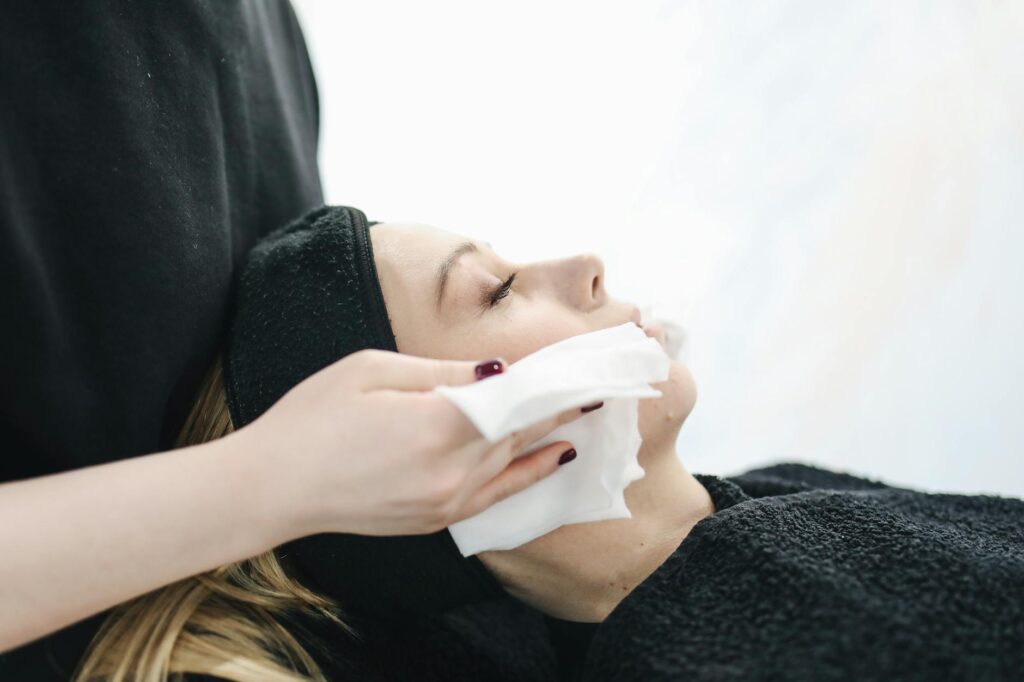
A cleanser that supports skin healing prioritizes maintaining your skin barrier—the protective layer that keeps bacteria out and moisture in—above all else. When your skin is inflamed, irritated, or healing from acne, the wrong cleanser can strip away natural oils, disrupt your microbiome, and slow recovery. Look for cleansers with a neutral to slightly acidic pH (between 4.5 and 7), minimal surfactants, and ingredients like ceramides, centella asiatica, or niacinamide that actively soothe inflammation rather than just clean.
For example, a gentle cream cleanser with added ceramides will remove dirt and excess oil without leaving your skin tight or reactive. This article walks through how to read cleanser labels, understand which ingredients actually support healing, and identify the formulation type that works best for compromised skin. The challenge is that many popular cleansers marketed as “gentle” still contain stripping sulfates or fragrance that can irritate healing skin. You need to know what to look for beyond marketing language.
Table of Contents
- What pH Level and Formula Type Matter When Healing Acne and Irritation
- Key Ingredients That Actually Support Healing vs. Those That Simply Clean
- How Surfactant Strength Affects Skin Healing and Barrier Function
- How to Test a New Cleanser Without Triggering a Reaction
- Common Mistakes That Undermine Even the Best Cleanser
- Understanding “Clean” Enough vs. Over-Cleaning for Healing Skin
- Moving Beyond Cleanser to Comprehensive Barrier Support
- Conclusion
- Frequently Asked Questions
What pH Level and Formula Type Matter When Healing Acne and Irritation
your skin naturally sits at a pH of around 4.5 to 5.5, creating an acidic environment that prevents bad bacteria from colonizing and helps maintain a strong barrier. cleansers with pH above 7 (alkaline) disrupt this acid mantle, causing tightness, dryness, and a weakened barrier—exactly the opposite of what healing skin needs. Most drugstore bar soaps are highly alkaline at pH 9 or higher; this is why dermatologists often recommend avoiding them during healing phases. A cleanser formulated to match your skin’s natural pH keeps the barrier intact while still effectively removing impurities.
The three main formula types—gel, cream, and micellar water—each have different cleansing power and potential for irritation. Gel cleansers are lightweight and work well for oily or acne-prone skin, but many gel formulas contain stronger surfactants to cut through oil, so you need to check labels carefully; a gentle gel with amino acid-derived cleansers (like cocamidopropyl hydroxysultaine) will heal skin better than one with sulfates. Cream cleansers are naturally gentler because the oil content buffers the cleansing action, making them better for severely compromised skin. Micellar water is the gentlest option and requires no rinsing beyond water, but it’s less effective at removing excess sebum, so it’s best for very sensitive or severely irritated skin rather than active acne.
Key Ingredients That Actually Support Healing vs. Those That Simply Clean
Beyond pH, the presence of barrier-repair and anti-inflammatory ingredients separates a healing cleanser from a basic one. Ceramides (especially ceramide NP, NS, and AP) fill gaps in a damaged skin barrier by mimicking the lipids naturally present in healthy skin. Centella asiatica (also called cica or gotu kola) reduces redness and promotes collagen synthesis—studies show it can measurably accelerate wound healing on irritated skin. Niacinamide calms inflammation, strengthens the barrier, and regulates sebum without over-drying.
Panthenol (provitamin B5) hydrates and supports the skin’s natural repair mechanisms. However, even a cleanser with great ingredients can fail if it also contains irritants that negate those benefits. Many “natural” or “gentle” cleansers still include essential oils, fragrance, or alcohol for scent—these feel refreshing but actively inflame healing skin. A rule of thumb: if the ingredient list includes fragrance, alcohol denat., or essential oils anywhere in the first eight ingredients, the cleanser is not designed for compromised skin, regardless of what soothing actives appear lower on the list. Similarly, avoid cleansers with physical exfoliants (microbeads, walnut shell powder) or high-strength acids during active healing; these provide no benefit over appropriate cleanser choice for barrier repair.
How Surfactant Strength Affects Skin Healing and Barrier Function
Surfactants are the molecules that actually strip dirt and oil from skin—they’re necessary for cleansing, but stronger ones damage more. Sulfates (sodium lauryl sulfate and sodium laureth sulfate) are the most stripping; they’re cheap and effective for industrial cleaning, which is why they appear in many inexpensive products, but they also disrupt the skin barrier more aggressively. Amino acid-derived surfactants (like sodium cocoyl glutamate or sodium cocoyl isethionate) are gentler; they were developed specifically for sensitive skin and remove excess oil without over-stripping. Soap-free cleansing bases (used in products labeled “syndets”) sit between these in strength.
The right surfactant choice becomes critical when your skin is actively healing. Someone with a compromised barrier recovering from intense acne treatment should use a cleanser with gentle amino acid surfactants or multiple gentle cleansing agents in combination—this reduces reliance on any single strong ingredient. In contrast, someone with oily, acne-prone skin with an intact barrier can tolerate slightly stronger surfactants because their skin can repair the minor disruption quickly. This is why a cleanser that works fine for your friend with normal skin might make your healing skin feel raw or reactive.

How to Test a New Cleanser Without Triggering a Reaction
Even a well-formulated cleanser might contain an ingredient your skin reacts to, so patch-testing is essential before committing. Start by using the new cleanser on just a small area—typically the chin or jawline—for three consecutive days, keeping everything else in your routine the same. If no redness, stinging, or increased breakouts appear, gradually introduce it to the full face. This two-week testing window reveals whether the cleanser supports your skin’s healing or triggers inflammation.
Many people rush and use a new product on their whole face, experience mild irritation, and blame the product without realizing their skin simply needs a 10-day adjustment period. When transitioning from a stripping cleanser to a gentler one, your skin might feel slightly oily at first as your sebaceous glands recalibrate—they often overproduce oil in response to a damaged barrier. This adjustment phase usually lasts 5 to 10 days. If your skin is still oily and reactive after two weeks, the cleanser isn’t working; move on. If the oiliness decreases and irritation subsides, the cleanser is supporting healing correctly.
Common Mistakes That Undermine Even the Best Cleanser
Even a perfectly formulated healing cleanser fails if you use it wrong. Over-cleansing—using cleanser more than twice daily, scrubbing hard, or using two different cleansers sequentially—damages the barrier faster than any single wrong product choice. Your skin barrier rebuilds between cleansing, so the most healing-focused routine uses one gentle cleanser twice daily: once in the evening to remove dirt and sebum, and once in the morning to rinse away sweat and overnight cell buildup.
Some people are tempted to “do more” by double-cleansing with an oil followed by a water-based cleanser; this is appropriate for heavy makeup removal but unnecessary and even counterproductive when skin is actively healing. Water temperature also matters—hot water opens pores and causes further dehydration in already-compromised skin, while lukewarm water cleanses effectively without triggering additional barrier stress. Similarly, many people instinctively use a towel to dry their face roughly; this small abrasion compound daily damage. Pat skin dry instead, ideally leaving it slightly damp so that any moisturizer you apply afterward can lock in some water.

Understanding “Clean” Enough vs. Over-Cleaning for Healing Skin
Healthy skin doesn’t need to feel squeaky-clean after washing; that tight, squeaky sensation indicates stripping rather than effective cleansing. If your cleanser leaves your skin feeling dry, tight, or reactive, it’s not appropriate for healing skin, even if it cleans well. Effective gentle cleansing feels barely noticeable—your skin should feel hydrated and calm after cleansing, not stripped.
This requires adjusting expectations: a gentle cleanser won’t feel as immediately “clean” as a sulfate-heavy one, but it’s working more effectively for barrier repair. The goal during healing is to remove excess sebum, sweat, and environmental debris without disrupting the barrier’s lipid composition. A 30-second cleanse with warm water and a gentle formula accomplishes this; longer contact time or vigorous application doesn’t add benefit and actively increases irritation.
Moving Beyond Cleanser to Comprehensive Barrier Support
While a healing-focused cleanser is foundational, it’s only the first step in skin recovery. The most effective routines pair a gentle cleanser with a strengthening moisturizer that includes ceramides and a protective oil or occlusive layer (like squalane or plant oils) to seal in hydration.
If your skin is severely compromised, adding a barrier repair serum with centella asiatica or panthenol before moisturizer accelerates healing. As your skin improves over 4-8 weeks, you may be able to gradually reintroduce active ingredients like vitamin C or low-strength retinol, but this should be guided by how your skin responds, not by a predetermined timeline.
Conclusion
Identifying a cleanser that genuinely supports skin healing requires looking beyond marketing language to pH level, surfactant type, and the presence of barrier-repair ingredients. A healing cleanser has a pH close to skin’s natural 4.5 to 5.5 range, uses gentle or amino acid-derived surfactants rather than sulfates, and includes ingredients like ceramides, centella asiatica, or niacinamide that actively reduce inflammation and strengthen the barrier.
Start by checking your cleanser’s ingredient list and pH if it’s listed, then commit to using your chosen product consistently for at least two weeks before evaluating results. Remember that “less is more” during healing—over-cleansing and hot water are more damaging than any single product choice, so focus on consistency, gentleness, and patience over switching products frequently.
Frequently Asked Questions
How long does skin barrier healing take with the right cleanser?
Most people see noticeable improvement in irritation and redness within 3-5 days of switching to a barrier-supporting cleanser, but full barrier recovery usually takes 4-8 weeks depending on severity. Healing accelerates with consistent use of both a gentle cleanser and a repair-focused moisturizer.
Can I use a healing cleanser if I have oily or acne-prone skin?
Yes. A gentle, pH-balanced cleanser is appropriate for any skin type. If oily skin is paired with active acne, you need a cleanser that doesn’t strip—over-cleansing actually triggers more oil production. The cleanser should be non-comedogenic, meaning it won’t clog pores, but gentleness is still the priority.
Why does my skin feel oily after switching to a gentler cleanser?
Your skin may have been over-producing oil in response to barrier damage caused by a stripping cleanser. This adjustment phase usually lasts 5-10 days as the skin recalibrates sebum production. If excessive oiliness continues beyond two weeks, the new cleanser may not be right for you.
Are “natural” cleansers always gentler than commercial ones?
No. Many natural cleansers contain fragrance, essential oils, or strong plant-derived ingredients that inflame healing skin. Always check the full ingredient list and pH; a simple, fragrance-free commercial formula is often gentler than a heavily botanicalized one.
Should I use different cleansers for morning and evening?
No. Using the same barrier-supporting cleanser twice daily is more effective than switching products. A single, appropriately formulated cleanser handles both sebum and sweat removal without the irritation risk that comes with product changes.
Can cleanser alone heal acne or irritated skin?
A healing cleanser is necessary but not sufficient. It removes barriers to recovery—by preventing further damage—but active healing requires barrier repair (moisturizer with ceramides) and, if needed, targeted actives like niacinamide. Cleanser sets the foundation; the rest of your routine builds on it.