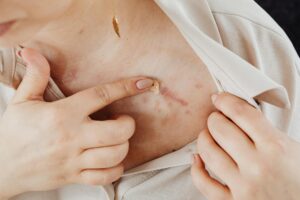
Adjusting your routine during an acne flare-up means simplifying your skincare regimen to focus on gentle cleansing and targeted treatments that won’t further irritate your skin, rather than adding more products or trying new solutions. When acne flares, your skin is already inflamed and compromised, so the instinct to experiment with new treatments often backfires—what works for maintenance won’t necessarily work during an active outbreak. This article breaks down exactly what to change in your daily routine, which treatments actually work during flare-ups, and when you need professional help instead of fighting it alone.
Acne affects more than 50 million people in the United States, and 85% of adolescents experience acne vulgaris at some point. For many of these people, the issue isn’t just occasional breakouts—it’s knowing how to respond when acne gets worse. Your routine during a flare-up should prioritize healing over stripping or over-treating, and that requires understanding what’s actually happening to your skin in that moment.
Table of Contents
- Should You Strip Your Routine or Simplify During a Flare-Up?
- Core Treatments That Work—Benzoyl Peroxide and Salicylic Acid
- What to Do (and Not Do) With Moisturizer During a Flare
- Lifestyle Changes That Reduce Flare-Up Duration
- The Temptation to Spot-Treat and Why You Shouldn’t
- When to Stop Adjusting and Call a Dermatologist
- Building a Flare-Up Prevention Routine for the Future
- Conclusion
- Frequently Asked Questions
Should You Strip Your Routine or Simplify During a Flare-Up?
The biggest mistake people make during acne flare-ups is treating it like a dermatological emergency that requires aggressive intervention. They’ll add exfoliating masks, switch to stronger treatments, use multiple actives at once, or scrub harder—all of which backfire. your skin doesn’t need more aggressive treatment when it’s already inflamed; it needs restraint. Simplify to the absolute basics: a gentle cleanser, a core treatment (like benzoyl peroxide or salicylic acid), and a non-comedogenic moisturizer. Wash your face twice daily with warm, not hot water, using a gentle cleanser that won’t trigger excess oil production or strip your skin barrier.
Avoid scrubbing, which disrupts the skin barrier and worsens reactive skin—use only your fingertips, applying cleanser with gentle circular motions. Hot water opens your pores and can dehydrate your skin, which paradoxically causes more oil production. The timeline matters too. Most skincare routines take 6 to 8 weeks to show noticeable improvement, and severe acne can take several weeks even with treatment. This means you won’t see immediate results from adjustments, so changing your routine three times in two weeks is counterproductive.

Core Treatments That Work—Benzoyl Peroxide and Salicylic Acid
Benzoyl peroxide and salicylic acid are the two most evidence-backed treatments for acne flare-ups, and they work differently enough that you should understand which one fits your situation. Benzoyl peroxide eliminates acne-causing bacteria and reduces sebum production; it’s applied in a thin layer over the entire face rather than spot-treated, so it prevents future breakouts while treating existing ones. Salicylic acid exfoliates the skin surface and penetrates pores to prevent blockages, making it ideal for comedonal acne (blackheads and whiteheads) or congestion. However, using both at the same time during a flare-up can be overkill and may over-dry your skin.
Start with one—benzoyl peroxide if your flare-up is inflamed and pustular, salicylic acid if it’s primarily congestion or surface-level breakouts. If your flare-up doesn’t improve with either after consistent use, that’s a signal to stop experimenting and consult a dermatologist rather than trying stronger concentrations on your own. For moderate to severe acne that doesn’t respond to topical treatments, oral doxycycline is a commonly recommended option that addresses inflammation and bacteria systemically. This requires a prescription, which brings us to the earlier point: if over-the-counter adjustments aren’t effective after consistent use, professional help is the logical next step, not additional home treatments.
What to Do (and Not Do) With Moisturizer During a Flare
Many people stop moisturizing altogether during a flare-up, believing that hydration will clog their pores and worsen acne. This is a counterproductive mistake. Your skin still needs moisture, especially if you’re using active acne treatments that can dry it out. Instead, use an oil-free, non-comedogenic moisturizer after cleansing to maintain skin hydration without clogging pores.
The distinction matters: “non-comedogenic” means it won’t clog pores or cause acne, which is verified through testing rather than just a label claim. During a flare-up, your skin barrier is compromised, and dehydration actually triggers more oil production as your skin tries to compensate, perpetuating the acne cycle. A lightweight moisturizer prevents that compensation mechanism while keeping your skin protected. Avoid heavy creams, oils, or anything with fragrance during a flare-up. Fragrance and essential oils can irritate inflamed skin and trigger additional sensitivity or reaction.
Lifestyle Changes That Reduce Flare-Up Duration
Your acne flare-up isn’t just a topical issue—systemic factors play a significant role in how severe it gets and how long it lasts. Stress triggers hormonal changes that increase oil production and inflammation, so managing stress may reduce flare-up duration. This doesn’t mean stress causes acne, but it exacerbates it, so during a flare-up, stress management becomes part of your treatment strategy rather than a nice-to-have. Minimize dairy and high-glycemic index foods to help decrease acne flares.
The connection isn’t universal for everyone, but the evidence shows that these foods correlate with worse acne in many people, likely through hormonal and inflammatory pathways. If you’re mid-flare-up, experimenting with eliminating dairy for two weeks while continuing your routine gives you actual data about whether that’s a trigger for you. Maintain adequate sleep and hydration, and keep contact points clean—your phone, pillowcase, and makeup brushes accumulate bacteria and oils that get transferred directly to your face multiple times daily. Changing your pillowcase every other night during a flare-up removes one source of bacterial reintroduction, which is surprisingly effective.
The Temptation to Spot-Treat and Why You Shouldn’t
Spot-treating—applying treatment only to visible breakouts—feels logical but undermines the actual mechanism of acne treatment. Acne develops over weeks before it surfaces, so you have acne lesions forming beneath your skin before you can see them. If you only treat visible spots, you’re allowing tomorrow’s flare-ups to develop untreated beneath the surface. Apply benzoyl peroxide or salicylic acid to your entire face (or at minimum the areas prone to breakouts), not just existing pimples.
This addresses the acne-forming environment rather than the visible symptoms, which is why it actually works. A common limitation: benzoyl peroxide can bleach fabrics and hair, so apply it to completely dry skin at night or wear light-colored clothing to avoid staining. If you’re tempted to use a stronger concentration of your treatment during a flare-up—10% benzoyl peroxide instead of 2.5%, or maxing out salicylic acid—resist that impulse. Higher concentrations don’t work faster; they just irritate your skin more and can damage your skin barrier, prolonging the flare-up rather than ending it.

When to Stop Adjusting and Call a Dermatologist
There’s a point at which adjusting your routine shifts from helpful to harmful—when you’ve been trying different combinations for more than 4 to 6 weeks without improvement, or when your flare-up is so severe that it’s causing scarring, significant pain, or cystic lesions. Prescription retinoids, hormonal treatments, or oral antibiotics address acne through different mechanisms than topical treatments, and delaying them while you experiment at home costs you time and potentially leaves you with permanent scarring.
If your flare-up doesn’t respond to benzoyl peroxide, salicylic acid, or both after consistent use, consult a dermatologist for prescription options rather than continuing to adjust your over-the-counter routine. Severe acne is a medical condition, not a skincare failure, and treating it as such removes the stigma from seeking appropriate care.
Building a Flare-Up Prevention Routine for the Future
Once your current flare-up resolves, the goal shifts to preventing the next one. Your routine during calm skin can be more sophisticated—you can introduce other actives, try new products, or experiment—but your baseline should remain the gentle cleanse, effective treatment, and non-comedogenic moisturizer that got you through the flare-up.
This foundation works because it addresses the basics: removing bacteria, unclogging pores, and protecting your skin barrier. Tracking what triggered your flare-up helps prevent repeats. Was it a new product, dietary change, stress period, or seasonal shift? Identifying the pattern lets you intervene earlier next time—perhaps increasing your benzoyl peroxide frequency or adjusting your diet before a breakout fully develops.
Conclusion
Adjusting your routine during an acne flare-up means stripping away everything except what directly addresses the outbreak: a gentle cleanser used twice daily with warm water, an evidence-backed treatment like benzoyl peroxide or salicylic acid, and a non-comedogenic moisturizer. Resist the urge to add more products, use stronger concentrations, or experiment with new solutions—flare-ups resolve through consistency with proven treatments, not aggressive intervention.
Remember that noticeable improvement takes 6 to 8 weeks even with the right routine, so patience is part of the strategy. If your flare-up doesn’t respond after that timeline, or if it’s severe enough to cause cystic lesions or scarring, consult a dermatologist for prescription options instead of continuing to adjust at home. Your skin will heal faster with appropriate care and the right expectations.
Frequently Asked Questions
Can I use both benzoyl peroxide and salicylic acid during a flare-up?
Using both simultaneously can over-dry and irritate your skin. Start with one, and only add the other if the first isn’t effective after consistent use for 6 to 8 weeks. If you do combine them, use lower concentrations (2.5% benzoyl peroxide and 0.5-1% salicylic acid) and apply them at different times of day.
How often should I wash my face during a flare-up?
Twice daily is the standard, using warm water and a gentle cleanser. More frequent washing doesn’t help—it can strip your skin and trigger more oil production. Don’t wash between scheduled cleansings even if you feel oily.
Should I exfoliate during a flare-up?
No. Mechanical exfoliation (scrubs, brushes) disrupts your already-compromised skin barrier and worsens inflammation. Salicylic acid is a chemical exfoliant that works without physical scrubbing, so it’s safer if exfoliation is part of your treatment, but dial back frequency during a flare-up.
How long until I see improvement?
Most people see some improvement within 2 to 4 weeks, but significant clearing takes 6 to 8 weeks of consistent treatment. Severe acne can take several weeks longer even with appropriate treatment.
Is my diet causing my flare-up?
Diet contributes for some people—dairy and high-glycemic index foods correlate with worse acne in many individuals. If you suspect a dietary trigger, eliminate it for 2 weeks while continuing your routine to see if you notice improvement.
When should I see a dermatologist instead of adjusting at home?
If over-the-counter treatments haven’t improved your acne after 6 to 8 weeks of consistent use, if you’re developing cystic lesions, or if acne is causing scarring, consult a dermatologist for prescription options like retinoids, oral antibiotics, or hormonal treatments.