Professional treatments accelerate your skincare results primarily through two mechanisms: concentrated active ingredients and techniques that your at-home routine simply cannot replicate, combined with the precision that only a trained professional can deliver. Where topical retinol might take three to six months to show meaningful improvement in texture or discoloration, a single professional laser treatment can fade dark spots by approximately 50% within 4-6 weeks. The difference isn’t just speed—it’s the ability to target specific skin concerns at the cellular level, triggering collagen production and cell turnover at rates that exceed what even the most diligent home skincare routine can achieve.
This article explores the science behind professional treatments, how to combine them for optimal results, what timeline to expect, and why the expertise of the person administering the treatment matters as much as the technology itself. Professional treatments work faster because they deliver therapeutic doses of energy, precision, or active ingredients directly to the layers of skin where change actually happens. Whether you’re dealing with acne scars, hyperpigmentation, texture issues, or loss of firmness, understanding how to leverage professional procedures—and how to amplify them—can cut your timeline to visible results in half or better.
Table of Contents
- Why Professional Treatments Outperform At-Home Skincare
- The Power of Professional-Grade Procedures and Technology
- Treatment Combinations That Maximize Results
- The Role of Professional Expertise in Your Outcomes
- Timeline Expectations: How Quickly You’ll See Improvements
- Pairing Professional Treatments with Daily Skincare
- The Future of Accelerated Results: 2026 Trends in Professional Skincare
- Conclusion
- Frequently Asked Questions
Why Professional Treatments Outperform At-Home Skincare
At-home products are limited by penetration depth, concentration limits, and the simple fact that you cannot apply them with the precision or intensity that professional equipment can achieve. Your retinol serum sits on the surface and upper epidermis; a professional chemical peel or microdermabrasion removes dead skin cells uniformly and triggers controlled inflammation that stimulates renewal. Your vitamin C moisturizer fades spots gradually; a laser reaches melanin in the dermis and disrupts it directly. The difference is one of physics and chemistry—professional treatments operate at levels of intensity that would damage skin if self-applied. This is why combining daily topicals with professional procedures is the fastest way to see dramatic difference.
You’re essentially working on two timelines: the gentle, consistent improvement from your morning and evening routine, and the concentrated acceleration from periodic professional sessions. A patient using tretinoin at home who also gets quarterly laser treatments will see results substantially faster than someone relying on tretinoin alone—the laser jump-starts the process while the tretinoin maintains and extends the gains. However, there’s an important caveat: professional treatments require downtime or recovery, and their results compound over time. A single laser session produces visible results within weeks, but a series of three to six sessions spaced four to six weeks apart produces dramatically better outcomes than a single treatment. At-home treatments require patience but involve zero downtime and zero risk of temporary redness or peeling. Choose professional treatments if you’re targeting a specific concern and willing to manage recovery; choose at-home treatments if you’re taking a slower, preventive approach.
The Power of Professional-Grade Procedures and Technology
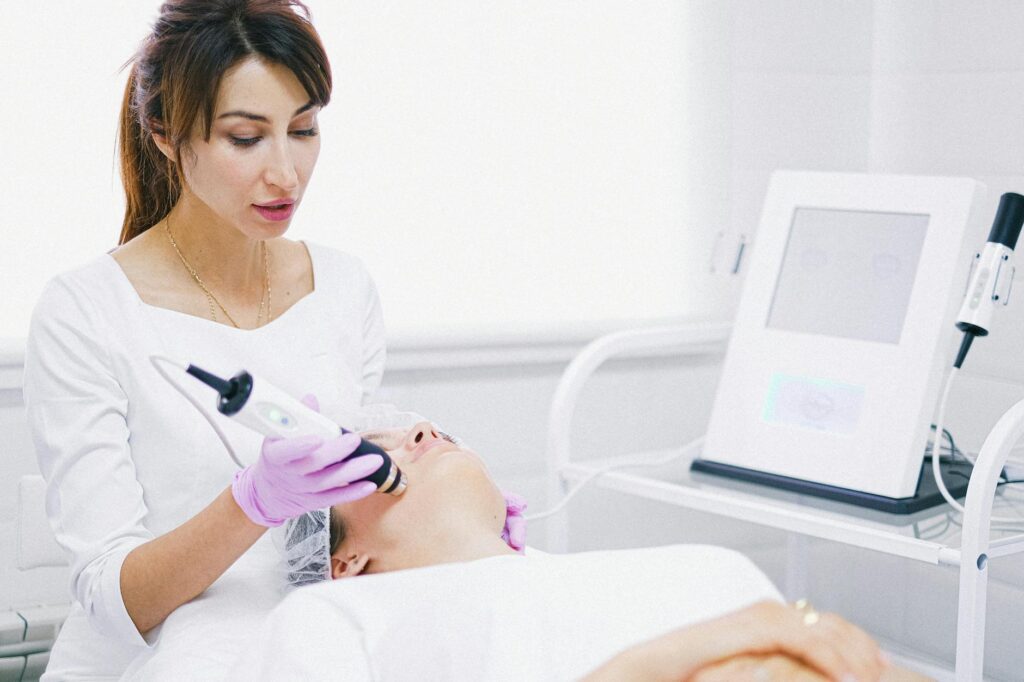
Professional dermatology equipment operates at energy levels and concentrations that licensed practitioners are trained to control. Laser systems, radiofrequency microneedling, chemical peels, and injectable treatments all deliver targeted energy or substances to specific skin layers, triggering measurable biological responses. Radiofrequency microneedling combined with microneedling and PRP accelerates healing, amplifies collagen production, and delivers more dramatic improvements in firmness and brightness than microneedling alone—the combination creates a synergistic effect where each treatment enhances the other’s benefits. The science is specific: RF microneedling creates micro-channels while simultaneously applying radiofrequency energy, which stimulates fibroblasts to produce collagen. Adding PRP (platelet-rich plasma) to this mix introduces growth factors that accelerate healing and further stimulate collagen synthesis. When biostimulatory fillers are paired with RF microneedling, collagen density improves by 25% over six months—a measurable, documented outcome that far exceeds what topical treatments can deliver.
This isn’t marketing; it’s the cumulative effect of multiple stimuli working synergistically at the cellular level. The limitation here is cost and accessibility. Professional treatments are expensive, require travel to a qualified practitioner, and may not be available in all areas. Additionally, not all skin types respond identically to all treatments. Darker skin tones require different laser wavelengths to avoid post-inflammatory hyperpigmentation, and some treatments carry higher risks for certain conditions like melasma. A consultation with a dermatologist is essential before committing to any professional procedure—what works beautifully for one person may not be appropriate for another.
Treatment Combinations That Maximize Results
The most effective approach to accelerating results is strategic combination therapy—pairing complementary treatments so that each amplifies the benefits of the others. Combining lifting treatments like Ultherapy Prime with traditional Botox brow lifts achieves optimum results by addressing skin laxity and muscle movement simultaneously. Ultherapy stimulates deep collagen remodeling through focused ultrasound energy, while Botox relaxes the muscles that cause dynamic wrinkles; together, they provide both structural tightening and prevention of future wrinkling. Similarly, radiofrequency microneedling paired with topical retinoids creates a powerful acceleration effect. The professional treatment creates the stimulus for collagen production; the retinoid at home maintains that stimulus and prevents regression.
A person undergoing RF microneedling quarterly while using tretinoin nightly will see much faster progression toward skin goals than someone doing either treatment alone. The key is spacing treatments appropriately—most professionals recommend four to six weeks between major procedures to allow healing and results to manifest fully. However, more treatments are not always better. Over-treating—pursuing multiple major procedures within weeks of each other—can overwhelm the skin’s repair capacity, lead to chronic irritation, or produce diminishing returns. A realistic combination strategy involves one primary procedure (like laser or RF microneedling) done quarterly, with complementary maintenance treatments (like professional peels or facials) done monthly if desired, and consistent at-home skincare daily. This rhythm allows the skin to build results progressively without creating cumulative damage or overwhelm.

The Role of Professional Expertise in Your Outcomes
The equipment matters, but the person operating it matters more. Patients treated by highly skilled injectors are 3x more likely to report satisfaction with their results. This statistic captures an often-overlooked truth: two practitioners using the identical technology can produce radically different outcomes based on training, experience, artistic sense, and attention to detail. An expert understands facial anatomy well enough to recognize asymmetries, anticipate how your face will age with treatment, and customize dosing or technique to your specific anatomy rather than applying a one-size-fits-all protocol. Consider Botox as an example. An inexperienced injector might create the “frozen” look that gives cosmetic injectables a bad reputation—overtreatment that eliminates all movement and expression.
An expert injector achieves a natural result that smooths wrinkles while preserving your ability to show emotion. The difference isn’t the product; it’s the skill. Similarly, with laser treatments, an experienced technician knows how to customize settings for your skin tone, adjust between passes based on real-time feedback, and avoid common pitfalls like hypopigmentation or scarring. When choosing a practitioner, credentials matter. Look for board-certified dermatologists or plastic surgeons, or highly trained nurses and aestheticians who work under physician supervision. Ask about their experience with your specific concern and skin type, request before-and-after photos, and trust your instinct if something feels off. The best technology in the hands of an inexperienced practitioner produces worse results than good technology in the hands of an expert.
Timeline Expectations: How Quickly You’ll See Improvements
Professional treatments deliver results faster than at-home treatments, but “faster” doesn’t mean “instant.” Most professional procedures require a series rather than a single session, and full results often take weeks or months to fully manifest as collagen remodeling continues beneath the surface. A laser treatment might show 50% improvement in dark spots within 4-6 weeks, but full fading may take three to six months. RF microneedling typically requires three to four sessions spaced four to six weeks apart to see optimal collagen remodeling, with continued improvement for months after the final treatment. Injectable treatments like Botox show results within three to seven days and reach full effect by two weeks, making them among the fastest-acting professional treatments. Filler results are visible immediately but continue to improve over two weeks as swelling resolves.
Biostimulatory fillers like Radiesse or Sculptra are slower—results appear over weeks and continue improving for months—but the collagen they stimulate lasts longer than traditional fillers. Understand that different treatments have different timelines; combining treatments with different result timelines means you’ll see some improvements quickly while waiting for others to fully develop. A realistic expectation for most serious skin concerns is three to six months of consistent professional treatment combined with diligent at-home care before you can assess whether you’re satisfied with results. This might sound long, but it’s dramatically faster than the one to two years required to see significant results from at-home treatments alone. Plan your treatment journey around this timeline—if you’re preparing for an event in six weeks, laser treatments and injectables are good choices; if you have a year to work with, you can pursue slower but perhaps more comprehensive treatments like biostimulatory fillers or series of radiofrequency microneedling.
Pairing Professional Treatments with Daily Skincare
Professional treatments are not a replacement for at-home skincare; they’re an acceleration of it. In fact, the fastest path to dramatic results combines daily topicals with professional procedures. Your at-home routine—whether it’s retinoids, vitamin C, niacinamide, or peptides—keeps your skin in an optimal state for professional treatments to work, speeds healing afterward, and maintains gains between sessions. Think of professional treatments as the sprint; at-home skincare is the distance run that makes the sprint effective. For example, someone receiving quarterly laser treatments for hyperpigmentation will see faster overall improvement if they’re also using a quality sunscreen daily and a brightening serum with ingredients like niacinamide or alpha-arbutin. The professional laser removes the pigmentation; the at-home brighteners prevent new pigmentation from forming and extend the laser’s benefits.
Similarly, someone undergoing RF microneedling benefits enormously from using tretinoin or another retinoid at home—the retinoid amplifies collagen production and prevents regression between treatments. Your skincare routine and professional treatments are complementary, not competitive. Post-procedure care is equally important. Most professional treatments leave skin temporarily irritated, and following your practitioner’s aftercare instructions—which typically involve gentle cleansing, moisturizing, and strict sun protection—speeds healing and improves results. Neglecting aftercare can lead to complications like infection, scarring, or hyperpigmentation, and reduces the treatment’s effectiveness. Plan your professional treatments around your lifestyle, ensuring you can commit to several days of modified activity and careful skincare afterward.
The Future of Accelerated Results: 2026 Trends in Professional Skincare
The skincare treatment landscape is evolving rapidly, with increasing emphasis on combination therapy and personalized approaches. The 2026 trend toward pairing multiple complementary treatments—such as combining Ultherapy Prime with Botox for dual lifting benefits, or RF microneedling with PRP and biostimulatory fillers for maximum collagen acceleration—reflects a growing understanding that synergistic approaches deliver better results than single modalities. Rather than choosing between technologies, forward-thinking practitioners are designing treatment plans that leverage multiple tools to address skin concerns comprehensively.
Biostimulatory fillers and radiofrequency treatments are gaining prominence because they stimulate the skin’s own collagen production rather than simply replacing lost volume or smoothing wrinkles temporarily. These treatments align with a broader industry shift toward “results that look like you, but better”—enhancement that’s natural, progressive, and increasingly difficult to detect as treatment rather than exceptional genetics. As these technologies improve and become more accessible, the gap between professional treatment results and at-home results will likely widen further, making the case stronger for anyone serious about accelerating their skincare outcomes.
Conclusion
Professional treatments accelerate results through concentrated energy delivery, precise technique, and the ability to trigger biological responses that at-home products simply cannot match. A 50% reduction in dark spots within weeks, collagen density improvements measured at 25% over six months, and 3x higher satisfaction rates from expert practitioners represent meaningful, quantifiable acceleration over what patience and at-home skincare alone can achieve. The most effective approach combines periodic professional procedures with consistent at-home skincare, allowing you to benefit from both the dramatic acceleration of professional treatments and the cumulative, preventive benefits of daily care.
Start by identifying your primary skin concern, researching qualified practitioners in your area, and understanding what timeline and investment you’re willing to commit to. A consultation with a board-certified dermatologist can help you design a treatment plan tailored to your specific goals, skin type, and realistic expectations. Whether you choose laser treatments, radiofrequency microneedling, injectables, or a combination approach, the principle remains the same: professional expertise and technology accelerate results significantly, shortening your journey from where your skin is now to where you want it to be.
Frequently Asked Questions
What’s the difference between professional treatments and expensive at-home devices?
Professional treatments use medical-grade equipment with higher energy outputs, precision controls, and safety measures that require training to operate. At-home devices are intentionally limited to lower energy levels to be safe for self-use; this makes them gentler but also less effective. A professional laser or RF microneedling machine is far more powerful than any consumer device, which is why results are faster and more dramatic with professional treatments.
How many professional treatments do I actually need to see results?
It depends on the treatment and your concern. Injectable treatments like Botox show results in days and may be one-time or quarterly depending on your goals. Laser treatments often require three to six sessions for optimal results. Biostimulatory fillers may need one to three sessions depending on your baseline. Your practitioner can give you a more specific timeline after assessing your skin.
Can I do multiple professional treatments at once, or do I need to space them out?
Most professional treatments need to be spaced four to six weeks apart to allow healing and let results fully develop. Doing too many treatments too close together can overwhelm your skin’s repair capacity and may cause complications. A strategic combination—like laser plus injectables during the same visit—is safe when designed by your practitioner, but major procedures need spacing.
Is professional treatment worth the cost if I’m diligent with at-home skincare?
If your at-home routine is truly excellent and you have years to work with, you’ll eventually see results. But if you want to see dramatic improvement in six to twelve months rather than two to three years, professional treatment is worth the investment. The time acceleration alone justifies the cost for most people with specific skin concerns they want to address.
Why do results vary so much between practitioners using the same equipment?
Because skill matters enormously. A board-certified dermatologist or highly experienced injector understands facial anatomy, has refined technique through thousands of treatments, and knows how to customize settings and approach for individual patients. An inexperienced practitioner may use identical equipment but produce inferior results. Always prioritize finding a skilled, experienced practitioner over the fanciest equipment.
What if I have sensitive skin or a history of bad reactions—are professional treatments still safe for me?
Yes, but with careful selection and customization. Some treatments are gentler than others, and a skilled practitioner can adjust intensity, choose specific treatments suited to sensitive skin, and monitor closely during treatment. A consultation is essential to discuss your history and identify treatments that are both safe and effective for your specific needs.