# How Long Does PIE Last After Acne?
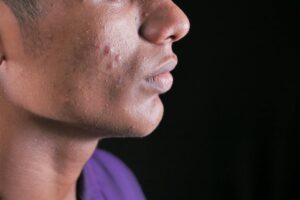
Post-inflammatory erythema, or PIE, refers to the red and pink spots that remain on your skin after a breakout has healed. These marks are caused by blood vessel damage that occurs during the inflammation process. Understanding how long PIE lasts can help you manage expectations and decide whether to pursue treatment.
## The Timeline for PIE Resolution
The duration of post-inflammatory erythema varies significantly from person to person. For many people, PIE resolves naturally within a few weeks to a few months with proper skin care. However, this is not always the case. Some individuals experience more severe PIE that can persist for 6 months to a year or even longer before fading completely.
Several factors influence how quickly your skin recovers. The severity of the initial inflammation plays a major role, as does your skin type and your body’s natural healing ability. Someone with mild PIE from a small breakout may see improvement in just a few weeks, while someone with extensive cystic acne may need significantly more time.
## Why PIE Takes Time to Fade
The redness associated with PIE stems from changes in blood circulation in the affected areas. When your skin experiences inflammation from acne, the blood vessels in that region become damaged or dilated. As your skin heals, these blood vessels gradually return to their normal state, and the redness fades accordingly. This process simply takes time as your body works to stabilize circulation and repair the damaged tissue.
## Treatment Can Speed Up Recovery
While PIE often resolves on its own, you don’t necessarily have to wait passively. Various treatments can help accelerate the fading process. Topical ingredients like vitamin C, niacinamide, glycolic acid, and azelaic acid have anti-inflammatory properties that may reduce redness. Anti-inflammatory ingredients such as aloe, green tea, and gotu kola can also support healing.
For more significant cases, professional treatments offer faster results. Microneedling involves creating controlled micro-injuries to stimulate your skin’s natural healing response and increase collagen and elastin production. Pulsed dye laser treatments target the blood vessels responsible for the redness. According to clinical data, certain combination treatments have achieved a 77 percent reduction in post-inflammatory erythema at 24 weeks.
## What to Expect from Treatment
If you pursue professional or topical treatments, visible improvement often appears within a few weeks. More severe cases typically require multiple sessions spread over several months to achieve optimal results. The exact timeline depends on the treatment method you choose and the extent of your PIE.
## Prevention Matters Most
The most effective approach to PIE is preventing it from developing in the first place. Since PIE results from acne inflammation, preventing breakouts is your best defense. While treating existing acne is easier than treating the resulting PIE, prevention remains the ideal strategy.
## Is PIE Permanent?
The good news is that post-inflammatory erythema is not permanent. Because the redness is caused by temporary changes in blood circulation rather than permanent skin damage, it will eventually fade as your skin heals. With proper care and time, the redness will reduce and your skin will return to its normal appearance.
Sources
https://moawadskininstitute.com/post-inflammatory-erythema-cure/
https://banish.com/blogs/article/pie-vs-pih-how-to-tell-the-difference
https://elosklinik.com/en/sivilce-tedavisi/sivilce-cukurlari-nasil-gecer/
https://pubmed.ncbi.nlm.nih.gov/41351204/?fc=None&ff=20251220022630&v=2.18.0.post22+67771e2