Post-acne redness persists long after your pimples have healed because the blood vessels beneath your skin remain inflamed and dilated from the acne lesion. When you develop acne, your immune system sends blood and immune cells to fight the bacteria and inflammation, which causes the blood vessels to expand. Even after the acne itself clears, these dilated vessels can take weeks or months to return to their normal size, creating that stubborn red or pink discoloration that frustrates so many acne sufferers. For example, someone who had moderate breakouts on their cheeks might notice the individual pimples disappear within days, but the overall redness in that area lingers for months because the small capillaries feeding each lesion site remain engorged.
This article explains the vascular mechanisms behind post-acne erythema, how blood vessel behavior affects different types of acne scars, and what treatments actually target the underlying vessel inflammation. The redness you see is fundamentally a vascular problem—it’s blood showing through your skin, not scarring or permanent skin damage in most cases. Understanding this distinction is crucial because it means many treatments work specifically by reducing blood vessel visibility, calming inflammation, or encouraging vessels to return to baseline size. This is different from atrophic or boxcar scars, which involve actual loss of collagen and skin structure.
Table of Contents
- What Role Do Blood Vessels Play in Post-Acne Redness?
- How Does Inflammation Affect Blood Vessel Behavior After Acne Clears?
- How Do Different Types of Acne Lesions Create Different Redness Patterns?
- What Treatments Target the Blood Vessels Causing Post-Acne Redness?
- When Does Post-Acne Redness Indicate Scarring Rather Than Just Vasodilation?
- How Does Skin Tone Affect Post-Acne Redness and Treatment Options?
- Looking Forward: Why Does Post-Acne Redness Eventually Fade on Its Own?
- Conclusion
- Frequently Asked Questions
What Role Do Blood Vessels Play in Post-Acne Redness?
When acne forms, your skin‘s inflammatory response involves immediate vasodilation—the widening of blood vessels to increase blood flow to the affected area. This serves a biological purpose: more blood delivery means more white blood cells and immune factors can reach the infection site. The redness you see during an active pimple is literally the concentrated blood in these expanded capillaries showing through the epidermis. However, the problem is that these vessels don’t always “remember” to shrink back down once the inflammation has resolved. The vessels remain dilated, sometimes for extended periods, because the inflammatory signals telling them to expand have calmed down but haven’t completely shut off.
This is why a pimple can be gone but the red mark remains. The specific blood vessels involved are primarily capillaries in the dermis, the layer of skin beneath the epidermis. These tiny vessels are normally nearly invisible, but when they dilate to two or three times their baseline width, they become visible through the overlying skin as pink or red marks. The severity and duration of post-acne redness correlates directly with how inflamed the acne lesion was and how long it persists. For comparison, a small whiteheads that resolves in a few days might leave barely noticeable redness, while a deep cystic lesion that lasts two weeks can leave pronounced redness that takes months to fade because the inflammatory stimulus lasted longer and recruited more vascular changes.
How Does Inflammation Affect Blood Vessel Behavior After Acne Clears?
The inflammatory process doesn’t end instantly when the acne bacteria is controlled or the lesion drains. Instead, inflammation gradually tapers down in a staged process. During this tapering phase, inflammatory cytokines like tumor necrosis factor-alpha and interleukins continue to maintain vasodilation even as the acute infection is resolving. Additionally, the skin releases vaso-active compounds including histamine and nitric oxide, which further promote blood vessel relaxation and keep capillaries dilated.
This explains why you can have completely clear skin with zero active pimples but still significant redness—the vascular response outlasts the actual acne pathology. However, if the acne lesion becomes infected secondarily or if you pick and traumatize a healing pimple, the inflammatory phase extends significantly, which means prolonged vasodilation and worse post-acne redness. This is a critical limitation of picking at acne: you don’t just risk scarring, you’re also restarting the inflammatory timer, which means the blood vessels stay dilated longer. some individuals also have genetic predispositions to prolonged vasodilation responses, which explains why certain people develop intense post-acne redness from relatively mild acne, while others with severe acne might have minimal residual redness. Fitzpatrick skin types V and VI (darker skin tones) also tend to develop more pronounced post-inflammatory erythema, a phenomenon that’s not yet fully understood but likely involves both vascular and melanin-related factors.
How Do Different Types of Acne Lesions Create Different Redness Patterns?
Comedonal acne (blackheads and whiteheads) typically produces minimal post-acne redness because these lesions involve less immune infiltration and less extensive blood vessel recruitment. When they clear, the small capillaries involved return to normal relatively quickly, often within days to a couple of weeks. In contrast, inflammatory acne—papules, pustules, and especially cystic lesions—triggers massive vasodilation because the immune response is much more aggressive. Cystic acne, which involves deep infections and significant inflammation, can produce redness that persists for three to six months because the inflammation penetrates deep into the dermis where larger vascular networks are affected.
A concrete example: suppose you have two acne lesions side by side, one a small whitehead and one a deep nodule. The whitehead clears in four days and is barely visible as redness within a week. The nodule, meanwhile, is inflamed, painful, and swollen for three weeks, and the resulting red mark persists for four months because the deeper vasculature was engaged for a longer period and at higher intensity. This is why people who suffer from cystic acne often report that the redness is actually more bothersome than the acne itself, since the active lesion is painful but temporary, whereas the lingering redness is a cosmetic concern that doesn’t hurt but doesn’t fade quickly. The redness from different lesion types can also be spatially different—surface pustules might leave very localized tiny red dots, while cystic lesions leave larger diffuse red patches because the vascular involvement spans a wider area.

What Treatments Target the Blood Vessels Causing Post-Acne Redness?
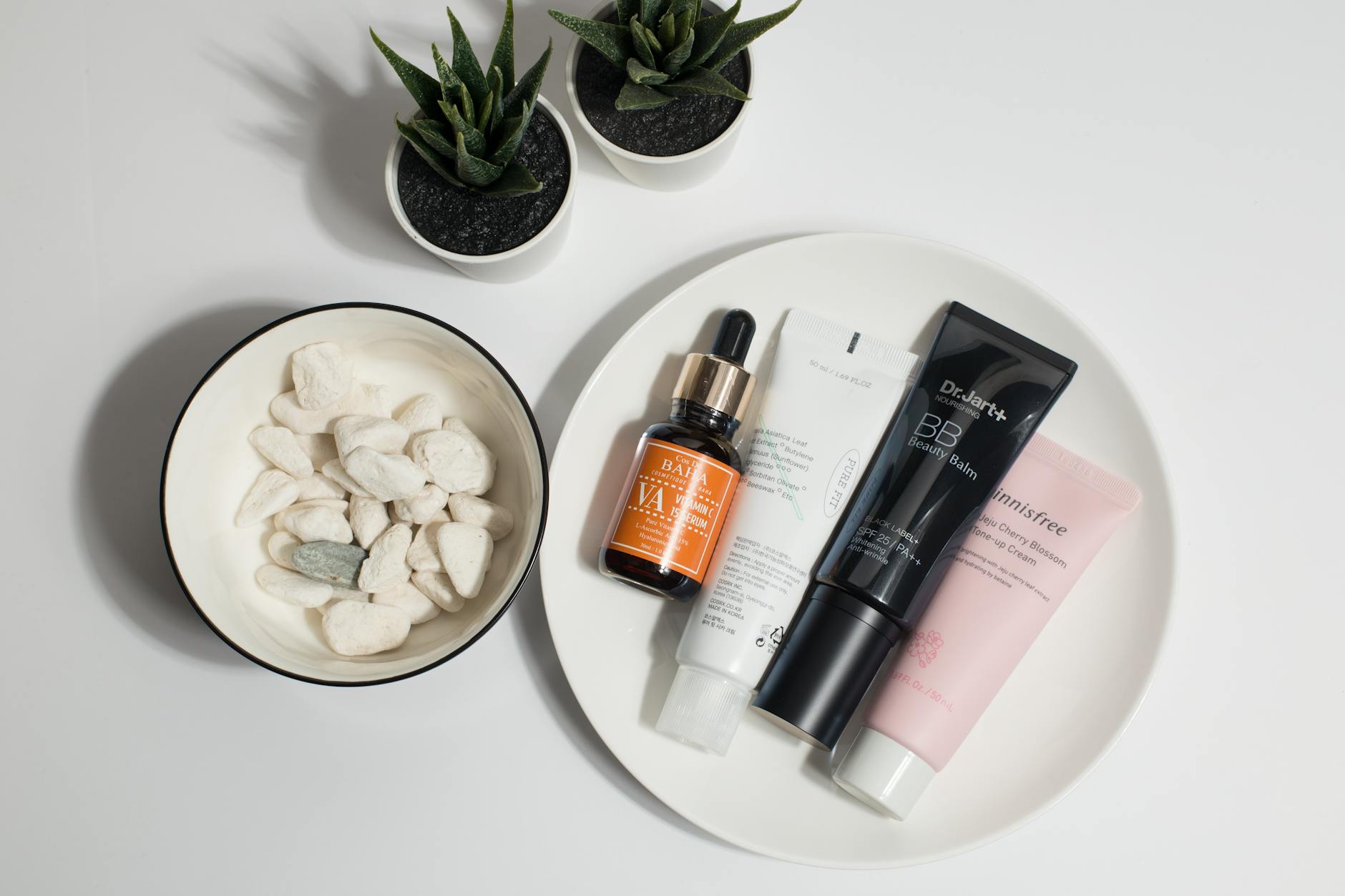
The most effective approaches for treating post-acne redness work by either reducing blood vessel visibility, calming ongoing inflammation, or promoting vessel return to baseline size. Topical treatments containing niacinamide, azelaic acid, or sulfur can help reduce redness by calming inflammatory mediators that keep vessels dilated. These work over weeks, so they’re better for mild redness. Vitamin C serums and retinoids can also help by strengthening the skin barrier and reducing overall inflammation, though they’re not direct vascular treatments. For more pronounced redness, laser treatments offer a direct approach by targeting the hemoglobin in red blood cells within the dilated vessels, essentially cauterizing or closing down those hyperactive capillaries.
The most commonly used are pulsed-dye lasers (PDL) and intense pulsed light (IPL), both of which can reduce post-acne redness by 50-80% in a few treatments. The tradeoff is cost, potential for bruising, and the need for multiple sessions spaced weeks apart. An important distinction: laser works best on redness that’s primarily vascular (post-inflammatory erythema) and less effective on redness combined with actual textural scarring. For people with very dark skin, PDL and IPL carry higher risks of hyperpigmentation or hypopigmentation, which is why stronger therapies like radiofrequency or microneedling might be preferred. Topical treatments are lower-risk but slower; lasers are faster but more invasive and expensive.
When Does Post-Acne Redness Indicate Scarring Rather Than Just Vasodilation?
One critical distinction that many people miss: post-acne redness that fades with pressure or blanches when you pull the skin is purely vascular and doesn’t indicate structural scarring. If you press your finger on a red acne mark and the redness disappears temporarily, that’s vasodilation and inflammation, not collagen loss. This means it will eventually resolve on its own, and treatments are aimed at speeding resolution. However, if you press on a mark and it remains red, or if the mark is slightly depressed or raised compared to surrounding skin, then you’re looking at true scarring where collagen has been destroyed or remodeled abnormally. The timeline is another important warning sign.
Purely vascular post-acne redness typically improves significantly within six to twelve months as vessels normalize naturally. If redness persists intensely beyond twelve months, it’s more likely to involve both vascular and structural components. Additionally, redness from severe cystic acne that leaves obvious pitting or ice-pick scars is often permanent to some degree, though laser and other treatments can improve it. For many people, the good news is that their post-acne redness is actually just vascular and will fade substantially without intervention; the bad news is that patience is required. But if you’re considering treatments, knowing whether you have vascular erythema versus true scarring changes your treatment strategy entirely—vascular redness responds to inflammation-calming treatments and some lasers, while true scarring requires collagen-remodeling approaches like microneedling, subcision, or stronger ablative lasers.
How Does Skin Tone Affect Post-Acne Redness and Treatment Options?
Post-acne redness manifests differently depending on baseline skin color. On lighter skin tones, redness is immediately visible as pink or red discoloration because there’s high contrast between the inflamed vessels and the surrounding pale skin. On medium and darker skin tones, the same vascular inflammation often appears more brown or violaceous because the melanin in your skin competes with the red blood color for visual dominance. This is called post-inflammatory hyperpigmentation, and it’s actually a different phenomenon than the vascular redness itself—it’s excess melanin production triggered by the same inflammatory response that dilates the vessels. Many people with darker skin experience both simultaneously: the underlying vascular redness plus overlying pigment darkening.
For example, someone with deep brown skin might have a healing acne site that looks almost bronze or purple rather than bright red, even though the vascular component is the same as on lighter skin. This distinction matters for treatment because vascular treatments like PDL lasers primarily target hemoglobin (the red), not melanin. So on lighter skin, laser treatment of post-acne redness works very efficiently. On darker skin, the response is often better when combined with treatments for the pigmentation component, such as topical vitamin C, hydroquinone, or alternative lasers like the 1064nm Nd:YAG that target deeper structures while minimizing melanin absorption. This is why it’s critical to see a dermatologist experienced with treating darker skin if you’re considering professional treatments for post-acne redness, because the approach needs to account for both the vascular and pigment components.
Looking Forward: Why Does Post-Acne Redness Eventually Fade on Its Own?
The human body has remarkable capacity for vascular remodeling. Over time, usually between three and six months for mild-to-moderate post-acne redness and up to twelve months for severe cases, the dilated capillaries gradually shrink back to their normal diameter as inflammatory signals fade completely. New collagen also begins to remodel in the acne lesion site, which helps normalize the skin architecture and potentially reduces visible vascularity.
Additionally, the skin barrier gradually rebuilds and thickens in response to the acne damage, which provides more coverage and camouflage for residual redness. This is why dermatologists often recommend patience as a first-line approach—many cases resolve substantially without intervention if you simply allow time to pass and practice sun protection to prevent the redness from becoming more visually prominent. Emerging research into microvascular dysfunction and chronic inflammation in acne-prone skin suggests that future treatments might involve more targeted approaches to vascular normalization, such as specific growth factor inhibitors or novel light-based therapies that work on different wavelengths than traditional lasers. For now, the combination of time, inflammation-calming skincare, photoprotection to prevent vascular damage from UV exposure, and professional treatments as needed represents the most practical approach for most people managing post-acne redness.
Conclusion
Post-acne redness is fundamentally a vascular problem caused by dilated capillaries that persist after acne inflammation begins to resolve. The redness represents increased blood flow to the affected area and typically does not indicate permanent scarring unless combined with visible texture changes or pitting. Understanding this vascular mechanism helps explain why redness fades with pressure, why it can last months even though the acne itself is gone, and why certain treatments work better than others—those addressing inflammation and vascular behavior are most effective for purely erythematous marks, while structural scarring requires different approaches.
If you’re dealing with post-acne redness, your options range from patience (allowing natural vascular remodeling over months) to topical anti-inflammatory treatments (niacinamide, azelaic acid, retinoids) to professional vascular treatments (laser, IPL) depending on severity, timeline, and skin type. The best choice depends on how quickly you want improvement, your skin tone and associated risks with certain treatments, and whether the redness includes textural scarring or is purely vascular. Starting with gentle inflammation-reducing skincare and strict sun protection is safe for everyone, while professional treatments should be discussed with a dermatologist familiar with your specific skin and concerns.
Frequently Asked Questions
How long does post-acne redness typically last?
Most post-acne redness improves significantly within three to six months. Mild redness fades within weeks, while severe or cystic acne-related redness can persist up to twelve months. If redness remains intense beyond a year, it may involve structural scarring rather than just vascular dilation.
If I press on a red acne mark and it blanches (turns white), does that mean it’s not scarring?
Correct. Blanching indicates the redness is purely vascular and caused by dilated blood vessels, not collagen loss or true scarring. These marks typically resolve on their own over time as vessels normalize.
Why does picking at acne make the redness worse?
Picking at acne retraumatizes the lesion, which restarts the inflammatory response and prolongs vasodilation. This extends the timeline for natural redness resolution and increases the risk of true scarring if you damage deeper skin layers.
Can I use laser treatment on post-acne redness right after my acne clears?
It’s generally better to wait four to six weeks after active acne resolves before pursuing laser treatment, to allow the acute inflammation to settle. However, this depends on the laser type and your dermatologist’s assessment—some providers do treat earlier.
Do treatments for post-acne redness work equally well on all skin tones?
No. Darker skin tones require more specialized approaches because post-acne marks often include both vascular redness and pigmentation changes. Traditional vascular lasers may be less effective or carry higher risk of pigmentation changes, so alternative technologies and careful selection are important.
Is post-acne redness the same as post-inflammatory hyperpigmentation?
No, they’re different but often occur together. Redness is dilated blood vessels; hyperpigmentation is excess melanin production. Both result from acne inflammation but require different treatments, and darker skin tones are more prone to the pigmentation component.