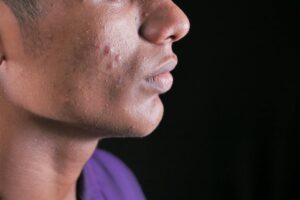
Acne inflammation and oiliness are related but different skin issues. Oiliness comes from too much sebum, the natural oil your skin makes, while inflammation is your body’s reaction that causes redness, swelling, and pain in pimples.
Oiliness happens when sebaceous glands produce extra sebum. This oil keeps skin moist but can mix with dead skin cells and block pores. Blocked pores lead to blackheads or whiteheads, which are non-inflammatory at first. These are common on oily skin, especially in the T-zone like the forehead, nose, and chin. Oily skin looks shiny, has bigger pores, and feels greasy soon after washing.[1][2][3]
Inflammation kicks in when bacteria like C. acnes grow in those blocked pores. The bacteria trigger your immune system, causing white blood cells to rush in. This makes pimples red, tender, and swollen. Types include papules, which are small red bumps without pus, and pustules, which have white pus heads. Worse cases bring cysts or nodules, deep painful lumps under the skin.[3][4][6][8]
The key difference is that oiliness sets the stage but does not always cause inflammation. Excess oil creates a warm, moist spot for bacteria, leading to more intense inflammation on oily skin. These inflamed spots heal slower and leave darker marks due to post-inflammatory hyperpigmentation.[1][3]
Dry skin can have inflammation too, but it looks different. Pimples there get redder, flakier, and more sensitive because the skin barrier is weak. Oily skin inflammation often mixes comedonal acne like blackheads with inflammatory types, while dry skin skips some oil-related clogs.[2][5]
Treatments match the issue. For oiliness, use salicylic acid to clear pores and control sebum. For inflammation, add benzoyl peroxide or retinoids to kill bacteria and calm redness. Oily skin handles stronger products, but always start gentle to avoid more irritation.[1][4]
Sources
https://worldofasaya.com/blogs/skin-types/skin-type-acne-marks-what-you-must-know
https://worldofasaya.com/blogs/acne/how-to-identify-which-skin-type-causes-pimples
https://naturalimageskincenter.com/common-misconceptions-about-bacterial-acne-how-to-identify-it-correctly/
https://www.bodycraft.co.in/blogs/skin/acne/understanding-acne-causes-and-symptoms
https://www.skinboutiqueonline.com/blogs/news/best-acne-routine-for-oily-vs-dry-skin
https://drebruokyay.com/7-key-types-of-acne/
https://glimmergoddess.com/pages/types-of-acne-explained-hormonal-vs-bacterial-vs-fungal-vs-sensitive-skin-acne
https://seventhirty.co/pages/acne-types