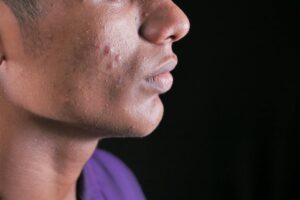
# How Acne Became a Public Health Issue
Acne is far more than a cosmetic concern affecting teenagers. It has emerged as a significant public health issue affecting millions of people worldwide across all age groups. Understanding how acne reached this status requires looking at its prevalence, the populations it affects, and the broader health implications it carries.
The scale of acne as a health problem is striking. Research shows that acne vulgaris, the most common form, is one of the most prevalent chronic skin disorders globally. In recent studies conducted in China, the overall prevalence of acne was found to be 43.91 percent, with rates varying significantly by region and gender. Men showed higher prevalence at 51.18 percent compared to women at 40.59 percent, though adult women actually experience more breakouts than men in their 30s and 40s. These numbers demonstrate that acne affects a substantial portion of the population at any given time.
The condition develops through a complex biological process. Acne vulgaris results from an interplay of heredity factors, hormones, and bacteria. In susceptible individuals, it typically begins during the teenage years when puberty triggers an upsurge in male sex hormones that overstimulate the sebaceous glands. These oil glands produce excess sebum, which combines with dead skin cells to block hair follicles. This creates an ideal environment for the bacterium Propionibacterium acnes to multiply, leading to inflammation and the visible lesions people recognize as pimples or zits.
What makes acne a public health concern extends beyond simple appearance. Severe acne can produce permanent scarring of the skin, particularly when lesions extend from the face to the neck and upper trunk. The psychological impact of acne, especially during formative teenage years, can affect self-esteem and social development. Additionally, the condition persists longer and becomes more severe in certain populations, making it a health equity issue.
Environmental and lifestyle factors have been identified as contributors to acne severity. Research has shown that sudden changes in living environment and frequent changes in residence are significantly correlated with the development of moderate and severe acne. This association persisted even after controlling for other variables, suggesting that environmental stress plays a measurable role in acne development. Environmental pollution, including particulate matter and traffic emissions, has also been explored as a potential factor affecting acne vulgaris.
The shift toward recognizing adult acne as a distinct health concern has further elevated acne’s status as a public health issue. While acne was traditionally viewed as a teenage problem, dermatologists now recognize that adult acne is surprisingly common, especially among women. Adult-onset acne often appears along the jawline rather than the typical teenage T-zone pattern and can suggest hormonal imbalances. Some women discover underlying conditions like polycystic ovary syndrome through acne symptoms, making acne a potential indicator of broader health issues.
Treatment accessibility and effectiveness have become public health considerations. While topical medications like benzoyl peroxide, salicylic acid, and adapalene are reasonably effective for mild cases, more severe acne requires professional dermatological care. The availability and affordability of these treatments vary widely, creating disparities in who can access effective care. Many people struggle with acne management at home and would benefit from professional dermatological consultation, yet access to such care remains unequal across different populations.
The recognition of acne as a public health issue reflects its widespread prevalence, its potential for permanent physical scarring, its psychological impacts, its connection to underlying health conditions, and the disparities in treatment access. As research continues to identify environmental and biological factors contributing to acne, public health approaches to prevention and treatment have become increasingly important for addressing this common but often underestimated health concern.
Sources
https://pmc.ncbi.nlm.nih.gov/articles/PMC12688717/
https://www.britannica.com/science/acne
https://www.tuftsmedicine.org/about-us/news/acne-over-30
https://www.sciencedaily.com/terms/acne_vulgaris.htm
https://academic.oup.com/skinhd/advance-article/doi/10.1093/skinhd/vzaf090/8407371?searchresult=1