
Better sleep can reduce acne severity, but it won’t clear acne on its own. When you sleep inadequately, your body increases cortisol production, a stress hormone that signals your sebaceous glands to overproduce sebum—creating an ideal breeding ground for acne-causing bacteria. In a cross-sectional study of 330 acne patients, 65% reported that inadequate sleep significantly worsened their breakouts. However, the relationship between sleep and acne, while statistically significant, remains relatively weak.
This means that while improving your sleep can help reduce breakouts as part of a comprehensive approach, you’ll likely need additional treatments—whether that’s topical medications, skincare routines, dietary changes, or professional dermatological care—to truly control acne. The confusion around this topic stems from oversimplified claims that “sleep fixes acne.” The reality is more nuanced. Sleep plays a supporting role in skin health, but it’s not a standalone cure. This article explores exactly how sleep influences acne, what the research shows, where sleep’s limitations begin, and how to combine better sleep with other evidence-based strategies for real results.
Table of Contents
- How Sleep Deprivation Triggers Acne Breakouts
- The Deep-Dive: Sleep, Cortisol, and Inflammatory Markers
- The Bidirectional Sleep-Acne Relationship
- How Many Hours of Sleep Do You Actually Need for Acne Improvement?
- What Sleep Won’t Do: The Limitations and Reality Check
- Sleep Quality vs. Quantity: Why Both Matter for Skin Health
- Combining Sleep with Evidence-Based Acne Treatments
- Conclusion
How Sleep Deprivation Triggers Acne Breakouts
Sleep deprivation sets off a hormonal cascade that directly impacts your skin. When you don’t get enough sleep, your cortisol levels spike. Cortisol is your body’s primary stress hormone, and one of its effects is signaling your sebaceous glands to increase sebum production. More sebum means oilier skin and a more hospitable environment for *Cutibacterium acnes*, the bacterium primarily responsible for acne formation. This mechanism explains why stressed or sleep-deprived people often see a sudden increase in breakouts within days of poor sleep.
The inflammation piece is equally important. Sleep deprivation triggers increased secretion of pro-inflammatory cytokines, specifically TNF and IL-6, which promote systemic inflammation throughout your body—including your skin. Additionally, your skin barrier becomes more compromised when you’re sleep-deprived. Inadequate sleep increases transepidermal water loss, meaning your skin loses moisture more rapidly and becomes more vulnerable to irritation, dryness, and bacterial colonization. For someone already dealing with acne, this weakened barrier can transform occasional breakouts into persistent, inflamed lesions. For example, a person who normally experiences 3-4 pimples per week might suddenly see 10-12 during a period of chronic sleep deprivation.

The Deep-Dive: Sleep, Cortisol, and Inflammatory Markers
The cortisol-acne connection runs deeper than just sebum production. Recent 2025 research confirms that sleep disturbances do far more than elevate cortisol—they disrupt your skin’s microbial balance, impair its barrier function, and reduce your antioxidant protection by decreasing melatonin production. Melatonin isn’t just the hormone that helps you sleep; it’s a potent antioxidant that protects your skin cells from oxidative damage during the night. When you shortchange your sleep, you lose this nightly repair and protection phase, leaving your skin more vulnerable to inflammation and bacterial overgrowth.
However, here’s the critical limitation: even if you perfectly optimize cortisol through perfect sleep, that alone won’t eliminate acne in most people. Acne is multifactorial, driven by genetics, hormonal fluctuations, diet, skincare habits, and bacterial colonization. Sleep is one variable in a much larger equation. If your acne is primarily hormonally driven (like the acne many women experience around their menstrual cycle) or genetically severe, improving sleep will help reduce severity but won’t address the root cause. This is why dermatologists recommend 7-9 hours of quality sleep per night as part of a broader acne management strategy, not as the singular solution.
The Bidirectional Sleep-Acne Relationship
The relationship between sleep and acne isn’t one-directional—it’s a feedback loop. Poor sleep worsens acne, and acne worsens sleep. When you have active, inflamed breakouts, especially on your face or areas that touch your pillow, the discomfort, itching, and self-consciousness can keep you awake at night. This poor sleep then triggers more sebum production and inflammation, worsening your acne further.
Over weeks, this cycle can create a pattern where someone’s sleep quality progressively deteriorates as their acne worsens, and their acne worsens because their sleep deteriorates. Breaking this cycle requires attacking both sides simultaneously. You can’t just wait for sleep to improve and expect acne to vanish—you need to address the acne itself (through whatever treatments your dermatologist recommends) while simultaneously prioritizing better sleep. Someone dealing with cystic acne, for example, might benefit from both a retinoid prescribed by their dermatologist *and* committing to 8-9 hours of sleep nightly. The sleep alone won’t clear the cystic lesions, but the combination of treatment plus sleep optimization gives the best chance of improvement.

How Many Hours of Sleep Do You Actually Need for Acne Improvement?
Dermatologists recommend 7-9 hours of quality sleep per night to support optimal skin health. But “quality” matters as much as quantity. You can spend 9 hours in bed and still wake up feeling unrested if your sleep is fragmented, interrupted by your phone, or disrupted by poor sleep environment conditions. For acne specifically, consistency matters too. Sleeping 5 hours one night and 10 hours the next doesn’t provide the same benefit as consistently getting 7-8 hours nightly.
The research doesn’t give us an exact threshold—like “6 hours won’t help but 7 hours will”—but the pattern is clear: the more severely sleep-deprived you are, the worse your acne becomes. Someone going from 5 hours to 7 hours of sleep per night will likely see more noticeable acne improvement than someone going from 7.5 to 8 hours. If you’re currently sleeping 6 hours or less, prioritizing an extra 1-2 hours is a reasonable experiment. Track your breakouts for 2-3 weeks before and after the change. However, if you’re already sleeping 7-8 hours consistently and still dealing with moderate to severe acne, sleep optimization alone isn’t your answer—additional treatments are necessary.
What Sleep Won’t Do: The Limitations and Reality Check
This is the section where oversimplified sleep-and-acne advice breaks down. Getting better sleep won’t completely clear acne, especially if your breakouts are driven by genetics, hormonal imbalances, or severe bacterial colonization. The statistical correlation between sleep quality and acne severity exists, but it’s relatively weak, meaning sleep is one factor among many. If your parents both had severe acne, if you have polycystic ovary syndrome (PCOS) affecting your hormones, or if you’ve had acne resistant to multiple treatments, improving sleep alone won’t solve it. Additionally, the timeline matters.
You might not see noticeable acne improvement from better sleep for 2-3 weeks because that’s roughly how long a pimple takes to form and resolve. Someone expecting to see results within 3 days of better sleep will be disappointed. Finally, sleep quality can be limited by factors outside your control. If you live in a noisy environment, have sleep apnea, work night shifts, or have a sleep disorder, “just sleep more” isn’t practical advice. In these cases, working with a sleep specialist alongside your dermatologist becomes important.
Sleep Quality vs. Quantity: Why Both Matter for Skin Health
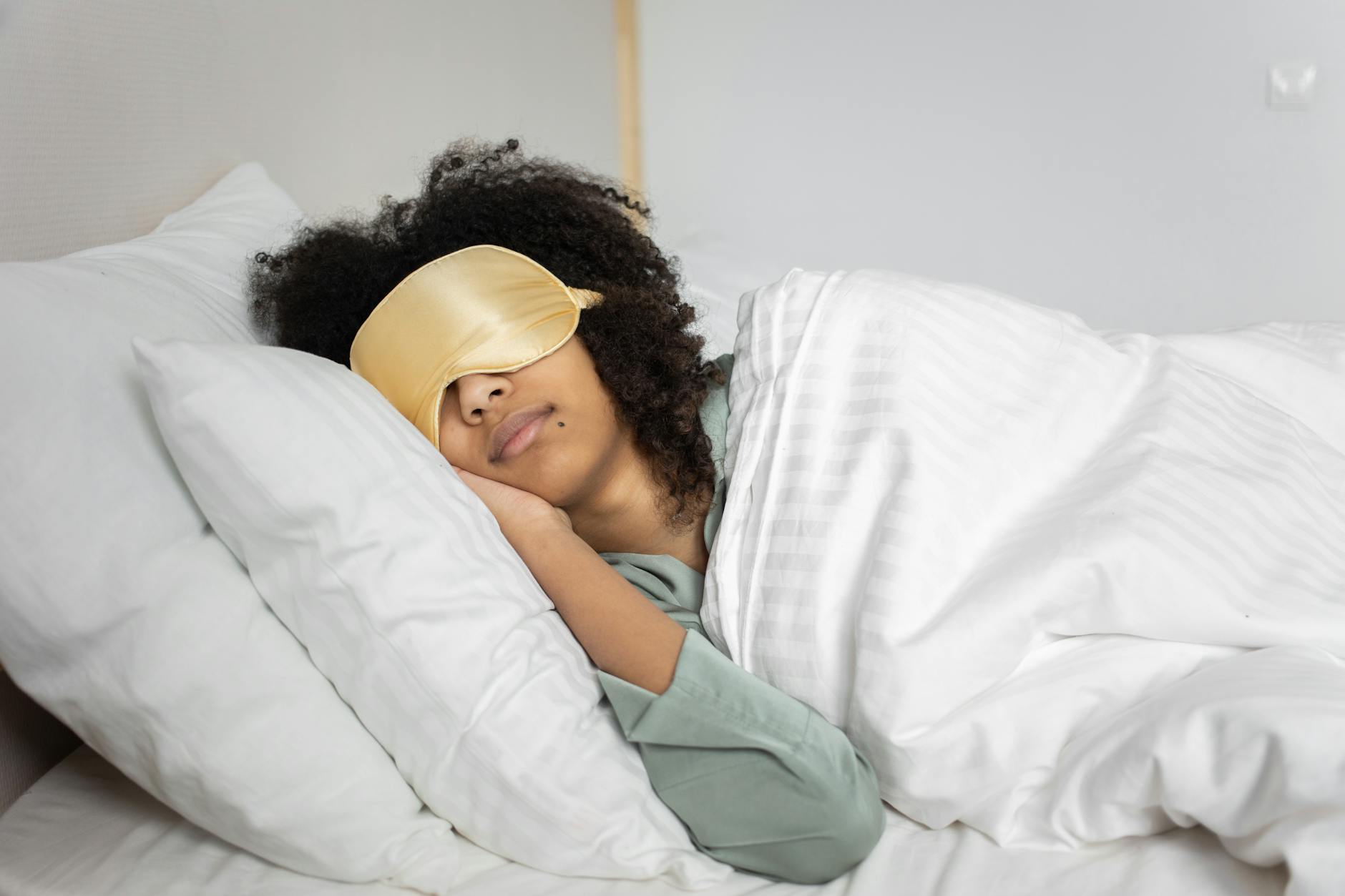
While the research emphasizes total hours of sleep, sleep *quality* deserves equal attention for acne management. Deep, uninterrupted sleep is when your body releases growth hormone and performs cellular repair—including skin barrier restoration. Someone sleeping 8 fragmented, interrupted hours might experience less skin benefit than someone sleeping 7 solid, continuous hours. Factors that improve sleep quality include a consistent sleep schedule, a dark and cool bedroom (ideally 60-67°F), limiting screen time 30-60 minutes before bed, and avoiding caffeine after 2 PM. For acne-prone skin specifically, sleep position also matters.
Sleeping on your back reduces friction between your face and your pillowcase, limiting bacterial transfer and physical irritation. Sleeping on your stomach or side presses your face into your pillow all night, potentially trapping bacteria and irritating existing breakouts. If you can’t comfortably sleep on your back, silk or satin pillowcases reduce friction compared to cotton pillowcases. Washing your pillowcase 2-3 times per week rather than weekly also reduces the bacterial load your skin contacts during sleep. These details seem minor, but they compound over weeks and months.
Combining Sleep with Evidence-Based Acne Treatments
Sleep works best for acne when it’s part of a comprehensive strategy. A dermatology-backed approach typically includes: (1) a consistent skincare routine with cleansing and appropriate topicals, (2) professional treatments like retinoids, benzoyl peroxide, or antibiotics if needed, (3) 7-9 hours of quality sleep nightly, and (4) attention to other factors like diet, stress management, and hormonal health. Sleep is the supporting actor here, not the lead.
Someone following a solid skincare routine and getting adequate sleep will see better results than someone sleeping 9 hours but using no acne medications or proper skincare. The good news is that optimizing sleep costs nothing and has benefits far beyond acne—improved mood, cognitive function, immune health, and metabolism. Even if sleep turns out to be just a 10-15% contributor to your overall acne picture, that’s a meaningful improvement worth pursuing, especially since the effort required is simply prioritizing consistent, quality sleep.
Conclusion
The answer to “Can sleeping more clear acne?” is yes and no. Better sleep reduces cortisol, decreases inflammatory markers, and strengthens your skin barrier—all of which support acne improvement. The 65% of acne patients who report that inadequate sleep worsens their breakouts demonstrate a real, observable connection. However, sleep won’t eliminate acne on its own.
Acne is multifactorial, and while sleep plays a supportive role, genetics, hormones, skincare routine, and sometimes professional treatments are equally important. If you’re currently sleep-deprived (6 hours or less nightly), prioritizing 7-9 hours of consistent, quality sleep should be part of your acne strategy. Pair this with evidence-based skincare, see a dermatologist if breakouts persist, and be patient—give yourself at least 2-3 weeks to notice improvement. Sleep is foundational to skin health, but it’s not a standalone cure. The most effective acne management combines better sleep with the other tools your dermatologist recommends.
You Might Also Like
- Fact Check: Does Stress Directly Cause Acne? Cortisol Increases Oil Production but Stress Alone Doesn’t Cause New Acne
- Fact Check: Can Manuka Honey Treat Cystic Acne? Antibacterial Properties Exist but Evidence for Deep Inflammatory Acne Is Insufficient
- Fact Check: Does Oil Cleansing Method Clear Acne? Some People Report Improvement but Clinical Evidence Is Limited