Can Acne Be Related to Cortisol Levels?
Yes, acne can be directly linked to cortisol levels. Cortisol, known as the main stress hormone, rises when you feel stressed and affects your skin in ways that lead to breakouts.
Your body makes cortisol through a system called the HPA axis, which involves the brain and adrenal glands. When stress hits, like from work deadlines or lack of sleep, this system kicks in and sends cortisol to your skin. There, it binds to oil glands called sebaceous glands, telling them to pump out more sebum, the oily stuff that keeps skin soft. Too much sebum mixes with dead skin cells and bacteria, clogging pores and sparking acne.[1][2]
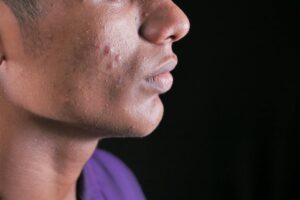
Stress acne often shows up as deep, painful bumps around the jawline or chin. These differ from regular pimples because cortisol also stirs up inflammation, making spots red and swollen. It weakens the skin’s barrier too, so the surface feels dry while oil builds up below. This mix tricks people into scrubbing too hard, which makes things worse.[1][2]
Research backs this up. A 2022 review found cortisol boosts oil gland activity and inflammation in acne. Studies on medical students showed higher stress matched worse acne. Poor sleep raises cortisol even more by messing with your body’s clock, leading to extra oil and irritated skin.[2][4][6]
Cortisol does not act alone. It teams up with other signals like CRH, another stress chemical, to overwork oil glands. Bacteria like C. acnes love the clogged, oily environment and grow fast, adding to the problem. Things like blue light from screens or irregular sleep keep cortisol high, turning everyday stress into skin issues.[1][2][4]
Adults get this type of acne too, not just teens. Stress from life changes can tip hormone balances, letting cortisol drive oil and inflammation without big shifts in other hormones.[5]
Sources
https://www.trummed.com/info-detail/not-just-pms-when-cortisol-quietly-triggers-your-breakouts
https://consciouschemist.com/blogs/good-skin-blog/stress-acne-is-real-here-s-how-to-treat-and-calm-it-fast
https://pmc.ncbi.nlm.nih.gov/articles/PMC12735603/
https://www.jdermis.com/abstract/circadian-rhythms-and-sebaceous-gland-function-the-impact-of-disrupted-sleep-patterns-on-acne-severity
https://www.medicaldaily.com/hormonal-acne-adults-acne-causes-skin-hormones-explained-474128
https://www.mindbodygreen.com/articles/6-things-stress-and-poor-sleep-can-do-to-your-skin-from-top-derm-hannah-frye