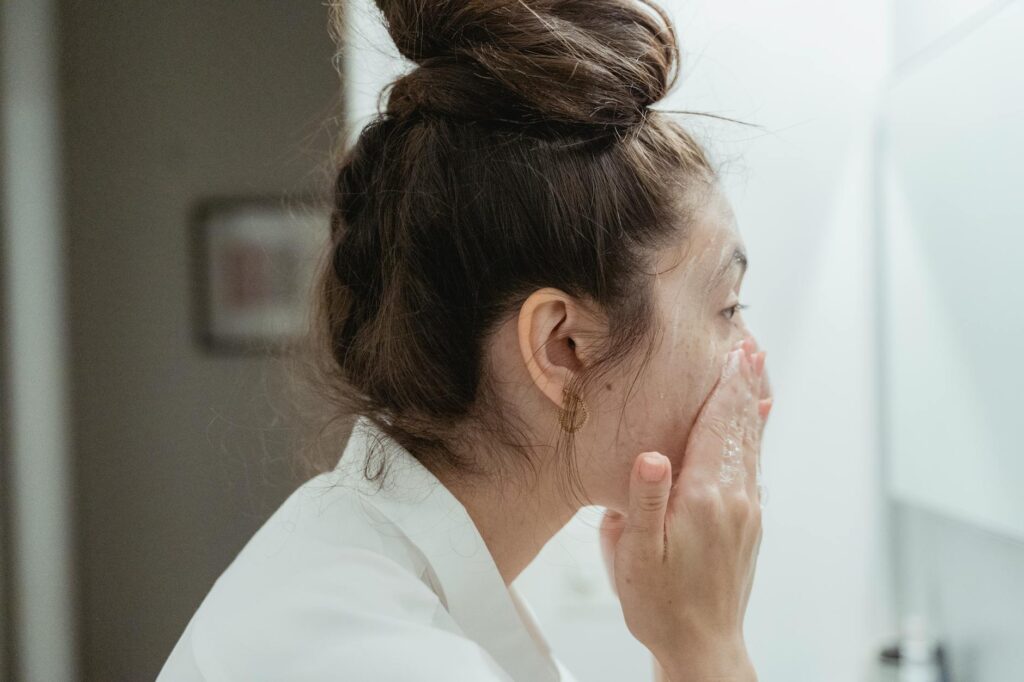
The best skincare routine for acne-prone oily skin focuses on two core strategies: controlling excess oil production while eliminating acne-causing bacteria and dead skin cells. A proven routine combines benzoyl peroxide (which kills acne bacteria) and salicylic acid (which removes dead skin) used at different times of day, alongside a non-comedogenic moisturizer and daily sunscreen. For example, a typical effective routine uses salicylic acid cleanser in the morning, followed by benzoyl peroxide treatment in the evening—a combination that dermatologists have found more effective than either ingredient alone. This article covers the evidence-backed active ingredients that actually work, how to structure your daily routine for maximum results, realistic timelines for seeing improvements, and when your skin needs professional help.
Your oily skin isn’t your enemy—it’s actually a barrier problem. Many people with acne-prone oily skin are paradoxically dehydrated, which causes the skin to overproduce oil to compensate. This is why stripping your skin with harsh drying products often backfires. The goal is to treat acne aggressively while keeping your skin barrier intact, so your skin stops overcompensating with excess oil.
Table of Contents
- Which Active Ingredients Actually Control Acne in Oily Skin
- Building Your Daily Routine That Actually Works
- Moisturizing Your Way to Less Breakouts
- Timing, Layering, and Treatment Frequency
- The Reality of Treatment Timelines and Healing
- When Professional Help Becomes Necessary
- Long-Term Maintenance After Your Breakouts Clear
- Conclusion
- Frequently Asked Questions
Which Active Ingredients Actually Control Acne in Oily Skin
Benzoyl peroxide is the gold standard for acne-prone skin. The American Academy of Dermatology rates it as a “Strong Recommendation” because it directly kills the bacteria that causes acne and has decades of research supporting its effectiveness. You can see initial results in as little as 5 days, with noticeable improvement by week 3, though maximum effects take 2 to 3 months. Benzoyl peroxide is especially suited for oily skin because it has a drying effect—but this is where consistency matters. Starting with a 2.5% concentration is smart; many people jump to 5% or 10% and end up with irritation that actually makes oily skin worse by damaging the barrier. Salicylic acid is the secondary workhorse.
The AAD rates it as a “Conditional Recommendation,” and it’s gentler than benzoyl peroxide while still being highly effective for clogged pores. Salicylic acid works by exfoliating inside the pore—removing the dead skin cells that trap sebum and bacteria. This makes it particularly valuable for oily, combination skin where congestion is the main issue. For example, if your acne is primarily blackheads and whiteheads rather than inflamed cysts, salicylic acid is often more effective than jumping straight to benzoyl peroxide. Topical retinoids are considered the “drugs of choice” for mild-to-moderate acne treatment and long-term maintenance. Unlike benzoyl peroxide and salicylic acid, which work on the surface, retinoids normalize skin cell turnover at a deeper level, preventing future clogs before they form. However, retinoids require weeks to show results and can cause irritation initially, so they’re best introduced after you’ve stabilized acne with benzoyl peroxide or salicylic acid first.
Building Your Daily Routine That Actually Works
A proven routine structure is: gentle cleanser → active treatment → moisturizer → sunscreen in the morning, and cleanser → active treatment in the evening. However, if you have sensitive skin or are just starting acne treatment, begin with only one active ingredient and introduce the second after 2-3 weeks, not both simultaneously. This prevents your skin barrier from becoming too compromised. Many people fail with acne routines because they use two or three actives immediately and end up with severe dryness and irritation, which paradoxically makes oily skin worse. The combination of benzoyl peroxide and salicylic acid shows enhanced effectiveness when used at different times. A practical example: salicylic acid cleanser in the morning (it’s gentler for repeated daily use), then a benzoyl peroxide spot treatment or wash in the evening (since you have time to let it absorb without irritation before applying moisturizer).
This staggered approach gives you both bacterial control and exfoliation without overwhelming your skin. Starting with lower concentrations—2.5% benzoyl peroxide and 0.5-2% salicylic acid—allows your skin to adapt before considering stronger formulations. Your cleanser matters more than people think. Use a gentle, fragrance-free cleanser (avoid sulfates and alcohol-based products) to remove excess oil without triggering more sebum production. Oily skin doesn’t need abrasive scrubs; in fact, physical exfoliation is less effective and more irritating than chemical exfoliants for acne-prone skin. Stick to your actives for exfoliation and keep cleansing simple.
Moisturizing Your Way to Less Breakouts
The biggest mistake people with oily, acne-prone skin make is skipping moisturizer entirely. When your skin is dehydrated, it overcompensates by producing more oil, which clogs pores and worsens acne. You must use a non-comedogenic, oil-free moisturizer—the word “non-comedogenic” means it won’t clog pores, and “oil-free” means it’s formulated without occlusive oils that trap bacteria. A lightweight gel moisturizer with niacinamide is ideal for oily skin; niacinamide specifically calms inflammation, balances oil production, and strengthens your skin barrier. This creates a virtuous cycle: healthy barrier → less irritation → less oil overproduction → fewer breakouts.
Moisturizing immediately after your active treatment is crucial. Apply your acne treatment to damp skin, wait 1-2 minutes for it to absorb, then apply moisturizer while your skin is still slightly damp. This traps hydration and reduces the irritation that actives can cause. If you’re using benzoyl peroxide at night, the window between application and sleeping is your moisturizer’s job—it prevents overnight dehydration and barrier damage. Skipping this step often leads to the “acne got worse” complaint, when actually the skin is just inflamed and reactive from unprotected drying.
Timing, Layering, and Treatment Frequency
Consistency beats intensity. Dermatologists recommend starting with single evidence-based ingredients and using them regularly before adding more. Once your skin adapts (usually after 2-3 weeks), you can add a second active—but many people see excellent results with just benzoyl peroxide or salicylic acid used consistently. For example, someone with primarily blackheads and whiteheads might only need a salicylic acid cleanser morning and night, while someone with inflamed papules might do better with benzoyl peroxide. The urge to combine many products is understandable but usually backfires through over-irritation.
Frequency matters as much as the active itself. For oily, acne-prone skin, once-daily application of actives is a reasonable starting point, especially with benzoyl peroxide, which can be quite drying. After 4-6 weeks, if your skin is tolerating it well, you can gradually move to twice-daily use. Salicylic acid is gentler and is often well-tolerated twice daily even in early treatment. If you’re using a retinoid alongside benzoyl peroxide or salicylic acid, use the retinoid only 2-3 times weekly initially to avoid barrier damage—more isn’t better, and overdoing actives leads to sensitization and worsening oiliness.
The Reality of Treatment Timelines and Healing
Nearly 85% of people ages 12-24 experience acne, and rates are increasing in adults, especially women—so you’re not alone. But here’s what you need to know: most acne treatments require at least 3 months of consistent use before you see substantial improvement. Benzoyl peroxide is faster than most (showing results in 5 days, noticeable improvement by week 3), but even benzoyl peroxide reaches its full effect after 8-12 weeks. This is why consistency matters more than constantly switching products. People often abandon treatments after 4-6 weeks because they haven’t seen “enough” improvement, not realizing they’re only halfway through the timeline.
The trap many oily-skinned people fall into is using harsh treatments, seeing dryness, interpreting that as “working,” then stopping. But acne can worsen temporarily during initial treatment as existing clogs are brought to the surface (called “purging”). If you’re experiencing breakouts in weeks 1-4, that’s often a good sign that the treatment is working—not a sign to switch. The distinction: true irritation (intense redness, stinging, excessive peeling) means dial back frequency or concentration. Temporary breakouts with normal redness usually mean stick with it.
When Professional Help Becomes Necessary
Moderate-to-severe acne requires professional dermatologist assessment and a personalized treatment plan. If you’re experiencing cystic acne, deep nodules, acne that covers large areas of your face and body, or any acne that’s causing significant scarring, over-the-counter treatments alone won’t be enough. A dermatologist can prescribe oral medications (like spironolactone for hormonal acne in women, or doxycycline for bacterial acne) or stronger topical treatments like prescription-strength retinoids.
For severe acne that hasn’t responded to conventional treatments, isotretinoin (Accutane) is highly effective—approximately 85% of patients see permanent clearing after one course. However, isotretinoin requires strict monitoring due to potential side effects, so it’s reserved for severe cases. The point: if you’ve been consistent with a solid routine for 3 months and haven’t seen meaningful improvement, it’s time to see a dermatologist, not to keep experimenting with new products.
Long-Term Maintenance After Your Breakouts Clear
Once your acne is under control, your routine shifts from treatment to maintenance and prevention. Many people stop using their active ingredients and see acne return within weeks. Instead, plan to use benzoyl peroxide or salicylic acid indefinitely—at least a few times per week, even when clear. This prevents the buildup of dead skin cells and bacteria that restart the cycle.
Think of it like brushing your teeth: you don’t stop brushing once your cavities are filled. A typical long-term routine might be salicylic acid cleanser 2-3 times per week and benzoyl peroxide 1-2 times weekly, depending on your skin’s needs. Retinoids become even more valuable in maintenance. Once your skin has adapted (usually after 2-3 months of occasional use), a stable retinoid routine strengthens your barrier, reduces sebum production long-term, and actively prevents future breakouts. Many dermatologists recommend a retinoid as a permanent part of any acne-prone person’s routine, even years after clearing.
Conclusion
The most effective skincare routine for acne-prone oily skin combines benzoyl peroxide and salicylic acid (ideally at different times of day), a non-comedogenic moisturizer with niacinamide, and daily SPF 30+ sunscreen. Start with one active ingredient at lower concentrations, add a second after 2-3 weeks if tolerating well, and commit to at least 3 months before evaluating results. Remember that consistency and simplicity matter far more than owning a cabinet of products—most people see better results from a basic, evidence-based routine used daily than from complex routines used sporadically.
If you’ve followed a solid routine for 3 months without meaningful improvement, or if you’re dealing with severe, cystic, or widespread acne, schedule a dermatology appointment. Professional treatments exist for a reason, and there’s no point suffering through another year of breakouts when oral medications or prescription retinoids could clear your skin in weeks. Your acne is treatable, but it requires commitment to a routine that actually works—not the next viral TikTok skincare trend.
Frequently Asked Questions
Will benzoyl peroxide permanently bleach my hair or pillowcase?
Yes, benzoyl peroxide can bleach fabric and hair with direct contact. Use it at night on clean skin, avoid contact with hair and fabrics, and let it fully absorb before touching anything. Switch to salicylic acid in the morning if you’re worried about hair contact.
Can I use all three actives—benzoyl peroxide, salicylic acid, and retinoid—at once?
Not when starting. You’ll severely irritate your skin and damage your barrier, which makes oily skin worse. Start with one, add a second after 2-3 weeks, and introduce a retinoid only after your skin has adapted to both the first two (usually 4-6 weeks).
What if my skin gets very oily and dry at the same time (dehydrated)?
This is often the sign of a damaged barrier from too many actives or insufficient moisturizing. Dial back active treatments to once daily or every other day, and commit to a heavier non-comedogenic moisturizer. Within 2 weeks, your skin will typically balance out, and then you can gradually reintroduce your full routine.
Is it normal for acne to get worse before getting better?
Yes, during weeks 1-4, you may see temporary breakouts as existing clogs surface (called “purging”). This is usually a good sign. However, if you’re experiencing intense redness, burning, or severe peeling beyond normal dryness, you’re over-irritating—dial back frequency or concentration.
How long before I can stop using acne treatments?
Most people need to use them indefinitely, even after clearing. Plan for at least once-weekly benzoyl peroxide or salicylic acid as maintenance, and a retinoid several times weekly. Stopping treatments usually leads to recurrence within weeks.
Should I see a dermatologist even if my acne is mild?
If you have any doubt about your routine, or if you’ve been consistent for 2-3 months and aren’t seeing improvement, yes. A dermatologist can prescribe prescription-strength actives and oral medications that work faster than OTC options, and they can rule out underlying hormonal or dietary triggers.