Best Ingredients for Fading Dark Acne Scars
Table of Contents
- 1. INTRODUCTION
- 2. What causes dark acne scars in the first place?
- 3. Are retinoids the backbone of fading dark acne scars?
- 4. How does vitamin C help fade dark spots?
- 5. Can acids (AHA/BHA and azelaic acid) speed fading?
- 6. # Alpha‑hydroxy acids (AHAs): glycolic and lactic acid
- 7. # Beta‑hydroxy acid (BHA): salicylic acid
- 8. # Azelaic acid
INTRODUCTION
Dark acne scars can linger long after breakouts have cleared, affecting how comfortable you feel in your skin. Many people find that these marks take months or even years to fade, especially if they have deeper skin tones or frequent breakouts.[6] Understanding which ingredients actually work—and how to use them safely—can make a noticeable difference.
In this article, you’ll learn which ingredients are best supported by dermatology research for fading dark post-acne marks (post‑inflammatory hyperpigmentation), how long they typically take to work, and how to combine them in a simple routine.[3][4][6] You’ll also find practical tips, application steps, and answers to common questions so you can build a plan that fits your skin and lifestyle.
—
What causes dark acne scars in the first place?
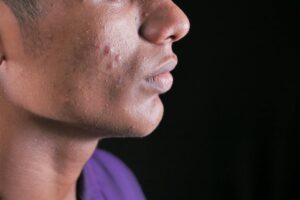
Dark “acne scars” are often **post‑inflammatory hyperpigmentation (PIH)**—flat brown, tan, or gray marks that appear after inflammation.[6]
Key points:
- Inflammation from a pimple stimulates **melanocytes** (pigment cells) to produce extra melanin, leaving a dark mark after the spot heals.[6]
- PIH is more common and longer‑lasting in **medium to deep skin tones** because there is naturally more melanin.
- Sun exposure darkens these marks further and slows fading, which is why **daily sunscreen** is non‑negotiable.[6]
Ingredients that fade PIH generally work by:
- Reducing melanin production
- Blocking the transfer of pigment to skin cells
- Increasing cell turnover so pigmented cells shed faster
- Supporting collagen to smooth texture over time[3][4][6]
—
Are retinoids the backbone of fading dark acne scars?
Retinoids (retinol, adapalene, tretinoin, and other vitamin A derivatives) are considered a core treatment for both acne and post‑acne marks.[4][6][8]
How retinoids help:
- **Speed up cell turnover**, helping pigmented cells shed more quickly and allowing fresher, more even skin to surface.[4][6]
- **Stimulate collagen production**, which can gradually improve the look of shallow, depressed acne scars over time.[4]
- Help prevent new breakouts, indirectly reducing future marks.[6]
Evidence and expectations:
- According to dermatology sources, topical retinoids can visibly lighten post‑acne dark spots with **consistent use over several months**.[6][8]
- Improvement is usually gradual: you might see small changes after 6–8 weeks, with more obvious fading over 3–6 months.
Practical ingredient examples:
- **Over‑the‑counter retinol serums or creams** (e.g., resurfacing or “wrinkle and texture” formulas) are often recommended for beginners.[4][5][6]
- **Prescription retinoids** (like tretinoin or adapalene 0.1–0.3%) are stronger options for more stubborn PIH, under medical supervision.
Tips:
- Start 2–3 nights per week and increase as tolerated.
- Always pair with **broad‑spectrum SPF 30+** because retinoids increase sun sensitivity.[6]
—
How does vitamin C help fade dark spots?
Vitamin C (ascorbic acid and its derivatives) is a cornerstone brightening ingredient frequently used for dark spots and post‑acne marks.[3][4][5][6]
What vitamin C does:
- Inhibits key steps in **melanin production**, helping to fade hyperpigmentation over time.[3][4]
- Acts as a **powerful antioxidant**, protecting skin from free radicals and UV‑induced darkening.[3][4]
- Supports **collagen synthesis**, which can subtly improve overall texture.[4]
Research and outcomes:
- Dermatology guidance notes vitamin C as a **go‑to ingredient** for dark spots and uneven tone when used consistently in serums.[3][4][5][6]
- Most people need **8–12 weeks** of daily use to see clearer, brighter skin, with continued gains beyond that timeframe.
Common forms and strengths:
- **L‑ascorbic acid serums** in the 10–20% range are widely used for hyperpigmentation.
- Stabilized derivatives (e.g., ascorbyl glucoside, THD ascorbate) are options for more sensitive skin.
Usage tips:
- Apply in the **morning** under sunscreen to boost protection against UV‑induced darkening.[6]
- Store away from heat and light; vitamin C is unstable and can oxidize (turn orange/brown), which reduces effectiveness.
—
Can acids (AHA/BHA and azelaic acid) speed fading?
Chemical exfoliants and azelaic acid are frequently recommended to help fade dark acne marks by encouraging gentle, controlled shedding of pigmented cells.[1][3][5][6][8]
Alpha‑hydroxy acids (AHAs): glycolic and lactic acid
- **Glycolic acid**: an AHA that dissolves dead, pigmented cells, refines texture, and brightens dark spots.[3][5]
- **Lactic acid**: a milder AHA that gently exfoliates, smooths texture, and improves tone; often better tolerated by sensitive skin.[1]
Dermatology experts highlight glycolic acid and other exfoliating ingredients as useful for helping skin shed **darkly pigmented cells**, which gradually lightens post‑acne marks.[5]
Typical formats:
- Toners, serums, or at‑home peel pads with **5–10% glycolic or lactic acid** used a few nights per week.
- In‑office chemical peels at higher strengths for faster or more dramatic results (under professional care).[3]
Beta‑hydroxy acid (BHA): salicylic acid
- Oil‑soluble, penetrates into pores, reduces inflammation, and **exfoliates inside the follicle**.[1][5]
- Helps treat ongoing acne while gradually improving discoloration and uneven texture.[1][5]
Azelaic acid
Azelaic acid is recommended for both acne and post‑inflammatory hyperpigmentation.[1][2][6]
Benefits:
- Has **antimicrobial and anti‑inflammatory** properties, helping treat active breakouts.[1][2]
- Encourages **cell turnover** and can help reduce excess melanin, making dark marks less visible.[1][2][6]
- Particularly useful for PIH in deeper skin tones and for redness‑prone or sensitive skin.
Common strengths:
- Over‑the‑counter **5–10% azelaic acid** gels or creams.
- Prescription formulas (15–20%) for more resistant pigmentation.
—
Which “brightening” ingredients target pigment directly?
Several non‑exfoliating brighteners focus more on **melanin pathways**, making them useful additions to a routine for dark acne marks.[3][5][6]
Key options:
- **Niacinamide (vitamin B3)**
- Reduces transfer of melanin to skin cells and calms inflammation.[3][5][6]
- Frequently included at around **2–10%** in serums and moisturizers.
- Health sources highlight niacinamide as a budget‑friendly option for improving discoloration and post‑acne marks.[5][6]
- **Tranexamic acid**
- An emerging ingredient that interferes with pathways involved in pigmentation.
- Topical tranexamic acid products combining **tranexamic acid, kojic acid, niacinamide, and licorice root** have been recommended for post‑inflammatory hyperpigmentation and dark marks.[5]
- **Kojic acid**
- A by‑product of fermentation, known to inhibit tyrosinase, a key enzyme in melanin production.[3][5]
- Often found in combination with other brighteners for dark spots.
- **Licorice root extract**
- Contains glabridin and other compounds that soothe inflammation and help with hyperpigmentation; often paired with niacinamide or acids.[5]
These ingredients are generally used **once or twice daily**, usually in serum or spot‑treatment form, and often layered with retinoids or vitamin C on alternating schedules.
—
Does sunscreen really make a difference for dark acne marks?
Yes. Without consistent sun protection, most dark acne marks will **stay darker for longer** and may not respond as well to brightening ingredients.[6]
Why SPF matters:
- UV exposure stimulates melanin production and **darkens existing PIH**, undoing progress from your active ingredients.[6]
- Many treatments for dark spots (retinoids, AHAs, vitamin C, exfoliating acids) increase **photosensitivity**, raising the risk of redness and further pigmentation if not paired with sunscreen.[3][6][8]
What to use:
- **Broad‑spectrum SPF 30 or higher** every day, even when indoors or cloudy, is strongly advised by dermatology brands and professionals for post‑acne marks.[6][8]
- Non‑comedogenic, oil‑free or mineral‑based formulas may suit acne‑prone skin better.
Helpful habits:
- Reapply every 2 hours when outdoors.
- Add physical protection: hats, shade, avoiding peak midday sun.
- Treat sunscreen as the one step you never skip—without it, fading will be much slower.
—
HOW TO PREPARE, USE, AND APPLY: A PRACTICAL ROUTINE
Below is an example routine structure for fading dark acne marks on acne‑prone skin. Adjust frequency and products to your skin’s tolerance and your dermatologist’s advice.
Step 1: Cleanse (AM & PM)
- Use a **gentle, non‑stripping cleanser** to remove oil, sweat, and sunscreen.
- For oily or very acne‑prone skin, consider a cleanser with **salicylic acid** once daily to keep pores clear and reduce new breakouts.[1][5]
Step 2: Morning treatment (brightening + protection)
- Apply 3–5 drops to dry skin after cleansing.
- Let it absorb for 1–2 minutes.
2. **Optional: Niacinamide or brightening serum**
- Layer a niacinamide or tranexamic acid/kojic acid/licorice serum over vitamin C if your skin tolerates it well.[3][5][6]
- Use once daily or every other morning if sensitive.
3. **Moisturizer (if needed)**
- Choose a lightweight, non‑comedogenic lotion or gel.
- Look for formulas that may also include **ceramides and niacinamide** to support the barrier and soothe irritation.[5][6]
4. **Sunscreen (non‑negotiable)**
- Apply a generous amount of broad‑spectrum **SPF 30+** as the last step, after moisturizer.[6]
- Cover face, ears, neck, and any other affected areas.
Step 3: Evening treatment (exfoliants + retinoid)
Use actives on alternating nights at first to limit irritation:
- **Night A: Chemical exfoliant (AHA/BHA or azelaic acid)**
- After cleansing: apply a thin layer of a **glycolic or lactic acid** toner/serum, or a salicylic acid product.[1][3][5][6]
- If using **azelaic acid**, apply it instead of or after your exfoliant, depending on product directions.
- Wait 5–10 minutes, then follow with a moisturizer.
- **Night B: Retinoid**
- After cleansing and (optionally) a hydrating serum, apply a pea‑sized amount of **retinol or prescription retinoid** to the whole face, avoiding the immediate eye area.[4][6][8]
- Follow with a barrier‑supporting moisturizer.
Start with:
- Exfoliant 1–2 nights per week.
- Retinoid 2 nights per week.
Gradually increase frequency (up to every other night or as tolerated). If you experience burning, peeling, or intense redness, scale back.
Step 4: Spot‑treating dark marks
- You can apply **targeted brightening serums** (with niacinamide, tranexamic acid, kojic acid, licorice, or azelaic acid) directly on stubborn spots once or twice daily.[3][5][6]
- Allow spot treatments to dry before applying moisturizer.
Practical tips for success
- **Patch test** new actives on a small area for several days before full‑face use.
- Introduce only **one new active** at a time and keep a simple routine.
- Hydration and barrier support (with ceramides, glycerin, hyaluronic acid) reduce the risk of irritation and help your skin tolerate brighteners and retinoids better.[5][6][8]
- Take photos every 4 weeks in similar lighting to track progress realistically.
—
NEXT STEPS
After reading this, a good next step is to **audit your current routine**:
- Remove or reduce harsh scrubs and overly fragranced products that can cause irritation and worsen PIH.
- Identify which proven ingredients (retinoid, vitamin C, AHA/BHA, azelaic acid, niacinamide, tranexamic acid/kojic acid) you already use and where you might add or adjust.[1][3][4][5][6][8]
Then:
- Start with **one or two core actives**—for most people, a retinoid at night plus vitamin C and sunscreen in the morning is a solid foundation.[3][4][6][8]
- Add supporting brighteners (niacinamide, azelaic acid, tranexamic acid/kojic acid) only after your skin is tolerating the basics.
If your dark marks are very persistent, widespread, or accompanied by deep, indented scars:
- Consider seeing a **dermatologist or licensed practitioner** to discuss stronger prescriptions (e.g., tretinoin, higher‑strength azelaic acid, hydroquinone) or in‑office procedures like chemical peels or laser, as appropriate.[3][5][7]
Be prepared for a **long game**: most dark acne marks take **several months** of consistent care to fade noticeably, even with effective ingredients.[5][6][8]
—
FAQ
1. How long does it usually take to fade dark acne scars?
Fading dark post‑acne marks is a gradual process. With consistent use of sunscreen plus targeted ingredients like retinoids, vitamin C, niacinamide, and acids, many people start to notice early improvement in **6–8 weeks**, with more visible fading over **3–6 months**.[3][4][5][6][8] Deep or long‑standing marks may take closer to a year and may require prescription treatments or procedures.
2. Which single ingredient should I start with if my skin is sensitive?
If you are sensitive, **niacinamide** and **azelaic acid** are often better tolerated starting points. Niacinamide helps reduce discoloration and inflammation while supporting the skin barrier, and is commonly used at 2–10% in gentle serums or moisturizers.[3][5][6] Azelaic acid at 5–10% also targets both acne and PIH with a relatively low irritation profile.[1][2][6] Always pair with SPF and introduce one product at a time.
3. Can I use vitamin C and retinoids together?
They can both be part of the same routine but are often used at **different times of day** or on alternating nights to reduce irritation. Many dermatology sources recommend vitamin C **in the morning** (for antioxidant and brightening benefits) and retinoids **at night** (for cell turnover and collagen support).[3][4][6][8] If your skin is very resilient, you may layer them carefully, but start slowly and watch for redness or burning.
4. Do I need to stop using these ingredients once my dark spots fade?
You do not have to stop entirely, but you may be able to **reduce frequency** or use lower‑strength maintenance products. Retinoids, vitamin C, and niacinamide offer ongoing benefits for texture, tone, and overall skin health, so many people continue them long term.[3][4][6][8] If you stop all brightening ingredients and become lax with sunscreen, old marks can darken again and new PIH can form after future breakouts.
5. What if my “dark acne scars” are actually indented or raised?
Indented (atrophic) or raised (hypertrophic/keloid) scars are different from flat dark spots. While ingredients like **retinoids, vitamin C, and acids** can modestly improve texture over time, significant indented or raised scars often respond better to **professional treatments** such as microneedling, subcision, chemical peels, or laser/energy‑based therapies.[4][5][7] A dermatologist can help distinguish between PIH and true scars and suggest an appropriate combination of at‑home care and in‑office procedures.
You Might Also Like
Categories: Acne Treatment |
Skincare |
Skin Health