Yes, professional treatments can improve acne scars in at least 80% of patients—some studies show improvement rates as high as 90%. A 35-year-old who spent years hiding their face due to pitted scars might see dramatic improvement with fractional laser treatment, going from deeply visible indented scars to smooth, nearly undetectable skin texture within six months. The sobering reality, however, is that most insurance plans classify acne scar treatment as cosmetic rather than medical, meaning you’ll pay for it entirely out of pocket unless you fall into a rare medical exception category. This article covers the most effective professional treatments available, why insurance typically refuses to cover them, how much you should realistically expect to improve, and what your actual costs will be.
Table of Contents
- Which Professional Treatments Actually Deliver on the 80% Improvement Promise?
- Why Does Insurance Refuse to Cover Treatments That Work This Well?
- Matching the Right Treatment to Your Scar Type
- The Real Cost of Out-of-Pocket Acne Scar Treatment
- Treatment Timelines and the Patience Required
- Combination Approaches Deliver Better Results Than Single Treatments
- Emerging Technologies Changing What’s Possible
- Conclusion
Which Professional Treatments Actually Deliver on the 80% Improvement Promise?
The 80%+ improvement claim isn’t marketing—it’s backed by clinical research across multiple treatment modalities. Laser treatments, particularly CO2 and Er:YAG lasers, achieve efficacy rates up to 90% in treating atrophic (indented) acne scars and are considered first-line treatments by dermatologists. A smaller 1550nm erbium-doped fiber laser study of 35 patients found that 80% showed “better than fair” improvement with zero aggravated scars, making it both effective and safe. Radiofrequency therapy is another proven option, achieving 78-85% clearance rates particularly for active cystic scars, with lower adverse event rates than some laser treatments.
For patients wanting less aggressive options, microneedling produces 50-70% improvement after 3-5 sessions spaced four weeks apart. The tradeoff is clear: microneedling is less effective overall but carries fewer risks and downtime compared to laser. A newer acne scar gel showed 83% of patients noticing improvement in skin texture and 70% seeing noticeable improvement in indented scars specifically. The general expectation across all these treatments is 50-90% improvement within 6-12 months depending on how severe your scarring is to begin with.

Why Does Insurance Refuse to Cover Treatments That Work This Well?
Insurance companies classify acne scar treatment as cosmetic in nearly all cases, meaning it’s not considered medically necessary. The line between “medical” and “cosmetic” is fundamentally financial—insurance only covers treatments required to restore health or function, not appearance. A scar that’s purely cosmetic, even if it affects someone‘s confidence and mental health, doesn’t meet that threshold from an insurance perspective. Chemical peels, for example, are classified as experimental or investigational by most health plans and therefore aren’t covered, even though they can improve scar appearance. There are genuine exceptions to this rule, though they’re narrow.
If scarring restricts movement, causes pain, or resulted from cancer surgery, insurance might cover revision. A few insurance plans—notably Aetna—explicitly cover fractional radiofrequency and microneedling for acne scars in their policies, offering a rare counterpoint to the usual denial. However, coverage varies dramatically by specific plan, employer group, and policy year. Even if one Aetna plan covers it, a different employer’s Aetna plan might not. This means your only path forward with insurance coverage requires directly calling your insurer and asking about their acne scar revision policy by name—not asking generally about “scar treatment.”.
Matching the Right Treatment to Your Scar Type
The reason treatment success varies isn’t random—it depends on matching the right procedure to your scar type. Rolling scars (the most common type, with sloping sides) respond exceptionally well to laser and radiofrequency treatments. Boxcar scars (angular, defined edges) also improve significantly with lasers, typically showing 70-85% improvement. Atrophic scars (broad depressions) are what laser manufacturers designed their devices to treat, which is why they achieve those highest efficacy rates.
Ice-pick scars are the problem. These are narrow, deep punctures that look like they were actually created by an ice pick, and microneedling is less effective on them—it only produces modest improvement. Some dermatologists use subcision (literally cutting under the scar to release it) or filler injections for ice-pick scars instead of laser, since laser alone can’t fix the depth-to-width ratio. If you have predominantly ice-pick scars, the 80% improvement headline doesn’t quite apply to you the same way it does to someone with rolling or boxcar scars. A dermatologist consultation is non-negotiable for determining your specific scar types before committing to treatment.

The Real Cost of Out-of-Pocket Acne Scar Treatment
Laser treatments typically cost $1,500-$4,000 per session, with most patients needing 3-5 sessions spaced 4-6 weeks apart. That puts you at roughly $4,500-$20,000 for a complete laser course. Radiofrequency treatments fall in a similar range, often $1,500-$3,500 per session. Microneedling is the budget option at $400-$700 per session, which sounds better until you realize you need 5 sessions minimum—that’s $2,000-$3,500 total.
The financial comparison matters because it can drive your treatment choice when insurance won’t help. A patient with moderate rolling scars might choose microneedling at $2,500 total instead of laser at $10,000 total, accepting 50-70% improvement instead of aiming for 80-90% improvement. Some dermatology practices offer package deals—paying for 3 or 5 sessions upfront at 10-20% discount. Medical credit cards like CareCredit offer 0% financing for 12-24 months if you qualify, which can make even expensive laser courses more manageable than paying upfront.
Treatment Timelines and the Patience Required
One reason people sometimes feel disappointed is they expect overnight results. Laser and radiofrequency treatments create inflammation intentionally—they damage the top layers of skin to trigger collagen rebuilding. You’ll see redness and swelling for 3-10 days after each session, then gradual skin texture improvement over the next 4-6 weeks as collagen remodels. The full results appear 2-3 months after your final session, not immediately.
Microneedling follows a similar timeline but feels less aggressive because there’s visible trauma. The warning here is about sun exposure—all these treatments create skin vulnerability, and sun damage during healing can reverse improvements or cause permanent pigmentation changes. Some dermatologists require strict sunscreen use (SPF 50+) and indoor-only activity for weeks after treatment. If you’re someone who can’t stay out of the sun during healing season, laser timing matters: plan treatments for fall or winter when UV exposure is naturally lower.
Combination Approaches Deliver Better Results Than Single Treatments
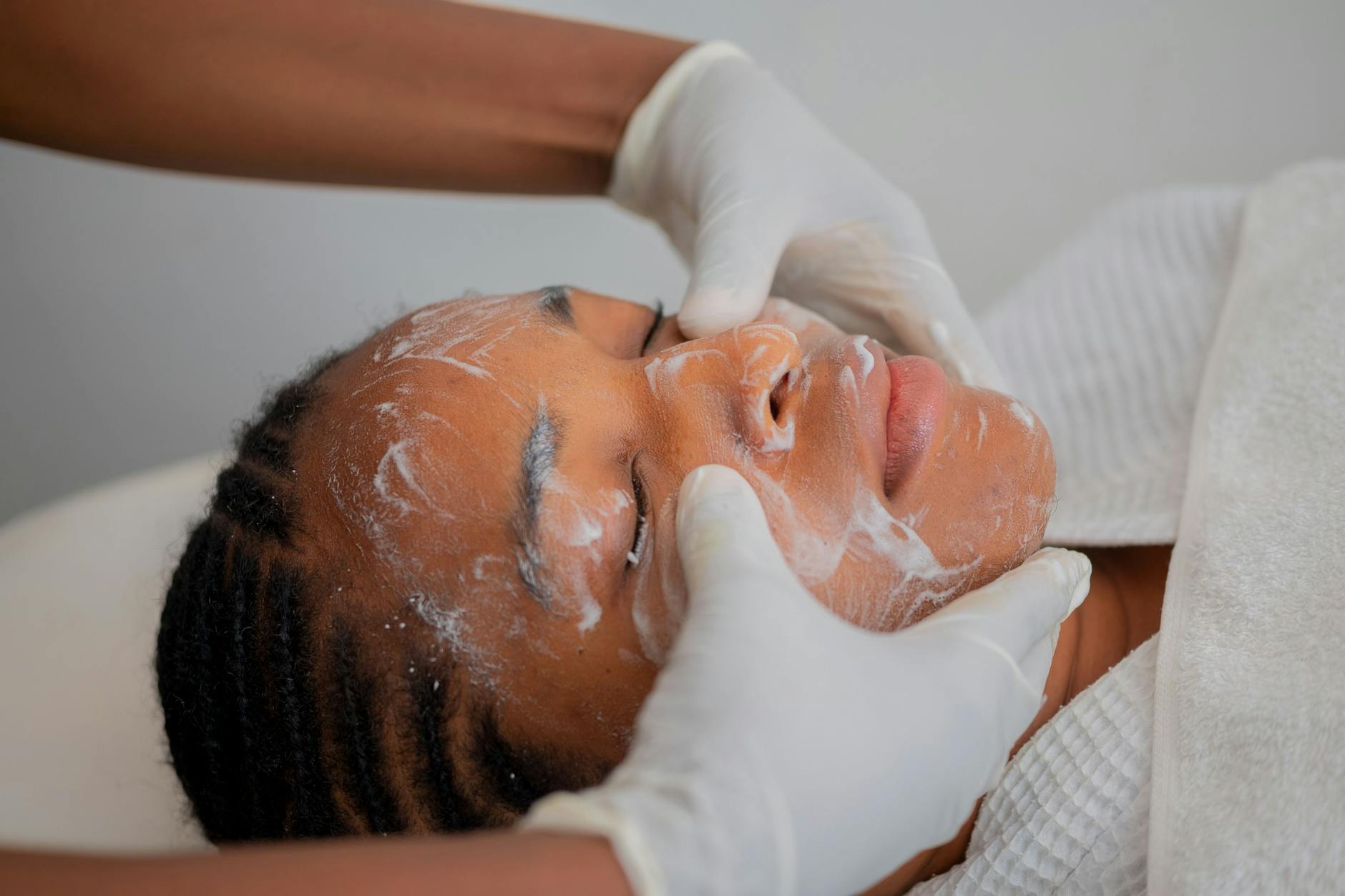
Experienced dermatologists rarely recommend a single treatment in isolation for moderate-to-severe scarring. They typically combine approaches—for example, laser treatment plus subcision plus microneedling over several months, layering treatments to address different scar characteristics. A patient with mixed rolling and boxcar scars might get one or two laser sessions, then switch to radiofrequency because RF works differently on the scar tissue collagen, then finish with microneedling to refine surface texture.
The practical advantage is that combination approaches let you start less aggressively. You might have one laser session, see 40% improvement, then decide whether to continue laser or switch to a different modality rather than committing to five laser sessions upfront. Your dermatologist should present a treatment plan that shows progression and decision points, not a rigid preset protocol.
Emerging Technologies Changing What’s Possible
Acne scar treatment is evolving beyond traditional laser and mechanical approaches. A novel acne scar gel showed remarkable results in recent studies—83% of patients noticed improvement in skin texture and evenness, with 70% seeing noticeable improvement specifically in indented scars. These newer topical and injectable options might offer alternatives for patients who can’t tolerate downtime or prefer less invasive approaches, though they’re not yet as proven as laser treatments in large-scale studies.
The future of scar treatment is moving toward customization. Rather than every patient getting the same laser protocol, dermatologists are using imaging analysis and genetic testing to predict which treatments will work best for individual skin types and scar characteristics. This means that in coming years, the “80% improvement” claim might become even stronger because treatments are being matched to patients more precisely rather than assuming one approach fits everyone.
Conclusion
The claim that 80% of acne scars can improve with professional treatment is accurate—laser treatments hit 90% efficacy in studies, radiofrequency achieves 78-85% improvement, and even microneedling produces 50-70% better appearance. The gap between this promise and reality for most patients is insurance coverage. Since acne scar treatment is classified as cosmetic, you’ll almost certainly pay entirely out of pocket, ranging from $2,000 for basic microneedling to $20,000 for comprehensive laser treatment.
Before investing in treatment, get a dermatologist consultation to identify your specific scar types, learn which treatments they’d recommend for your situation, and understand realistic timelines and costs. Ask specifically about combination approaches, payment plans, and package discounts. Verify your insurance policy by calling your carrier directly, because rare exceptions exist and the cost difference between covered and uncovered treatment is substantial. With the right treatment matched to your scar type, visible improvement is genuinely achievable—you just need to plan for paying for it yourself.
You Might Also Like
- At Least 70% of People With Acne Try OTC Products First…Only 30% of Moderate-to-Severe Cases Respond to OTC Alone
- At Least 50 Million Americans Have Active Acne Right Now…It’s the Most Common Skin Condition in the Country
- At Least 30% of Teenagers With Severe Acne Develop Permanent Scarring Without Treatment