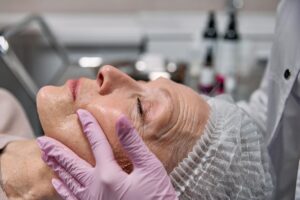
The global acne treatment market is experiencing unprecedented growth driven by a wave of scientific innovation fundamentally changing how dermatologists and consumers approach skin care. The market, valued at USD 10.45 billion in 2024, is projected to reach USD 16.91 billion by 2034, growing at a compound annual growth rate of 5.00% over the next decade. This expansion reflects far more than simply more people seeking acne treatments—it reflects genuine therapeutic breakthroughs that are solving long-standing problems with existing medications.
For example, Sanofi’s development of the world’s first mRNA acne vaccine represents a paradigm shift from treating acne’s symptoms to addressing the underlying inflammatory mechanisms that trigger breakouts in the first place. This article explores how innovation is reshaping the acne treatment landscape. We’ll examine the market drivers propelling growth, the breakthrough therapies currently advancing through clinical trials, the corporate investments fueling research, and what these developments mean for patients seeking more effective, tolerable treatment options. The changes underway extend beyond new drug approvals to encompass microbiome-aware formulations, targeted antibiotics that preserve gut health, and combination therapies that maximize efficacy in single topical applications.
Table of Contents
- What’s Driving the Acne Treatment Market Expansion?
- How Are Innovative Formulations Changing Treatment Approaches?
- Corporate Investments Reshaping the Innovation Pipeline
- Breaking Through Treatment Barriers with Next-Generation Therapies
- Market Realities and the Innovation-Access Gap
- How Corporate R&D Investments Benefit Patient Outcomes
- The Future of Acne Innovation and Market Evolution
- Conclusion
What’s Driving the Acne Treatment Market Expansion?
The acne treatment market expansion is powered by several converging forces, with innovation serving as the primary engine. Rising global acne prevalence across all age groups has expanded the addressable patient population, but equally important is the recognition that existing treatments have significant limitations. Traditional oral antibiotics, while effective at controlling inflammatory acne, disrupt the gut microbiome—a side effect that has prompted patients and physicians to seek alternatives. This clinical reality has created market demand for innovation that goes beyond simply “stronger” medications.
The COVID-19 pandemic inadvertently contributed to sustained market growth through mask-induced acne, a phenomenon that persisted even after mask-wearing decreased. This sustained demand demonstrated that acne remains a significant quality-of-life issue for adults, not just teenagers, prompting investment in treatments targeting older populations. Meanwhile, the rise of telehealth dermatology has democratized acne treatment access, making patients more likely to seek professional guidance rather than relying on over-the-counter products alone. However, it’s important to note that this market expansion doesn’t mean acne itself has become more prevalent globally—rather, diagnostic and treatment awareness has increased, particularly in developed markets.

How Are Innovative Formulations Changing Treatment Approaches?
Recent innovation has moved away from single-agent therapies toward intelligently designed combination treatments that amplify efficacy while minimizing side effects. The most significant recent advancement is a fixed-dose triple-combination therapy containing clindamycin, adapalene, and benzoyl peroxide—the most efficacious topical acne treatment to date. This single topical addresses bacterial resistance concerns (through dual antibiotic mechanisms), targets the underlying follicular obstruction (adapalene), and prevents resistance development (benzoyl peroxide), all in one application. Previously, patients had to layer multiple products, reducing adherence and increasing irritation.
Microbiome-aware formulations represent another critical innovation vector, though it’s important to acknowledge that the microbiome science in skincare remains evolving. Rather than aggressively eliminating all skin bacteria, these new formulations target specific pathogenic strains while preserving beneficial commensals. Companies like Beiersdorf have opened dedicated R&D centers specifically focused on developing acne treatments that work *with* rather than against skin health. However, consumers should be cautious about products claiming “microbiome restoration”—the regulatory standards for these claims remain less stringent than for traditional medications, and long-term efficacy data is still emerging.
Corporate Investments Reshaping the Innovation Pipeline
Major pharmaceutical and dermatology companies are making substantial R&D commitments, signaling confidence in the market’s expansion trajectory. Almirall’s partnership with Dermira represents a strategic approach: rather than developing new molecules in isolation, established companies are acquiring or partnering with specialized dermatology biotech firms. This collaborative model accelerates drug development and brings niche expertise into larger organizations with manufacturing and distribution capabilities. Beiersdorf’s investment in dedicated R&D infrastructure signals a long-term commitment beyond simply acquiring existing technologies—they’re building internal innovation capacity.
These corporate moves reflect market forecasts showing robust growth across multiple research organizations. Fortune Business Insights projects the market reaching USD 11,825.1 million by 2032 at a 6.1% CAGR, while Persistence Market Research estimates USD 12.8 billion in 2026, expanding to USD 18.6 billion by 2033. The consistency across these projections—all showing 5-6% annual growth—suggests industry confidence in sustained demand. However, pharmaceutical development carries inherent risk: not every promising experimental therapy reaches market approval, and regulatory pathways for novel drug classes can extend timelines unpredictably.

Breaking Through Treatment Barriers with Next-Generation Therapies
Perhaps the most remarkable innovation underway is Sanofi’s development of an mRNA acne vaccine—the first of its kind globally. Rather than applying medications topically or systemically, this approach trains the immune system to suppress the inflammatory cascade triggered by *Cutibacterium acnes*, the primary bacterial cause of acne. This fundamentally different mechanism offers potential advantages: patients wouldn’t need daily medication adherence, and the therapy could provide sustained benefit through immune memory. The once-weekly topical treatment containing Spongilla lacustris extract, currently advancing through Phase 3 clinical trials, offers another path forward with dual anti-inflammatory and antimicrobial properties in a simpler dosing regimen than current topicals.
The development of sarecycline, a narrow-spectrum oral antibiotic engineered specifically to minimize gut microbiome disruption, addresses one of the most significant limitations of older antibiotics like doxycycline and minocycline. Compared to broad-spectrum antibiotics that inhibit numerous bacterial species, sarecycline targets only acne-related pathogens. This specificity reduces secondary infections and dysbiosis, which have been documented complications of traditional antibiotic acne therapy. However, narrower spectrum also means sarecycline may be less effective for severe bacterial acne, so it represents a tradeoff between tolerability and broad antimicrobial coverage rather than a universal improvement.
Market Realities and the Innovation-Access Gap
Despite robust innovation, a significant gap persists between breakthrough therapies in clinical trials and availability to patients who need them. The mRNA acne vaccine, while promising, remains years away from regulatory approval and commercial availability. Many advanced formulations launching in developed markets remain inaccessible in emerging economies where acne burden may actually be higher due to climate, hygiene constraints, and limited dermatology infrastructure. Additionally, the acne treatment market’s expansion has been uneven—innovations have concentrated in topical and systemic medications, while procedural innovations like laser therapy and light-based treatments remain expensive and inaccessible to most patients globally.
A critical limitation worth acknowledging: newer, more sophisticated treatments often carry higher price points, creating a paradox where improved therapies may be less accessible than older, cheaper alternatives. While market projections show growth, this growth reflects developed-market expansion primarily. Furthermore, not all innovation translates to clinical superiority. Some products marketed as “innovative” represent repackaging of existing ingredients in new combinations without demonstrating meaningful advantages over established treatments. Consumers and physicians must carefully evaluate which innovations represent genuine therapeutic advances versus incremental marketing improvements.

How Corporate R&D Investments Benefit Patient Outcomes
The increased R&D investment by pharmaceutical companies directly translates to more treatment options reaching patients, particularly those with severe or treatment-resistant acne. Before these partnerships and investments, patients with acne unresponsive to first-line therapies faced limited alternatives beyond isotretinoin, a potent medication requiring intensive monitoring due to teratogenicity risks. New combination therapies and novel mechanisms now provide intermediate options that previously didn’t exist. For example, a patient experiencing gut dysbiosis from traditional antibiotics can now potentially switch to sarecycline without losing antimicrobial coverage.
The competitive landscape created by multiple companies pursuing different innovation angles benefits patients through diverse therapeutic choices suited to different clinical situations. Someone with inflammatory acne and a compromised gut microbiome has different optimal treatment than someone with comedonal acne resistant to topicals. As the market expands with more options, dermatologists can match treatments to individual patient pathophysiology rather than relying on standardized protocols. This precision medicine approach, enabled by the innovation wave, represents the true value of market growth from a patient-outcome perspective.
The Future of Acne Innovation and Market Evolution
The trajectory of acne treatment innovation over the next decade will likely emphasize personalized approaches based on individual acne pathophysiology. Advances in microbiome sequencing may enable dermatologists to identify which skin bacterial profiles respond best to specific treatments, replacing trial-and-error approaches with targeted therapy selection. The development of immunological therapies like the mRNA vaccine could fundamentally shift acne from a chronic condition requiring continuous management to one preventable through vaccination. Market projections suggest this innovation will continue accelerating—the forecasted growth from USD 10.45 billion to USD 16.91 billion by 2034 represents sustained demand for new solutions.
Looking forward, the most impactful innovations may occur at the intersection of dermatology and microbiome science rather than through traditional drug development alone. As our understanding of skin bacterial communities, immune tolerance, and inflammatory pathways deepens, treatments will likely become more sophisticated and personalized. The combination of corporate R&D investment, academic dermatological research, and patient demand creates a virtuous cycle supporting continued innovation. For individuals struggling with acne, this expanding treatment landscape means better options, improved tolerability profiles, and potentially life-changing therapeutic breakthroughs currently in development.
Conclusion
The acne treatment market’s growth from USD 10.45 billion in 2024 to a projected USD 16.91 billion by 2034 reflects genuine innovation rather than simply market expansion among existing treatments. Breakthrough therapies including fixed-dose triple combinations, narrow-spectrum antibiotics that preserve microbiome health, and experimental approaches like mRNA vaccines represent fundamental advances in how dermatology approaches acne. Corporate investments from major players like Almirall, Dermira, and Beiersdorf signal confidence in sustained innovation, suggesting this growth trajectory will continue through the 2030s.
For patients and clinicians, this expanding treatment landscape offers unprecedented opportunity to move beyond one-size-fits-all acne management toward precision approaches tailored to individual skin pathophysiology. However, realizing the full promise of these innovations requires attention to equitable access across economic strata and geographic regions. The innovations reshaping acne treatment demonstrate how focused R&D investment combined with better understanding of underlying disease mechanisms can transform a common, chronic skin condition into a problem with genuinely better solutions.