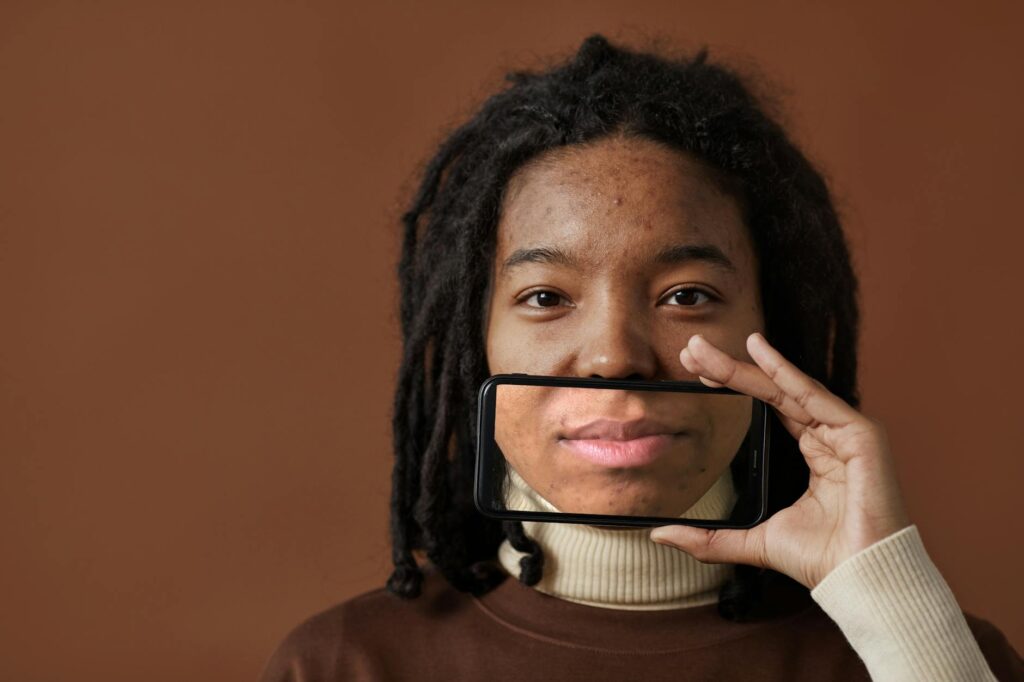
Accutane side effects range from nearly universal dry skin and chapped lips to rare but serious complications including liver damage, psychiatric disturbances, and severe birth defects. In a 2025 cross-sectional study of 377 isotretinoin users published in Scientific Reports, 82% of participants reported side effects — yet 86.2% still expressed overall satisfaction with their treatment, which tells you something about how desperate severe acne can make people and how effective the drug actually is when it works. The original Accutane brand was discontinued by Roche in 2009, but isotretinoin itself remains widely prescribed under names like Absorica, Amnesteem, Claravis, Myorisan, and Zenatane.
It was FDA-approved in 1982 for severe nodular acne resistant to conventional therapy, including systemic antibiotics, in patients 12 years and older. Treatment courses typically last about six months, with full improvement sometimes continuing up to six months after stopping. The drug carries two FDA black box warnings — one for psychiatric effects and one for birth defects — making it one of the most heavily regulated medications in dermatology. This article covers the full spectrum of Accutane side effects: the common ones you should expect, the psychiatric risks that remain hotly debated, the pregnancy dangers that led to the iPLEDGE program, relapse rates from recent research, and the lesser-known musculoskeletal and sexual side effects that patients often aren’t told about upfront.
Table of Contents
- What Are the Most Common Side Effects of Accutane for Acne Treatment?
- The Psychiatric Side Effects of Isotretinoin — What the Research Actually Shows
- Accutane and Pregnancy — Why the iPLEDGE Program Exists
- Understanding Accutane Relapse Rates and Whether a Second Course Is Worth It
- Lesser-Known Side Effects — Bones, Sexual Health, and Cosmetic Restrictions
- Rare but Serious Complications — Pseudotumor Cerebri and Pancreatitis
- What 2025 Research Tells Us About the Future of Isotretinoin
- Conclusion
- Frequently Asked Questions
What Are the Most Common Side Effects of Accutane for Acne Treatment?
The side effects that nearly every isotretinoin patient encounters are related to the drug’s mechanism — it dramatically reduces oil production across the entire body, not just in acne-prone skin. Dry skin, severely chapped lips, dry and irritated eyes, and nosebleeds are the most frequently reported adverse reactions. These aren’t occasional nuisances. Most patients describe their lips cracking and bleeding within the first two weeks, requiring near-constant application of heavy balm. Eye dryness can make contact lenses intolerable for the duration of treatment. Nosebleeds become a regular occurrence, especially in dry climates or heated indoor environments during winter months.
Liver function abnormalities occur in up to 15% of patients, which is why dermatologists require regular blood work throughout treatment — typically every month. Significant elevations requiring discontinuation are uncommon, but they do happen, and patients who drink alcohol while on isotretinoin compound the hepatic stress considerably. Elevated triglycerides are another laboratory finding that requires monitoring, as the drug can push blood lipid levels into ranges that carry cardiovascular risk, particularly in patients who already have metabolic concerns. Despite the long list of common side effects, the 2025 cross-sectional study found that only 19.9% of participants actually discontinued treatment because of them. That means roughly four out of five patients pushed through the discomfort to complete their course. For someone who has dealt with painful cystic acne for years and failed multiple rounds of antibiotics and topical treatments, dry lips and monthly blood draws are a trade they’re willing to make.

The Psychiatric Side Effects of Isotretinoin — What the Research Actually Shows
Isotretinoin carries an FDA black box warning issued in 2005 for suicide, depression, aggression, and psychosis. It holds the distinction of being the only non-psychiatric drug in the FDA’s top 10 drugs associated with depression, and it also ranks within the top 10 for suicide attempts according to FDA Adverse Event Reporting System data through June 2000. A JAMA Dermatology analysis covering 1997 to 2017 found 17,829 reports of adverse psychiatric events associated with isotretinoin, with depressive disorders making up 42.3% of all reports and nearly 2,300 reports of suicidal ideation. The 2025 Syrian cross-sectional study found that 56.3% of isotretinoin users reported psychological symptoms including anxiety, mood changes, depression, or suicidal thoughts. However — and this is where the picture gets complicated — multiple high-quality controlled studies have found no causal association between isotretinoin and psychiatric disorders. The correlation remains genuinely controversial in dermatology and psychiatry circles.
One of the core problems with interpreting the data is that severe acne itself is strongly associated with depression, anxiety, and suicidal ideation. Patients who are prescribed isotretinoin already have the worst acne and have already failed other treatments, meaning they may have been experiencing psychiatric symptoms before ever taking the drug. Separating the psychological burden of disfiguring acne from the effects of the medication used to treat it has proven extremely difficult. If you have a personal or family history of depression, bipolar disorder, or other psychiatric conditions, this does not automatically disqualify you from isotretinoin treatment, but it does mean the conversation with your dermatologist needs to be more thorough. Some dermatologists will coordinate care with a psychiatrist before initiating treatment. What matters most is that patients, families, and prescribers are all watching for mood changes, withdrawal, irritability, or any shift in mental state during the course — and that stopping the medication is always on the table if warning signs emerge.
Accutane and Pregnancy — Why the iPLEDGE Program Exists
Isotretinoin is a known teratogen, meaning it is highly likely to cause birth defects when taken during pregnancy. This is not a theoretical risk or a precautionary label — it is one of the most well-documented drug-induced teratogenic relationships in modern medicine. Between 1982 and 2000, approximately 2,000 women became pregnant while on the drug in the United States. Most of those pregnancies ended in abortion or miscarriage, and about 160 babies with birth defects were born. By early 1988 alone, an estimated 1,000 birth defects had already been attributed to isotretinoin. The scale of the problem led to the creation of the iPLEDGE Risk Evaluation and Mitigation Strategy, a program that requires female patients of childbearing potential to use two forms of contraception, take monthly pregnancy tests, and complete regular check-ins before their prescription can be filled.
The system is cumbersome — patients and pharmacists alike complain about its bureaucratic complexity — but it has worked. after iPLEDGE was implemented, only 155 pregnancies (0.12%) occurred among 129,544 women of childbearing potential taking isotretinoin in 2011. That is a dramatic reduction from the pre-program era. Male patients are also affected by iPLEDGE requirements, though the obligations are less intensive. The program requires all patients, regardless of sex, to register and acknowledge the risks. For women, the monthly pregnancy testing and contraception documentation create real logistical friction that can delay refills and interrupt treatment courses. If you are a woman considering isotretinoin, expect this administrative layer and plan for it — missed iPLEDGE windows can mean gaps in your medication that extend your overall treatment timeline.

Understanding Accutane Relapse Rates and Whether a Second Course Is Worth It
A January 2025 study published in JAMA Dermatology provided some of the clearest data yet on what happens after an isotretinoin course ends. The study found that 61% of patients achieved acne clearance with a single course, while 39% experienced relapse within the first 18 months. Of those who relapsed, 23% required an additional course of isotretinoin. Women had a higher relapse rate than men. These numbers are important context for anyone weighing whether to start treatment. Isotretinoin is often described as a “cure” for acne, and for the majority of patients it does produce lasting clearance.
But nearly four in ten patients see their acne return, and almost a quarter end up going through the entire process again — the blood tests, the dryness, the iPLEDGE paperwork, and another six months of side effects. A second course is generally considered safe and often effective, but it does mean a longer total exposure to a drug with a meaningful side effect profile. The tradeoff calculation depends heavily on the severity of your acne and what alternatives remain. For someone with deep cystic lesions that are actively scarring their skin, a 61% chance of clearance with one course — and higher odds if a second course is needed — may far outweigh the risks. For someone with moderate acne who still has untried options like spironolactone or hormonal therapy, the relapse data might give them reason to exhaust those routes first. Your dermatologist should be discussing these numbers with you before you start, not after.
Lesser-Known Side Effects — Bones, Sexual Health, and Cosmetic Restrictions
The side effects that get the least attention are sometimes the ones that matter most to patients after the fact. In an open-label clinical trial of 217 patients, 92% showed no significant decrease in bone mineral density, but 7.9% — 16 patients — had decreases in lumbar spine bone density greater than 4%. For adolescents still growing, isotretinoin carries a risk of premature epiphyseal closure, which can affect final adult height. This is a consideration that pediatric dermatologists take seriously when prescribing to younger teenagers. Sexual side effects represent another category that has gained increasing attention. Erectile dysfunction, low libido, vaginal dryness, and genital numbness have all been reported, and some patients describe these effects as persisting long-term even after discontinuing the drug.
The medical literature on persistent sexual side effects remains limited and somewhat controversial, but the reports are numerous enough that both patients and clinicians should be aware of the possibility. If you are experiencing sexual dysfunction during treatment, raise it with your prescriber rather than assuming it will resolve on its own after you finish the course. There is also a practical restriction that catches many patients off guard: no cosmetic procedures — including waxing, dermabrasion, and laser therapy — for at least six months after the last dose. Isotretinoin impairs the skin’s ability to heal normally, and procedures that involve removing or damaging the outer skin layers can result in severe scarring. This means planning around isotretinoin if you have a wedding, major event, or cosmetic treatment timeline in mind. It also means being upfront with estheticians and laser technicians about your medication history, as not all of them will think to ask.

Rare but Serious Complications — Pseudotumor Cerebri and Pancreatitis
Among the more alarming rare side effects is pseudotumor cerebri, a condition involving increased intracranial pressure that mimics the symptoms of a brain tumor — severe headaches, visual disturbances, and nausea. The risk increases when isotretinoin is taken alongside tetracycline antibiotics, which is one reason dermatologists stop oral antibiotics before starting isotretinoin rather than overlapping the two. Pancreatitis, while uncommon, has also been reported and is potentially life-threatening.
Patients with pre-existing elevated triglycerides are at greater risk, which is another reason blood lipid monitoring throughout treatment is not optional. A 2025 systematic review by Cowan and colleagues published in the Australasian Journal of Dermatology examined rare major adverse cardiovascular events associated with isotretinoin, adding to a growing body of research exploring whether the drug’s effects on blood lipids translate into actual cardiac risk. While the evidence for cardiovascular events remains limited, it underscores the importance of comprehensive metabolic monitoring — not just liver enzymes but full lipid panels — especially in patients who are already overweight or have a family history of cardiovascular disease.
What 2025 Research Tells Us About the Future of Isotretinoin
The research landscape around isotretinoin continues to evolve. Beyond the cardiovascular review and the relapse data from JAMA Dermatology, a 2025 systematic review and meta-analysis published in the Journal of the European Academy of Dermatology and Venereology examined low-dose isotretinoin for rosacea management, suggesting the drug’s utility may expand beyond acne in coming years.
The StatPearls clinical reference for isotretinoin was updated as recently as December 13, 2025, reflecting the ongoing accumulation of safety and efficacy data. The future likely involves better patient selection, more refined dosing protocols, and possibly genetic or biomarker-based approaches to predict who will respond well and who is at higher risk for adverse effects. For now, isotretinoin remains the most powerful single tool in the acne treatment arsenal — but it is a tool that demands respect, monitoring, and an honest conversation between patient and provider about what the six-month journey actually looks like.
Conclusion
Accutane — or rather, isotretinoin under its current brand names — is a drug defined by contradictions. It is the most effective treatment available for severe acne, with 61% of patients achieving clearance in a single course, yet it carries two black box warnings and requires a federal risk management program just to dispense. Its most common side effects are annoying but manageable; its rare side effects can be life-altering. The psychiatric data is alarming in volume but inconclusive in causation. Eighty-two percent of patients in recent research experienced side effects, yet 86% reported satisfaction with their treatment.
The decision to take isotretinoin should be made with full knowledge of these realities, not based on fear or on minimized reassurances. Ask your dermatologist about the relapse rates, the psychiatric monitoring plan, the pregnancy prevention requirements, and the timeline for cosmetic restrictions. Get your baseline blood work interpreted and explained to you. If you have a history of depression or a family history of psychiatric illness, make sure that is part of the treatment plan from day one. Isotretinoin can genuinely transform the skin and confidence of people who have suffered with severe acne — but only when the risks are taken as seriously as the benefits.
Frequently Asked Questions
How long do Accutane side effects last after stopping treatment?
Most common side effects like dry skin and chapped lips resolve within weeks to a month after stopping isotretinoin. However, some patients report persistent effects — particularly sexual side effects such as low libido or erectile dysfunction — that last months or longer after discontinuation. Full skin improvement may continue developing for up to six months after the final dose.
Can you drink alcohol while taking isotretinoin?
Isotretinoin already stresses the liver, with up to 15% of patients showing liver function abnormalities during treatment. Adding alcohol compounds this hepatic burden. Most dermatologists strongly advise against drinking during treatment, and your monthly blood work will reflect any liver stress.
What is the iPLEDGE program and who has to follow it?
iPLEDGE is a federal Risk Evaluation and Mitigation Strategy that all isotretinoin patients in the United States must register with, regardless of sex. For women of childbearing potential, it requires two forms of contraception, monthly pregnancy tests, and regular check-ins before each prescription refill. After implementation, pregnancy rates among women taking isotretinoin dropped to 0.12%.
Does Accutane cause permanent depression?
The relationship between isotretinoin and depression remains scientifically controversial. The drug carries an FDA black box warning for depression and suicidal ideation, and a JAMA Dermatology analysis found over 17,800 psychiatric adverse event reports between 1997 and 2017. However, multiple controlled studies have failed to establish a causal link. Severe acne itself is strongly associated with depression, making it difficult to isolate the drug’s effect.
What happens if acne comes back after a course of isotretinoin?
According to a January 2025 JAMA Dermatology study, 39% of patients relapse within 18 months of completing treatment, and 23% require a second course. Women tend to relapse at higher rates. A second course is generally considered safe and is often effective for patients who did not achieve lasting clearance the first time.
When can I get laser treatments or waxing after finishing isotretinoin?
You must wait at least six months after your last dose before undergoing any cosmetic procedure that involves skin removal or damage, including waxing, dermabrasion, chemical peels, and laser therapy. Isotretinoin impairs normal skin healing, and premature procedures can cause severe scarring.